
Electric cars don’t have gears because their motors provide maximum torque instantly across a wide range of speeds, eliminating the need for multi-speed transmissions. Their simple, single-speed gearboxes keep things efficient, reliable, and easier to maintain. This design allows smooth acceleration without shifting. If you want to understand how this simplicity benefits electric vehicle performance and why manufacturers favor it, there’s more to discover beyond this quick overview.

Get backup power and energy gear delivered free — and shop member deals
- Fast, free delivery on millions of items
- Access to Prime Big Deal Days deals on October 6–7
- Prime Video, Amazon Music and more included
Key Takeaways
- Electric motors provide maximum torque instantly across a broad RPM range, eliminating the need for multiple gears.
- Single-speed gearboxes simplify design, reduce mechanical parts, and lower maintenance compared to multi-gear systems.
- The fixed gear ratio ensures seamless acceleration and smooth power delivery without shifting.
- EV transmissions focus on efficiency and durability, making them more reliable and cost-effective.
- Future innovations may introduce multi-speed systems, but current EVs favor simplicity for performance and reliability.
The Basic Design of Electric Vehicle Transmissions
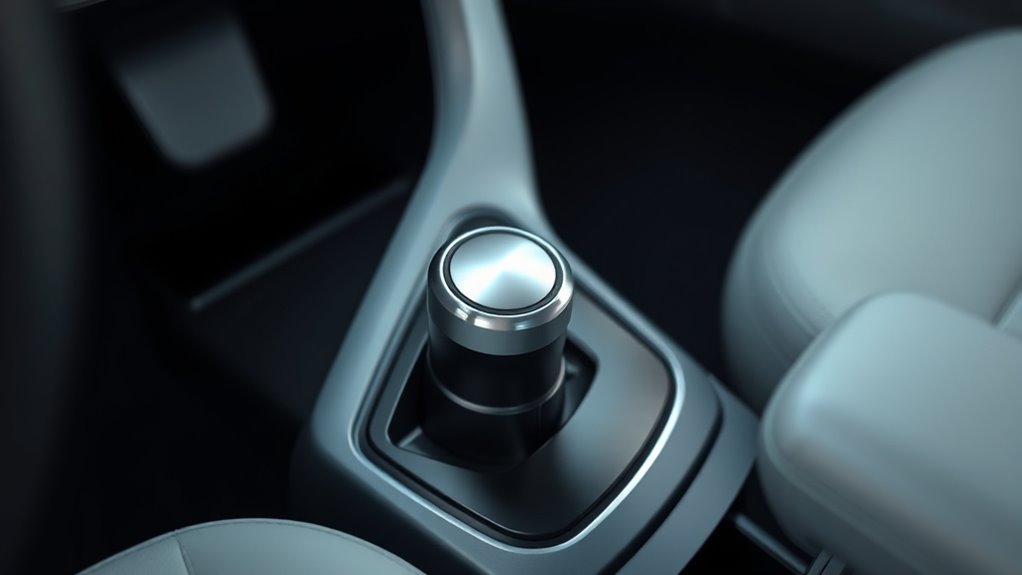
The basic design of electric vehicle (EV) transmissions centers on simplicity and efficiency. Unlike traditional cars with multi-gearboxes, EVs usually have a single-speed transmission. You’ll find an input shaft connected directly to the electric motor, which transfers mechanical energy. A fixed reduction gear steps down the high RPM of the motor to a suitable wheel speed, eliminating the need for multiple gears. The output shaft then drives the wheels directly, providing smooth propulsion without shifting gears. This straightforward setup reduces mechanical parts, weight, and potential maintenance issues. Because electric motors deliver maximum torque instantly and across a wide RPM range, complex gear systems aren’t necessary. Overall, the design focuses on creating a reliable, efficient drivetrain that offers a seamless driving experience.
How EV Transmissions Differ From Traditional Gasoline Engines

How do electric vehicle (EV) transmissions differ from traditional gasoline engine (ICE) transmissions? Unlike ICE transmissions, which use multiple gears to keep the engine in its ideal RPM range, EV transmissions typically have a single fixed gear ratio. Electric motors deliver maximum torque instantly across a broad RPM spectrum, removing the need for gear changes. ICE gearboxes control power and speed through shifting, while EVs rely on a fixed gear that simplifies design, reduces weight, and enhances efficiency. This means no clutch or gear lever is necessary, leading to smoother acceleration and fewer mechanical parts that wear out. In essence, EV transmissions are much simpler, focusing on transferring power directly from the motor to the wheels without the complexity of multi-speed gearboxes. Additionally, the absence of gear shifting contributes to high overall efficiency, which helps maximize energy conservation and extends the driving range.
The Role of Single-Speed Gearboxes in Electric Cars

Single-speed gearboxes simplify power delivery in electric cars by providing a constant gear ratio, which allows for smooth acceleration without shifting. This design also boosts drivetrain efficiency by reducing mechanical losses and unnecessary components. As a result, you experience a more responsive and reliable driving experience with fewer maintenance needs.
Simplified Power Delivery
Ever wonder why electric cars can accelerate so smoothly and quickly without shifting gears? It’s because the single-speed gearbox simplifies power delivery. Unlike traditional transmissions that change gear ratios to match engine speed, EVs use a fixed gear ratio. This setup allows the electric motor to deliver maximum torque instantly across a wide RPM range. As a result, acceleration feels seamless and immediate, without the pauses or shifts that occur in conventional vehicles. The fixed gear ratio balances torque and top speed, making driving feel effortless. This simplicity means fewer mechanical parts, reducing maintenance and mechanical complexity. It also guarantees consistent power flow, so you get smooth, efficient acceleration every time you hit the accelerator. This straightforward design enhances both comfort and reliability in electric vehicles. Additionally, electric motor efficiency is maximized with this setup, contributing to better energy use and longer driving range.
Enhanced Drivetrain Efficiency
By simplifying the drivetrain with a single-speed gearbox, electric cars minimize energy losses that typically occur in multi-speed transmissions. This streamlined setup reduces mechanical components, lowering friction and power loss, so more energy from your battery reaches the wheels. As a result, your vehicle operates more efficiently, extending range and improving performance. The fixed gear ratio balances torque and top speed without frequent shifting, ensuring smooth acceleration. Additionally, fewer moving parts mean less maintenance and less energy wasted on gear engagement. This simplicity also leads to quicker response times and better overall efficiency. Understanding how gearboxes work is key to appreciating why EVs favor this minimalist design.
Instant Torque and Its Impact on Transmission Needs
When you press the accelerator, electric motors deliver instant torque, meaning you get immediate power without delay. This quick response reduces the need for complex multi-speed transmissions found in traditional engines. As a result, electric vehicles can operate smoothly with simpler gear setups, making driving more straightforward and reliable.
Immediate Power Delivery
Electric vehicles deliver peak torque instantly the moment you press the accelerator, a stark contrast to internal combustion engines that need time to build up power. This immediate power delivery means you feel rapid acceleration without delay or gear changes. With electric motors providing full torque from zero RPM, you don’t need a multi-gear system to match engine speed and load. Instead, the transmission primarily controls how power is delivered, not how much power is generated. This simplicity allows for smoother acceleration and a more responsive driving experience. Understanding electric motor performance also highlights how EVs can provide consistent torque across all speeds, reducing the need for complex gear systems. Additionally, the design of electric motors inherently supports simplified transmission architectures, further eliminating the necessity for traditional gearboxes.
Reduced Transmission Complexity
Instant torque from electric motors means power reaches the wheels immediately upon pressing the accelerator, eliminating the need for complex gear changes. Because electric motors deliver maximum torque at all speeds, there’s no need for multi-speed transmissions to optimize power delivery like in traditional cars. This enables a more efficient drivetrain design, which is crucial for maximizing vehicle range and performance. Instead, a single-speed gearbox with a fixed gear ratio simplifies the drivetrain, reducing mechanical parts and maintenance. This straightforward setup makes EVs lighter, more efficient, and quieter. Without gear shifts, acceleration feels smooth and instant, enhancing driving comfort. The absence of multiple gears also means fewer components that could wear out or require repair. Additionally, transmission design in electric vehicles is optimized for simplicity, further reducing weight and manufacturing costs. Overall, reduced transmission complexity not only simplifies manufacturing but also improves reliability, making electric vehicles easier to operate and maintain.
Why Simplicity Benefits Electric Vehicle Performance
The simplicity of electric vehicle (EV) drivetrains directly enhances their performance by reducing mechanical complexity and potential points of failure. Fewer moving parts mean fewer breakdowns, less maintenance, and more reliable operation. This straightforward design allows for quicker acceleration and smoother driving, since there’s no need to shift gears or manage clutch engagement. Additionally, a simplified drivetrain improves efficiency by minimizing energy losses from mechanical components. You also benefit from quieter operation because there are no gear whines or clunks. Moreover, the absence of a multi-speed gearbox simplifies drivetrain design, making EVs easier to service and repair. Overall, this simplicity leads to better durability, lower costs, and a more consistent driving experience. Understanding drivetrain design highlights how minimal mechanical parts contribute to these advantages.
Situations Where Multi-Gear Systems Are Used in EVs

While single-speed transmissions work well for most EV applications, multi-gear systems are employed in specific situations to optimize performance and efficiency. For example, racing EVs or luxury models use multi-speed transmissions to maximize power delivery and optimize fuel economy during long-distance driving. Some hybrids also incorporate multi-gear systems to better manage the progression between electric and combustion power. Additionally, vehicles designed for extreme conditions, such as off-road or heavy-duty applications, might rely on multi-gear setups to provide better torque control and efficiency across diverse terrains and speeds. These systems are tailored to meet the unique demands of specific driving scenarios. Understanding transmission types can help clarify why certain EVs benefit from these setups. Furthermore, advanced transmission technology plays a crucial role in enhancing the overall driving experience in specialized electric vehicles.
Additional Components Supporting EV Power Delivery
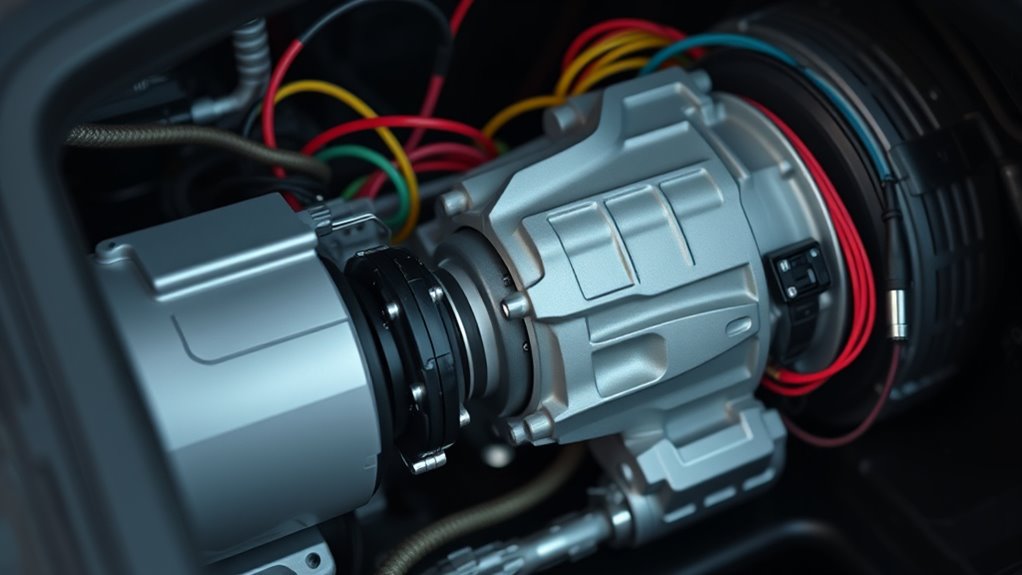
Supporting components work alongside the transmission to guarantee efficient and reliable power delivery in electric vehicles. These parts ensure that electrical energy from the battery converts smoothly into mechanical motion, optimizing performance. The electric traction motor is the core element, transforming electrical energy into rotation. Power electronics controllers regulate the flow of electricity, adjusting motor speed and torque instantly. Thermal management systems keep components cool, preventing overheating and ensuring longevity. Additionally, onboard chargers manage energy transfer between the grid and battery, while DC/DC converters supply stable voltage levels to electronics. Control systems coordinate power distribution, sometimes directing torque to specific wheels for better handling. Together, these components create a seamless, efficient drivetrain without the complexity of multi-speed gearboxes.
- Electric traction motor
- Power electronics controllers
- Thermal management systems
- Onboard chargers
- DC/DC converters
The Future of EV Transmission Technologies

As electric vehicle technology advances, manufacturers are exploring innovative transmission systems to enhance performance and efficiency. One promising direction involves multi-speed gearboxes, which could optimize motor efficiency across various speeds, especially for high-performance or long-range EVs. These systems aim to improve acceleration, top speed, and energy consumption by providing more precise control over power delivery. Additionally, researchers are developing advanced CVTs tailored for electric motors, offering seamless gear ratio adjustments without traditional gear shifts. Hybrid systems may also incorporate multi-gear transmissions to better manage the progression between electric and combustion power. Furthermore, transmission complexity is a consideration, as simplifying the drivetrain can reduce maintenance and improve reliability. Emerging electric drivetrain technologies are also exploring ways to streamline components while maintaining or enhancing vehicle performance. While current single-speed setups dominate, these emerging technologies promise to bring greater versatility, efficiency, and driving dynamics to future EVs, pushing the boundaries of what electric drivetrains can achieve.
Frequently Asked Questions
Can Electric Cars Ever Benefit From Multi-Speed Transmissions?
Electric cars can benefit from multi-speed transmissions in specific cases, especially for performance or efficiency upgrades. You might see this in high-performance models or hybrids, where additional gears help optimize top speed or fuel economy. However, for most everyday driving, the simplicity of a single-speed transmission still offers smoother acceleration, fewer mechanical parts, and lower maintenance. So, while possible, multi-speed systems are usually reserved for specialized applications.
How Does Gear Ratio Affect Electric Vehicle Acceleration and Top Speed?
You’ll find that gear ratio directly impacts your electric vehicle’s acceleration and top speed. A lower gear ratio provides more torque, helping you accelerate quickly, while a higher gear ratio enhances top speed. Because EVs use a fixed gear ratio, they balance smooth acceleration with efficient high-speed cruising. Adjusting this ratio allows manufacturers to optimize your driving experience, ensuring quick starts and capable highway performance without complex multi-gear systems.
Are There Electric Models With Multi-Gear or CVT Transmissions?
Yes, some electric models feature multi-gear or CVT transmissions. For example, Porsche’s Taycan uses a two-speed gearbox to boost acceleration and top speed, like shifting gears in a bike to conquer steep hills. While most EVs stick with single-speed gearboxes for simplicity, these alternatives enhance performance or efficiency in specific vehicles, proving that even in electric cars, a little extra gear can make a noticeable difference.
What Are the Maintenance Differences Between Single-Speed and Multi-Speed EV Transmissions?
You’ll find that single-speed EV transmissions require less maintenance because they have fewer moving parts, no clutch systems, and simplified gear mechanisms. In contrast, multi-speed transmissions involve more components like additional gears, clutches, and synchros, which need regular inspection, lubrication, and potential repairs. This makes multi-speed systems more complex and costly to maintain over time, while single-speed setups offer greater reliability and lower maintenance needs.
Will Future EVS Include Multi-Gear Transmission Options?
Future EVs might include multi-gear transmissions, especially for high-performance or specialized vehicles. While most current models favor simplicity and efficiency with single-speed gearboxes, advancements in technology could enable multi-speed systems that improve top speed and efficiency. You’ll likely see hybrids and performance-oriented EVs adopting this approach first, as automakers balance innovation with the core benefits of electric drivetrains. So, expect a shift as technology evolves and consumer demands change.
Conclusion
So, here you are, marveling at the simplicity of electric car transmissions, thinking they’re missing out on gear-shifting thrills. Ironically, that very simplicity is what makes EVs smoother, more efficient, and easier to drive. While traditional cars chase gears for performance, electric vehicles prove you don’t need complexity to excel. Sometimes, the easiest way truly is the best—minus the clunky transmissions and shifting headaches. Who knew that less could be so much more?
Fall Picks
fall essentials
As an affiliate, we earn on qualifying purchases.