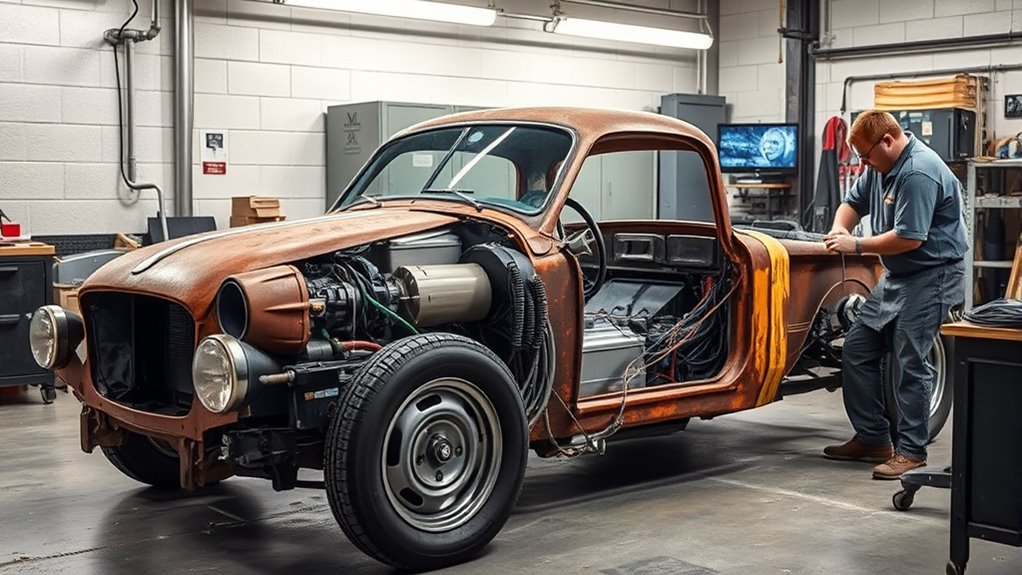

You can definitely attempt a DIY EV conversion, but modern electric vehicles differ greatly from older retrofit projects. Modern EVs feature complex, integrated battery management systems, specifically designed motors, and precise component coordination for safety and performance. These advanced features make conversions more challenging for amateurs. If you keep exploring, you’ll discover how planning battery placement, selecting compatible motors, and understanding vehicle integration are essential for success in creating a reliable, efficient electric ride.
Key Takeaways
- Modern EVs feature integrated battery management and control systems, making DIY retrofitting more complex than simple conversions.
- Factory-designed battery placement and cooling systems require specialized knowledge to replicate or modify safely.
- Modern EV motors are purpose-built and integrated, unlike older vehicles where DIYers can easily swap or adapt parts.
- Advanced safety standards and certifications in modern EVs pose challenges for DIY conversions without professional expertise.
- Successful DIY EV conversions demand thorough planning, research, and technical skills, differentiating them from straightforward retrofit projects.
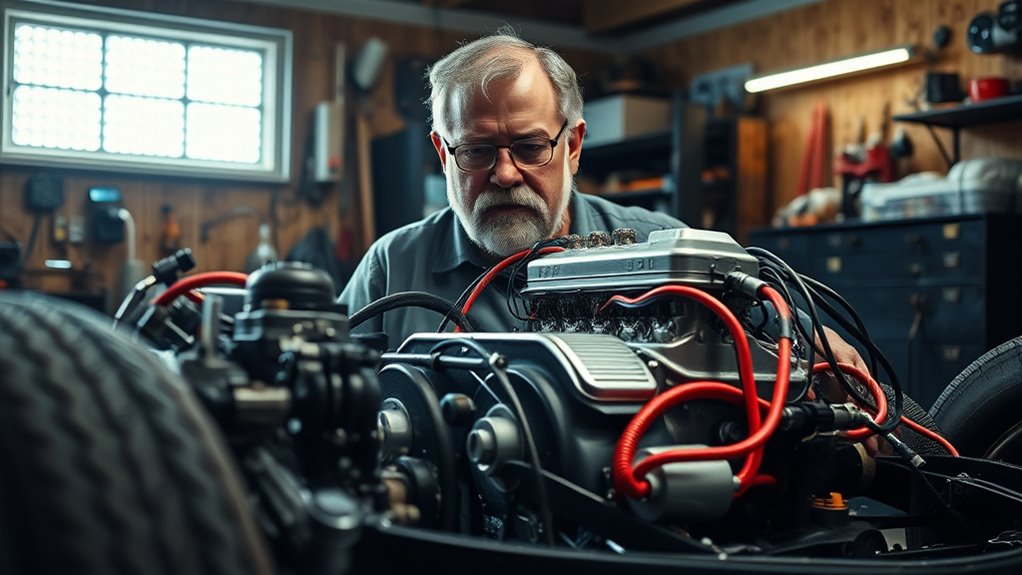
Converting your vehicle to electric power might seem intimidating, but with the right tools and knowledge, it’s an achievable project for DIY enthusiasts. One of the key aspects you’ll need to consider early on is how to handle battery placement. Unlike modern EVs, which have carefully engineered battery packs integrated into the chassis for ideal weight distribution and safety, DIY conversions require you to decide where to position your batteries for balance and efficiency. You might choose to place batteries under the floor, in the trunk, or distribute them along the chassis, but each option affects handling, center of gravity, and space. Proper battery placement ensures your vehicle remains stable and performs reliably, so take your time planning this layout. You’ll need to think about how much space you have, how to cool the batteries, and how to secure them safely to prevent movement during driving.
Another essential factor is motor selection. Modern EVs come with highly integrated, purpose-built motors designed for specific power and efficiency targets, whereas DIY projects demand careful choice based on your vehicle’s weight, desired performance, and budget. You’ll need to research various motor options—brushless DC motors are common for DIY conversions due to their simplicity and availability. Selecting the right motor involves balancing power output with efficiency; a motor that’s too powerful may be overkill and drain your batteries faster, while one that’s too weak could leave you disappointed with acceleration or top speed. Consider the motor’s compatibility with your existing drivetrain, as well as the ease of installation and control systems. Some motors come with built-in controllers, simplifying wiring, but you’ll still need to ensure your chosen motor aligns with your overall project goals.
Both battery placement and motor selection are interconnected; a well-chosen motor paired with an ideal battery layout maximizes your vehicle’s performance and range. As you plan your DIY EV conversion, take time to research components thoroughly, consult forums, and learn from experienced converters. Modern EVs benefit from advanced battery management systems and integrated control units, which DIY conversions often lack, making proper component choice even more vital. With patience and attention to detail, you can create a reliable, efficient electric vehicle. While it takes effort, understanding how to position your batteries and select the right motor makes the process smoother and ensures your conversion is successful and satisfying.
DIY electric vehicle conversion kit
As an affiliate, we earn on qualifying purchases.
As an affiliate, we earn on qualifying purchases.
Frequently Asked Questions
What Are the Legal Requirements for EV Conversions?
You need to guarantee your EV conversion meets legal compliance and safety standards. Check local regulations for vehicle modifications, including emissions, safety inspections, and registration requirements. You may need to have your vehicle inspected and certified by authorities. Following all safety standards, especially regarding wiring, batteries, and electronics, is essential to avoid fines or legal issues. Always research your area’s specific laws before starting your DIY EV conversion.
How Much Does a Typical DIY EV Conversion Cost?
A typical DIY EV conversion costs between $5,000 and $15,000, depending on your battery capacity and motor selection. You’ll need to budget for the batteries, which determine range and power, and the motor, which impacts performance. Additional expenses include controllers, chargers, and wiring. Costs vary based on how much you can source used parts and your project’s complexity, but planning carefully helps keep expenses manageable.
Can Any Car Be Converted Into an EV?
Think of converting a car into an EV like fitting a new engine into a vintage car—you need the right parts. Not every vehicle is suitable; some lack the space or structural support for battery management systems and compatible motors. For example, a small hatchback might work, but a classic muscle car could be a challenge. Check the motor compatibility and verify the chassis can handle the battery pack before starting your project.
What Skills Are Essential for a Successful DIY EV Conversion?
You need solid electrical skills to handle wiring complexity and guarantee battery safety during a DIY EV conversion. Understanding how to safely wire high-voltage systems is essential, as mistakes can be dangerous. You should also be comfortable working with electrical components, troubleshooting, and following safety protocols. Having a basic understanding of automotive mechanics helps, but prioritize safety and proper handling of batteries and wiring to ensure a successful, safe conversion.
How Long Does a DIY EV Conversion Usually Take?
A DIY EV conversion is like building a bridge—time depends on your skills and resources. Typically, it takes 4 to 8 weeks, but factors like battery capacity and motor compatibility can speed things up or slow you down. If you’re organized and have experience, you might finish faster. Be patient, plan thoroughly, and expect some unexpected twists along the way to keep your project on track.

Battery Management Systems for Electric Vehicles: A Practical Guide to EV Battery Safety, Charging, Cell Balancing, and BMS Design (Modern Automotive Technology Diagnostics Mastery Series)
As an affiliate, we earn on qualifying purchases.
As an affiliate, we earn on qualifying purchases.
Conclusion
So, while transforming your car into an EV might seem like a rewarding adventure, remember it’s more than just swapping parts. Picture yourself cruising down the road, silent and smooth, powered by your own hands. However, modern EVs are intricate marvels, built with precision and advanced technology. Whether you plunge into a DIY project or admire the sleek, ready-made models, knowing the differences helps you appreciate the journey—whether it’s a hands-on adventure or a smooth, factory-finished ride.
brushless DC motor for EV conversion
As an affiliate, we earn on qualifying purchases.
As an affiliate, we earn on qualifying purchases.

Electric Vehicle Technology and Repair: Complete Guide to EV Diagnostics, Battery Management Systems, Charging Systems, Electric Motors, Inverters, … Analysis (Vehicle System Engineering Series)
As an affiliate, we earn on qualifying purchases.
As an affiliate, we earn on qualifying purchases.