Owning an EV can save you thousands on maintenance and fuel costs over five years, with lower annual expenses and fewer repairs. However, you’ll face higher upfront costs, even with federal incentives, and might pay more for insurance and registration. Hidden expenses like home charger setup and potential repairs also add up. If you keep an eye on these factors, you’ll better understand the true financial picture; more details are just around the corner.

Get backup power and energy gear delivered free with Prime
- Fast, free delivery on millions of items
- Prime Video, Amazon Music and more included
- Member-only deals all year
Key Takeaways
- Federal tax credits can reduce initial EV purchase costs by up to $7,500, offsetting higher upfront prices.
- EVs typically cost less to maintain annually ($2,232) than ICE vehicles ($3,696), leading to significant savings over time.
- Home charging expenses ($400–$1,200/year) are generally lower than gasoline costs ($160/month), reducing operating costs.
- Insurance premiums for EVs are higher (15–25%) due to expensive parts, but regional taxes and incentives affect overall costs.
- Hidden expenses like charger installation and potential electrical upgrades (~$2,300–$5,000) should be budgeted for smooth ownership.
Products Worth Considering

Autel MaxiCOM MK808S Bidirectional Automotive Diagnostic Scanner

Autel 40A Level 2 EV Charger, 240V NEMA 14-50 J1772, WiFi, 25ft Cable

Chemical Guys 14-Piece Arsenal Builder Car Wash Kit with Foam Blaster
As an affiliate, we earn on qualifying purchases.
Upfront Purchase Price and Incentives

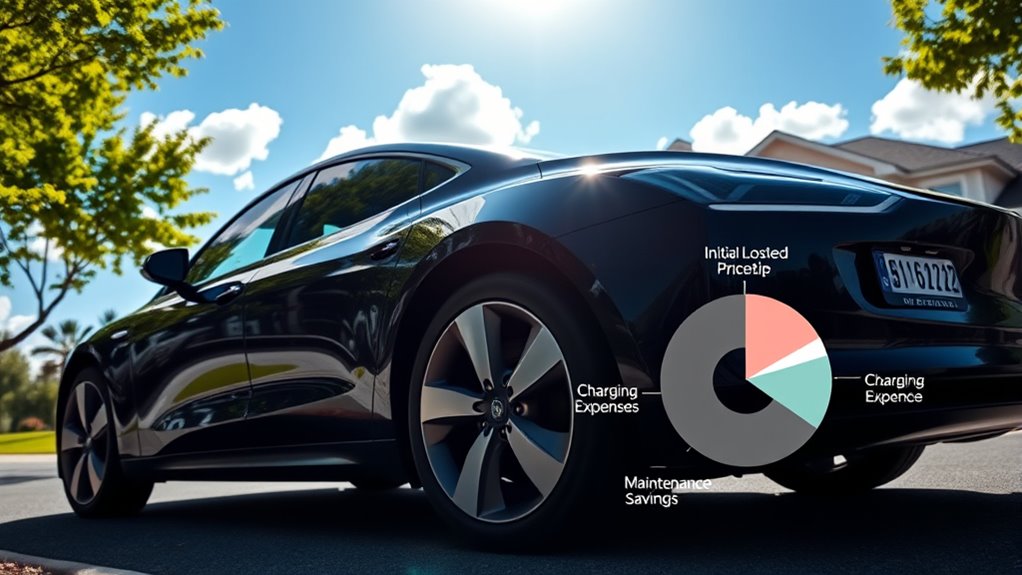
When considering an electric vehicle (EV), the upfront purchase price is a key factor. On average, EVs cost about $5,804 more than comparable internal combustion engine (ICE) vehicles in 2025. However, federal tax credits of up to $7,500 can substantially reduce this gap for eligible buyers, making EVs more affordable. Entry-level battery electric vehicles (BEVs) and ICE vehicles in similar segments often start at similar prices, especially for budget-friendly models. Luxury EVs and premium brands tend to have higher initial costs, which can be a barrier. If you’re open to used EVs, you’ll find lower upfront costs, but you might miss out on newer incentives and the latest technology. Overall, incentives play a essential role in offsetting the initial investment, and European cloud innovation is driving the development of energy-efficient charging infrastructure, which can further reduce long-term ownership costs for EVs. Additionally, the cost of batteries is a major factor influencing EV prices and future savings. Advances in cybersecurity are also critical for protecting the increasingly connected charging networks and vehicle data. Moreover, ongoing research into battery recycling aims to lower material costs and environmental impact.
Maintenance and Service Cost Comparison

Maintenance costs for electric vehicles are generally lower than those for internal combustion engine (ICE) cars, primarily because BEVs have fewer moving parts and require less routine servicing. You’ll spend about $2,232 annually or $0.093 per km on maintenance, mainly for tires, air filters, and brake fluid. In contrast, ICE vehicles cost around $3,696 annually or $0.154 per km due to engine and transmission upkeep. Here’s a quick comparison:
| Vehicle Type | Annual Cost | Cost per km |
|---|---|---|
| BEV | $2,232 | $0.093 |
| ICE | $3,696 | $0.154 |
| PHEV/HEV | $3,288–$3,432 | $0.137–$0.143 |
Over five years, EV maintenance totals about $6,900, versus $11,700 for ICE vehicles. Electric vehicle maintenance tends to be less complex, contributing to these savings. Additionally, the fewer moving parts in EVs reduce the likelihood of mechanical failures, further lowering maintenance costs. Regular servicing procedures can also extend the lifespan of EV components, helping owners save even more over the long term. Proper battery maintenance is essential to ensure optimal performance and longevity of electric vehicles, which can further reduce overall expenses.
Charging, Fuel, and Operating Expenses
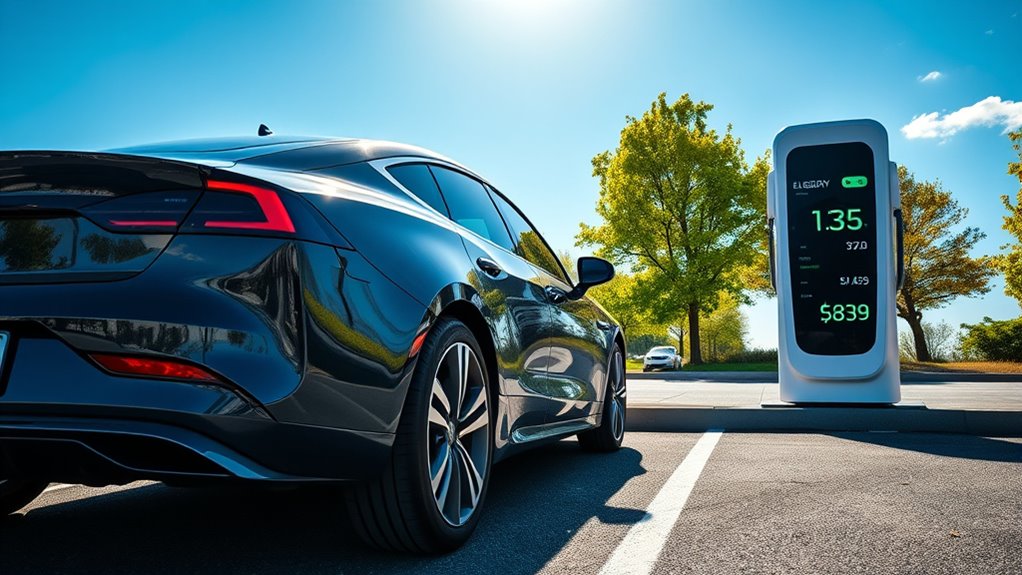
Ever wondered how much it costs to keep your EV charged and running compared to fueling an ICE vehicle? Charging your EV at home typically costs between $0.13 and $0.25 per kWh, translating to annual expenses of $400 to $1,200. Public fast-charging, however, can cost $0.30 to $0.50 per kWh, increasing your yearly costs if you rely heavily on these stations. On average, you’ll spend about $70 a month on charging at home, compared to $160 monthly on gasoline. Using renewables or charging overnight during off-peak hours can lower your expenses further. While fueling an ICE vehicle remains more expensive over time, switching to home charging with efficient energy sources can considerably reduce your operating costs. Trusted businesses and services near you can help identify more cost-effective charging options and energy solutions. Additionally, utilizing smart energy management systems can optimize your energy use and further reduce costs. Incorporating home energy integration strategies, such as solar power and energy storage, can make your EV ownership even more economical, especially in regions with abundant renewable energy resources. Moreover, understanding energy consumption patterns can help you tailor your charging habits to maximize savings.
Insurance, Taxes, and Registration Fees
Insurance premiums for electric vehicles tend to be 15–25% higher than those for comparable ICE cars, mainly because of more expensive parts and specialized repair needs. This higher cost reflects the value of advanced technology, batteries, and the complexity of repairs. In the UK, EV insurance costs about £88 more annually than ICE vehicles. When it comes to taxes and registration fees, costs vary by region. For example:
- Starting April 2025 in the UK, EV drivers pay £195 annually, with luxury cars over £40,000 paying £620.
- Some US states impose a $250 yearly EV registration fee, adding to ownership expenses.
- Road taxes for ICE vehicles generally remain higher, but EV tax benefits are increasing as parity approaches.
- Wave and wind considerations are also influencing regional policies and incentives related to EV ownership.
- Additionally, insurance costs are impacted by the evolving landscape of EV technology and repair requirements.
Hidden Costs and Unexpected Expenses

Owning an electric vehicle often comes with unexpected costs that can catch you off guard. Home charger installation is a prime example, costing between $500 and $700 for a Level 2 charger, with professional setup adding another $1,000 to $2,500. If your electrical panel is outdated, upgrades could cost $2,000 to $4,000. Permits and inspections add $200 to $500, increasing expenses further. Many owners spend an extra $2,300 within the first three years on unforeseen repairs and upgrades. It’s wise to budget an additional $3,000 to $5,000 beyond the purchase price to cover these surprises. Being prepared for these hidden costs helps you avoid financial strain and ensures your EV ownership remains smooth and sustainable. Proper ventilation considerations can also impact long-term maintenance costs and safety. Additionally, electric vehicle maintenance may differ significantly from traditional cars, requiring awareness of potential specialized service expenses.
Frequently Asked Questions
How Do Resale Values of EVS Compare to ICE Vehicles Long-Term?
You’ll find that EV resale values often hold up better than ICE vehicles, especially as demand for used EVs increases. Batteries and tech upgrades make newer models more appealing, boosting their long-term worth. However, factors like battery health and market trends can influence resale prices. Overall, with the growing shift toward electric, your EV is likely to retain value better over time, offering you a smarter investment.
Are There Specific Regions With Better Incentives for EV Ownership?
You’ll find that regions like California, Norway, and parts of Canada shine like beacons for EV incentives. These areas offer generous rebates, tax credits, and charging infrastructure that make EV ownership more accessible and affordable. It’s almost like hitting the jackpot, with savings stacking up fast. If you’re considering an EV, look into local programs—they could turn your investment into a smoother, more rewarding ride.
What Are the Environmental Impacts of EV Battery Recycling Costs?
You’re likely concerned about the environmental impact of EV battery recycling costs. Recycling batteries helps recover valuable materials like lithium, cobalt, and nickel, reducing mining. However, recycling processes can be energy-intensive and costly, which may offset some environmental benefits. Investing in advanced recycling tech can lower costs and emissions over time, making EVs more sustainable. Overall, responsible recycling is essential for minimizing environmental harm and supporting a circular economy in EV manufacturing.
How Does EV Ownership Affect Long-Term Insurance Premiums?
Owning an EV typically increases your long-term insurance premiums by 15–25%, mainly due to higher replacement costs for batteries and advanced tech. You’ll pay more for coverage because repairs are often more expensive and require specialized parts. Over time, these premiums can add up, but shopping around and choosing extensive coverage can help offset some costs. Keep this in mind when budgeting for your EV’s total ownership expenses.
Do Government Policies Change Frequently, Impacting EV Costs?
Government policies do change frequently, impacting EV costs considerably. You might see new incentives, tax credits, or registration fees introduced or revised, which can lower or raise your expenses. Staying informed about local and national policy updates helps you plan better and maximize savings. Be prepared for policy shifts, as they can influence your total ownership costs, especially when subsidies or taxes are adjusted unexpectedly.
Conclusion
Ultimately, understanding the true toll of owning an EV takes time and transparency. By balancing bold benefits against hidden hassles, you can make a smarter, smoother switch. Remember, researching repairs, rebates, and recharging routines reveals real costs and remarkable savings. So, stay savvy, scrutinize specifics, and seize the opportunity to steer your journey toward sustainable, savvy, and satisfying transportation. Your next move could be more mindful, more meaningful, and ultimately more rewarding.