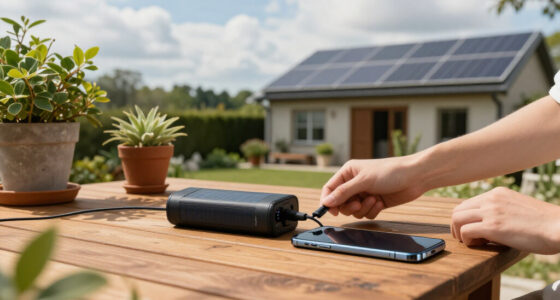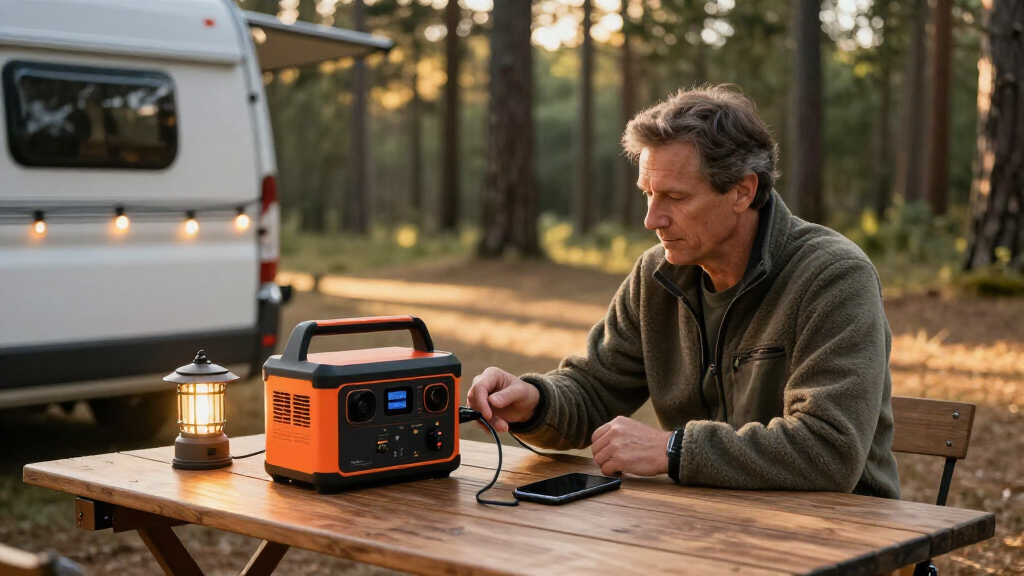
Portable power stations have become the go-to solution for camping trips, emergency backup, and off-grid work, but choosing the right one means balancing capacity, portability, and price. After comparing 15 of the most popular models, the Anker SOLIX C1000 Gen 2 stands out as my best overall pick for its fast recharging and well-rounded feature set. The Jackery Explorer 1000 v2 is a strong alternative if you want lighter weight and a more streamlined design, while budget shoppers should look at the GRECELL 519Wh for solid midrange capacity at a lower cost. The main tradeoffs in this category come down to lithium-ion versus LiFePO4 battery lifespan, inverter wattage versus portability, and paying extra for expandability you may never use. Keep reading for the full breakdown of every model and which buyer each one fits best.

Get backup power and energy gear delivered free — and shop member deals
- Fast, free delivery on millions of items
- Access to Prime Big Deal Days deals on October 6–7
- Prime Video, Amazon Music and more included
Complete the kit


Key Takeaways
- The Anker SOLIX C1000 Gen 2 earned the top spot because it combines fast recharging with LiFePO4 durability at the 1kWh capacity most buyers actually need.
- LiFePO4 battery chemistry was the biggest differentiator in this roundup — models like the BLUETTI AC180 and Anker S2000 rated for 3,000+ cycles clearly outlast standard lithium-ion options like the original Jackery Explorer line.
- Small units under 300Wh (MARBERO M82, ALLWEI 300W, Jackery Explorer 300) only make sense for device charging and short trips; none can run a fridge or microwave meaningfully.
- Expandable systems (Jackery HomePower 1000 Plus v2 and 3600 Plus) reward buyers planning whole-home backup but add cost and weight that casual campers shouldn’t pay for.
- Bundled solar panels rarely matched the value of buying panels separately — only one bundle in this lineup justified its package price.
| Anker SOLIX C1000 Portable Power Station |  | Best Overall | Battery capacity: 1,056Wh | Battery chemistry: LiFePO4 | Continuous output: 1,800W | VIEW LATEST PRICE | See Our Full Breakdown |
| Jackery Explorer 1000 v2 Portable Power Station, 1070Wh, 1500W (Dune White) |  | Best for Lightweight Capacity | Battery capacity: 1,070Wh | Battery chemistry: LFP | Continuous output: 1,500W | VIEW LATEST PRICE | See Our Full Breakdown |
| MARBERO Portable Power Station M82, 88Wh Solar Generator with 120W Surge |  | Best Compact Backup | Battery capacity: 88Wh (24,000mAh) | Output wattage: 80W | Surge power: 120W | VIEW LATEST PRICE | See Our Full Breakdown |
| Anker SOLIX S2000 Portable Power Station, 2,010 Wh, 1,500 W |  | Best for Longer Outages | Battery capacity: 2,010Wh | Battery type: LFP | Continuous output: 1,500W | VIEW LATEST PRICE | See Our Full Breakdown |
| 1000W Portable Power Station with 1024Wh LiFePO4 Battery |  | Best for Straightforward Solar Charging | Battery capacity: 1,024Wh | Battery chemistry: LiFePO4 | Continuous output: 1,000W | VIEW LATEST PRICE | See Our Full Breakdown |
| GRECELL 500W Portable Power Station, 519Wh |  | Best for Flexible Everyday Charging | Capacity: 519Wh | AC output: 500W; two 110V pure sine wave outlets | USB-C: PD, up to 60W | VIEW LATEST PRICE | See Our Full Breakdown |
| Jackery Explorer 1000 v2 Portable Power Station |  | Best for Portable High-Capacity Power | Battery capacity: 1,070Wh | Battery type: LFP | AC output: 1,500W | VIEW LATEST PRICE | See Our Full Breakdown |
| Jackery Explorer 300 Portable Power Station, 292Wh |  | Best Compact Pick | Capacity: 292Wh | Peak output: 600W | Weight: Listed as 7.1–7.5 lb | VIEW LATEST PRICE | See Our Full Breakdown |
| Anker SOLIX C1000 Gen 2 Portable Power Station |  | Best for Fast Backup Recharging | Battery capacity: 1,024Wh | Battery type: LiFePO4 | Output: 2,000W | VIEW LATEST PRICE | See Our Full Breakdown |
| Jackery HomePower 1000 Plus v2 Portable Power Station Bundle with Battery Pack 2000 and 340W Solar Panel |  | Best Expandable Solar Bundle | Battery capacity: 1,024Wh | Expandable capacity: Up to 11kWh | Battery chemistry: LiFePO4 | VIEW LATEST PRICE | See Our Full Breakdown |
| ALLWEI 300W Portable Power Station, 256Wh LiFePO4 Battery |  | Best Budget Entry Point | Capacity: 256Wh | Continuous output: 300W | Peak surge output: 600W | VIEW LATEST PRICE | See Our Full Breakdown |
| Jackery Explorer 300 Portable Power Station with 40W Solar Panel |  | Best Complete Solar Starter Kit | Capacity: 292Wh | Peak surge: 600W | Battery chemistry: LiFePO4 | VIEW LATEST PRICE | See Our Full Breakdown |
| BLUETTI AC180 Portable Power Station, 1152Wh LiFePO4 Battery |  | Best Midsize All-Rounder | Battery capacity: 1152Wh | Battery type: LiFePO4 | AC output: 1800W (2700W boost) | VIEW LATEST PRICE | See Our Full Breakdown |
| Anker SOLIX C2000 Gen 2 Portable Power Station |  | Best Fast-Charging Workhorse | Battery capacity: 2,048Wh (expandable to 4kWh) | Peak output: 4,000W | Battery type: LiFePO4 | VIEW LATEST PRICE | See Our Full Breakdown |
| Jackery HomePower 3600 Plus Power Station |  | Best Premium Home Backup | Capacity: 3584Wh (expandable to 21kWh) | AC output: 3600W (7200W in parallel) | Voltage: Dual voltage (120V & 240V) | VIEW LATEST PRICE | See Our Full Breakdown |
| portable power station | Battery capacity | Weight | Battery type |
|---|---|---|---|
| Anker SOLIX C1000 Portable Pow | 1,056Wh | — | — |
| Jackery Explorer 1000 v2 Porta | 1,070Wh | 23.8 lb | — |
| MARBERO Portable Power Station | 88Wh (24,000mAh) | 3.2 lb | — |
| Anker SOLIX S2000 Portable Pow | 2,010Wh | 35.7 lb | LFP |
| 1000W Portable Power Station w | 1,024Wh | 27.73 lb | — |
| GRECELL 500W Portable Power St | — | — | — |
| Jackery Explorer 1000 v2 Porta | 1,070Wh | 23.8 lb | LFP |
| Jackery Explorer 300 Portable | — | Listed as 7.1–7.5 lb | Lithium-ion |
| Anker SOLIX C1000 Gen 2 Portab | 1,024Wh | 11.3kg | LiFePO4 |
| Jackery HomePower 1000 Plus v2 | 1,024Wh | — | — |
| ALLWEI 300W Portable Power Sta | — | 6.4 lbs | LiFePO4 (LFP) |
| Jackery Explorer 300 Portable | — | 7.5 lbs | — |
| BLUETTI AC180 Portable Power S | 1152Wh | — | LiFePO4 |
| Anker SOLIX C2000 Gen 2 Portab | 2,048Wh (expandable to 4kWh) | 41.7 lbs (18.9 kg) | LiFePO4 |
| Jackery HomePower 3600 Plus Po | — | — | LFP (Ceramic Membrane) |
More Details on Our Top Picks
Anker SOLIX C1000 Portable Power Station
The Anker SOLIX C1000 balances useful appliance output, roughly 1kWh of storage, and a relatively compact build, making it the most versatile choice in this group. Its 1,800W continuous output and 2,400W surge give it more headroom for starting appliances than the Jackery Explorer 1000 v2’s 1,500W continuous rating. Anker’s stated 80% recharge time of 43 minutes also suits people who may need to refill between outages or travel stops. The LiFePO4 battery is rated for 3,000 cycles, and 11 ports offer room for several devices. The tradeoffs are its 15% smaller claim rather than a supplied weight, and fast charging’s dependence on the app and a limited temperature range. Choose it for flexibility; skip it if app-free charging is a priority.
Pros:- 1,800W continuous output with 2,400W surge headroom
- 80% recharge in a stated 43 minutes
- LiFePO4 battery rated for 3,000 charge cycles
- 11 ports and up to 600W solar input
Cons:- UltraFast charging requires the Anker app
- Fast charging is limited to an operating range of 68–122°F
- The supplied data gives no exact weight for judging carrying effort
Best for: Campers and households seeking a roughly 1kWh station with higher appliance output and rapid recharge options.
Not ideal for: Buyers who want fast charging without a smartphone app or who need dependable fast charging outside the stated temperature range.
- Battery capacity:1,056Wh
- Battery chemistry:LiFePO4
- Continuous output:1,800W
- Surge output:2,400W
- Ports:11
- Solar input:Up to 600W
- Recharge time:80% in 43 minutes; full charge in under 1 hour
- Voltage:230V AC
Our verdict“Pick the C1000 for a versatile 1kWh station with strong output and rapid recharging, provided app-dependent charging fits your routine.”
Jackery Explorer 1000 v2 Portable Power Station, 1070Wh, 1500W (Dune White)
At 23.8 pounds, the Jackery Explorer 1000 v2 is the more carryable option among the roughly 1kWh stations here, with a foldable handle that helps on road trips and campsite moves. Its 1,070Wh capacity is slightly above the Anker SOLIX C1000’s 1,056Wh, but its 1,500W continuous output is lower, so the Anker has more room for demanding appliances. Jackery offers three AC outlets, USB-C ports, and app-controlled charging modes, including a quiet overnight setting. The one-hour full-charge mode requires enabling emergency charging in the app; its default 1.7-hour mode is intended to support battery health. Solar charging is restricted to Jackery panels, a significant limit for buyers who already own another brand’s panels. This suits portability and device charging better than maximizing outlet count or compatibility.
Pros:- 23.8-pound weight with foldable handle
- 1,070Wh capacity and 3,000W surge rating
- Two 100W USB-C ports
- Selectable quiet overnight and emergency charging modes
Cons:- Solar charging works only with Jackery solar panels
- One-hour charging requires activation in the app
- 1,500W continuous output is below the Anker SOLIX C1000
Best for: Road trippers and campers who want around 1kWh of capacity in a comparatively light unit with a foldable handle.
Not ideal for: Buyers with non-Jackery solar panels or appliances that need more than 1,500W of continuous output.
- Battery capacity:1,070Wh
- Battery chemistry:LFP
- Continuous output:1,500W
- Surge output:3,000W
- Weight:23.8 lb
- AC outlets:3 pure sine wave outlets
- USB-C:2 ports, 100W PD
- Dimensions:12.9 × 8.8 × 9.7 in
- Full recharge:1 hour with app-enabled emergency charging; 1.7 hours default
Our verdict“Choose the Explorer 1000 v2 when carrying weight matters more than higher continuous output or broad solar-panel compatibility.”
MARBERO Portable Power Station M82, 88Wh Solar Generator with 120W Surge
The MARBERO M82 fills a different job from the larger stations: at 3.2 pounds and about DSLR size, it is easy to keep in a vehicle or carry on a short outing. Its 88Wh battery and 80W output can top up small electronics and run modest loads, but they are not a substitute for the Anker SOLIX C1000 or Jackery Explorer 1000 v2 when you need to power household appliances for hours. Eight output ports, including USB-C PD and a car socket, help it serve several small devices, while the built-in LED with SOS mode adds practical emergency utility. The main compromise is capacity: 88Wh runs out quickly under sustained use. Solar charging also requires a separately purchased MARBERO 30W or 60W panel, limiting flexibility compared with the larger stations’ listed solar inputs.
Pros:- Compact 3.2-pound body for easy transport
- Eight ports, including USB-C PD and car DC
- Built-in LED with SOS mode and up to 68 hours listed runtime
- BMS includes overload, overcharge, and short-circuit protection
Cons:- 88Wh capacity limits runtime and appliance choice
- 80W output is far below the larger Anker and Jackery stations
- Solar charging requires a compatible MARBERO panel sold separately
Best for: Drivers, day campers, and emergency-kit builders who need a lightweight source for phones, lights, and other small electronics.
Not ideal for: People who need to run refrigerators, high-wattage appliances, or multiple devices through a long outage.
- Battery capacity:88Wh (24,000mAh)
- Output wattage:80W
- Surge power:120W
- Output ports:8
- Weight:3.2 lb
- Dimensions:6.5 × 4.6 × 3.1 in
- Charging time:0–80% in 2 hours
- LED runtime:37–68 hours depending on brightness
Our verdict“Get the M82 for portable power for small electronics and emergency lighting, not as a household backup station.”
Anker SOLIX S2000 Portable Power Station, 2,010 Wh, 1,500 W
The SOLIX S2000’s 2,010Wh battery gives it nearly twice the stored energy of the Anker SOLIX C1000, so it is better suited to keeping lower-draw essentials going for longer between charges. Its 1,500W continuous output is lower than the C1000’s 1,800W, though, so extra capacity does not mean more headroom for demanding appliances. Eight outlets and a UPS switchover under 10ms make the S2000 appealing for a home setup with devices that should stay powered through a brief interruption. It supports up to 400W solar input and several charging methods. At 35.7 pounds, it takes more effort to move than the Jackery Explorer 1000 v2, and it lacks a 12V DC port, narrowing its usefulness for some vehicle gear. Refrigerator runtime will depend on the appliance and conditions.
Pros:- 2,010Wh capacity for longer runtime than the C1000
- UPS switchover under 10ms
- Eight outlets
- Supports up to 400W solar input and several recharge methods
Cons:- 35.7-pound weight makes frequent carrying less convenient
- No 12V DC port
- 1,500W continuous output is lower than the Anker SOLIX C1000
Best for: Households prioritizing longer backup runtime and fast UPS switchover for compatible electronics.
Not ideal for: Campers who frequently move their station or buyers whose 12V DC devices need a dedicated output port.
- Battery capacity:2,010Wh
- Battery type:LFP
- Continuous output:1,500W
- Peak output:3,000W
- Solar input:Up to 400W
- Outlets:8
- UPS switchover:Under 10ms
- Weight:35.7 lb
- DC port:No 12V DC port
Our verdict“Choose the S2000 when stored energy and UPS function matter more than lighter carrying weight or higher continuous output.”
1000W Portable Power Station with 1024Wh LiFePO4 Battery
This 1,024Wh station is a practical middle ground for buyers who want LiFePO4 storage and basic solar capability without the higher output of the Anker SOLIX C1000. Its 1,000W continuous rating is enough for many moderate loads, while two AC outlets, USB-A ports, and a 60W USB-C PD port can serve up to five devices at once. The listed 3,000-plus cycle life to 80% capacity and six-layer battery management system support a long-term backup role. Compared with the Jackery Explorer 1000 v2, it has lower continuous output and no supplied weight advantage; at 27.73 pounds, it is a substantial carry. Solar input tops out at 300W and the panel is optional, so off-grid charging needs extra planning. Its strength is a simple, well-specified power mix rather than standout portability or speed.
Pros:- 1,024Wh LiFePO4 battery rated for 3,000-plus cycles to 80% capacity
- Two AC outlets plus USB-C PD and USB-A charging
- Solar input supported up to 300W
- Six-layer battery management protection
Cons:- 1,000W continuous output is lower than the C1000 and Explorer 1000 v2
- Solar panel is optional
- 27.73-pound weight may be burdensome for frequent transport
Best for: Campers and homeowners who need about 1kWh for moderate loads and plan to add a compatible solar panel.
Not ideal for: Buyers who need to start high-draw appliances, carry a station frequently, or expect a solar panel in the package.
- Battery capacity:1,024Wh
- Battery chemistry:LiFePO4
- Continuous output:1,000W
- AC outlets:2 × 110V
- USB-C:1 × 60W PD
- USB-A:2 ports
- Maximum solar input:300W
- Cycle life:3,000+ cycles to 80% capacity
- Weight:27.73 lb
Our verdict“Pick this model for moderate loads and a long cycle-life battery if its 1,000W output and optional solar panel suit your setup.”
GRECELL 500W Portable Power Station, 519Wh
The GRECELL 500W fits buyers who want several kinds of charging in one mid-capacity unit. Its 519Wh battery and 500W AC limit can handle phones, laptops, lights, and other modest loads, while pure sine wave AC output suits sensitive electronics. Three USB-A ports, USB-C, DC, car, and wireless outputs make it easier to charge a mix of gear at once than the simpler Jackery Explorer 300, though the GRECELL is heavier to carry by virtue of its larger capacity. Wall, car, and compatible solar recharging give it useful flexibility for trips away from an outlet. The tradeoff is modest appliance support: anything above 500W is out, and the solar panel is separate. Its battery also needs a recharge at least every three months.
Pros:- Pure sine wave AC output for sensitive electronics
- Wide mix of AC, USB-A, USB-C, DC, car, and wireless charging
- Can recharge from a wall outlet, car charger, or compatible solar panel
- Supports up to 10 devices at once
Cons:- 500W output rules out higher-draw appliances
- Compatible solar panel is sold separately
- Needs periodic recharging at least every three months
Best for: Campers and road trippers who need to charge several phones, laptops, lights, and small devices from varied ports.
Not ideal for: Buyers who need to run appliances above 500W or want a solar panel included.
- Capacity:519Wh
- AC output:500W; two 110V pure sine wave outlets
- USB-C:PD, up to 60W
- USB-A:Three QC3.0 ports, up to 18W each
- Other outputs:Two 12V/5A DC ports, 12V/10A car port, 10W wireless charging
- Maximum devices:10 simultaneously
- Recharge methods:Wall outlet, car charger, compatible 100W or 200W solar panel
- Wall recharge time:6–7 hours
Our verdict“Choose the GRECELL for varied device charging and flexible recharging, provided your loads stay below 500W.”
Jackery Explorer 1000 v2 Portable Power Station
The Jackery Explorer 1000 v2 balances a substantial 1,070Wh battery with a 23.8-pound body and foldable handle, making it a more manageable carry than many higher-capacity home backup units. Its 1,500W output covers a broader range of appliances than the GRECELL 500W, while the LFP battery is rated to retain over 70% capacity after 4,000 cycles. App controls add quiet and energy efficiency charging modes; quiet charging is listed at 30 dB. The standard charge takes 1.7 hours, and the one-hour option requires emergency charging in the app. That flexibility comes with a solar restriction: it works with Jackery panels only, which are sold separately. Compared with the bundle-style Jackery HomePower 1000 Plus v2, this model is a simpler portable power choice without the included solar panel or expansion battery.
Pros:- 1,070Wh capacity and 1,500W AC output cover more loads than compact stations
- LFP battery rated for over 70% capacity after 4,000 cycles
- Foldable handle and 23.8-pound weight aid transport
- App includes quiet and energy efficiency charging modes
Cons:- Solar panels are sold separately and compatibility is limited to Jackery panels
- One-hour AC recharge requires enabling emergency charging in the app
- At 23.8 pounds, it is less convenient for frequent long-distance carrying
Best for: Campers and van travelers who want roughly 1kWh of capacity and enough output for mid-size appliances in a carryable unit.
Not ideal for: Buyers seeking broad solar panel compatibility, included solar gear, or expandable capacity.
- Battery capacity:1,070Wh
- Battery type:LFP
- AC output:1,500W
- Surge peak:3,000W
- Weight:23.8 lb
- Ports:Three AC, two USB-C, one USB-A, one DC car port
- USB-C charging:PD, 100W
- AC charging time:1 hour with emergency charging enabled; 1.7 hours by default
- Battery lifespan:Over 70% capacity after 4,000 charge cycles
Our verdict“Pick the Explorer 1000 v2 for portable 1kWh-class power if Jackery-only solar compatibility works for your setup.”
Jackery Explorer 300 Portable Power Station, 292Wh
At about 7.5 pounds, the Jackery Explorer 300 is the easy choice here when portability matters more than running appliances. Its 292Wh battery and 300W rated output suit phones, cameras, laptops, and small accessories; the two AC outlets and USB ports give it more connection options than a basic battery pack. The GRECELL 500W offers nearly twice the capacity and a higher output ceiling, so it is better for longer trips or more demanding loads. The Explorer 300 instead keeps weight down for day hikes, short camps, and car travel. Solar charging is supported, but the panel is extra, and the listed weight varies between 7.1 and 7.5 pounds. Its lithium-ion battery also differs from the LFP chemistry in larger alternatives.
Pros:- About 7.5 pounds with an integrated handle for easier carrying
- Two AC outlets plus USB-C, USB-A, and car outputs
- Solar charging support for compatible Jackery panels
- 600W peak output provides brief surge headroom
Cons:- 292Wh capacity and 300W rated output limit runtime and appliance choices
- Solar panel is sold separately
- Product data lists two different weights
Best for: Solo campers and travelers who need a light station for phones, cameras, laptops, and other low-wattage gear.
Not ideal for: Buyers running larger appliances or needing enough stored energy for extended use away from charging.
- Capacity:292Wh
- Peak output:600W
- Weight:Listed as 7.1–7.5 lb
- Outlets:Two AC outlets
- Other ports:One 100W USB-C PD, two USB-A, one 120W car port
- Battery type:Lithium-ion
- AC charge time:4 hours
- Solar charging:About 80% in 2.8 hours with a 100W panel; panel not included
Our verdict“Choose the Explorer 300 when light carry and small-device charging matter more than high capacity or appliance support.”
Anker SOLIX C1000 Gen 2 Portable Power Station
The Anker SOLIX C1000 Gen 2 is a strong fit when a portable station needs to be ready again quickly. Its 1,024Wh LiFePO4 battery supports 2,000W output, and app-enabled AC charging is listed at 49 minutes; solar input reaches 600W with a stated 1.8-hour recharge. That charging pace sets it apart from the Jackery Explorer 1000 v2, whose default charge time is 1.7 hours, while its under-10ms UPS switchover gives it a useful role for backup-sensitive equipment. The unit weighs 11.3kg, so it is portable for car trips and room-to-room moves, though not as light as a compact station like the Explorer 300. The data conflicts on whether it has nine outlets or ten ports, and the 600W solar input caps charging speed with larger arrays.
Pros:- App-enabled AC recharge listed at 49 minutes
- Under-10ms UPS switchover for backup use
- 2,000W output and 1,024Wh capacity support a broad range of devices
- LiFePO4 battery rated for at least 80% capacity after 4,000 cycles
Cons:- 600W maximum solar input limits charging speed with larger solar arrays
- Product information conflicts on nine outlets versus ten total ports
- At 11.3kg, it is heavier than compact stations for frequent carrying
Best for: Home users and RV travelers who value rapid recharging and automatic backup for essential electronics.
Not ideal for: Buyers who need a very light carry or want certainty about the exact outlet and port count before purchase.
- Battery capacity:1,024Wh
- Battery type:LiFePO4
- Output:2,000W
- Peak output:3,000W
- AC recharge:49 minutes at 1,600W
- Solar input:600W maximum, 60V maximum
- UPS switchover:Under 10ms
- Weight:11.3kg
- Battery cycle life:At least 80% capacity after 4,000 cycles
Our verdict“Pick the SOLIX C1000 Gen 2 for fast recharge and UPS backup if its port-count ambiguity is acceptable.”
Jackery HomePower 1000 Plus v2 Portable Power Station Bundle with Battery Pack 2000 and 340W Solar Panel
This Jackery HomePower 1000 Plus v2 bundle makes the most sense for buyers building a backup setup from a single purchase: it includes a 340W solar panel and Battery Pack 2000 alongside a 1,024Wh LiFePO4 station. Its expandable capacity up to 11kWh can support longer outages when additional packs are added, a flexibility the standalone Anker SOLIX C1000 Gen 2 does not offer in the listed specs. The 1,800W output and 3,600W surge peak cover many everyday appliances, while 10ms UPS switchover and two independently managed AC circuits add control for home use. At 23.8 pounds, it is portable for a station with this bundle capacity, though less convenient than the 11.3kg Anker for moving around. Expansion beyond the included pack requires separately purchased batteries, and Emergency Charging Mode depends on the app.
Pros:- Includes a 340W solar panel and Battery Pack 2000
- Expandable capacity up to 11kWh with additional battery packs
- 10ms UPS switchover and two independently managed AC circuits
- LiFePO4 battery rated for 6,000 cycles to at least 70% capacity
Cons:- Further capacity expansion requires separately purchased battery packs
- Emergency Charging Mode requires the Jackery app
- 23.8-pound station is less convenient to carry than the Anker SOLIX C1000 Gen 2
Best for: Households preparing for longer outages who want solar included and the option to add capacity over time.
Not ideal for: Buyers prioritizing the lightest 1kWh station or unwilling to use an app for emergency charging features.
- Battery capacity:1,024Wh
- Expandable capacity:Up to 11kWh
- Battery chemistry:LiFePO4
- AC output:1,800W
- Surge peak:3,600W
- Included solar panel:340W
- Included battery pack:Battery Pack 2000
- Wall recharge time:1.25 hours
- UPS switchover:10ms
Our verdict“Choose this bundle for a solar-equipped backup system that can grow, if its weight and app-dependent charging mode suit your setup.”
ALLWEI 300W Portable Power Station, 256Wh LiFePO4 Battery
Capacity-for-the-dollar is where this unit earns its spot, pairing a 256Wh LiFePO4 battery with a port selection that punches above its size. The 3000-cycle battery chemistry matters more here than it does on pricier units, because budget buyers tend to keep a station for years rather than upgrade — this one won’t degrade into a paperweight. Compared with the Jackery Explorer 300, the ALLWEI gives up some capacity and a bundled solar panel, but it counters with dual AC+solar charging that cuts recharge time to roughly 2–2.5 hours. The tradeoff is real, though: 300W continuous output means no kettles, hair dryers, or power tools. It’s a phone-and-lights station, not an appliance station, and buyers should accept that limit up front.
Pros:- LiFePO4 battery rated for 3000 charge-discharge cycles
- Six output ports allow simultaneous charging of multiple devices
- Four recharging paths including dual AC+solar for faster top-ups
- Built-in LED light with SOS mode adds emergency utility
- Genuinely portable at 6.4 lbs
Cons:- Solar panel sold separately, unlike the Jackery Explorer 300 bundle
- 300W output cannot handle larger appliances
- Only one AC outlet limits flexibility
Best for: Campers and emergency-prep beginners who want long-lived battery chemistry and multi-device charging without a big spend
Not ideal for: Anyone hoping to run heating appliances, blenders, or worksite tools — the 300W ceiling rules them out
- Capacity:256Wh
- Continuous output:300W
- Peak surge output:600W
- Battery type:LiFePO4 (LFP)
- Output ports:6 (1 AC, 2 DC5521, 1 car port, 1 USB-A 18W, 1 USB-C PD 60W)
- AC charging time:3.5–4 hours
- Weight:6.4 lbs
- Warranty:5 years
Our verdict“A smart first power station for light-duty camping and outage prep, as long as you accept the 300W ceiling.”
Jackery Explorer 300 Portable Power Station with 40W Solar Panel
This bundle stands out for one reason the ALLWEI 300W can’t match: everything you need for off-grid charging ships in one purchase. The 40W solar panel is included, which makes this the lowest-friction entry into solar generators on this list. Capacity is a modest bump to 292Wh, but the battery is rated for over 4,000 cycles — a longevity claim that beats the ALLWEI’s 3,000 and suggests a decade of weekend use. The honest tradeoff is patience: that 40W panel needs about 7.5 hours of good sun to reach 80%, so this is a trickle-charging setup rather than a fast-recharge solution. Two AC outlets (versus the ALLWEI’s one) add welcome flexibility for a campsite.
Pros:- Solar panel included, so no compatibility guesswork
- LiFePO4 battery rated for over 4,000 cycles to 70% capacity
- Two AC outlets plus a 100W USB-C PD port for modern laptops
- Lightweight at 7.5 lbs with an integrated carry handle
Cons:- Included 40W panel takes roughly 7.5 hours to reach 80% charge
- Station and panel may ship separately, complicating gifting or returns
- 292Wh capacity runs out quickly under multi-device loads
Best for: First-time solar buyers who want a matched station-and-panel kit for weekend camping without researching compatibility
Not ideal for: Anyone needing quick turnarounds between uses — the small panel charges slowly, and 300W output rules out appliances
- Capacity:292Wh
- Peak surge:600W
- Battery chemistry:LiFePO4
- Charge cycles:Over 4,000 cycles to 70% capacity
- Ports:2 AC, 1 USB-C 100W PD, 2 USB-A, 1 car port
- Included solar panel:40W
- Solar charging time:Approximately 7.5 hours to 80%
- Weight:7.5 lbs
Our verdict“The easiest one-box entry into solar power for casual campers who value convenience over charging speed.”
BLUETTI AC180 Portable Power Station, 1152Wh LiFePO4 Battery
This model makes the most sense for buyers who’ve outgrown 300W-class units but can’t justify a home-backup giant like the Jackery HomePower 3600 Plus. At 1152Wh with 1800W output — and a boost mode reaching 2700W — it crosses the threshold where real appliances become viable: microwaves, coffee makers, even most hair dryers. The 20ms UPS response time is the standout differentiator at this capacity, letting it double as an un interruptible power supply for a desktop PC or home network during outages. The 1440W AC input means wall recharges happen in under an hour, far swifter than the smaller ALLWEI or Jackery Explorer 300. The catch: boost mode lives behind the BLUETTI app, which will annoy buyers who dislike mandatory app setups, and solar top-ups still take around three hours even at the full 500W input.
Pros:- 1800W output with 2700W boost mode handles most kitchen appliances
- 20ms UPS switchover protects computers and networking gear
- 1440W AC input enables very fast wall recharging
- Eight outlets plus all charging cables included with a 5-year warranty
Cons:- Boost mode requires using the BLUETTI app
- Solar charging takes 2.8–3.3 hours even at maximum 500W input
- Heavier and pricier than 300W-class alternatives
Best for: Suburban homeowners and van-lifers who need appliance-level power and UPS backup without a whole-home system
Not ideal for: Households trying to run heating or large HVAC equipment through extended outages — the capacity isn’t sized for that
- Battery capacity:1152Wh
- Battery type:LiFePO4
- AC output:1800W (2700W boost)
- Outlets:8
- Maximum solar input:500W
- AC charging input:1440W
- UPS response time:20 ms
- Warranty:5 years
Our verdict“The sweet-spot choice for buyers who need genuine appliance power and UPS functionality in a still-portable package.”
Anker SOLIX C2000 Gen 2 Portable Power Station
Where the BLUETTI AC180 balances capacity and portability, the C2000 Gen 2 goes all-in on speed and raw output. A full recharge in 58 minutes via combined AC and solar is exceptional at 2,048Wh — roughly triple the capacity of the AC180 charged in a comparable window. With 2,400W rated and 4,000W peak output, it can start and run most window and RV air conditioners, which is the dividing line between “big power bank” and “genuine off-grid power source.” The 800W alternator input is a thoughtful road-trip addition, fully charging from a vehicle in about three hours. Buyers should read the expansion pitch carefully, though: the headline 4kWh figure requires a separate expansion battery, so budget accordingly rather than assuming the base unit covers it.
Pros:- 58-minute full recharge with combined AC and solar input
- 4,000W peak output runs most window and RV air conditioners
- Six recharging methods including 800W alternator charging
- Capacity expandable to 4kWh for longer trips
Cons:- Reaching 4kWh requires purchasing a separate expansion battery
- At 41.7 lbs it demands two-hand lifting despite the compact frame
- More capacity and output than casual campers will ever use
Best for: RV owners and campers who need air-conditioner-level output and can’t tolerate long recharge windows
Not ideal for: Minimalists and day-trippers — at 41.7 lbs and with capacity most weekend users will never touch, it’s overkill
- Battery capacity:2,048Wh (expandable to 4kWh)
- Peak output:4,000W
- Battery type:LiFePO4
- Recharge time:58 minutes with AC and solar
- Alternator charging:800W; full charge in 3 hours
- Weight:41.7 lbs (18.9 kg)
- Charging methods:6
Our verdict“The pick for buyers whose priority is charging speed and air-conditioner capability in a still-movable frame.”
Jackery HomePower 3600 Plus Power Station
This is the roundup’s heavyweight, and it earns that position through capability no smaller unit can approach. With 3584Wh of capacity and 3600W of output (7200W in parallel), it runs pumps, heaters, and dryers — loads that would trip the Anker SOLIX C2000 Gen 2 instantly and that the BLUETTI AC180 couldn’t dream of. The dual-voltage 120V/240V support matters for well pumps and 240V appliances, a spec none of the other picks offer. The luggage-style wheels and telescopic handle are genuinely practical rather than marketing gloss, taming what is still a serious piece of equipment. Two honest caveats: the upfront cost is substantial, and a household aiming for off-grid living beyond two weeks will need additional units or expansion batteries. For outage insurance rather than full energy independence, though, it’s the strongest answer here.
Pros:- 3600W output (7200W in parallel) runs heavy appliances like heaters and dryers
- Dual 120V/240V voltage supports well pumps and 240V equipment
- 2-hour hybrid full recharge is remarkable at this capacity
- Wheels and telescopic handle make 3584Wh genuinely movable
Cons:- High initial cost typical of large-capacity stations
- Extended off-grid household use beyond two weeks requires multiple units
- Far more weight and bulk than any camping-oriented pick on this list
Best for: Homeowners in outage-prone regions who need to run well pumps, heaters, and large appliances through multi-day blackouts
Not ideal for: Campers and casual users — the size, cost, and capacity are wasted on weekend trips, even with the wheels
- Capacity:3584Wh (expandable to 21kWh)
- AC output:3600W (7200W in parallel)
- Voltage:Dual voltage (120V & 240V)
- Battery type:LFP (Ceramic Membrane)
- Charge cycles:6,000 cycles
- Recharge time:2 hours (hybrid AC+DC); 4 hours (solar)
- Lifespan:10 years
Our verdict“Whole-house-grade backup power for serious outage preparedness, priced and sized for homeowners rather than campers.”
How We Picked
I evaluated each portable power station against five buyer-relevant criteria: usable capacity (watt-hours and how much of that you can actually draw), inverter output (continuous and surge watts relative to common appliances), battery chemistry and cycle life (LiFePO4 models rated for thousands of cycles scored higher than standard lithium-ion), recharge speed and input options (AC, solar, and car charging), and portability (weight and handle design relative to capacity). I also weighed versatility — port selection, expandability, and app control — against price positioning within the lineup.
The ranking logic favors models that deliver the right balance for their intended buyer rather than raw specs alone. A 2kWh station that weighs 60 pounds isn’t “better” than a 300Wh unit for a hiker, so each pick earned its position by fit within its category: everyday midrange use, budget entry-level, premium expandable backup, and ultra-portable duty. Where two models overlapped directly, the one with longer battery chemistry life, faster recharging, or better port coverage won the higher slot.
| portable power station | Battery type |
|---|---|
| Anker SOLIX C1000 Portable Pow | — |
| Jackery Explorer 1000 v2 Porta | — |
| MARBERO Portable Power Station | — |
| Anker SOLIX S2000 Portable Pow | LFP |
| 1000W Portable Power Station w | — |
| GRECELL 500W Portable Power St | — |
| Jackery Explorer 1000 v2 Porta | LFP |
| Jackery Explorer 300 Portable | Lithium-ion |
| Anker SOLIX C1000 Gen 2 Portab | LiFePO4 |
| Jackery HomePower 1000 Plus v2 | — |
| ALLWEI 300W Portable Power Sta | LiFePO4 (LFP) |
| Jackery Explorer 300 Portable | — |
| BLUETTI AC180 Portable Power S | LiFePO4 |
| Anker SOLIX C2000 Gen 2 Portab | LiFePO4 |
| Jackery HomePower 3600 Plus Po | LFP (Ceramic Membrane) |
Factors to Consider When Choosing Portable Power Stations
Before settling on a specific model, it helps to understand the bigger forces at play in this category — the mistakes that catch buyers off guard and the specs that matter more than marketing suggests.Match Watt-Hours to What You Actually Run
The most common mistake in this category is buying capacity based on a headline number rather than a real load list. A 1,000Wh station sounds generous until you realize a mini fridge draws 600Wh per day and an electric kettle can pull 1,200W on its own. Before comparing models, write down the two or three devices you genuinely need to run and how long — that math determines whether a 300Wh unit suffices or whether you need 2kWh and expansion batteries. Buyers who skip this step routinely overspend on capacity they never touch, or worse, discover mid-outage that their station can’t start a compressor fridge. Also remember that usable capacity is typically 85–90% of the rated figure, and cold weather cuts it further.
Battery Chemistry Determines Lifespan, Not Just Safety
LiFePO4 (lithium iron phosphate) batteries are rated for roughly 3,000–4,000 charge cycles, while older NMC lithium-ion chemistries often spec out at 500–800 cycles. That difference compounds over years of use — a LiFePO4 station used weekly could last a decade, while an NMC unit may need replacement in three or four years. The chemistry also affects cold-weather performance and thermal stability. My advice: for occasional camping, either chemistry works fine; for regular use or emergency standby, LiFePO4 is worth a premium because the battery is the entire value of the product. Don’t be swayed purely by lighter weight in NMC models unless portability is your defining requirement.
Surge Watts and Inverter Headroom Matter More Than Peak Numbers
Appliances with motors — refrigerators, power tools, air compressors — draw two to three times their running wattage at startup. A station rated at 1,000W continuous with weak surge handling will trip offline the moment a fridge compressor kicks in, even though the math looks fine on paper. Look for surge ratings of at least 2x continuous output, and check whether the unit has a UPS-style transfer function if you plan to keep devices plugged in during outages. Pure sine wave inverters are another quiet differentiator: they’re safer for sensitive electronics like CPAP machines and laptops, and most — but not all — modern stations now include them. Verify before buying if you run medical devices.
Recharge Speed Shapes Real-World Usefulness
A station that takes ten hours to refill becomes a bottleneck during extended outages or back-to-back camping trips. Modern midrange models recharge in one to two hours via AC, and that gap widens dramatically when you rely on solar, where input limits of 100–500W determine whether a full charge takes one sunny day or three. If you expect to recharge primarily from panels, solar input ceiling should weigh as heavily as capacity in your decision. Car charging is convenient but slow — treat it as a trickle option, not a primary method. Pass-through charging (running devices while the station recharges) is also worth confirming if you plan to pair the unit with panels during daylight use.
Expandability: Pay Now or Regret Later
Some stations accept add-on battery packs that double or triple capacity, while others are sealed at their original size. Expandable systems cost more upfront, but they let you start small and grow into whole-home backup without buying a second complete station with its own inverter and ports. The catch: expansion batteries only work with their parent unit, so you’re locking into one brand’s ecosystem — check the roadmap for that product line before committing. Buyers who know their needs will stay modest should skip expandability entirely and put the savings toward capacity or faster charging. Buyers hedging toward future home backup should treat expandability as cheap insurance.
Weight, Ports, and the Details That Annoy You Daily
Every station in this roundup is technically “portable,” but the range runs from under 7 pounds to well over 60. If you’ll carry the unit from car to campsite regularly, weight and handle ergonomics matter more than an extra 200Wh you won’t use. Port selection is the other daily-friction point: USB-C Power Delivery has largely replaced AC adapters for laptops, so a station with 100W USB-C output can replace a wall charger entirely. Also check the display quality — some units show only a vague battery percentage while others report real-time input and output wattage, which makes a genuine difference when you’re rationing power during an outage. Wireless charging pads and built-in lights are nice but shouldn’t drive a decision.
Frequently Asked Questions
What size portable power station do I need for camping versus home backup?
For typical car camping — charging phones, a laptop, a portable fridge, and running lights — a station in the 300–1,000Wh range covers most trips, with the smaller end suiting weekenders and the larger end suiting multi-day outings or fridge owners. Home backup is a different calculation: running just a fridge, phone chargers, and a CPAP for a day typically consumes 1,500–2,000Wh, which is why models like the Anker S2000 or expandable Jackery systems exist. The mistake most people make is buying one station for both jobs and ending up with something too heavy to camp with and too small to matter in an outage. If you’re serious about both use cases, a small unit for travel plus a large expandable unit that stays home usually works better than one compromise purchase.
Is LiFePO4 really worth choosing over standard lithium-ion?
In most cases, yes, and the reason is cycle life rather than daily performance. A LiFePO4 cell rated for 3,000+ cycles can be charged and emptied weekly for five to ten years before degrading to 80% capacity, while a lithium-ion unit rated at 500–800 cycles may hit that same degradation within two or three years of regular use. For a device you’ll use occasionally, the chemistry difference barely matters over a typical ownership period. But for emergency standby — where the station sits plugged in and cycles continuously — or for frequent campers, LiFePO4 effectively triples the product’s lifespan. LiFePO4 is also more thermally stable, though it is slightly heavier per watt-hour than NMC.
Can a portable power station run a refrigerator during a power outage?
Usually yes, but you need to check two numbers. First, the inverter’s surge rating: refrigerator compressors draw a startup spike of two to three times their running wattage, so a fridge that runs at 150W may briefly demand 400–600W — a station with weak surge handling will shut off even though the math looks fine. Second, the capacity: an efficient modern fridge consumes roughly 500–1,000Wh per day, meaning a 1,000Wh station buys you one to two days, while a 2,000Wh model with solar panels can stretch indefinitely in good sun. Chest freezers are hungrier and less forgiving. If fridge backup is your main goal, prioritize surge rating and solar input over raw port numbers.
Are bundled solar panel kits a good deal?
Sometimes, but bundles deserve more skepticism than they usually get. Manufacturers often pair stations with modest panels — 40W to 100W units that take days to meaningfully recharge a 1kWh battery — because the bundle price looks attractive while the panel is nearly decorative at that scale. For a 1,000Wh station, you realistically want 200W of solar input minimum, and buying a quality third-party panel separately often gets you better wattage per dollar. Where bundles do make sense is when the included panel matches the station’s solar input ceiling and the package discount is real. In this roundup, only one bundle earned its place on value grounds; the others made more sense as station-only purchases paired with a separately chosen panel.
How long can a portable power station hold a charge while in storage?
Expect a well-maintained station to retain most of its charge for three to six months, though self-discharge and the unit’s standby electronics will slowly drain it regardless of chemistry. The bigger long-term concern is battery health when stored empty: lithium cells degrade fastest at 0% charge, so the standard advice is to store stations at 50–80% charge in a cool, dry place. If you’re keeping one purely for emergency backup, set a quarterly reminder to top it up — some models even have a storage mode that holds the battery at an ideal level. Failing to do this is the single most common reason emergency stations are dead when the outage finally arrives.
Conclusion
After comparing all 15 models, the right choice depends less on specs and more on how you’ll actually use the station. For most buyers, the Anker SOLIX C1000 Gen 2 is my best overall pick — it hits the 1kWh sweet spot, recharges quickly, and its LiFePO4 chemistry means it will still be healthy years from now. If budget leads your decision, the GRECELL 519Wh delivers dependable midrange capacity without the premium price tag, and the MARBERO M82 covers light-duty device charging for occasional users.
On the premium end, the Jackery HomePower 3600 Plus is the clear choice for whole-home backup ambitions, with the HomePower 1000 Plus v2 bundle offering a smarter entry point into that expandable ecosystem. Beginners and casual campers are best served by the Jackery Explorer 300 — simple, light, and forgiving. For specific needs: the BLUETTI AC180 suits high-wattage tools and appliances, the Anker S2000 handles multi-day outages, and the ALLWEI 300W works as a grab-and-go emergency kit. Whatever you choose, size the station to your real load list rather than the biggest number you can afford — that’s the difference between a purchase you forget about and one you rely on for years.
Fall Picks
fall essentials
As an affiliate, we earn on qualifying purchases.