Over the last decade, electric cars have become more practical and user-friendly. In 2015, they had limited range and sparse charging stations, making long trips difficult. By 2025, you’ll find EVs with over 300 miles per charge, rapid charging, and widespread infrastructure. Better batteries and smarter charging tech mean less downtime and more convenience. If you’d like to see how these advances transformed EVs, there’s plenty more to learn.
Key Takeaways
- Battery energy density and lifespan have significantly improved, enabling longer ranges and quicker charging times.
- EVs now routinely offer over 300 miles per charge, reducing range anxiety and supporting long-distance travel.
- Charging infrastructure has expanded massively, with widespread fast chargers and home stations enhancing convenience.
- User experience has improved through smart charging technology, reducing charging times and increasing accessibility.
- Electric vehicles have transitioned from niche options to mainstream, reliable, and affordable transportation choices.

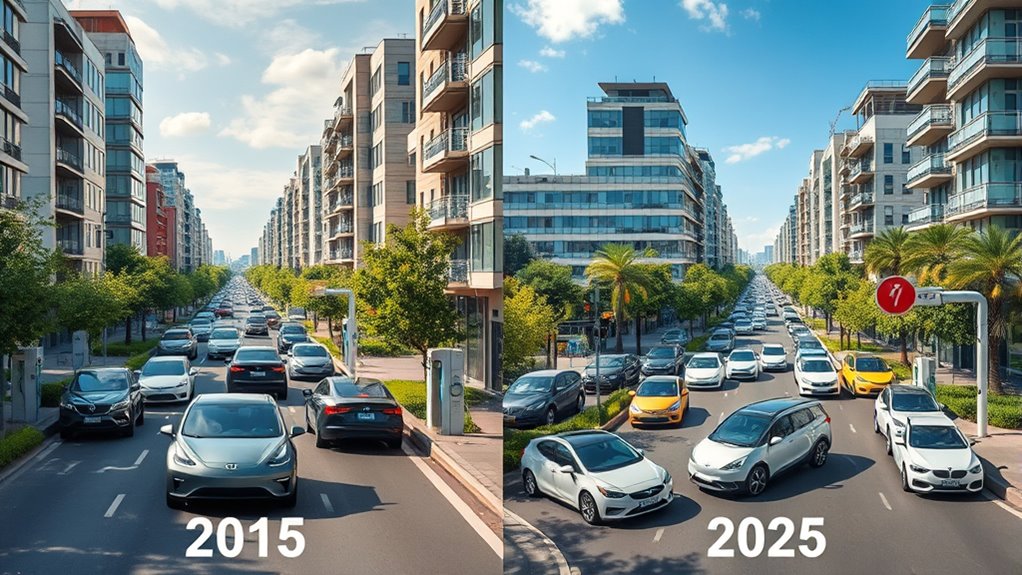
Over the past decade, electric cars have transformed from niche innovations into mainstream alternatives to traditional vehicles. When you look back to 2015, EVs were still considered cutting-edge, often limited by battery technology and sparse charging infrastructure. Back then, batteries had lower energy densities, which meant shorter driving ranges and longer charging times. You might have hesitated to buy one because you worried about running out of juice or finding a charging station. The charging infrastructure was also underdeveloped—charging stations were few and far between, especially outside major cities—making long trips a challenge. These limitations kept many consumers on the sidelines, unsure whether electric cars could meet their daily needs.
Fast forward to 2025, and everything has changed. Battery technology has seen dramatic improvements, with newer batteries offering higher energy densities, faster charging capabilities, and longer lifespans. You now get considerably more miles per charge, often exceeding 300 miles on a single charge, which makes EVs much more practical for daily commuting and even road trips. Charging times have also shortened; many vehicles can now recharge up to 80% in just 20-30 minutes using rapid chargers. These advancements mean you can top off your battery during a short stop, reducing range anxiety and making electric cars more convenient than ever. The improvements in battery technology have also led to lighter, more efficient batteries, which in turn boost overall vehicle performance and handling.
By 2025, EVs deliver over 300 miles per charge with faster, more efficient batteries for everyday and long-distance driving.
Meanwhile, the charging infrastructure has expanded exponentially. What once was a handful of charging stations in urban centers has now become a widespread network covering highways, cities, and rural areas. Public charging stations are more accessible, with many located at shopping centers, workplaces, and along major travel routes. Home charging has become a standard feature, allowing you to plug in overnight and wake up with a fully charged vehicle. This widespread availability has made electric cars more viable for everyday use and long-distance travel alike. The integration of smart charging technology and faster chargers has further streamlined the experience, making it more aligned with fueling a traditional vehicle. Additionally, advancements in high refresh rates and low input lag have enhanced the overall driving experience, particularly for those interested in high-performance and gaming applications.
In essence, the last decade has seen electric cars evolve from limited, niche options into highly capable, user-friendly alternatives. Advances in battery technology and the expansion of charging infrastructure have dismantled many of the barriers that once hindered adoption. Now, when you consider an electric vehicle, you’re looking at a reliable, efficient, and increasingly affordable option that fits seamlessly into your lifestyle and travel needs.
Frequently Asked Questions
How Have Charging Infrastructure and Accessibility Evolved Between 2015 and 2025?
Between 2015 and 2025, charging stations have become more widespread, making it easier for you to find a spot almost anywhere. Accessibility improvements include faster chargers and more public locations, reducing wait times and range anxiety. You now enjoy seamless charging experiences, whether at urban centers or along highways. This growth guarantees that electric vehicle ownership is more convenient, encouraging you to adopt cleaner transportation options with confidence.
What New Safety Features Have Been Introduced in Electric Cars Over the Decade?
Over the decade, you’ve seen electric cars introduce advanced safety features like autonomous safety systems that actively monitor your surroundings. Crash prevention technologies have improved with sophisticated sensors and AI, helping you avoid accidents more effectively. These innovations work seamlessly to alert you, intervene if necessary, and enhance overall safety, giving you greater confidence and peace of mind while driving.
How Have Battery Recycling and Sustainability Practices Changed Since 2015?
Since 2015, you’ve seen significant progress in battery reuse and recycling innovation. Manufacturers now prioritize sustainable practices, repurposing old batteries for energy storage and developing advanced recycling techniques to recover valuable materials like lithium and cobalt. These improvements reduce environmental impact, promote resource efficiency, and support a circular economy. As a result, electric vehicle sustainability has greatly improved, making your car more eco-friendly and aligned with global efforts to minimize waste.
What Are the Affordability Trends for Electric Cars From 2015 to 2025?
Imagine a rising tide of affordability lifting everyone onto electric roads. From 2015 to 2025, prices have dropped markedly, making electric cars more accessible than ever. As technology advances and production scales up, the price reduction fuels greater adoption, turning electric vehicles from luxury to everyday necessity. You now find it easier to invest in clean transportation, spreading sustainability’s hope to every driver seeking a smarter, greener future.
How Has Consumer Perception and Adoption of Electric Vehicles Shifted?
You’ve likely noticed that consumer perception and adoption of electric vehicles have improved markedly. You now trust brands more, thanks to better quality and reliability, which boosts your confidence in switching. As brand loyalty grows, you’re more inclined to think about electric cars as a practical choice. The shift reflects increased awareness of environmental benefits and advancements in technology, making EVs an attractive, trusted option for your transportation needs.
Conclusion
In just ten years, electric cars have transformed from basic batteries to breathtaking breakthroughs. You’ve seen sleek styles, smarter systems, and superior sustainability soar sky-high. This rapid revolution reveals a domain of remarkable, responsible, and refined rides. As you embrace the evolving electric experience, remember: innovation ignites inspiration, inspiring infinite improvements. The future feels fast, fierce, and fabulous—fueling your fascination with this fantastic, forward-focused frontier.