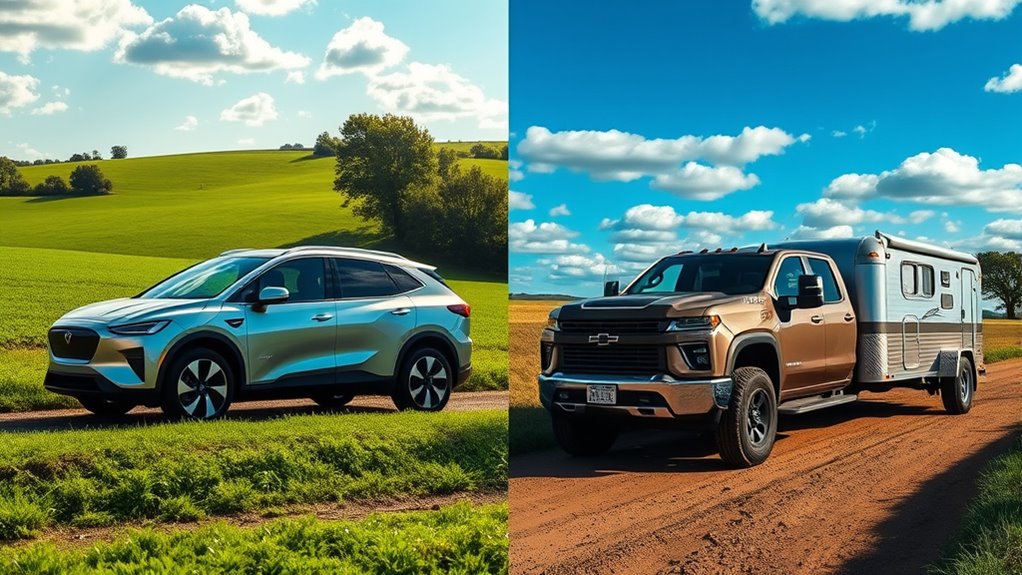
When you tow a trailer, your electric vehicle’s range can drop by 40-50%, making longer trips challenging without planned charging stops. Gas vehicles, however, handle towing more efficiently, with less impact on fuel economy and often greater towing capacity. While EVs are environmentally friendly, they require careful trip planning for towing. If you want to understand how each vehicle type manages towing and what to contemplate, keep exploring further.

Get backup power and energy gear delivered free with Prime
- Fast, free delivery on millions of items
- Prime Video, Amazon Music and more included
- Member-only deals all year
Key Takeaways
- EVs experience 40-50% range reduction when towing due to increased power demand.
- Gas vehicles maintain stable fuel efficiency and can tow heavier loads longer distances.
- Towing significantly decreases EV range, requiring frequent charging stops and careful trip planning.
- Gas vehicles are more practical for heavy or frequent towing, handling longer trips with less range concern.
- EV towing needs specialized models with higher capacities and cooling systems for optimal performance.
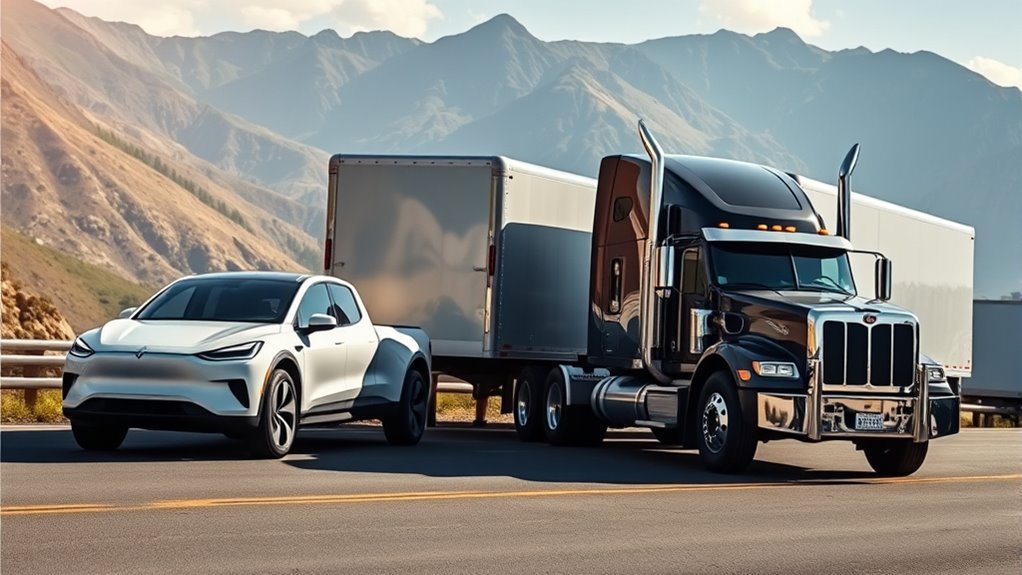
When it comes to towing, the debate between electric and gas-powered vehicles is increasingly pertinent. You’re likely wondering how each type performs when pulling a trailer, especially considering essential factors like battery range and fuel efficiency. Electric vehicles (EVs) have made impressive strides in recent years, but towing can impact their capabilities markedly. The added weight and resistance of a trailer demand more power, which, in turn, affects your vehicle’s battery range. You might find that an EV’s range drops considerably once you connect a trailer, sometimes by as much as 40-50%. This means you’ll need to plan your trips more carefully, accounting for potential charging stops or shorter distances between destinations. Unlike gas-powered vehicles, which can often maintain their fuel efficiency regardless of trailer weight, EVs tend to see a sharper decline in efficiency when towing. The extra load causes the battery to drain faster, reducing your overall range and making long-distance towing less practical without frequent recharges. Additionally, electric vehicle towing requires specialized considerations, such as choosing models with higher towing capacities and robust cooling systems.
On the other hand, gas-powered vehicles generally handle towing more effectively in terms of fuel consumption. They can keep their fuel efficiency relatively stable, especially in well-maintained engines designed for heavy loads. When pulling a trailer, you might notice a drop in miles per gallon, but it’s usually less drastic than the reduction in an EV’s range. This means you can often tow heavier loads for longer distances before needing to refuel, giving you more confidence on extended trips. However, gas vehicles come with their own drawbacks—primarily, the ongoing cost of fuel and the environmental impact. They might be more convenient for towing in the short term, but their fuel efficiency decreases with increased load, and they emit more pollutants compared to EVs.
Products Worth Considering

Innova 5610 OBD2 Bidirectional Scan Tool

Autel Home EV Charger up to 50A J1772 Hardwired Level 2 Charger with 25 ft Cable

Vantrue N2X 2.7K Dual Dash Cam (Front and Inside)
As an affiliate, we earn on qualifying purchases.
Frequently Asked Questions
How Does Towing Affect Electric Vehicle Battery Life?
Towing with your electric vehicle can lead to increased battery degradation over time because it forces the battery to work harder, especially when hauling heavy loads. This extra strain may reduce your EV’s overall towing capacity and shorten its battery lifespan. To mitigate this impact, avoid frequent heavy towing and ensure your vehicle is properly maintained. Keep in mind, higher towing demands accelerate battery wear, affecting long-term performance.
Are Electric Trucks More Cost-Effective Long-Term Than Gas Trucks?
Yes, electric trucks can be more cost-effective long-term than gas trucks. With a favorable cost comparison, you’ll save on fuel expenses, and maintenance costs are generally lower since electric motors have fewer moving parts. Plus, incentives and tax credits can boost savings initially. Over time, these factors make electric trucks a smart investment, especially if you frequently tow or haul heavy loads, ultimately reducing your overall ownership costs.
What Safety Features Are Essential for Electric Towing?
You should prioritize safety features like robust battery safety systems to prevent thermal runaway, especially during towing. Make certain the electric vehicle has advanced cooling mechanisms and secure battery enclosures. Also, check for reliable charging infrastructure to handle the increased power demands when towing. These features help protect you and your cargo, giving you confidence on the road while ensuring the vehicle remains safe and ready for long trips.
How Does Towing Influence Electric Vehicle Charging Times?
Towing considerably impacts your electric vehicle’s charging times by increasing the charging impact and causing range reduction. When you tow a trailer, your EV uses more energy, which means it takes longer to recharge and decreases your driving range. You’ll notice that towing reduces efficiency, so plan for longer charging sessions and be mindful of your vehicle’s reduced range to avoid getting stranded.
Can Electric Vehicles Tow the Same Weight as Gas-Powered Vehicles?
Back in the day, you’d never think an electric vehicle could match a gas-powered one in towing. Today, with advancements in battery capacity and torque requirements, EVs can tow comparable weights—though it depends on the model. While they might not handle the heaviest loads like traditional trucks, many electric vehicles now offer impressive towing capabilities for most recreational or light commercial needs, making them a viable option for many drivers.
Conclusion
When it comes to towing, electric vehicles can handle about 50% less weight than gas-powered ones, but advancements are closing that gap. Remarkably, electric trucks like the Ford F-150 Lightning can tow up to 10,000 pounds, showcasing impressive capability. So, whether you’re worried about range or power, both options are evolving fast. Just keep in mind, your choice depends on your towing needs and how much distance you plan to cover.