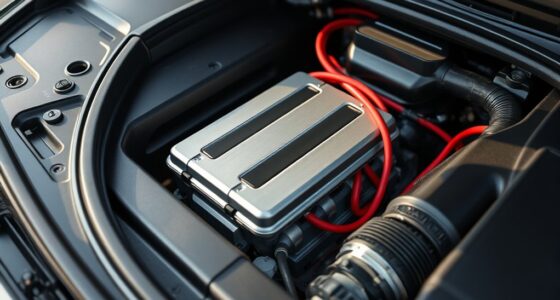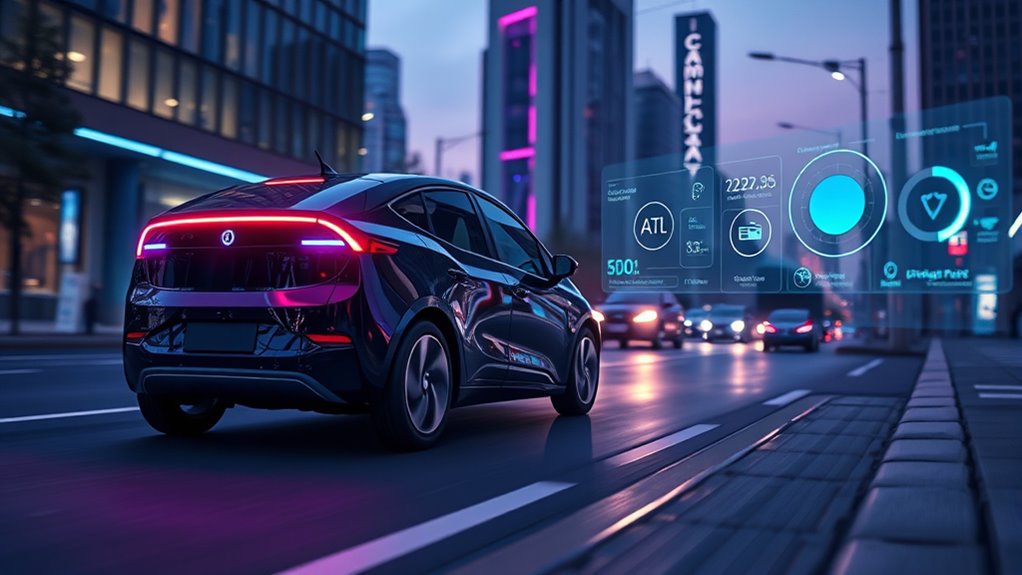

Artificial intelligence is revolutionizing electric vehicles by optimizing both charging and driving. It analyzes your habits, energy rates, and grid demands to schedule charging during off-peak hours, saving you money and reducing environmental impact. AI also powers autonomous driving, helping your vehicle recognize obstacles and navigate complex roads safely. As these systems learn and adapt, they make your EV smarter, safer, and more efficient. Keep exploring to discover how AI continues to enhance your driving experience.

Get backup power and energy gear delivered free — and shop member deals
- Fast, free delivery on millions of items
- Access to Prime Big Deal Days deals on October 6–7
- Prime Video, Amazon Music and more included
Key Takeaways
- AI analyzes driving habits and electricity rates to optimize charging times, prioritizing off-peak hours for cost savings and grid relief.
- Smart algorithms adjust charging speeds based on real-time energy availability for seamless and efficient vehicle charging.
- AI-driven autonomous systems interpret environmental data to make real-time driving decisions, enhancing safety and reducing manual control.
- Continuous learning enables AI to suggest optimal routes, avoid congestion, and adapt to changing traffic conditions for efficient driving.
- Integration with cloud infrastructure ensures secure data management, supporting sustainable, energy-aware, and autonomous EV operation.
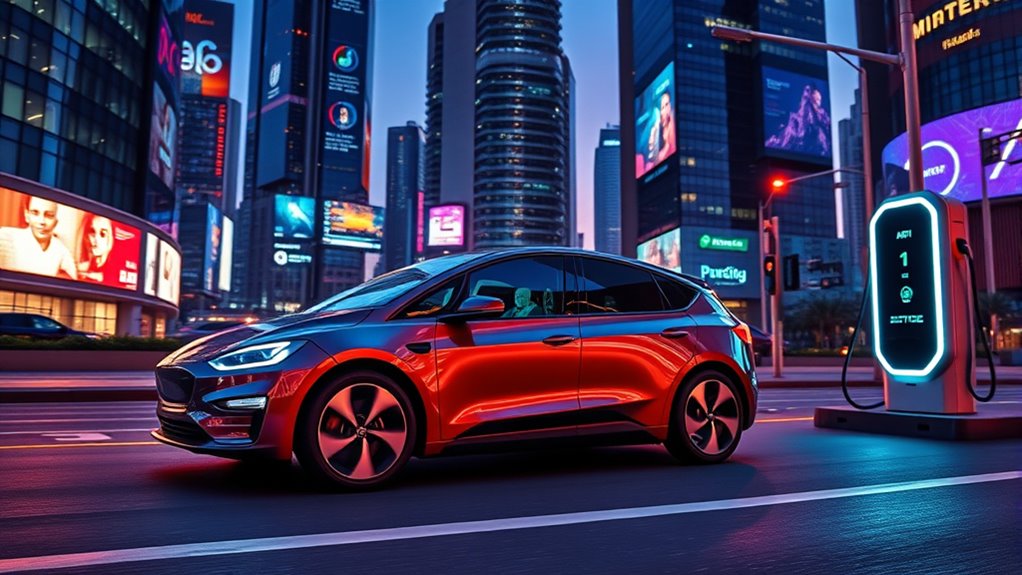
Have you ever wondered how artificial intelligence is transforming electric vehicle systems? The answer lies in how AI enhances both smart charging and autonomous guidance, making EVs more efficient, convenient, and safer. When you plug in your EV, smart charging algorithms analyze your driving habits, electricity rates, and grid demands to optimize when and how your vehicle charges. Instead of simply charging whenever you connect, AI guarantees your car charges during off-peak hours, saving you money and reducing strain on the power grid. It can even adjust charging speeds based on real-time energy availability, making the process seamless and energy-efficient. This smart charging capability isn’t just about convenience; it’s about sustainable energy management, helping to reduce overall carbon emissions and make EVs more environmentally friendly.
Alongside smart charging, autonomous guidance powered by AI is revolutionizing how you drive your electric vehicle. With advanced sensors and machine learning algorithms, your EV can interpret the environment, recognize obstacles, and make real-time driving decisions. No longer do you need to micromanage every turn or concern yourself with perfect lane positioning — AI systems handle these tasks smoothly. They analyze data from cameras, radar, and lidar to create a detailed map of your surroundings, allowing your vehicle to navigate complex traffic scenarios autonomously. Whether it’s merging onto highways, navigating through city streets, or parking in tight spots, AI-driven autonomous guidance makes driving more precise and less stressful. It’s like having a highly skilled co-pilot that’s constantly learning and improving.
This synergy between smart charging and autonomous guidance means your EV is not just a mode of transportation but an intelligent system that adapts to your needs and the environment. AI continuously learns from your driving patterns, optimizing energy consumption and route planning to extend your vehicle’s range. It can suggest the most efficient routes, avoid congestion, or reroute you around accidents, all in real time. Moreover, European cloud infrastructure plays a crucial role in supporting these intelligent systems by providing secure and sustainable data management. This level of automation and intelligence doesn’t just enhance your driving experience; it pushes the boundaries of what electric vehicles can do, making them safer, smarter, and more aligned with sustainable energy practices. As AI advances, expect your EV to become increasingly autonomous and energy-aware, transforming the way you travel and interact with your vehicle every day.
Top picks for "artificial intelligence optimiz"
As an affiliate, we earn on qualifying purchases.
Frequently Asked Questions
How Does AI Improve Battery Lifespan in Electric Vehicles?
AI improves your electric vehicle’s battery lifespan through advanced battery management and charging optimization. It analyzes real-time data to prevent overcharging and deep discharging, reducing battery wear. AI also adjusts charging rates based on temperature and usage patterns, ensuring ideal conditions. By continuously monitoring and fine-tuning these factors, AI helps extend your battery’s health, saving you money and maintaining peak performance over time.
What Are the Privacy Concerns With Ai-Powered EV Data Collection?
You should be aware that AI-powered EV data collection raises privacy concerns, mainly around data privacy and user consent. When your EV gathers driving habits or location data, it’s essential that your information is safeguarded and used responsibly. Always check if the manufacturer requests your consent before sharing data, and stay informed about how your data is stored and shared to ensure your privacy remains secure.
Can AI Predict Future EV Market Trends Accurately?
Think of AI as a crystal ball for the EV market. It’s quite capable of making accurate predictions through market forecasting and trend analysis, but it’s not infallible. While AI can spot patterns and offer valuable insights, unexpected shifts or disruptive innovations can throw off its forecasts. So, you should rely on AI’s trend analysis as a helpful guide, but stay flexible, knowing the future remains a bit unpredictable.
How Accessible Is AI Technology for Small EV Manufacturers?
AI technology is becoming increasingly accessible for small EV manufacturers, helping reduce costs and overcome industry barriers. You can implement AI-driven solutions without huge investments, as many tools and platforms are now affordable and user-friendly. This accessibility enables small manufacturers to optimize design, production, and charging processes, leveling the playing field and fostering innovation in a competitive market. Embracing AI allows you to stay ahead and improve efficiency.
What Are the Cybersecurity Risks Associated With Ai-Driven EV Systems?
You should be aware that AI-driven EV systems face cybersecurity threats like hacking and data breaches. These risks can compromise vehicle control or steal personal data. To protect yourself, manufacturers use data encryption to secure communications and system integrity. It’s crucial to stay updated on security protocols and verify your vehicle’s software is regularly maintained, reducing the chances of cyberattacks and keeping your driving experience safe.
Conclusion
As you explore the future of AI and EVs, it’s clear that artificial intelligence is transforming how you charge and drive. With AI optimizing charging schedules, you could reduce energy costs by up to 30%. This not only makes your driving more efficient but also helps the environment. As technology advances, expect smarter, more sustainable journeys that save you money and support a greener planet. Embrace these innovations—your driving experience is about to become smarter and more eco-friendly.
Fall Picks
fall essentials
As an affiliate, we earn on qualifying purchases.