

To keep your EV battery healthy in hot climates, avoid parking in direct sun and use shaded or covered areas. Utilize pre-conditioning features to cool the battery before driving, and regularly check your cooling system for leaks or blockages. Monitor your battery’s temperature via your vehicle’s app, and avoid rapid acceleration or high speeds that generate extra heat. Understanding your vehicle’s thermal management tech helps protect your battery longer—discover more tips to guarantee peak performance.
Key Takeaways
- Utilize built-in cooling systems and ensure regular maintenance like checking for leaks and cleaning vents.
- Park in shaded or covered areas to minimize heat exposure and use pre-conditioning features to cool the battery before driving.
- Monitor real-time battery temperature via vehicle app or dashboard, and limit high-speed driving or rapid acceleration in hot conditions.
- Activate and optimize thermal management features, understanding your EV’s specific cooling capabilities for better temperature regulation.
- Avoid prolonged direct sunlight parking and implement practical cooling practices to reduce thermal stress and extend battery lifespan.
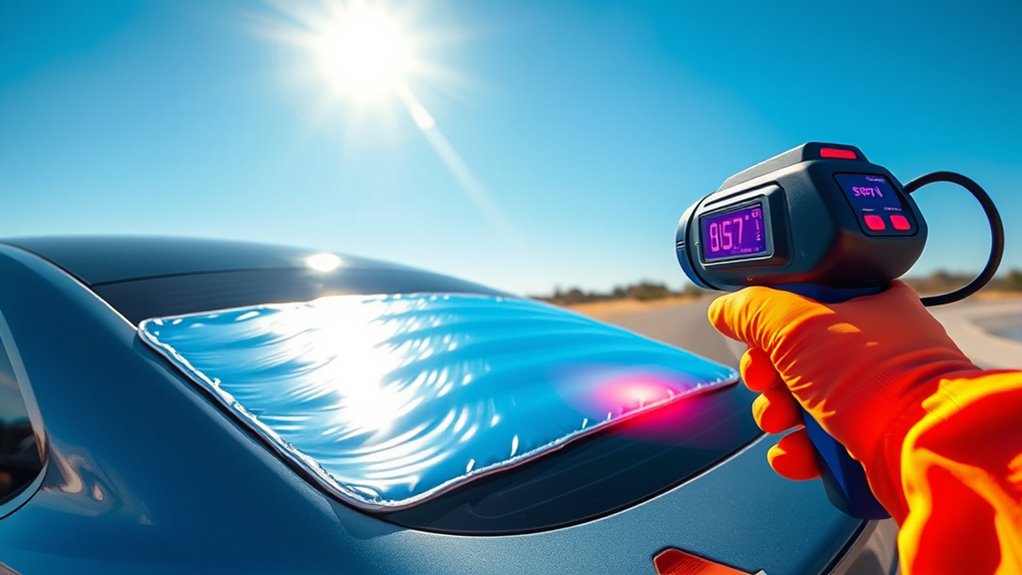
Living in hot climates requires you to pay special attention to your EV battery’s health, as high temperatures can accelerate wear and reduce performance. The key to protecting your battery lies in effective thermal management. When temperatures soar, your EV’s battery can overheat, which not only hampers its longevity but also diminishes energy efficiency. To keep your battery cool and functioning as well as possible, you need to understand how thermal management systems work and how they can be optimized for hot environments.
Modern EVs often come equipped with active cooling systems, such as liquid cooling or air cooling, designed to regulate battery temperature during operation. These systems work by dissipating excess heat, preventing the battery from reaching damaging temperatures. It’s essential to make certain these cooling mechanisms are properly maintained—regularly check for leaks, clean cooling vents, and follow manufacturer recommendations for service. If your EV offers a thermal management customization option, activate it for hotter days to prioritize cooling and maintain energy efficiency.
In addition to built-in cooling systems, simple practices can help you manage your battery temperature. Avoid parking your EV in direct sunlight for extended periods, and whenever possible, use shaded or covered parking. If your vehicle has a pre-conditioning feature, take advantage of it to cool down the battery before driving, especially during peak heat hours. This not only helps preserve the battery’s health but also ensures better energy efficiency during your trip, as the vehicle won’t have to work as hard to cool the battery while on the move.
Monitoring your battery’s temperature through your vehicle’s app or dashboard can give you real-time insights into its health during hot weather. If you notice the temperature rising abnormally, consider reducing your driving load, avoiding rapid acceleration, and steering clear of long, high-speed drives that generate additional heat. These measures help to prevent thermal stress and extend your battery’s lifespan. Being aware of your vehicle’s thermal management system capabilities allows you to optimize its performance and safeguard your investment.
Lastly, staying informed about your specific EV model’s thermal management features is essential. Some vehicles have advanced cooling systems that automatically adjust based on ambient temperatures, while others may require manual intervention. By understanding these features and integrating simple cooling habits into your routine, you can greatly improve your battery’s longevity and energy efficiency in hot climates. Proper thermal management isn’t just about protecting your battery—it’s about ensuring your EV performs reliably and efficiently, no matter how high the temperature climbs.
EV Thermal Management: Heat Pumps, Battery Cooling, and HVAC Service: A Technical Reference for EV Thermal Specialists (EV Owner & Service Series)
As an affiliate, we earn on qualifying purchases.
As an affiliate, we earn on qualifying purchases.
Frequently Asked Questions
How Does High Ambient Temperature Affect EV Battery Lifespan?
High ambient temperatures can considerably reduce your EV battery’s lifespan by accelerating battery degradation. Battery cooling and thermal management systems help regulate temperature, preventing overheating and preserving battery health. When temps rise, these systems work harder, minimizing damage caused by heat. To protect your battery, make sure your EV’s cooling system is functioning properly, avoid exposing your vehicle to direct sunlight for long periods, and consider parking in shaded areas.
Are There Specific Cooling Technologies Recommended for Hot Climates?
Think of your EV’s battery as a delicate garden needing shade and water. In hot climates, liquid cooling acts like an oasis, actively regulating temperature and preventing overheating. Passive cooling, akin to a stone sculpture, offers natural heat dissipation without energy use. Both methods are recommended, but liquid cooling provides more precise control, ensuring your battery remains healthy and efficient under the sun’s relentless gaze.
Can I Pre-Cool My EV Battery Before Driving in the Heat?
Yes, you can pre-cool your EV battery before driving in the heat. Pre-cooling strategies help you manage battery temperature effectively, ensuring ideal performance and longevity. By using your vehicle’s climate control or dedicated battery cooling features before starting your trip, you reduce the risk of overheating. This proactive battery temperature management keeps your EV running smoothly and extends battery life, especially during hot weather conditions.
What Are Signs of Thermal Degradation in an EV Battery?
You’ll notice signs of thermal degradation when your EV’s battery temperature rises unusually high, causing reduced range and performance. Additionally, cell imbalance may occur, leading to uneven charging and discharging, which can trigger warning lights or error messages. If you observe rapid battery drain, inconsistent power delivery, or your vehicle’s cooling system working overtime, these are indicators of thermal degradation affecting your battery’s health.
How Often Should I Perform Maintenance Checks in Hot Weather?
You should perform maintenance checks at least every 3 to 6 months in hot weather. Focus on inspecting your battery insulation for any damage and monitor your charging frequency, as frequent fast charging can increase thermal stress. Keeping an eye on these factors helps prevent overheating and guarantees your EV battery stays healthy. Regular checks allow you to catch issues early and maintain ideal performance in hot climates.
EV Thermal Management: Heat Pumps, Battery Cooling, and HVAC Service: A Technical Reference for EV Thermal Specialists (EV Owner & Service Series)
As an affiliate, we earn on qualifying purchases.
As an affiliate, we earn on qualifying purchases.
Conclusion
Keeping your EV battery healthy in hot climates is like tending a delicate garden—you need to stay attentive and proactive. By applying cooling tips and staying aware of your battery’s needs, you can prevent overheating and prolong its life. Think of your efforts as a gentle breeze that shields a flame from scorching heat. With consistent care, your EV will perform reliably, just like a well-nurtured plant thriving in the brightest sun.

BETUMODA Level 2 EV Charger, 40A 25ft, 9.6kW, LED Display, J1772 EV/PHEVs.
- Universal Compatibility: Compatible with all SAE-J1772 EVs and PHEVs
- Adjustable Current Settings: Five levels from 8A to 40A for tailored charging
- Professional-Grade Connectivity: Includes NEMA 14-50 and NEMA 5-15 adapters
As an affiliate, we earn on qualifying purchases.
As an affiliate, we earn on qualifying purchases.

LEARNIBEE 14Pcs Mini Split Cleaning Kit, Professional Mini Split Cleaning Bag with 2L High-Pressure Sprayer & Gloves, AC Cleaning Kit for Wall-Mounted Air Conditioners – Large
- All-In-One 14-Piece Kit: Includes cleaning cover, brushes, sprayer, gloves
- Durable, Waterproof Materials: Made from high-quality thickened PVC for reuse
- Splash-Proof & Fast Drainage: Widened water-collecting area with barriers and drain pipe
As an affiliate, we earn on qualifying purchases.
As an affiliate, we earn on qualifying purchases.