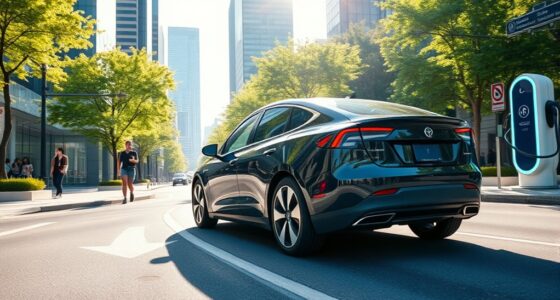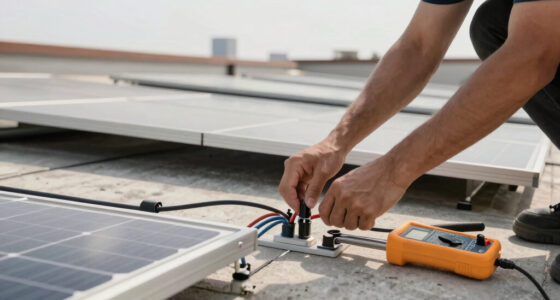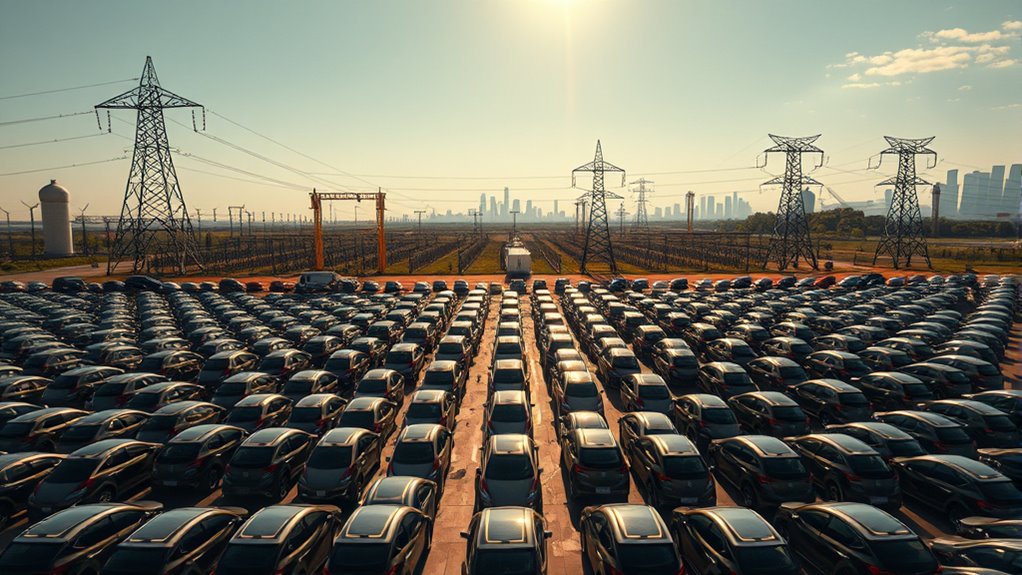

The power grid can handle more electric cars, but it needs upgrades to keep up with rising demand. Aging infrastructure and peak load issues pose challenges, so expanding charging stations and modernizing systems are essential. Smart grid tech and better load management help balance the load and prevent outages. If these improvements keep pace with EV growth, we’ll see a more resilient and sustainable grid—if you want to understand how this all works, keep exploring the details.
Key Takeaways
- Upgrading infrastructure with smart grid technologies is essential to manage increased EV charging demands effectively.
- Strategic expansion of charging stations and load management can prevent grid overloads.
- Integrating renewable energy and storage solutions enhances grid capacity and resilience for EV growth.
- Modernizing substations and implementing real-time monitoring improve system reliability during peak loads.
- Coordinated policies and consumer incentives are critical for a sustainable, grid-friendly EV adoption.

Emporia Vue 3 Home Energy Monitor – Smart Home Automation Module and Real Time Electricity Usage Monitor, Power Consumption Meter, Solar and Net Metering for UL Certified Safe Energy Monitoring
- UL Certified Safe Energy Monitoring: Certified for safety and reliability
- Easy Installation in Circuit Panel: Supports various home electrical systems
- Real-Time Energy Monitoring: 24/7 management and control of energy
As an affiliate, we earn on qualifying purchases.
As an affiliate, we earn on qualifying purchases.
Current State of the Power Grid
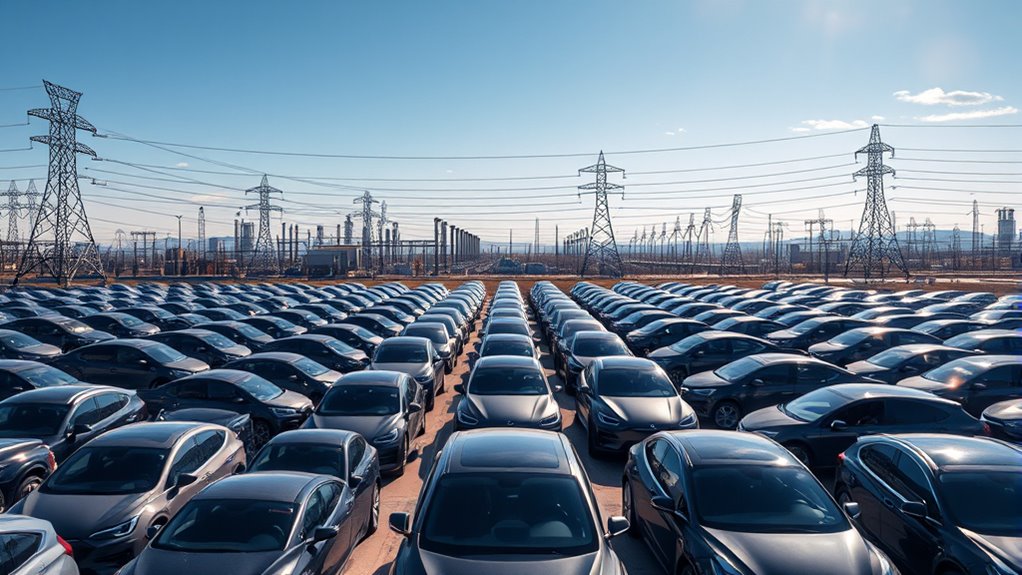
The current state of the power grid is characterized by aging infrastructure and increasing demand, which challenge its reliability and efficiency. To meet future needs, integrating renewable energy sources like solar and wind is essential, but it also introduces variability that the grid must manage effectively. Strengthening cybersecurity measures is equally critical, as the grid becomes more connected and vulnerable to cyber threats. You need to guarantee these systems are protected against attacks that could disrupt power flow or compromise sensitive data. Upgrading infrastructure to handle renewable integration and implementing robust cybersecurity measures are crucial steps toward a resilient, future-proof power grid. Additionally, incorporating advanced grid management technologies can significantly improve responsiveness and stability. Without these improvements, the grid may struggle to support the rising number of electric vehicles and renewable energy contributions. Moreover, adopting smart grid solutions can enhance the ability to monitor and respond to fluctuations in real-time, ensuring a more reliable and efficient power supply. Embracing modernization efforts is key to maintaining a resilient electrical network capable of supporting a sustainable energy future. Implementing integrated energy systems is also vital for optimizing energy flow and reducing waste across the network.

EVIQO Level 2 EV Charger J1772 40A NEMA 14-50 – 240V Wall Charging Station
- Plug-in Installation: No electrician needed, requires NEMA 14-50 outlet
- High Power Output: 40A, 240V, 9.6kW charging capacity
- Universal Compatibility: Works with all North American EVs and PHEVs
As an affiliate, we earn on qualifying purchases.
As an affiliate, we earn on qualifying purchases.
Growth of Electric Vehicle Adoption

As electric vehicle adoption accelerates worldwide, the demand for a more robust and adaptable power grid grows stronger. Increased EV ownership means you’ll need reliable charging infrastructure, which relies heavily on battery storage to balance supply and demand. This growth also pushes for greater renewable integration, enabling cleaner energy sources like solar and wind to power your vehicles sustainably. As more EVs hit the roads, the grid must evolve to handle higher loads without compromising stability. Investments in advanced battery storage help smooth out fluctuations, ensuring charging remains consistent even when renewable output varies. Additionally, improving juice extraction techniques can support the development of more efficient energy harvesting methods. Innovations in energy management systems are critical to optimizing the overall grid performance. Implementing smart grid technology allows for real-time monitoring and better allocation of resources, which is essential for accommodating increased electric vehicle charging demands. Furthermore, the integration of demand response programs can help manage peak loads effectively. Embracing advanced grid infrastructure is vital for supporting renewable integration and expanding battery storage, ensuring the grid can meet the rising demand, making your switch to electric vehicles more practical and environmentally friendly.

Ontel Battery Daddy Storage & Organizer Case w/Tester, Stores & Protects Up to 180 Batteries, Double-Sided, Clear Locking Lid, Secure Latches & Portable Carrying Handle – Red (Batteries Not Included)
- Double-Sided Storage: Holds up to 180 batteries
- Clear Viewing Cover: Easily see contents at a glance
- Compact and Portable: Fits in drawers, includes handle
As an affiliate, we earn on qualifying purchases.
As an affiliate, we earn on qualifying purchases.
Peak Demand and Load Management

Managing peak demand is crucial to keeping the power grid stable as electric vehicle usage increases. When many EVs charge simultaneously, peak loads can strain the system, risking outages or damage. Load management strategies help smooth out these spikes by encouraging consumers to charge during off-peak hours or using smart charging technologies. Incorporating renewable energy sources, like solar and wind, can also help meet increased demand sustainably, reducing reliance on fossil fuels. Your behavior plays a significant role—by adjusting your charging habits, you support grid stability and renewable integration. Utilities are developing advanced demand response programs to better balance loads, ensuring that the grid remains reliable even as EV adoption accelerates. Effective load management is essential for a resilient, sustainable energy future for EVs and grid and ensures long-term stability. Additionally, modern grid infrastructure improvements, such as smart grid technologies, are being implemented to better monitor and respond to fluctuating demand patterns. As technology advances, grid modernization initiatives further enhance our ability to handle increased electricity loads safely and efficiently.

Control of Power Inverters in Renewable Energy and Smart Grid Integration (IEEE Press)
As an affiliate, we earn on qualifying purchases.
As an affiliate, we earn on qualifying purchases.
Challenges of Integrating EV Charging

Integrating electric vehicle (EV) charging into the power grid presents several significant hurdles. One challenge is managing increased demand without overloading existing infrastructure. As more drivers charge at home or public stations, the grid must adapt to prevent outages. Additionally, the surge in EVs raises concerns about battery recycling, since large quantities of used batteries will need proper disposal or repurposing to avoid environmental issues. Consumer incentives can help encourage off-peak charging, easing grid pressure, but aligning these incentives effectively remains complex. Ensuring that charging stations are widespread and accessible is also essential, yet it requires coordination between utilities, regulators, and manufacturers. Furthermore, developing regional energy policies that support sustainable EV integration is crucial for long-term success. Overcoming these challenges is vital to smoothly integrating EVs without compromising grid stability or environmental sustainability. Addressing grid modernization is also necessary to upgrade existing infrastructure to meet future demand efficiently.
Infrastructure Upgrades and Modernization
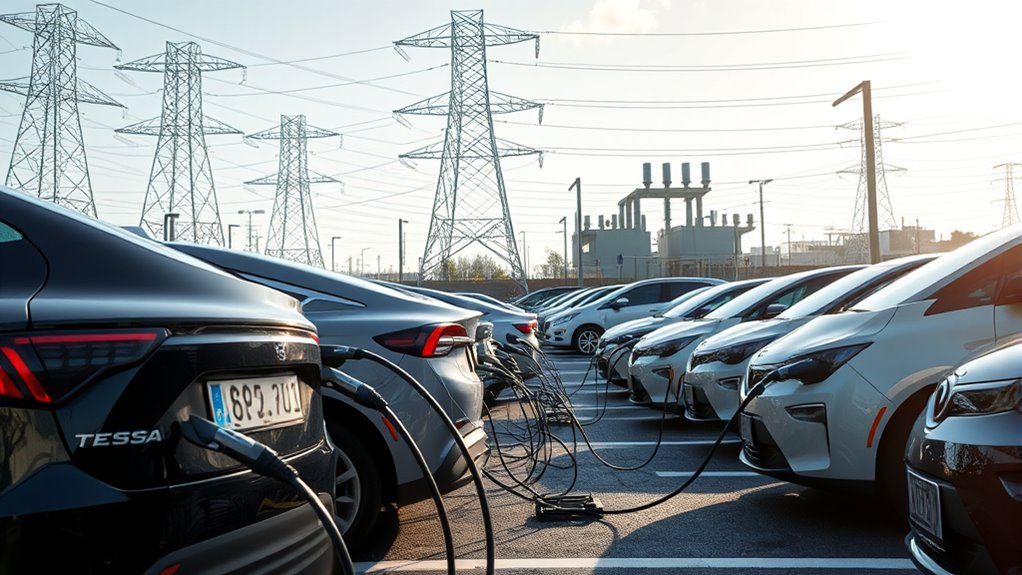
To support the growing number of electric vehicles, you need to upgrade power substations and expand charging station networks. Modernizing the grid with advanced strategies can improve reliability and efficiency. These efforts are essential to guarantee your infrastructure keeps pace with demand. Incorporating smart home gym equipment and connected fitness technologies can also serve as a model for integrating innovative solutions into essential infrastructure. Understanding the importance of field-of-view and imaging-scale in related technological systems highlights how precise measurements and planning are critical for successful infrastructure upgrades. Additionally, leveraging modern kitchen technology concepts can inspire smarter, more integrated approaches to infrastructure modernization. As with home EV charging, applying load calculations and smart monitoring can optimize capacity and prevent overloads in the grid.
Upgrading Power Substations
Upgrading power substations is indispensable for supporting the increasing demand of electric vehicles and modern energy needs. Modernizing these facilities ensures reliable power delivery, accommodates renewable integration, and enhances disaster preparedness. Without upgrades, the grid risks overloads and outages during peak times or extreme events. Incorporating renewable energy sources seamlessly into the grid is essential for a sustainable future. Key improvements include: – Installing advanced transformers for higher capacity – Implementing smart grid technology for real-time monitoring – Reinforcing infrastructure to withstand natural disasters – Integrating renewable energy sources seamlessly – Enhancing automation for quicker response and maintenance. Additionally, upgrading substations supports grid resilience by enabling faster recovery from disruptions. These upgrades enable your power system to meet future demands, support clean energy goals, and maintain stability during emergencies. Upgraded substations are crucial to building a resilient, efficient grid that powers the growing electric vehicle landscape. Moreover, integrating modernization techniques helps optimize energy distribution and reduces operational costs over time. Incorporating advanced control systems can further improve the efficiency and safety of the entire power infrastructure.
Expanding Charging Stations
As electric vehicle adoption accelerates, expanding charging stations becomes essential to meet the growing demand for convenient and reliable access. To support this, infrastructure upgrades focus on integrating renewable energy sources and offering consumer incentives. These incentives motivate more people to switch to EVs and use public charging networks. By expanding charging stations, you’ll reduce range anxiety and encourage cleaner transportation. Strategic placement near highways, urban centers, and workplaces ensures accessibility. Additionally, modern stations can incorporate renewable integration, powering chargers with solar or wind energy, further reducing carbon footprints. Here’s a quick look at key elements:
| Focus Area | Benefits |
|---|---|
| Renewable integration | Lowers emissions, promotes sustainability |
| Consumer incentives | Boosts EV adoption and station use |
| Station expansion | Enhances accessibility |
| Infrastructure upgrades | Supports faster charging |
| Strategic placement | Maximizes convenience |
Grid Modernization Strategies
Have you considered how modernizing the electric grid can support the surge in electric vehicle adoption? Upgrading infrastructure is essential for reliable, efficient energy delivery. Modernization strategies include integrating more renewable energy sources, which reduces emissions and eases grid strain. You’ll also see cybersecurity enhancements to protect against cyber threats targeting critical infrastructure. To give you a clearer picture, here are key actions:
- Incorporating smart grid technology for better demand management
- Expanding renewable integration for cleaner energy
- Upgrading transmission and distribution systems
- Implementing advanced cybersecurity measures
- Investing in energy storage solutions to balance supply and demand
These efforts ensure your electric vehicle charging is consistent, safe, and sustainable, preparing the grid for the increased load driven by EV adoption.
Smart Grid Technologies and Their Role

Smart grid technologies play a vital role in optimizing power distribution for electric vehicles. With advanced grid monitoring, you can detect issues early and guarantee stability, while dynamic load balancing helps manage fluctuating energy demands. Automated energy management systems make it easier to efficiently distribute resources and keep the grid reliable.
Advanced Grid Monitoring
How do modern grid systems guarantee dependable integration of electric vehicles? Advanced grid monitoring plays a vital role by continuously analyzing real-time data, enabling quick responses to fluctuations. Smart grid technologies help optimize renewable integration, ensuring clean energy supports EV charging without overloading the system. They also strengthen cybersecurity measures, protecting against malicious attacks that could disrupt operations. By deploying sensors and advanced analytics, you can detect faults early, maintain grid stability, and improve reliability. These systems facilitate dynamic adjustments, balancing supply and demand seamlessly. Here are some key aspects:
- Real-time data collection and analysis
- Automated fault detection and response
- Enhanced cybersecurity protocols
- Renewable energy flow management
- Load forecasting accuracy
Dynamic Load Balancing
Dynamic load balancing is vital for maintaining the stability and efficiency of modern power grids, especially as electric vehicle adoption increases. With vehicle-to-grid integration, EVs can serve as flexible energy sources, helping to balance supply and demand. This technology allows your vehicle batteries to feed electricity back into the grid during peak times, reducing stress on power stations. By actively managing charging patterns and utilizing real-time data, dynamic load balancing guarantees that energy flow remains smooth, preventing overloads or outages. Smart grid systems coordinate these processes, optimizing energy distribution across the network. As EV numbers grow, embracing dynamic load balancing and vehicle-to-grid integration becomes indispensable for a resilient, efficient, and sustainable power grid.
Automated Energy Management
Automated energy management systems leverage advanced technologies to coordinate power distribution and optimize grid performance. These smart grid technologies adapt to fluctuating demand, support renewable integration, and respond to consumer behavior. By automating decision-making, they can shift loads during peak times and integrate diverse energy sources seamlessly. This reduces strain on the grid and ensures efficient energy use.
- Monitor real-time consumption patterns
- Balance renewable energy input
- Respond instantly to outages or surges
- Influence consumer behavior through demand response
- Improve overall grid reliability
With these capabilities, the grid becomes more resilient and flexible, ready to handle increased electric vehicle adoption without overloading. This approach not only enhances efficiency but also encourages sustainable energy practices.
Policy and Investment Strategies
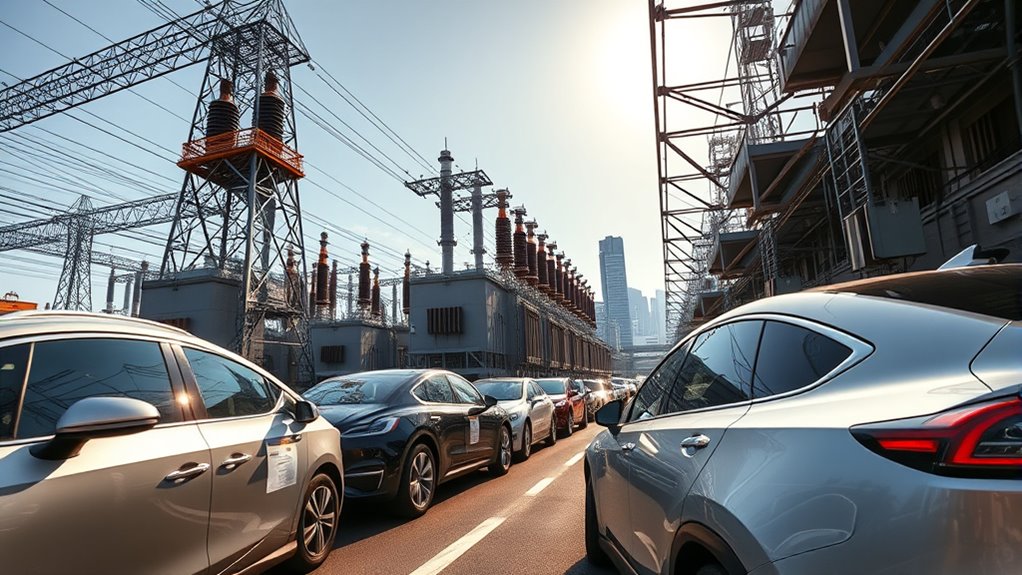
Effective policy and investment strategies are essential for integrating electric vehicles into the power grid. Policy incentives, such as tax credits and rebates, encourage consumers to adopt EVs while motivating utilities to upgrade infrastructure. Clear investment priorities help direct funding toward smart grid technologies, renewable energy integration, and charging station expansion. By aligning government support with private sector efforts, you can accelerate the transition and guarantee the grid can handle increased demand. Strategic policies also promote research into new technologies that improve grid resilience. Your role in advocating for balanced incentives and targeted investments is pivotal for creating a sustainable, reliable energy system capable of supporting widespread EV adoption without risking grid stability.
Future Outlook and Sustainable Solutions

Looking ahead, the future of the power grid and electric vehicles hinges on sustainable solutions that balance growth with environmental responsibility. Successfully integrating renewable energy sources is key to reducing emissions and ensuring a reliable supply. Your awareness of consumer behavior will influence grid stability—shifting charging habits to off-peak hours can ease demand. Advances in smart grid technology enable better management of energy flow, supporting renewable integration. Additionally, innovative storage solutions will buffer supply fluctuations, making renewables more dependable. Policies encouraging sustainable practices and infrastructure upgrades are paramount for long-term resilience. By embracing these strategies, you can help shape a cleaner, more efficient power grid capable of supporting widespread electric vehicle adoption. The future depends on your choices and support for sustainable solutions.
Frequently Asked Questions
How Quickly Can the Grid Be Upgraded to Support Widespread EV Charging?
Upgrading the grid can happen relatively quickly with targeted infrastructure investments and focused grid modernization efforts. You’ll see faster improvements in areas prioritizing electric vehicle charging stations, which often involve upgrading local substations and adding smart grid technology. While large-scale upgrades take years, strategic investments can accelerate support for widespread EV adoption, making it possible to adapt the grid efficiently and meet increased demand without overhauling the entire system overnight.
What Are the Environmental Impacts of Expanding the Power Grid for EVS?
Expanding the power grid for EVs can have both positive and negative environmental impacts. While it reduces reliance on fossil fuels, it may cause wildlife disruption during infrastructure development. Additionally, increased battery recycling efforts help mitigate e-waste. You should consider these factors, as responsible expansion minimizes ecological harm and promotes sustainable energy use, ensuring the progression to electric vehicles benefits the environment without unintended consequences.
How Will Rural Areas Be Affected by Increased EV Charging Demands?
Rural areas will likely face challenges with increased EV charging demands, straining rural infrastructure and impacting grid reliability. You might see longer wait times for charging or the need for upgraded infrastructure to support the extra load. To address this, local authorities and utilities need to invest in strengthening rural infrastructure, ensuring the grid remains reliable and capable of accommodating the growing number of electric vehicles in these communities.
Are There Any Health Concerns Related to Increased Electrical Infrastructure?
You might worry about health risks from increased electrical infrastructure, but the truth is, electromagnetic fields from power lines are generally safe at standard exposure levels. However, long-term exposure to strong fields could raise concerns about potential health effects. While current science shows minimal risk, ongoing research keeps a close watch on electromagnetic fields. Stay informed, and you’ll better understand how these changes could impact your health in the future.
What Role Do Renewable Energy Sources Play in Supporting EV Growth?
Renewable energy sources are essential in supporting EV growth by enhancing grid stability and providing sustainable power. You rely on energy storage solutions like batteries to balance supply and demand, especially when solar and wind output fluctuates. These technologies guarantee a steady electricity flow, reducing dependency on fossil fuels. As EV adoption increases, expanding renewable capacity and storage will be indispensable for a resilient, clean energy future.
Conclusion
So, as you can see, the future of electric vehicles depends on your actions and investments now. The power grid faces an unprecedented challenge—like trying to hold back a tidal wave of clean energy dreams. But with smart upgrades and bold policies, you can be part of the solution. Together, we have the power to transform our grid into a resilient, sustainable force that fuels a greener, brighter tomorrow.