Yes, you can have one electric car charge another through EV-to-EV charging technology. This allows direct power transfer between vehicles, offering a quick and convenient way to recharge, especially during emergencies or in areas with limited charging stations. While the hardware and standards are still developing, many automakers and startups are working on solutions. To discover how this innovative system could benefit you and its current state, keep exploring the latest advancements.

Get backup power and energy gear delivered free with Prime
- Fast, free delivery on millions of items
- Prime Video, Amazon Music and more included
- Member-only deals all year
Key Takeaways
- EV-to-EV charging allows direct power transfer between vehicles, enabling one car to charge another.
- Specialized connectors and communication systems are needed for safe and efficient battery sharing.
- Industry standards and compatible infrastructure are essential for widespread EV-to-EV charging adoption.
- This technology is useful during emergencies, roadside assistance, or in areas with limited charging stations.
- Safety, battery health management, and technological advancements are critical for practical EV-to-EV charging.
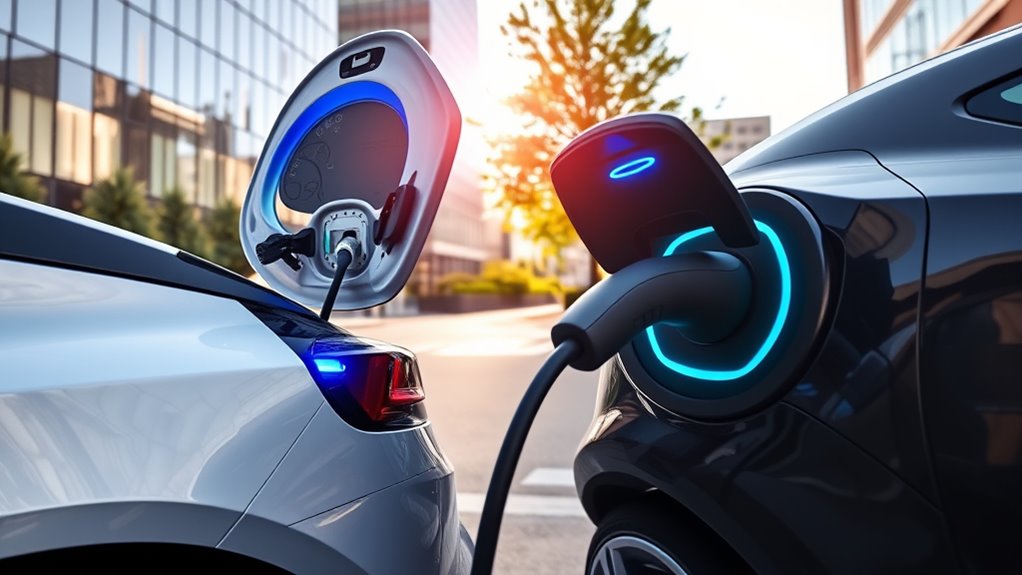
As electric vehicles (EVs) become more common, the idea of EV-to-EV charging is gaining traction as a convenient and efficient solution for roadside emergencies and everyday needs. Imagine you’re stranded with a dead battery, and instead of waiting for roadside assistance or finding a charging station, your EV could directly transfer power from another vehicle. This concept, often called battery sharing, could revolutionize how we think about charging infrastructure. Instead of relying solely on fixed charging stations, EVs could serve as mobile power sources, creating an interconnected network that enhances convenience and reduces downtime.
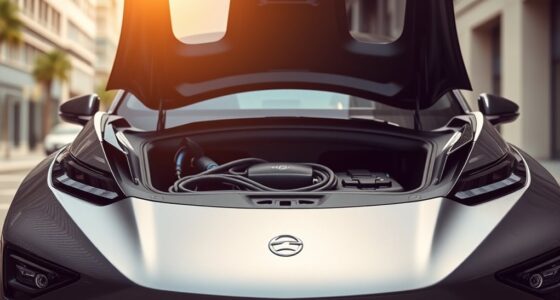
Battery sharing involves a process where one EV supplies its stored energy directly to another. This requires compatible hardware and software that enable safe and efficient power transfer, often through specialized connectors or adapters. The technology is still evolving, but some automakers and startups are developing systems that allow EVs to communicate and coordinate charging sessions. This prompts the question: could EV-to-EV charging become as simple as plugging in a smartphone? The potential is there, especially in areas where charging infrastructure is limited or in emergency situations. You could imagine a future where you help out a fellow EV owner or even charge your own car using a friend’s vehicle, without needing a traditional charging station.
Battery sharing allows EVs to transfer energy directly, enabling quick, safe, and efficient power exchange between vehicles.
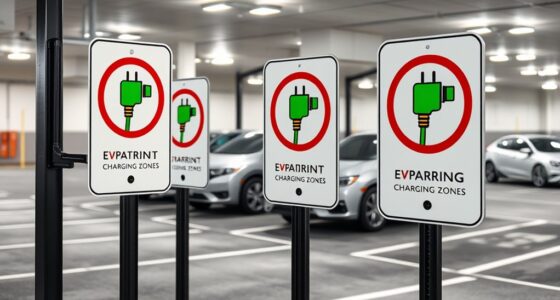
Additionally, the development of micro-mobility solutions and portable charging options could further enhance the practicality of battery sharing in diverse environments. However, integrating EV-to-EV charging into our daily routines isn’t just about technology; it also involves expanding charging infrastructure to support this new paradigm. For battery sharing to work seamlessly, vehicles need to be equipped with compatible ports and communication systems, which requires industry-wide standards. Additionally, the charging infrastructure itself must evolve to facilitate quick, safe power exchanges between vehicles. This might include dedicated charging zones where multiple EVs can connect and share energy efficiently or portable units designed specifically for battery sharing. Such infrastructure would make EV-to-EV charging more practical and accessible, especially in remote areas or during emergencies.
While the concept is promising, there are still challenges to overcome. These include ensuring safety during power transfer, managing battery health, and establishing protocols for fair usage. As technology advances and standards develop, you’ll likely see more vehicles capable of battery sharing, making EV-to-EV charging a viable supplement to traditional charging methods. Ultimately, expanding both the technology and the charging infrastructure will be key to opening the full potential of EV-to-EV charging, giving you more flexibility and resilience on the road.
As an affiliate, we earn on qualifying purchases.
Frequently Asked Questions
Can All Electric Cars Support Vehicle-To-Vehicle Charging?
Not all electric cars support vehicle-to-vehicle charging because of differences in charging standards and battery compatibility. You’ll find some models, like the Nissan Leaf and newer BMWs, equipped with V2V capability, but many others lack this feature. Check your car’s specifications to see if it supports the necessary charging standards, such as CHAdeMO or CCS, and verify your battery is compatible with V2V systems before attempting to charge another EV.
How Long Does It Take to Charge Another EV Directly?
Charging speed depends on the power transfer and the vehicles’ compatibility. If you connect two EVs with compatible systems, it can take anywhere from 30 minutes to several hours to charge another EV directly. Faster charging happens with higher power transfer, but most EVs support limited rates. So, while EV-to-EV charging is promising, it’s not a quick fix—expect significant time for a meaningful charge.
Are There Safety Concerns With Ev-To-Ev Charging?
Yes, there are safety concerns with EV-to-EV charging. You should be cautious about battery safety, ensuring the connection is secure and compatible. Electrical hazards like sparks or short circuits can occur if proper safety measures aren’t followed. Always use approved adapters and follow manufacturer guidelines to minimize risks. Staying aware of these safety aspects helps protect both you and your vehicle during the charging process.
What Equipment Is Required for Ev-To-Ev Charging?
You need the right equipment to make EV-to-EV charging work smoothly. First, get a compatible charging adapter that connects the two vehicles safely. Then, guarantee your car supports power transfer features, like vehicle-to-vehicle (V2V) capability. These components act as the bridge, making sure power flows correctly. Think of it as a handshake—you need the right tools to get the connection right and avoid any surprises.
Is Ev-To-Ev Charging Cost-Effective Compared to Traditional Charging?
EV-to-EV charging can be cost-effective if you consider the cost comparison and energy efficiency. Charging directly from another EV might reduce charging fees and energy loss, making it cheaper than traditional station charging. However, it depends on factors like battery health, available equipment, and electricity prices. You’ll want to weigh the benefits against potential costs and convenience to determine if this method suits your budget and energy needs.
portable EV battery sharing device
As an affiliate, we earn on qualifying purchases.
As an affiliate, we earn on qualifying purchases.
Conclusion
Imagine your electric car as a lifeboat, ready to lend a helping hand when others are stranded. While EV-to-EV charging isn’t common yet, innovations are paving the way for a future where your vehicle could become a portable power bank. As technology evolves, you’ll find yourself more connected and capable, turning your car into a trusty companion that not only takes you places but also helps others along the journey. The road ahead is bright and full of possibilities.
electric vehicle charging connectors
As an affiliate, we earn on qualifying purchases.
As an affiliate, we earn on qualifying purchases.
As an affiliate, we earn on qualifying purchases.
Fall Picks
fall essentials
As an affiliate, we earn on qualifying purchases.