
To plan a cross-country EV trip, start by mapping your route with charging station locations using EV apps and online tools. Prioritize fast chargers, verify connector compatibility, and identify backup options. Assess your vehicle’s range, and schedule charging stops evenly, aligning them with sightseeing or rest. Keep track of battery levels for smooth progressions, and optimize your route to minimize delays. Continue exploring how to guarantee a seamless and enjoyable journey.

Get backup power and energy gear delivered free with Prime
- Fast, free delivery on millions of items
- Prime Video, Amazon Music and more included
- Member-only deals all year
Key Takeaways
- Map out the entire route emphasizing charging stations with EV apps and online tools for efficiency.
- Prioritize fast chargers compatible with your EV, checking station details and backup options.
- Assess your vehicle’s range, planning charging stops accordingly, especially in rural or remote areas.
- Distribute charging stops evenly, monitor battery levels, and align charging with sightseeing or rest breaks.
- Prepare thoroughly to minimize delays, reduce stress, and ensure a smooth, enjoyable cross-country EV trip.

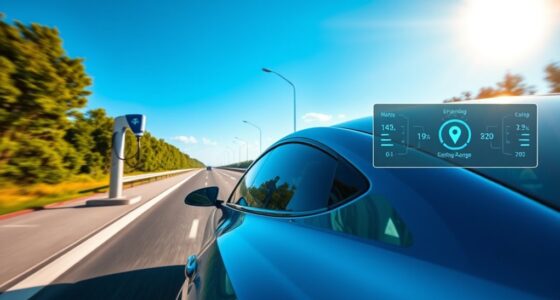
Beginning a cross-country EV trip requires careful planning to guarantee a smooth journey from start to finish. Your first step should be mapping out your route, paying close attention to charging stations along the way. Modern EV navigation apps and online tools can help you identify charging locations, ensuring you won’t be caught off guard in unfamiliar areas. By integrating charging station data into your route planning, you can create a clear, efficient path that minimizes detours and reduces the chances of running low on battery. Route optimization is essential—it’s not just about the shortest distance but about balancing travel time with charging opportunities. This way, you can schedule stops at convenient charging stations, avoiding unnecessary delays and making your trip more predictable.
Careful route planning and charging station integration ensure a smooth, efficient cross-country EV trip.
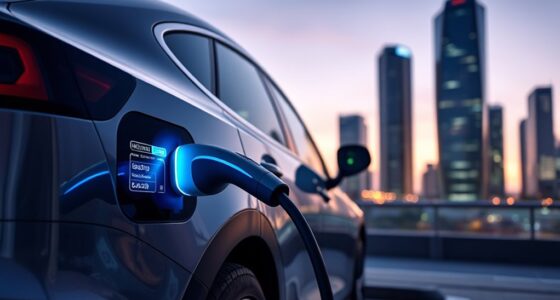
Once you’ve pinpointed the main route, look for high-speed chargers or fast-charging stations along your path. These stations can markedly cut charging time, letting you get back on the road faster. Consider the types of chargers at each station, especially if your EV supports fast charging; planning to stop at stations equipped with the right connectors will save you valuable time. Also, check the hours of operation and availability, as some stations might be busy or temporarily out of service. Having a backup plan—such as alternative charging locations—can prevent unexpected delays and keep your trip on track.
Next, take into account your vehicle’s range and your personal comfort. Evaluate how far your EV can travel on a full charge and plan your charging stops accordingly. If you’re traveling through rural or less populated areas, it’s wise to identify charging stations in advance, as options may be limited. Make sure your EV’s navigation system is updated with the latest maps and charging station databases. This will improve route accuracy and help you spot new or recently installed chargers you might not have known about before. Additionally, understanding energy-efficient cloud solutions and how they can optimize data management during your trip can be beneficial for real-time updates and route adjustments.
Finally, consider the timing of your stops. Spreading out charging sessions evenly throughout your trip ensures you won’t need to wait unnecessarily at stations or risk battery depletion. Keeping track of your battery’s state of charge and planning your stops proactively helps you maintain a steady pace. With thorough route optimization and a well-researched charging station plan, you’ll enjoy a smoother, more efficient cross-country EV trip. Proper planning minimizes stress, saves time, and allows you to focus on the sights and experiences along the way.
Products Worth Considering

Nextbase iQ 4K Smart HD Dash Cam Pro with 64GB microSD Card – Front and Rear View, 1440p, Smart Sense Parking, Emergency SOS, Roadwatch AI

NOCO Boost GB70 2000A 12V Lithium Jump Starter

Autel MaxiCOM MK808S Bidirectional Automotive Diagnostic Scanner
As an affiliate, we earn on qualifying purchases.
Frequently Asked Questions
How Do I Find Reliable Charging Stations Along Remote Routes?
To find reliable charging stations along remote routes, you should use trusted charging network apps like PlugShare or ChargePoint. These apps provide real-time updates on station status and dependability, helping you avoid broken chargers. Always plan your route with multiple options, and check reviews for station reliability before you arrive. Keeping your navigation updated ensures you won’t get stranded, and you’ll have confidence in your charging stops.
What Should I Do if My EV Runs Out of Battery Unexpectedly?
If your EV unexpectedly runs out of battery, stay calm and activate your emergency preparedness plan. Use your roadside assistance service or a backup charger if available. Remember, regular battery maintenance helps prevent this situation. Carry a portable charger and keep your navigation app updated with nearby charging stations. Staying prepared guarantees you can handle emergencies confidently and keep your trip moving smoothly, even in unexpected situations.
How Can I Reduce Charging Time During the Trip?
To decrease charging time during your trip, focus on using fast charging stations whenever possible. Make sure your EV’s battery cooling system is functioning well, as cooling helps speed up charging. Plan your stops ahead to target these stations, and avoid charging during peak hours to minimize wait times. Staying prepared with charging apps and knowing the locations of nearby fast chargers will keep your trip smooth and efficient.
Are There Apps That Optimize Route Planning for EVS?
Think of EV charging apps as your GPS in the world of electric travel. These apps, like PlugShare or A Better Route Planner, are your route optimization tools, guiding you to the fastest charging stations. They analyze real-time data, helping you avoid detours and reduce downtime. With them, you’ll navigate efficiently, ensuring your journey is smooth, saving time, and making your cross-country adventure as epic as a classic road trip.
What Safety Precautions Are Recommended for Long-Distance EV Travel?
When traveling long distances in your EV, prioritize safety by practicing good charging etiquette to avoid delays and conflicts at charging stations. Always carry emergency preparedness items like a first aid kit, portable charger, and extra supplies. Keep your phone charged for navigation and emergency calls. Regularly check your vehicle’s systems, plan charging stops ahead, and stay attentive to weather and road conditions to make certain a safe, smooth journey.
Conclusion
As you reach the final miles of your journey, remember that every mile traveled in your EV is a gentle step toward a more sustainable future. Though the road may have its quiet moments, each charging stop and scenic detour paints a picture of progress and hope. Embrace these small victories, knowing you’re part of a larger movement—one that’s guiding us gently toward brighter horizons. Your adventure leaves a lasting mark, inspiring change one mile at a time.