
When you move to a new state, federal EV incentives usually stay with you, but state-specific perks often depend on your residency and vehicle registration. You must update your registration promptly to maintain eligibility for state rebates or discounts, as delays can mean losing benefits. Some incentives are transferable, while others expire if not claimed within certain periods. To maximize your benefits and avoid surprises, understand new state rules—more details will help you stay informed.

Get backup power and energy gear delivered free with Prime
- Fast, free delivery on millions of items
- Prime Video, Amazon Music and more included
- Member-only deals all year
Key Takeaways
- Federal EV tax credits generally remain available regardless of state residency, but vehicle recertification may be required after moving.
- State-specific incentives or rebates often require registration in the new state within a certain timeframe to maintain eligibility.
- Updating vehicle registration promptly after moving is essential to retain incentives and comply with local emissions standards.
- Some states offer transferable incentives or benefits for EV owners who relocate, but rules vary by jurisdiction.
- Researching new state policies before moving helps plan for registration, possible fee changes, and incentive eligibility.
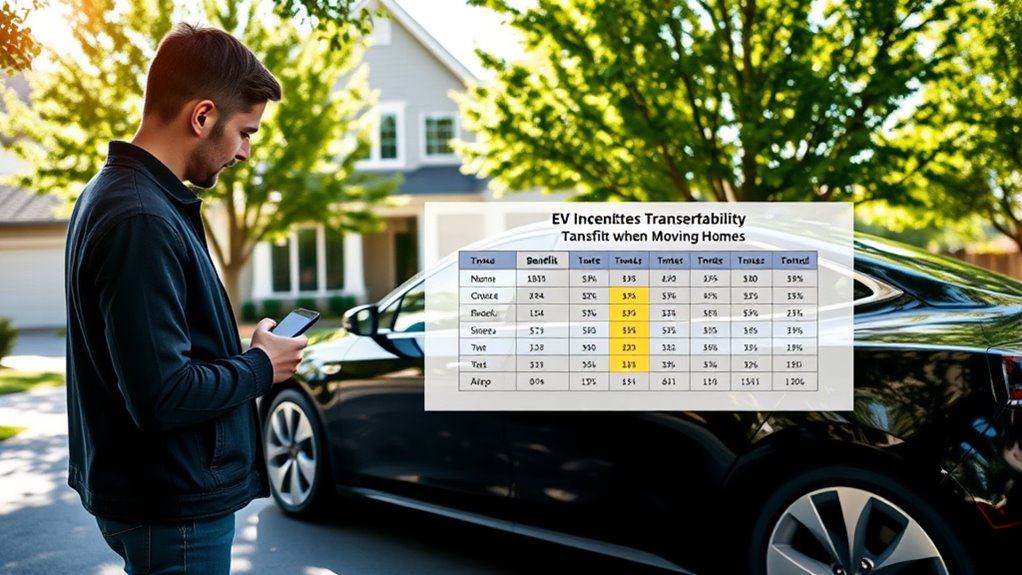
Moving to a new location can complicate your access to electric vehicle (EV) incentives, but understanding how these programs work can help you maximize your benefits. One key factor to contemplate is how tax credits and registration fees are affected by your move. Tax credits are often federal or state-based incentives designed to reduce the overall cost of purchasing an EV. These credits are typically tied to your vehicle purchase, and in many cases, you can claim them regardless of where you live within the country. However, some states have additional incentives or rebates that may only be available to residents or those who register their EV in that state. So, if you move, your eligibility for certain tax credits could change based on your new residency status.
Moving may affect your EV incentives; check state residency rules and registration requirements to maximize benefits.
Registration fees are another important aspect. When you relocate, you’ll need to update your vehicle registration with your new state or local DMV. This process isn’t just administrative; it can also impact your incentives. Some states offer special EV registration discounts or reduced fees to encourage clean vehicle adoption. Moving might mean losing these benefits if you don’t update your registration promptly. Conversely, in states with higher registration fees, relocating might increase your costs unless you qualify for specific EV incentives that offset these expenses. Additionally, the vetted quality and durability of your vehicle can influence ongoing eligibility for certain programs, especially those tied to vehicle longevity or emissions standards.
It’s essential to check whether your new state offers any transferable incentives. Some states have programs that allow you to carry over certain benefits or provide additional incentives for EV owners who move into their jurisdiction. For example, a state might offer a rebate or a reduced registration fee for EVs, but only if you register your vehicle within a certain timeframe after moving. Failing to do so could mean losing out on these advantages. Conversely, if your new state doesn’t offer as many incentives, you might want to explore federal programs, which generally remain accessible regardless of your state, as long as you meet the basic eligibility criteria.
Keep in mind that the specifics can vary widely from one location to another, and incentives are subject to change. It’s a good idea to research your new state’s policies before you move, so you can plan accordingly. This way, you’ll know whether you’ll need to recertify your vehicle, pay different registration fees, or if you’ll qualify for new or continued tax credits. Staying informed empowers you to make the most of available incentives and avoid surprises that could increase your EV ownership costs after your move.
Products Worth Considering

DEWALT 20V MAX Cordless 1/2-Inch Impact Wrench Kit (DCF900P1)

DEWALT 20V MAX 1/4-Inch Impact Driver Kit with Battery and Charger (DCF787D1)

Chemical Guys 16-Piece Arsenal Builder Car Wash Kit with Foam Cannon & Bucket
As an affiliate, we earn on qualifying purchases.
Frequently Asked Questions
Do EV Incentives Transfer Across State Lines Automatically?
EV incentives don’t transfer automatically across state lines. When you do an interstate registration, you might lose eligibility for certain incentives, as they often depend on local policies. Incentive portability varies by state, so check each state’s rules. You may need to reapply or meet new requirements after moving. It’s essential to examine both your current and new state’s policies to maximize your benefits and ensure compliance.
Are There Different Incentives for Leased Versus Purchased EVS?
Think of incentives like a treasure map—you’ll find that leased EVs often qualify for rebates, but some incentives may only apply to purchased vehicles. While EV maintenance is straightforward, charging infrastructure improvements can boost your savings. Always check local policies, as incentives vary by state and lease terms. Moving can change your benefits, so stay informed to maximize your savings and keep your EV running smoothly.
How Does Moving Impact Existing EV Tax Credits?
When you move, your EV tax credits depend on your new state residency and vehicle registration. If you change your address, you may need to reapply for incentives specific to your new location, and some credits may no longer apply. Keep in mind, certain incentives are tied to where your vehicle is registered, so updating your registration is vital to guarantee you receive any applicable benefits.
Can I Combine Multiple State EV Incentives?
Yes, you can combine multiple state EV incentives, like charging station rebates and battery rebates, to maximize your savings. For example, if you move to California, you might qualify for both a charging station rebate and a battery rebate from different programs. Always check each state’s rules, as some incentives stack while others don’t. Combining these benefits can markedly reduce your overall EV costs and enhance your driving experience.
What Documentation Is Required to Transfer EV Incentives?
To transfer EV incentives, you need to provide proof of purchase, such as the sales contract or invoice, along with the vehicle registration. You should also submit documentation showing your move, like a change of address form. Keep in mind, transferring incentives may have tax implications, so consult with a tax professional. Make certain all paperwork is accurate and complete to meet documentation requirements and facilitate a smooth transfer process.
Conclusion
Think of your EV incentives as a delicate garden, thriving under the right conditions. When you move, it’s like transplanting that garden—you need to know which plants (incentives) will carry over and which might need replanting. By understanding the terrain and adjusting your approach, you guarantee your garden continues to flourish. With careful planning, your electric vehicle journey remains smooth, transforming change into an opportunity for growth rather than a setback.