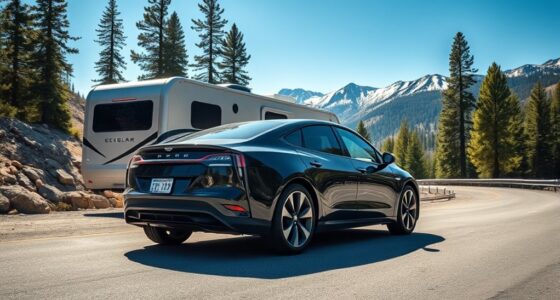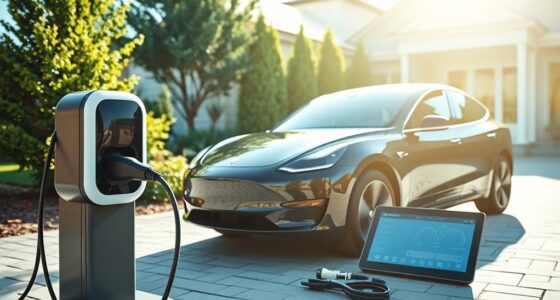
Every year, EV ownership gets easier thanks to expanded charging infrastructure with more stations, including fast chargers that top up your battery in 30 minutes or less. Advances in battery tech give you longer ranges and faster charging, reducing worries about running out of power. Better affordability through lower costs, combined with government incentives, makes buying and owning an EV simpler. To find out how these improvements can make your EV experience even smoother, keep exploring the latest updates.
Key Takeaways
- Charging infrastructure expansion and fast chargers reduce charging time and increase convenience for EV owners.
- Advancements in battery technology extend vehicle range and improve longevity, easing range anxiety.
- Increased charging stations near homes, workplaces, and highways make EV ownership more practical.
- Cost reductions in batteries and vehicles make EVs more affordable and accessible to a broader audience.
- Government incentives and perks, such as tax credits and access privileges, lower ownership costs and enhance appeal.

Owning an electric vehicle just became simpler thanks to recent improvements in charging infrastructure and streamlined registration processes. As more charging stations pop up across cities and highways, you no longer have to plan long trips around limited charging options. Fast chargers are now more common, enabling you to top off your battery in 30 minutes or less, making long-distance travel practical and stress-free. This expansion of charging infrastructure directly addresses one of the biggest concerns about EV ownership: range anxiety. With more charging points readily available, you can confidently drive your electric vehicle knowing that charging stations are just a few miles away.
Battery innovations have played a pivotal role in making EV ownership easier each year. Modern batteries last longer, charge faster, and hold more energy than ever before. Advances in solid-state batteries and other cutting-edge technologies mean your vehicle can go further on a single charge, reducing the frequency of charging stops. These innovations also help lower costs, making EVs more affordable and accessible to a broader audience. Coupled with improvements in battery durability, your vehicle’s lifespan is extended, which means fewer worries about replacing the battery prematurely. The combination of these technological strides ensures you get more mileage for your investment, making EVs a practical choice for both daily commutes and longer trips.
Government incentives further ease the shift to electric driving. Many states and countries now offer tax credits, rebates, and other financial incentives that help offset the initial purchase price of an EV. These incentives can considerably reduce the financial barrier, encouraging more people to switch from traditional gasoline cars. Additionally, some regions provide perks such as access to carpool lanes, free parking, or reduced tolls, adding extra value to owning an EV. These benefits make it easier for you to justify the switch and enjoy the advantages of electric driving without feeling burdened by costs. As governments continue to support clean transportation initiatives, the incentives are expected to grow, making EV ownership even more appealing and affordable.

ChargePoint HomeFlex Level 2 EV Charger J1772 – Fast Smart Battery Power Charging at Home for Electric Automobile Vehicles – Hardwired for Electric Car
- Reliable Home Charging: Builds dependable EV charging stations
- 24/7 Support: Around-the-clock assistance available
- Mobile App Control: Manage charger via smartphone app
As an affiliate, we earn on qualifying purchases.
As an affiliate, we earn on qualifying purchases.
Frequently Asked Questions
How Long Does It Typically Take to Charge an EV Fully?
A full charge for your EV typically takes about 30 minutes to 12 hours, depending on charging speed and battery capacity. Fast chargers can replenish 80% of your battery in around 30 minutes, ideal for quick stops. Level 2 chargers, common at home or public stations, usually take 4-8 hours for a full charge. Larger battery capacities naturally require longer charging times to reach full capacity.
Are There Fast-Charging Options Available Nationwide?
Yes, there are fast-charging options available nationwide. For example, Tesla’s Supercharger network spans most major highways, enabling you to recharge quickly during long trips. Fast charging networks like Electrify America and ChargePoint are expanding rapidly, increasing charging station availability across the country. With these options, you can add significant range in about 20-30 minutes, making EV travel more convenient and reducing long charging stops.
What’s the Average Lifespan of an EV Battery?
Your EV battery typically lasts around 8 to 15 years, depending on usage and maintenance. Battery degradation happens gradually, reducing range over time, but many manufacturers offer warranties up to 8 years. Recycling programs are improving, helping to recover valuable materials and reduce environmental impact. By taking good care of your battery, you can prolong its lifespan, and recycling ensures responsible disposal when it finally reaches the end of its life.
How Do Government Incentives Vary by Region?
Government incentives vary widely by region, so you should check local policies to maximize benefits. Many areas offer attractive incentive programs, including tax credits, rebates, and reduced registration fees. Regional policies can substantially lower your upfront costs and encourage EV adoption. By researching your area’s specific incentive programs, you can save money and make the switch to electric vehicles more affordable and convenient.
Can I Install a Home Charging Station Easily?
Yes, you can install a home charging station easily, but you’ll need to check your electrical requirements first. A professional can assess your electrical system and determine if upgrades are necessary. Most installations involve adding a dedicated circuit and ensuring your home’s wiring can handle the charger’s power needs. With proper planning and professional help, setting up your home charging station becomes a straightforward process, making EV ownership even more convenient.

EV Battery Health: Understanding Degradation, Range, and Long-Term Care (EV Owner & Service Series)
As an affiliate, we earn on qualifying purchases.
As an affiliate, we earn on qualifying purchases.
Conclusion
Every year, EV ownership becomes smoother and more convenient, transforming what once felt like a futuristic dream into everyday reality. With advancements in charging tech, increased range, and expanding infrastructure, you’ll wonder how you ever lived without your electric ride. It’s like the universe conspiring to make your life easier—faster, cleaner, and smarter. So, buckle up, because the future of driving is here, and it’s more accessible than ever before. Your electric adventure awaits!
ChargePoint HomeFlex Level 2 EV Charger J1772 – Fast Smart Battery Power Charging at Home for Electric Automobile Vehicles – Hardwired for Electric Car
- Reliable Home Charging: Builds dependable EV charging stations
- 24/7 Support: Around-the-clock assistance available
- Mobile App Control: Manage charger via smartphone app
As an affiliate, we earn on qualifying purchases.
As an affiliate, we earn on qualifying purchases.

THE FUTURE OF ELECTRIC VEHICLES: A SUSTAINABLE SOLUTION
As an affiliate, we earn on qualifying purchases.
As an affiliate, we earn on qualifying purchases.