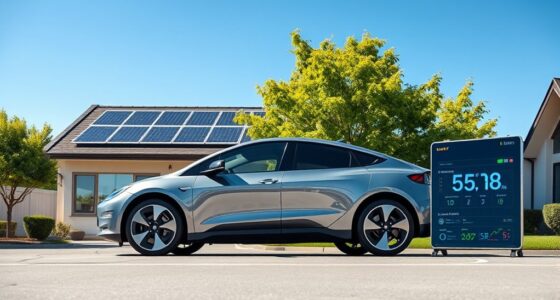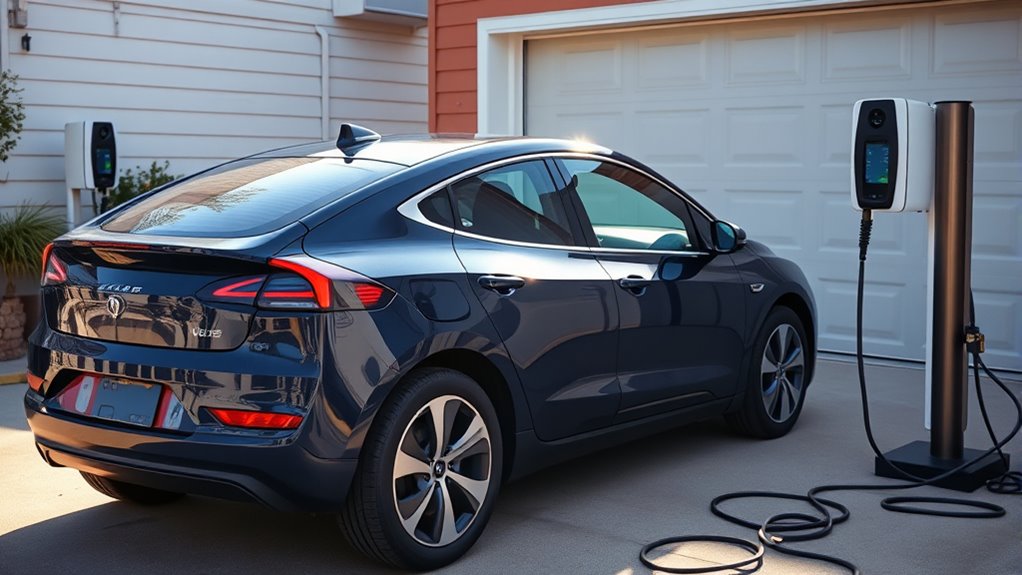

If you wake up to a dead EV, don’t panic. First, check for nearby charging stations using your navigation app or a public charging map. Opt for a fast charger if possible to maximize your recharge quickly. If no station is close, consider mobile charging services or ask a friend for help with a portable charger. Being prepared with knowledge about local options guarantees you’ll find a quick fix. Keep going to discover more solutions to get back on the road fast.

Get backup power and energy gear delivered free with Prime
- Fast, free delivery on millions of items
- Prime Video, Amazon Music and more included
- Member-only deals all year
Key Takeaways
- Use navigation apps to locate the nearest fast-charging station for quick top-up.
- Opt for fast chargers to replenish 80% of your battery within 20-30 minutes.
- Consider mobile charging services if no nearby stations are available or accessible.
- Check real-time station updates to find available chargers and avoid wait times.
- Plan future charging options, such as workplace or public chargers, to prevent similar situations.

Ever found yourself stranded with a dead electric vehicle (EV) and no charging station in sight? It’s a frustrating situation, especially if you’re pressed for time or in a hurry. But don’t panic. There are quick solutions to get you back on the road, even if you didn’t plan ahead. First, check your nearby options—some public charging stations might be hidden or less obvious. Use your smartphone or a navigation app to locate the nearest charging points. If you spot a station, remember to follow proper charging station etiquette; be courteous when connecting your EV, avoid occupying chargers longer than necessary, and be mindful of others waiting. Many charging stations now offer fast charging, which considerably reduces your wait time. EV charging speed varies depending on the station and your vehicle’s capabilities. Fast chargers can often replenish 80% of your battery in as little as 20 to 30 minutes, so even a brief stop can make a big difference. If you’re in a hurry, prioritize quick chargers over standard ones—they’re designed for speed and efficiency.
While waiting, consider your options carefully. If your EV’s battery is critically low, go for the fastest charging station available. Keep in mind, though, that rapid charging can sometimes impact your battery’s long-term health if used excessively, but in a pinch, it’s the best solution to get you moving again. If no charging stations are nearby, think about alternative solutions. Some EV models support mobile charging services, where technicians bring a portable charger to your location. This can be a lifesaver if you’re in a remote area or stuck without any nearby charging options. Additionally, some workplaces, shopping centers, or public facilities offer free or paid charging stations—so keep those in mind for future planning.
Once you find a station, connect your EV, and keep an eye on the charging speed. Many modern chargers display real-time updates, so you can see how quickly your battery is replenishing. If you’re in a busy area, be prepared to move your vehicle promptly once charging is complete, respecting other drivers’ turn. Remember, patience and courtesy go a long way in charging station etiquette. Being aware of home charging options and capabilities can help you plan better and avoid unexpected situations. In the end, a little preparation can help you avoid this predicament altogether, but when it happens, quick thinking and understanding your charging options can save your day.
Products Worth Considering

Autel 40A Level 2 EV Charger, 240V NEMA 14-50 J1772, WiFi, 25ft Cable

Autel MaxiCharger Level 2 EV Charger, 40A, 240V, Indoor/Outdoor, 25‑Foot Flexible Cable, NEMA 14‑50 Plug (White)

Autel Home EV Charger up to 50A J1772 Hardwired Level 2 Charger with 25 ft Cable
As an affiliate, we earn on qualifying purchases.
Frequently Asked Questions
Can I Safely Charge My EV With a Standard Outlet?
Yes, you can safely charge your EV with a standard outlet, but you should prioritize charging safety and confirm outlet compatibility. Use a dedicated, grounded outlet to prevent overloads, and consider installing a Level 1 charging station if possible. Always check your vehicle’s manual for specific recommendations, and avoid extension cords or adapters that aren’t rated for high current. This way, you keep your charging process safe and efficient.
What Should I Do if My EV Doesn’t Start Charging?
Well, if your EV refuses to start charging, first check if the charging station is compatible—sometimes, it’s a simple case of incompatible connectors or settings. Confirm your vehicle’s battery health management system isn’t preventing charging due to a low battery state. If that doesn’t work, try restarting both your EV and the station, or consider trying a different charger. Sometimes, even your car needs a little patience—and a proper connection.
How Long Can I Drive My EV Without a Full Charge?
You can usually drive your EV for about 70-150 miles without a full charge, depending on your model and driving conditions. To avoid range anxiety, plan your trips around available charging stations and keep an eye on your battery level. If you’re nearing empty, find the closest charging station to top off quickly. Staying aware of your range helps you prevent surprises and keeps your journey smooth.
Is It Harmful to Leave My EV Plugged in Overnight?
Leaving your EV plugged in overnight is generally safe, supporting battery health and charging safety. Modern EVs are designed with safeguards to prevent overcharging, so your car stops charging once full. That said, avoid extreme temperatures and check your vehicle’s guidelines. Staying plugged in helps maintain ideal battery performance and peace of mind, ensuring your EV stays ready without risking harm or compromising safety.
Are There Portable Chargers Available for Emergencies?
Yes, portable chargers are available for emergencies, providing emergency power when your EV’s battery is drained. These compact devices can deliver a quick boost, so you’re not stranded. Keep a portable charger in your car for unexpected situations, ensuring you have a reliable backup to recharge your EV when needed. They’re easy to use and a smart safety measure for those who want peace of mind during long trips or busy days.
Conclusion
So, next time you wake up to a dead EV, don’t panic like a knight without his lance. Instead, try plugging in at the nearest charging station, using a portable charger if you have one, or even jump-starting from a friend’s car. Remember, even the most legendary heroes faced setbacks—it’s all about quick thinking and resourcefulness. With these tips, you’ll be back on the road faster than you can say “Great Scott!”