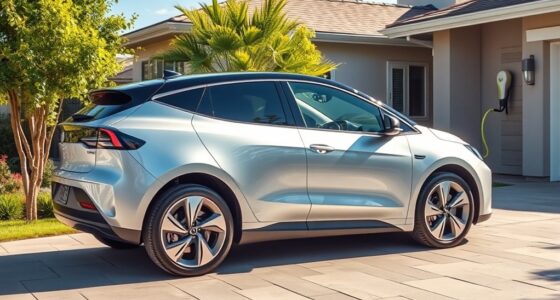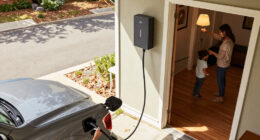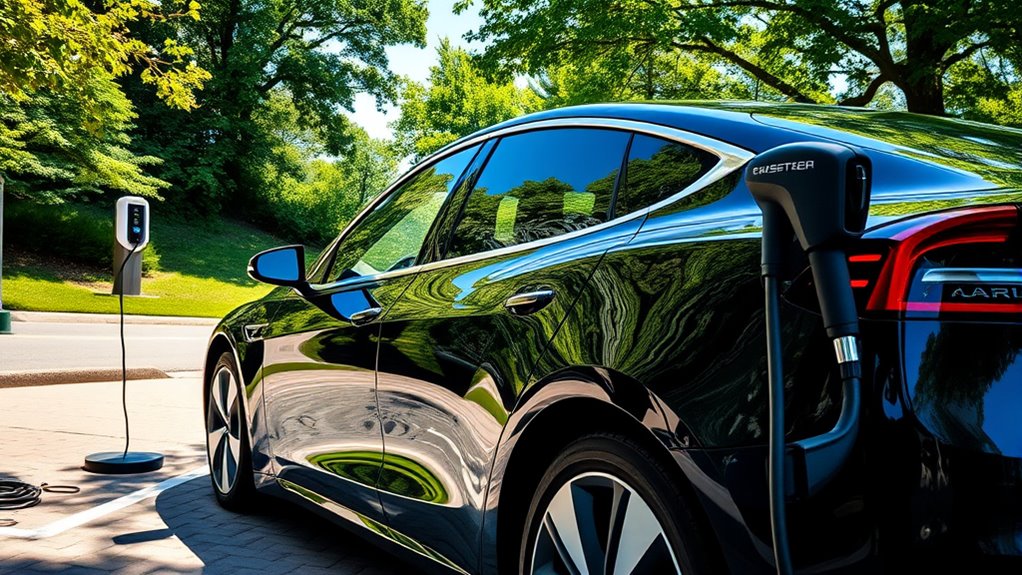

If you’re parking your EV long-term, keep the battery charge around 50-70% using solar or storage solutions to avoid capacity loss. Park in shaded areas to prevent temperature damage, and use vehicle features to maintain stable temperatures. Regularly check your battery’s status and avoid full charges or discharges. By managing these factors, you’ll keep your battery healthy even when you’re not driving much. Learn more about maintaining your EV’s battery for extended parking.

Get backup power and energy gear delivered free with Prime
- Fast, free delivery on millions of items
- Prime Video, Amazon Music and more included
- Member-only deals all year
Key Takeaways
- Keep the battery charge between 50% and 70% using solar power or minimal charging to prevent capacity loss.
- Park in shaded or climate-controlled areas to minimize temperature-related battery degradation.
- Regularly monitor the battery’s charge level via mobile app or onboard display for optimal maintenance.
- Use solar energy stored during sunny periods to maintain a healthy charge without over-reliance on grid charging.
- Disconnect from chargers or solar systems when not in use to avoid overcharging and preserve battery longevity.
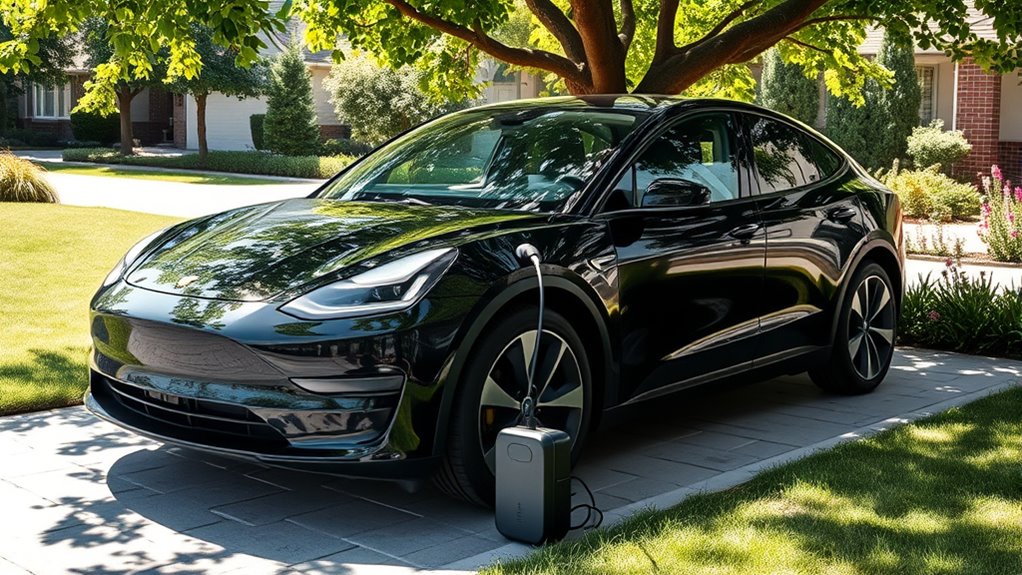
When your electric vehicle is parked for an extended period, maintaining its battery health is essential to guarantee peak performance and longevity. If you don’t plan to drive your EV regularly, you need to take specific steps to prevent battery degradation. One effective approach involves leveraging solar charging and battery storage solutions. Installing a solar charging system allows you to harness sunlight to keep your battery topped up without relying solely on grid power. This sustainable method ensures your EV’s battery remains at ideal charge levels, reducing the risk of it discharging completely and suffering capacity loss over time. When combined with a dedicated battery storage system, solar energy can be stored during sunny periods, providing a reliable power source whenever your vehicle is parked. This setup minimizes the need for manual charging and keeps your battery in a healthy state, preserving its capacity.
Using solar and battery storage keeps your EV’s battery healthy during extended parking periods.
You should also pay attention to the recommended state of charge for long-term parking. Most EV manufacturers suggest maintaining the battery at around 50% to 70% charge, avoiding full charges or complete discharges. Using solar charging paired with battery storage makes it easier to maintain this perfect level, especially if you’re not around to plug in manually. Keep an eye on your vehicle’s charge level through your mobile app or onboard display, and top it off as needed, preferably during peak sunlight hours. This proactive approach prevents the battery from falling into low-charge territory, which can cause capacity fade over time. Furthermore, understanding battery management systems can help optimize long-term storage and prevent unnecessary wear.
Temperature plays a crucial role in battery health, so park your EV in a shaded or climate-controlled area if possible. Extreme heat or cold accelerates battery wear, so maintaining a stable environment supports your efforts. If your vehicle supports pre-conditioning or climate control while parked, use these features to keep the battery within safe temperature ranges, especially during long storage periods. Additionally, disconnecting the vehicle from the charger or solar system when not in use can prevent overcharging, which might harm the battery. Regularly checking your vehicle’s status and adjusting your solar charging or storage setup accordingly helps preserve a consistent, healthy charge level.
Ultimately, combining solar charging with a proper battery storage system offers a sustainable, low-maintenance way to keep your EV’s battery healthy during extended parking. It minimizes risks associated with self-discharge, temperature fluctuations, and capacity loss, ensuring your vehicle remains ready to go whenever you need it. Taking these steps now can greatly extend your EV’s battery lifespan, saving you money and hassle in the long run.
Products Worth Considering

DEWALT 20V MAX 1/4-Inch Impact Driver Kit with Battery and Charger (DCF787D1)

Milwaukee M18 FUEL 18V Lithium-Ion Brushless Cordless 1 in. Impact Wrench Extended Reach D-Handle Kit with Two 12.0 Ah Batteries

Nextbase iQ 4K Smart HD Dash Cam Pro with 64GB microSD Card – Front and Rear View, 1440p, Smart Sense Parking, Emergency SOS, Roadwatch AI
As an affiliate, we earn on qualifying purchases.
Frequently Asked Questions
How Often Should I Check My Ev’s Tire Pressure During Long Stops?
You should check your EV’s tire pressure at least once a month during long stops. Proper tire maintenance is vital to prevent flat spots and guarantee safety. Temperature changes can affect tire pressure, so regular checks help you catch any leaks or pressure drops early. Use a reliable gauge and inflate your tires to the recommended PSI to keep your tires in peak condition and extend their lifespan.
Can I Leave My EV Plugged in Continuously Without Damaging the Battery?
You can leave your EV plugged in continuously without damaging the battery; in fact, it helps maintain ideal charge levels. Studies show that frequent charging cycles improve battery calibration, ensuring better range accuracy. Just make sure your vehicle’s settings are adjusted to prevent overcharging, and avoid leaving it plugged in excessively long once the battery is full. This way, you protect your battery’s longevity while keeping it ready to go.
What’s the Best Way to Prevent Battery Drainage Over Extended Parking Periods?
To prevent battery drainage during extended parking, you should enable solar charging if available, as it helps keep the battery topped off naturally. Also, manage the temperature by parking in a shaded or garage area to avoid extreme heat or cold, which can degrade the battery. Regularly check your vehicle’s battery status and consider setting it to a maintenance mode if your EV offers that feature.
Should I Disconnect the 12V Auxiliary Battery When Parking for Months?
You should consider doing a 12v disconnect on your auxiliary battery if you’re parking your EV for months. This prevents unnecessary drain, preserving battery health. By disconnecting the auxiliary battery, you reduce the risk of it discharging completely and causing issues when you’re ready to drive again. Just make sure to follow your vehicle’s specific instructions for safe disconnection, and reconnect it before driving.
Are There Specific Storage Environments Recommended for Long-Term EV Parking?
Keep your EV in a climate-controlled environment for long-term parking. You want to avoid high humidity in the garage, which can lead to corrosion, and maintain a steady temperature to prevent battery degradation. A cool, dry garage is ideal—think consistent temperatures around 20°C (68°F). If you ignore these details, your battery’s health could unexpectedly suffer. Don’t leave it to chance—choose a storage environment that protects your vehicle’s future.
Conclusion
Even if you don’t drive often, neglecting your EV’s battery can lead to unexpected issues. Think of it as nurturing a delicate plant—you need to care for it regularly to keep it alive and thriving. When parked for long periods, a little attention preserves its health and extends its lifespan. Don’t let your EV’s battery become a forgotten relic; instead, give it the love and care it needs to stay ready for your next adventure.