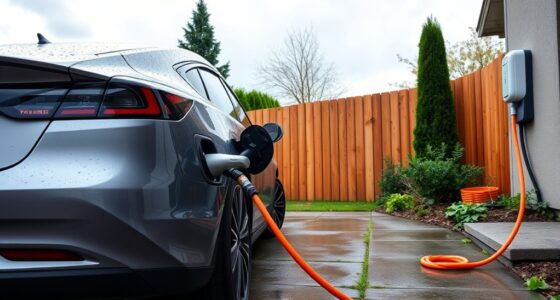
Accessible EV charging stations are designed to make charging easy and comfortable for drivers with disabilities. They include features like designated parking spots close to chargers, wider spaces for mobility aids, and adaptive technology such as tactile buttons and audio prompts. These innovations help you charge confidently without barriers. As more stations adopt inclusive design, your options expand, ensuring independence and convenience. Keep exploring to discover how these smart solutions are improving accessibility for all EV drivers.

Get backup power and energy gear delivered free with Prime
- Fast, free delivery on millions of items
- Prime Video, Amazon Music and more included
- Member-only deals all year
Key Takeaways
- Accessible EV charging stations feature designated parking spots with wider spaces near charging units for ease of access.
- Adaptive technology such as tactile interfaces, audio prompts, and voice controls assist drivers with disabilities.
- Stations are designed with universal principles, incorporating adjustable or wheelchair-accessible charging ports.
- Clear signage, pavement markings, and proximity to accessible parking enhance usability for drivers with disabilities.
- Ongoing innovations aim to improve convenience, independence, and broader adoption of accessible EV charging solutions.
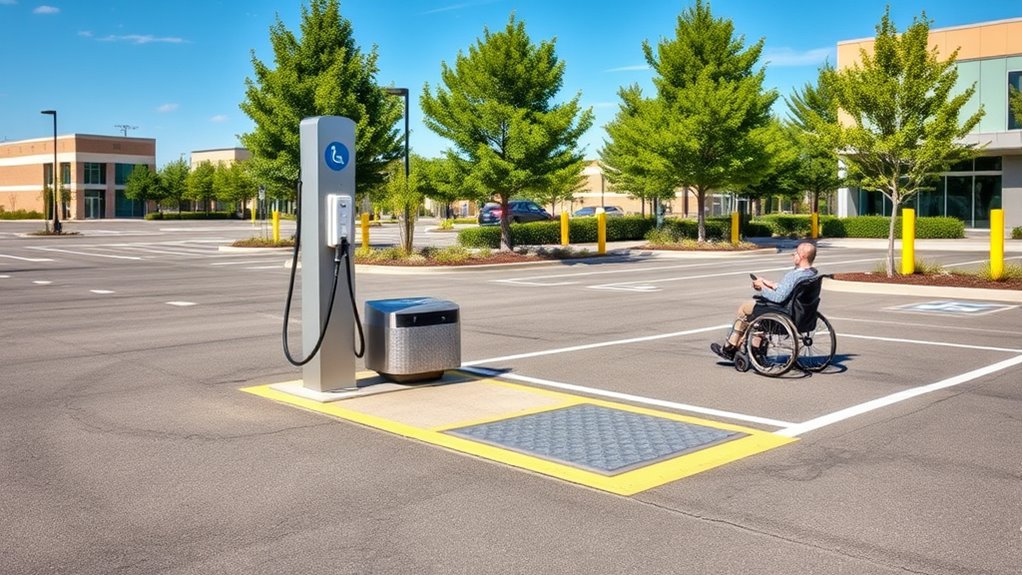
For drivers with disabilities, accessing reliable and convenient EV charging stations is essential to fully enjoy the benefits of electric vehicles. Without accessible facilities, you might find yourself limited by physical barriers that prevent easy entry and use. Fortunately, many charging stations are now designed with accessibility in mind, incorporating features like designated accessible parking spots and adaptive technology to make charging straightforward and stress-free. These improvements ensure you can park close to the charging unit without difficulty, allowing you to connect your vehicle comfortably and efficiently.
Accessible parking plays a crucial role in supporting your needs. When a charging station offers designated accessible parking spots, you gain the convenience of parking close to the charger, reducing physical strain and minimizing the distance you need to walk. These spots are typically wider, allowing room for mobility aids such as wheelchairs or scooters, and are often located near the station for quick access. Clear signage and pavement markings help you identify these spots easily, so you don’t waste time searching for suitable parking. By prioritizing accessible parking, charging stations acknowledge the importance of inclusive design, making electric vehicle ownership more attainable for everyone.
Designated accessible parking spots make EV charging easier and more inclusive for drivers with disabilities.
Adaptive technology further enhances the charging experience for drivers with disabilities. Many stations now feature user-friendly interfaces with tactile buttons, large displays, and audio prompts to assist users with visual or mobility impairments. Touchscreens may be replaced or supplemented with voice-activated controls, enabling you to operate the charger without needing to reach or see small details. Some stations also incorporate adjustable or wheelchair-accessible charging ports, allowing you to connect your vehicle comfortably regardless of your physical position. These technological advances ensure that charging your EV is not only possible but also simple and comfortable, regardless of your physical limitations.
As the infrastructure continues to evolve, more charging stations are adopting universal design principles to accommodate a diverse range of needs. This progress reflects a broader commitment to inclusivity, recognizing that accessible charging solutions benefit all users by making EV ownership more practical and convenient. You’ll find that with these thoughtful features, you can confidently plan your trips, knowing that charging your vehicle won’t be hindered by accessibility issues. Whether you’re parking or connecting your car, accessible parking and adaptive technology work together to remove barriers, giving you independence and peace of mind while enjoying the many advantages of electric driving. Additionally, ongoing advancements in accessible charging technology are expected to further improve the overall user experience for drivers with disabilities.
Frequently Asked Questions
Are There Government Incentives for Accessible EV Charging Stations?
Yes, there are government grants and disability incentives available for accessible EV charging stations. You can apply for federal and state programs that provide funding to install accessible chargers, making charging easier for drivers with disabilities. These incentives aim to promote inclusivity and help offset installation costs. By taking advantage of these programs, you support accessible transportation and ensure everyone can benefit from the shift to electric vehicles.
How Can I Locate Accessible Charging Stations Nationwide?
Finding accessible charging stations nationwide is like using a GPS for your journey; it guides you smoothly. You can locate these stations through accessible maps online or station apps that highlight features like ramps and designated parking. Download apps like PlugShare or ChargePoint, filter for accessible stations, and plan your route confidently. These tools make it easy to find the right charging spots wherever you travel.
Do All Public Chargers Comply With Disability Accessibility Standards?
No, not all public chargers conform to disability accessibility standards. You should look for chargers designed to meet specific design standards and legal compliance for accessibility. These standards ensure features like lowered height, clear space, and easy-to-use controls. Before using a charger, verify it adheres to these standards to ensure it’s accessible for you. Always check for signage or ask station staff if you’re unsure about a charger’s compliance.
What Modifications Are Available for Home Charging Stations?
Think of your home charging station as a tailored suit—customized just for you. You can add home modifications like lowered charging ports or ramps, making access effortless. Adaptive equipment such as extended cords or touchless chargers can further enhance convenience. These modifications turn your charging space into a welcoming gateway, ensuring independence. By customizing your setup, you create a seamless, accessible experience that fits your unique needs perfectly.
How Can I Provide Feedback on Accessibility Issues at Charging Sites?
You can provide feedback on accessibility issues at charging sites through the designated feedback channels or reporting procedures typically available on the station’s website or app. Use these channels to clearly describe the problem, including specific details about the accessibility barrier. Your feedback helps operators address issues promptly and improve accessibility. Don’t hesitate to follow up if your concerns aren’t addressed, ensuring your voice contributes to more inclusive charging experiences.
Conclusion
As a driver with a disability, accessible EV charging isn’t just a convenience—it’s a necessity. Did you know that nearly 1 in 4 Americans with disabilities face transportation barriers? By advocating for inclusive charging solutions, you help create a more equitable future where everyone can enjoy the benefits of electric vehicles. Your voice matters in pushing for accessible infrastructure, ensuring you and others with disabilities can charge confidently and comfortably wherever you go.
Halloween Picks
halloween
As an affiliate, we earn on qualifying purchases.