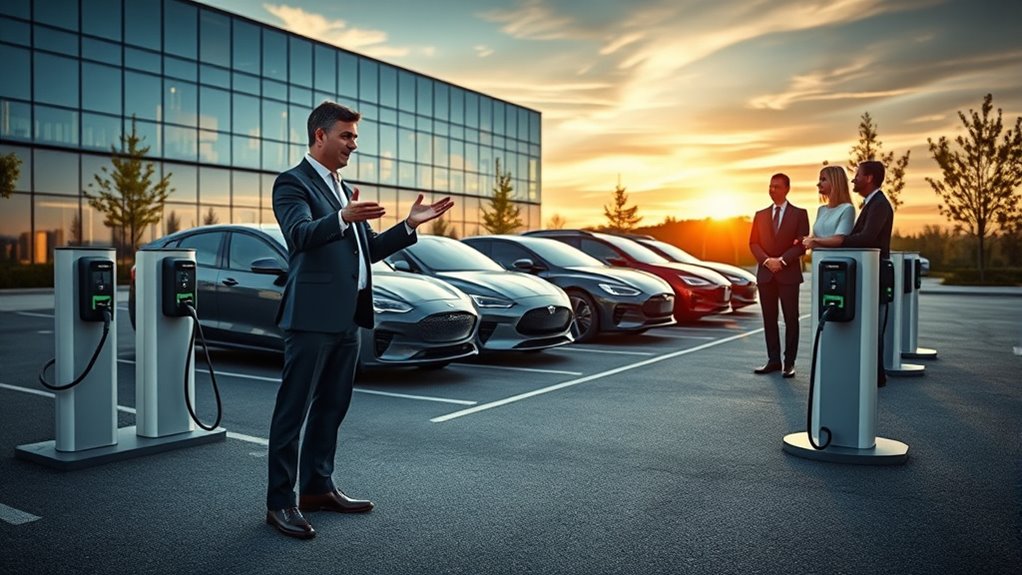

To convince your employer to install workplace EV chargers, highlight the financial incentives and long-term savings they can gain through rebates, grants, and lower energy costs. Emphasize how chargers boost the company’s sustainability reputation, attract eco-conscious employees, and support corporate responsibility goals. Show how this move can differentiate your company from competitors and improve employee retention. For proven strategies and details, keep exploring how you can make a compelling case.

Get backup power and energy gear delivered free with Prime
- Fast, free delivery on millions of items
- Prime Video, Amazon Music and more included
- Member-only deals all year
Key Takeaways
- Highlight how installing chargers demonstrates corporate responsibility and enhances brand reputation among eco-conscious clients and stakeholders.
- Present available financial incentives, rebates, and long-term savings to make a compelling economic case.
- Emphasize how workplace chargers attract environmentally minded talent and boost employee satisfaction and retention.
- Show alignment with sustainability goals and market differentiation by positioning the company as an industry leader in green initiatives.
- Use local EV adoption data and environmental impact benefits to strengthen your proposal and motivate investment.

Installing workplace electric vehicle (EV) chargers is more than just a convenience; it’s a strategic move that benefits both employers and employees. As electric vehicles become increasingly popular, offering charging stations at work can make your company stand out and demonstrate a commitment to sustainability. One of the most compelling reasons to advocate for workplace EV chargers is the availability of electric vehicle incentives. Many government programs and local initiatives provide financial rebates, tax credits,, and grants to businesses that install EV charging stations. These incentives can considerably offset installation and operational costs, making the investment more affordable and attractive. By highlighting these benefits, you can present a strong case to your employer that installing chargers isn’t just an environmental gesture but also a financially savvy decision.
Installing workplace EV chargers boosts sustainability and benefits from government incentives that offset costs.
Beyond financial incentives, workplace sustainability plays a vital role in today’s corporate responsibility landscape. Companies that adopt eco-friendly practices enhance their brand reputation, attract environmentally conscious clients, and appeal to a workforce that values sustainability. Installing EV chargers aligns with these goals by reducing the company’s carbon footprint and encouraging employees to choose cleaner transportation options. When employees see their employer actively supporting renewable energy and sustainable commuting, it boosts morale and loyalty. Moreover, integrating EV charging stations into your workplace can position your company as an industry leader in environmental stewardship, which can be a powerful differentiator in the competitive marketplace. Additionally, investing in European cloud servers and sustainable technology infrastructure can further reinforce your company’s commitment to innovation and eco-friendly practices.
To effectively advocate for workplace EV chargers, you need to present a well-researched proposal that emphasizes both the environmental and economic benefits. Gather data on local electric vehicle adoption rates, available incentives, and the potential positive impact on your company’s sustainability goals. Demonstrate how installing chargers can lead to long-term savings through reduced energy costs and potential tax benefits. Highlight how offering charging stations can support employee retention and attract new talent, especially among younger generations who prioritize sustainability. It’s also helpful to mention that many workplaces are setting ambitious sustainability targets, and installing EV chargers can be a tangible step toward achieving those goals.
Your role is to communicate these advantages clearly and persuasively, emphasizing that this initiative isn’t just a trend but a strategic move that aligns with broader corporate objectives. By doing so, you can motivate your employer to see the value in investing in workplace EV infrastructure—an investment that pays off environmentally, financially, and reputationally. With the right approach, you’ll position yourself as a proactive advocate for sustainability and innovation in your workplace.
Products Worth Considering

Innova 5610 OBD2 Bidirectional Scan Tool

Autel Home EV Charger up to 50A J1772 Hardwired Level 2 Charger with 25 ft Cable

Vantrue N2X 2.7K Dual Dash Cam (Front and Inside)
As an affiliate, we earn on qualifying purchases.
Frequently Asked Questions
What Are the Initial Costs Involved in Installing Workplace EV Chargers?
The initial installation costs for workplace EV chargers vary depending on the charger type and setup, typically ranging from $2,000 to $5,000 per unit. You should also consider ongoing maintenance expenses, which are generally low but can include software updates and occasional repairs. Planning for electrical upgrades might increase costs, but investing in chargers can boost employee satisfaction and sustainability efforts, making it a worthwhile expense.
How Do EV Chargers Impact Overall Workplace Safety Protocols?
Ironically, installing EV chargers actually boosts safety. You’ll need to update safety training and emergency procedures to address new electrical risks, but these improvements reduce hazards. Properly maintained chargers prevent electrical fires, and clear protocols ensure quick responses. Your workplace becomes safer as staff learn to handle new equipment confidently, turning potential safety concerns into an opportunity for enhanced training and better emergency preparedness.
Are There Any Legal or Zoning Restrictions for Installing EV Chargers?
You should check local zoning regulations and permit requirements before installing EV chargers. Many areas have specific rules about where chargers can be installed, and you might need to obtain permits to guarantee compliance. Contact your city or county planning office to understand these restrictions and streamline the approval process. Doing this upfront helps avoid delays, so you’re prepared to install chargers legally and efficiently.
How Can I Measure the ROI of Installing Workplace EV Chargers?
To measure your ROI, perform a clear cost analysis to compare installation expenses with potential savings and incentives. Track employee engagement by monitoring charger usage and employee feedback. Increased employee satisfaction and attraction can boost productivity and retention. You’ll see returns through reduced fuel costs, enhanced company reputation, and improved morale. This thorough tracking transforms investment into tangible benefits, making your workplace a more attractive, efficient, and eco-friendly environment.
What Incentives or Rebates Are Available for Workplace EV Charging Stations?
You can take advantage of various incentives and rebates for workplace EV charging stations, including federal tax credits and state rebates. These incentives can substantially reduce installation costs and improve ROI. Check with local and state agencies, as well as utility providers, to find current programs. Applying for these rebates and credits is straightforward, and they can make a compelling financial case for your employer to invest in EV chargers.
Conclusion
By advocating for workplace EV chargers, you’re helping to promote sustainable commuting and support your company’s green initiatives. Did you know that workplaces with EV chargers see a 20% increase in employee EV adoption? Your voice can make a difference, encouraging your employer to invest in this essential infrastructure. Together, you can create a smarter, more eco-friendly workplace that benefits everyone—and the planet. Take the step today to make electric vehicle support a priority.