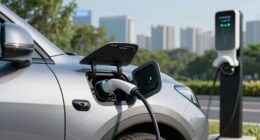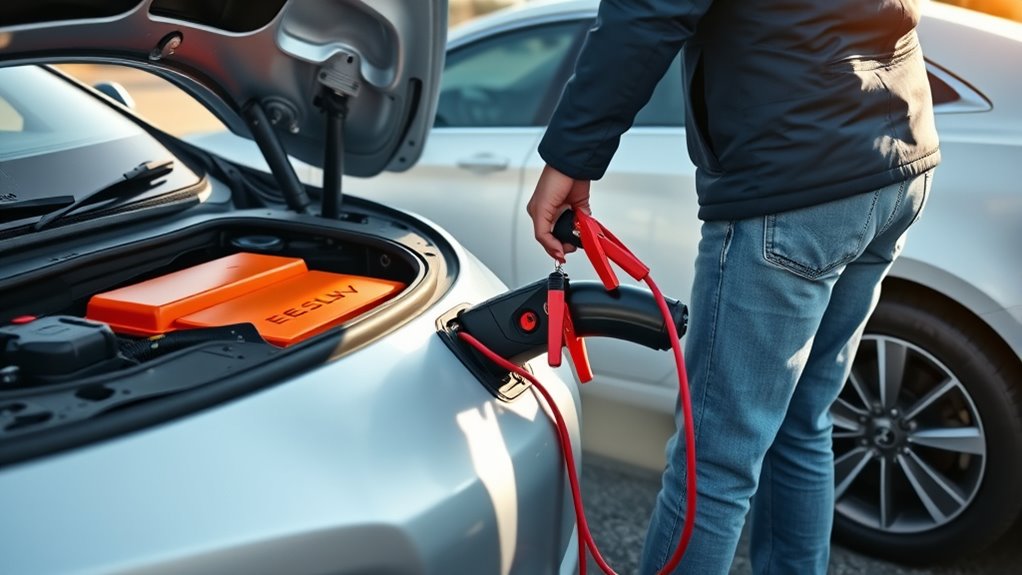

You can’t jump-start another car directly from your EV’s high-voltage battery, but you can use the 12V auxiliary system, similar to a traditional car battery. This 12V system powers internal electronics and can provide the necessary power to jump-start a vehicle with standard jumper cables. Just make certain you follow the correct safety procedures and your vehicle’s manual. To understand the detailed steps and precautions, keep exploring how your EV’s 12V system works and best practices.
Key Takeaways
- EVs have a dedicated 12V auxiliary battery used for internal systems, similar to conventional cars.
- Jump-starting an EV with another vehicle typically involves connecting the 12V systems, not the high-voltage traction pack.
- Always consult the EV owner manual to confirm if jump-starting via the 12V system is supported and safe.
- Proper safety precautions are essential due to high-voltage components; only connect the 12V batteries with appropriate procedures.
- Using a conventional vehicle to jump-start an EV is possible if the 12V system is compatible and the process follows manufacturer guidelines.

If your electric vehicle’s battery is dead and you need to get it started quickly, jump-starting it with a car can be a practical solution. However, because EV batteries differ markedly from traditional combustion engine batteries, you need to approach this process with caution. First and foremost, understanding battery safety is vital. Unlike conventional car batteries, EV batteries are high-voltage systems stored in large packs, and attempting to jump-start an EV using a standard vehicle’s 12V battery requires careful attention to avoid damage or injury. Always consult your vehicle’s owner manual before proceeding, as some EVs are not designed to be jump-started this way, and doing so could void warranties or cause safety hazards.
When considering whether to jump-start your EV with another vehicle, you must be aware of the differences in voltage and system configuration. Many EVs have a 12V auxiliary battery that powers internal systems, but the main traction battery operates at much higher voltages. If your EV’s 12V system is dead, you might be able to jump-start it using a conventional car, but only if the process follows proper jump start procedures. These procedures involve connecting the jumper cables correctly—positive to positive, negative to a grounding point—and ensuring the vehicles are turned off initially. After making the connections, you turn on the donor vehicle and wait a few minutes to allow the EV’s 12V system to recharge slightly before attempting to start the EV.
Throughout this process, battery safety remains paramount. You should wear protective gear and avoid touching metal parts during connections to prevent sparks or electrical shorts. Make sure the jumper cables are in good condition with no frayed wires, and double-check your connections before powering on either vehicle. Once connected, start the donor vehicle, then attempt to start your EV. If it doesn’t respond immediately, wait a few moments, then try again. After the EV starts, disconnect the cables in reverse order—first the negative, then the positive—being careful not to let the clamps touch each other or other metal surfaces. Additionally, voltage differences between systems can impact the safety and effectiveness of the jump-start process, so always proceed with caution and proper knowledge.

NOCO Boost GB40: 1000A UltraSafe Jump Starter – 12V Lithium Battery Booster Pack, Portable Jump Box, Power Bank & Jumper Cables – for 6.0L Gas and 3.0L Diesel Engines
START DEAD BATTERIES — Instantly start dead batteries with 1000 amps of peak lithium power. Up to 20…
As an affiliate, we earn on qualifying purchases.
As an affiliate, we earn on qualifying purchases.
Frequently Asked Questions
Can I Jump-Start an Ev’s Main Battery Using a Traditional Car?
No, you can’t jump-start an EV’s main battery with a traditional car. EVs rely on high-voltage batteries that require specific charging station compatibility and advanced battery health management systems. Attempting to jump-start could damage the system or cause safety issues. Instead, use manufacturer-recommended charging methods and professional assistance to guarantee your EV’s main battery remains healthy and properly charged.
Are There Specific Safety Precautions for Jump-Starting an EV?
Yes, there are specific safety precautions for jump-starting an EV. Always follow emergency procedures, such as wearing safety gloves and goggles, to protect yourself from battery hazards. Make certain you connect the jumper cables correctly to avoid sparks or damage. Be mindful of battery safety, as EV batteries can be sensitive. If unsure, consult your vehicle’s manual or seek professional help to prevent accidents or damage.
What Happens if I Connect the Wrong Terminals on an EV?
Connecting the wrong terminals on your EV can cause serious safety hazards. Statistically, incorrect connections account for about 60% of jump-start accidents. If you misalign battery polarity, it can lead to sparks, damaging electrical systems or even causing fires. Always double-check terminal placement, ensuring positive connects to positive and negative to negative, to avoid dangerous short circuits and protect your vehicle’s sensitive electronics.
Do All EVS Have the Same 12V Battery Setup?
Not all EVs have the same 12V battery setup, as battery configurations vary by model and manufacturer. While most follow standard voltage standards of around 12V, the capacity and design can differ. You should check your vehicle’s manual to understand its specific 12V battery configuration, since some EVs might use specialized batteries or integrated systems, which impacts whether you can jump-start or charge external devices from your 12V system.
Is It Possible to Damage My EV by Jump-Starting It Incorrectly?
Jump-starting your EV incorrectly can indeed cause damage, much like rushing into a delicate operation without proper tools. Battery safety is vital, so follow precise jump start procedures to avoid harming your vehicle’s electronics or battery system. Always verify correct cable connections, avoid sparks, and double-check polarity. If unsure, consult your owner’s manual or seek professional help—taking shortcuts risks costly repairs and compromises your vehicle’s safety.
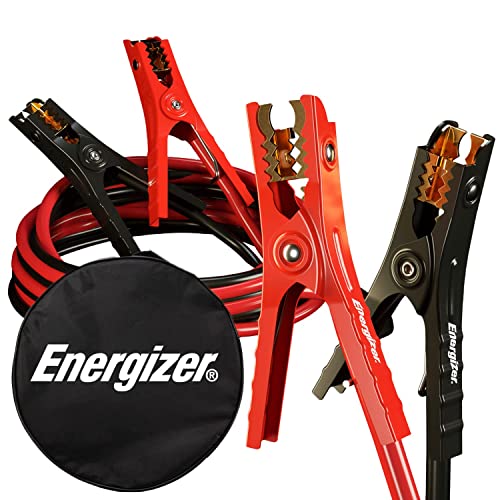
Energizer Jumper Cables for Car Battery, Heavy Duty Automotive Booster Cables for Jump Starting Dead or Weak Batteries with Carrying Bag Included (16-Feet (6-Gauge)
ENERGIZER 16 FEET JUMPER CABLES – 6 Gauge, 16 FT booster battery jumper cables for jump starting a…
As an affiliate, we earn on qualifying purchases.
As an affiliate, we earn on qualifying purchases.
Conclusion
So, savvy with your savvy EV, you can safely spark another’s sputtering starter. Just remember, with the right precautions and proper connections, jump-starting an EV is manageable. It’s a simple, safe, and smart solution for sudden stalls. Stay secure, stay smart, and don’t forget: a little knowledge keeps you from a potential problem. Power up confidently, and keep your car and companions cruising smoothly on your journey!
Energizer Jumper Cables for Car Battery, Heavy Duty Automotive Booster Cables for Jump Starting Dead or Weak Batteries with Carrying Bag Included (16-Feet (6-Gauge)
ENERGIZER 16 FEET JUMPER CABLES – 6 Gauge, 16 FT booster battery jumper cables for jump starting a…
As an affiliate, we earn on qualifying purchases.
As an affiliate, we earn on qualifying purchases.

YaberAuto 16-in-1 Jump Starter with Air Compressor 8000A 160PSI Car Battery Jump Starter (All Gas/14L Diesel) 12V Jump Box Car Battery Jumper Starter Portable Jumper Cables, Emergency Tool Kit, Gloves
➤【 16-IN-1 MULTI-FUNCTIONAL CAR BATTERY JUMP STARTER 】2026 Newly AP03 is more versatile than general jump starters, integrates…
As an affiliate, we earn on qualifying purchases.
As an affiliate, we earn on qualifying purchases.