
When your electric vehicle hits 100,000 miles, expect some battery capacity decline but reliable performance typically continues if you’ve maintained good charging habits. Avoid frequent fast charging and keep the battery charge between 20% and 80% to slow degradation. Regular maintenance and software updates help extend your EV’s lifespan. Most high-mileage EVs still run smoothly beyond this milestone. To learn more about maintaining your EV long-term, continue exploring effective care tips.

Get backup power and energy gear delivered free with Prime
- Fast, free delivery on millions of items
- Prime Video, Amazon Music and more included
- Member-only deals all year
Key Takeaways
- Proper maintenance and charging habits can help EVs surpass 150,000 to 200,000 miles with minimal battery degradation.
- Battery capacity gradually declines over time, leading to reduced range but maintaining usability beyond 100,000 miles.
- Using slower, level 2 chargers and avoiding extreme charge levels preserves battery health longer.
- Manufacturers typically warranty EV batteries for up to 8 years or 100,000 miles, with replacements covered if needed.
- Regular diagnostics and updates ensure reliable performance and early detection of capacity decline for high-mileage EVs.
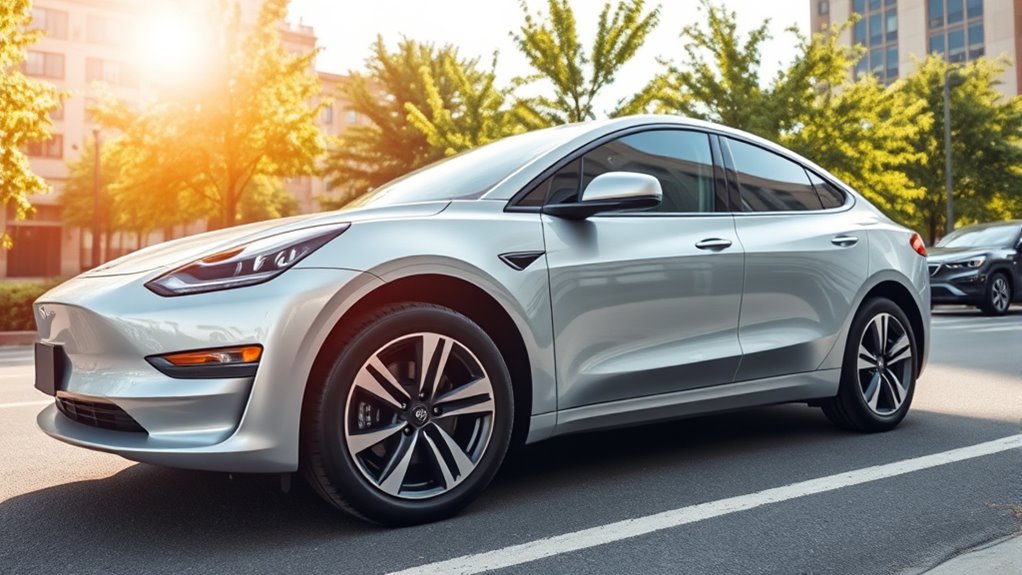
Have you ever wondered how long an electric vehicle (EV) can really last on a single charge or over its lifetime? The answer depends on several factors, but one of the most important is battery longevity. As your EV racks up miles, the health of its battery gradually declines. However, with proper charging habits, you can considerably extend its lifespan. Avoiding frequent fast charging, for instance, helps preserve the battery’s capacity over time, for example by utilizing solar-powered charging stations, which are becoming more accessible and eco-friendly. Instead, sticking to slower, level 2 chargers when possible minimizes stress on the battery cells and slows degradation.
When your EV hits this milestone, don’t assume it’s nearing the end of its usefulness. Many vehicles can comfortably surpass 150,000 or even 200,000 miles with diligent maintenance and mindful charging. The key is understanding that battery longevity isn’t just about the vehicle’s age but also how you care for it. Regularly updating your car’s software, monitoring battery health through onboard diagnostics, and avoiding extreme charge levels—either too full or too empty—help maintain ideal battery performance. Charging habits matter greatly; keeping your battery between 20% and 80% charge most of the time reduces undue stress and prolongs its ability to hold a charge effectively.
Many EVs surpass 150,000 miles with proper care and mindful charging habits.
It’s also worth noting that most manufacturers now offer warranties that cover battery replacements up to 8 years or a certain mileage, often 100,000 miles. This gives you some peace of mind that if your battery does start to fade noticeably, you have options. Many high-mileage EV owners report that their cars continue to perform well even after crossing the 100,000-mile threshold, especially when they’ve been attentive to charging practices. As the battery ages, you might notice a slight reduction in range, but this doesn’t mean your car is no longer useful. Instead, it’s a sign that the battery’s capacity is diminishing, and you can adapt by planning longer charging stops or investing in a replacement if necessary.
Ultimately, your EV’s longevity depends on a combination of factors—regular maintenance, smart charging habits, and understanding how the battery ages. With these in mind, you can confidently expect your electric car to serve you reliably well past the 100,000-mile mark, often for many more miles to come. Proper care ensures that your investment remains a dependable, eco-friendly vehicle for years to come.
Products Worth Considering

DEWALT 20V MAX 1/4-Inch Impact Driver Kit with Battery and Charger (DCF787D1)

Autel 40A Level 2 EV Charger, 240V NEMA 14-50 J1772, WiFi, 25ft Cable

Milwaukee 2697-22 M18 18-Volt Lithium-Ion Cordless Hammer Drill/Impact Driver XC Combo Kit (2-Tool)
As an affiliate, we earn on qualifying purchases.
Frequently Asked Questions
How Does Battery Degradation Affect Long-Term Vehicle Performance?
Battery degradation reduces your EV’s battery life and causes capacity loss over time. As the battery ages, it can’t hold as much charge, leading to decreased driving range and performance. You might notice more frequent charging or longer charging times. However, modern EV batteries are designed to slow degradation, so while capacity loss occurs, your vehicle can still perform reliably well beyond 100,000 miles with proper maintenance.
What Are the Most Common Repairs for High-Mileage EVS?
Think of your EV as a trusted companion, facing the journey ahead. Common repairs include replacing tires due to wear from frequent charging and driving habits. You might also need to check the brakes or cooling system as they endure long miles. Staying attentive to tire wear and adjusting your charging habits can extend your vehicle’s life, keeping it running smoothly through many more adventures.
Is Warranty Coverage Reliable After 100,000 Miles?
Warranty coverage can be dependable after 100,000 miles if it’s extensive and includes battery longevity. Many manufacturers offer extended warranties that cover major components like the battery, giving you peace of mind. However, it’s essential to review the specific terms and conditions, as some warranties may have mileage or time limits. Staying informed about warranty coverage ensures you’re protected as your EV reaches and surpasses the 100,000-mile mark.
How Do Maintenance Costs Compare to Gasoline Vehicles at High Mileage?
At high mileage, EV maintenance costs are usually lower than gasoline vehicles because they have fewer moving parts. You’ll spend less on oil changes and engine repairs. However, you should consider the charging infrastructure, which impacts long-term costs, and resale value, which can decrease as mileage increases. Overall, EVs tend to be more economical over time, especially if you keep up with battery health and utilize widespread charging options.
Can High-Mileage EVS Be Resold Profitably?
You can resell high-mileage EVs profitably if you consider resale value and market demand. As EV popularity grows, more buyers look for affordable options, even with high miles. Maintaining your vehicle well boosts its resale value, and a strong market demand for used EVs means you might get a good return. So, properly cared-for high-mileage EVs can definitely be profitable when you sell.
Conclusion
As your EV hits 100,000 miles, remember that many owners report minimal issues—some even surpassing 200,000 miles with proper care. Did you know the average electric car battery retains about 70-80% of its capacity after this milestone? That’s like running a marathon and still having enough energy for another. With thoughtful maintenance, your high-mileage EV can continue to serve you reliably, proving that electric cars are built to go the distance.