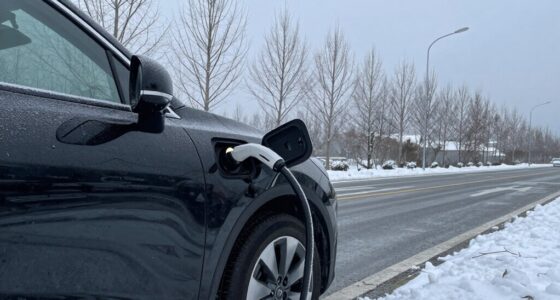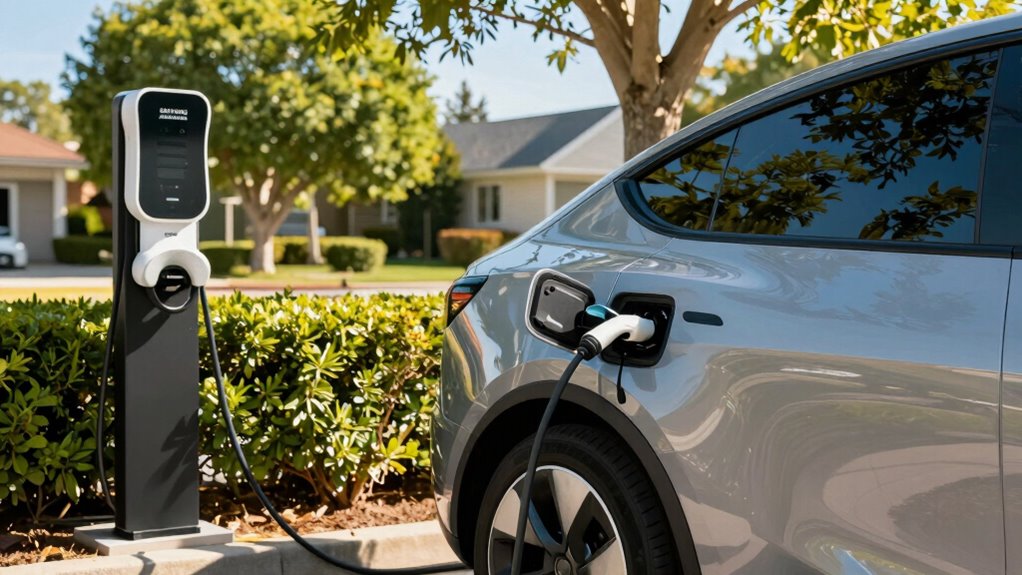

When you take short daily trips, you can charge your EV less frequently and focus on overnight, home charging, which is gentle on your battery. This routine helps reduce wear caused by fast chargers and deep discharges, prolonging your battery’s lifespan. Smaller, consistent charges also boost your confidence and lower range anxiety. If you want to discover more about optimizing your charging habits for longer battery health, keep exploring these tips.
Listen free for 30 days with Audible
Thousands of audiobooks and originals — cancel anytime.
As an affiliate, we earn on qualifying purchases.
Key Takeaways
- Short trips reduce battery drain, allowing for less frequent and more flexible charging routines.
- Routine overnight charging maintains full battery levels, minimizing range anxiety.
- Gentle, slower charging methods help preserve battery health during daily use.
- Limited use of fast chargers decreases battery wear and extends lifespan.
- Utilizing home charging and routine patterns enhances cost efficiency and vehicle reliability.
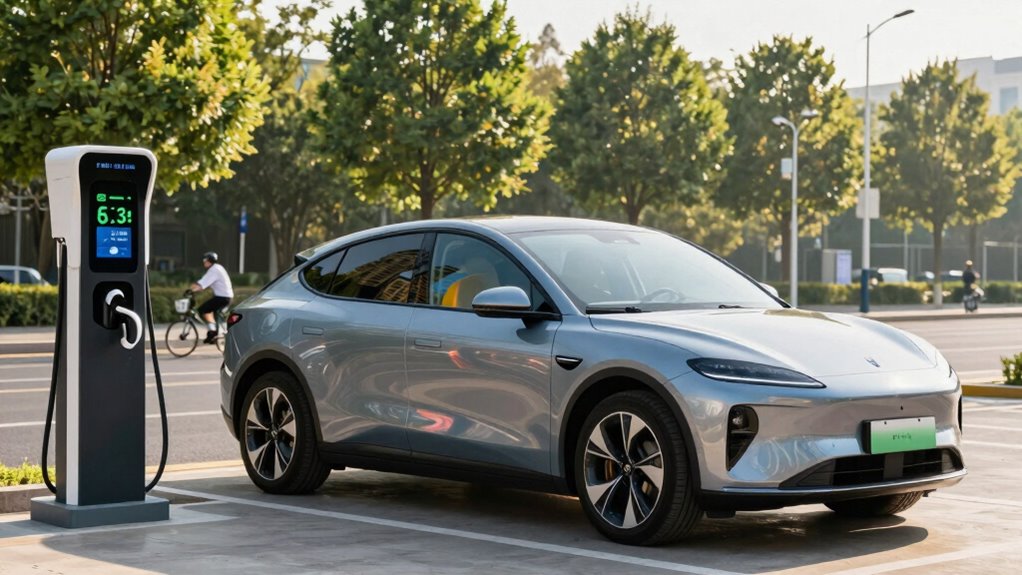
If you mainly take short daily trips, managing your electric vehicle’s charging becomes simpler and more convenient. Unlike long-distance driving, where you might need to plan for extended charging sessions, your daily routine keeps your EV charged efficiently with minimal effort. Short trips mean your battery isn’t frequently drained to very low levels, which can help reduce concerns about battery degradation over time. When you’re not constantly pushing your vehicle’s limits, you tend to preserve the battery’s health, ensuring it remains reliable longer. This makes your charging habits more flexible, giving you the opportunity to tailor them to your schedule and lifestyle.
Since your trips are brief, you might find that you don’t need to rely heavily on fast chargers or frequent trips to charging stations. Instead, you can often take advantage of overnight charging at home, which is usually slower but more consistent. This is especially beneficial because slower charging can be gentler on your battery, potentially extending its lifespan by reducing stress caused by rapid charging cycles. Furthermore, because your trips are short, you’re less likely to experience range anxiety, giving you the confidence to simply plug in your vehicle at night and wake up with a full battery. Additionally, understanding your range planning can help you optimize your charging schedule even further. Proper battery management strategies can also help you maximize the lifespan of your EV’s battery, especially given your routine of short trips.
Overnight home charging is gentle on your battery and reduces range anxiety for short daily trips.
In areas with a well-developed charging infrastructure, you can plan around quick top-ups during errands or breaks, further keeping your battery in good shape and avoiding unnecessary long charging sessions that could contribute to battery degradation over time. Plus, frequent, short charging sessions at moderate power levels are generally less stressful on your battery than occasional, high-power fast charges. Incorporating charging habits can further enhance your vehicle’s longevity and performance. Being mindful of battery health can help you make better decisions about when and how often to charge, preventing unnecessary wear.
Ultimately, because your daily driving pattern involves short trips, you have the advantage of managing your charging in a way that minimizes wear and tear on your battery while also making use of the existing charging infrastructure efficiently. By charging primarily at home and avoiding unnecessary fast charging, you help maintain your EV’s health, ensuring it stays reliable and performs well for years to come. Your routine allows you to optimize your charging habits, making electric vehicle ownership more seamless and cost-effective.
As an affiliate, we earn on qualifying purchases.
Frequently Asked Questions
How Do Short Trips Affect Battery Longevity?
Short trips can accelerate battery degradation because they keep your battery at a high state of charge and prevent it from fully cooling down. This impacts your charging habits, as frequent short trips mean you might need to charge more often, potentially causing more wear over time. To protect your battery’s longevity, try to avoid frequent quick charges and maintain a balanced charging routine, especially with short daily drives.
Should I Charge My EV Immediately After Short Trips?
Think of your EV battery as a garden that needs regular tending. After short trips, you should charge your EV promptly to maintain best health. This helps with battery maintenance and supports consistent charging habits, preventing stress on the cells. By staying attentive to your charging routine, you guarantee your battery remains vibrant and healthy, ready for the next day’s journey, just like a well-tended garden blooms beautifully.
Do Short Trips Require Different Charging Equipment?
Short trips generally don’t require different charging equipment, but they do influence your battery maintenance habits. Since frequent short trips can cause the battery to stay at high charge levels longer, it’s a good idea to use charging infrastructure that supports ideal charging practices, like Level 2 chargers. This helps preserve battery health and longevity, ensuring your EV stays efficient without needing specialized equipment for short trips.
How Can I Optimize Charging for Frequent Short Trips?
To optimize charging for frequent short trips, regularly perform battery calibration to maintain accurate capacity readings. Use charging stations compatible with your vehicle’s charging system to guarantee efficient and safe charging. Avoid shallow charging sessions; instead, charge fully when possible to preserve battery health. By calibrating your battery and choosing compatible stations, you can enhance your EV’s performance and extend its lifespan, especially with frequent short trips.
Are There Specific Charging Settings Recommended for Short Daily Use?
For short daily trips, set your charging to a lower speed, like a trickle or standard charge, to protect the battery temperature from overheating. Avoid fast charging often, as it can increase heat and degrade the battery over time. Instead, maintain a steady, moderate charging speed to keep the battery healthy, especially since short trips mean frequent charge cycles. This approach helps extend your battery’s lifespan and overall performance.
As an affiliate, we earn on qualifying purchases.
Conclusion
So, here’s the irony: your short daily trips, meant to save energy and time, might just be the trickiest to charge efficiently. Instead of letting your battery rest, you keep it busy — and that can wear it out faster. Ironically, those quick jaunts could be the reason you’re constantly hunting for a charger. Maybe it’s time to rethink that routine, because sometimes, less driving really does mean more charging — or at least, smarter charging.
As an affiliate, we earn on qualifying purchases.
As an affiliate, we earn on qualifying purchases.
Flea & tick season Picks
flea and tick prevention
As an affiliate, we earn on qualifying purchases.