
EV brakes can develop rust when your vehicle sits unused for a while, especially since moisture tends to settle on metal surfaces. While regenerative braking reduces reliance on traditional brakes, it doesn’t completely prevent rust from forming. Regular driving or using protective coatings helps keep rust at bay and maintains brake performance. If you stay proactive with care, you’ll find ways to manage rust issues effectively. Keep going to discover more tips on caring for your brake discs.
Key Takeaways
- EV brake discs can develop surface rust during disuse, especially when exposed to moisture and humidity.
- Regenerative braking reduces reliance on traditional brakes but doesn’t fully prevent rust formation on brake components.
- Regular driving or short trips help keep brake surfaces dry and prevent rust buildup.
- Manufacturer coatings and active cleaning systems help resist rust and extend brake lifespan.
- Routine inspection and maintenance, like applying anti-corrosion sprays, are essential for preserving brake performance.

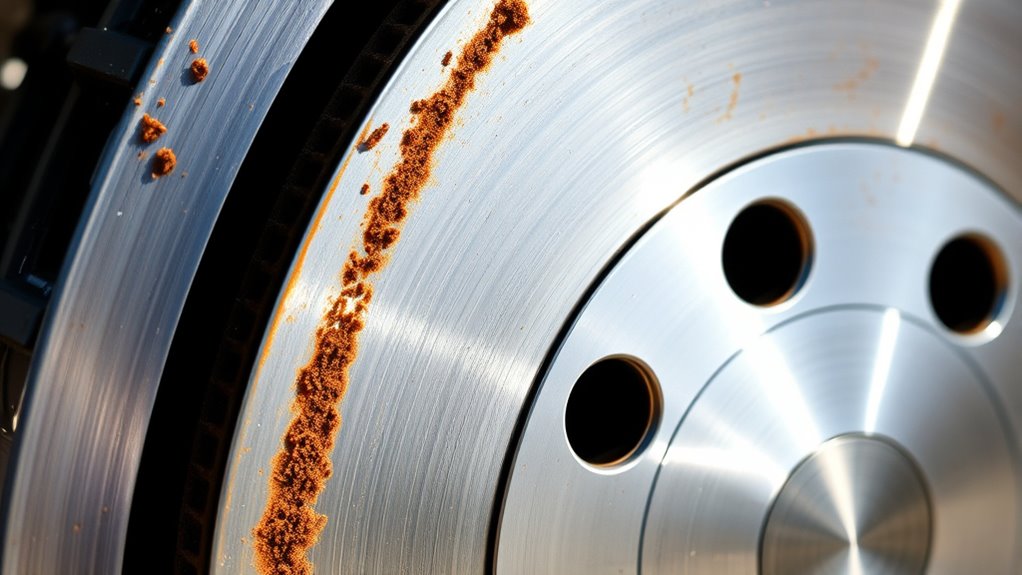
Electric vehicle brakes can develop rust when left unused for long periods, but manufacturers are now implementing solutions to address this issue. While EVs use regenerative braking systems that rely less on traditional brake components, the risk of rust buildup still exists, especially on brake discs and pads. When your vehicle sits idle for weeks or months, moisture can settle on the metal surfaces, leading to rust formation. This rust isn’t just a cosmetic concern; it can cause uneven brake pad wear and potentially impact braking performance. Additionally, prolonged disuse can accelerate issues like battery corrosion, which indirectly affects your vehicle’s overall health, including the braking system.
Rust can form on EV brakes during disuse, affecting performance and longevity.
Battery corrosion occurs when moisture interacts with the battery terminals, leading to buildup that can interfere with electrical connections. While this isn’t directly related to brake function, it highlights how neglecting vehicle maintenance can cause cascading problems. In terms of braking, rust on the discs can cause the brake pads to wear unevenly. When rust forms on the surface, it creates a rough, uneven contact area. As you brake, this roughness can lead to increased friction, which accelerates brake pad wear. Over time, this can reduce braking efficiency and necessitate more frequent pad replacements. For EV owners, neglecting to regularly drive or move the vehicle isn’t just inconvenient—it’s a risk to safety and component longevity.
Thankfully, many manufacturers recognize these issues and are developing solutions. Some EVs now come equipped with anti-corrosion coatings on brake discs that help resist rust formation. Others include features like active brake cleaning systems that periodically engage to remove surface rust. Regularly driving your vehicle, even for short trips, helps keep rust at bay by continuously circulating moisture and preventing it from settling. If your EV has been parked for an extended period, you might notice some surface rust when you first start driving again, but it usually wears off after a few gentle stops. In addition, routine maintenance, such as applying anti-corrosion sprays or inspecting brake components, can substantially prolong the lifespan of your brakes and mitigate issues like uneven brake pad wear.
Ultimately, understanding that rust can develop from disuse encourages you to stay proactive in caring for your EV’s brake system. Even though regenerative braking reduces reliance on traditional brakes, it doesn’t eliminate the risk of rust or corrosion entirely. Regular use, combined with manufacturer-recommended maintenance and protective measures, ensures your EV’s brakes remain effective and safe. By staying attentive to these details, you’ll help prevent costly repairs and maintain peak braking performance, keeping you secure on every drive.
Top picks for "brak rust disuse"
Open Amazon search results for this keyword.
As an affiliate, we earn on qualifying purchases.
Frequently Asked Questions
How Often Should I Drive My EV to Prevent Brake Rust?
To prevent brake rust, you should drive your EV regularly—ideally at least once a week—to keep the brake discs in good condition. Short trips are fine, but longer drives help ensure regenerative braking maintains battery longevity and reduces tire wear. Consistent use prevents rust buildup and keeps your brakes functioning properly, so make a habit of driving your EV regularly to maintain ideal performance and avoid costly repairs.
Can Regenerative Braking Fully Replace Traditional Braking Systems?
Regenerative braking can’t fully replace traditional brakes because it primarily handles deceleration during normal driving, maintaining braking efficiency. Your brake system design includes essential mechanical components that need occasional use for safety and reliability. While regenerative braking reduces wear and improves efficiency, you still need traditional brakes for emergency stops or high-speed deceleration, ensuring your vehicle remains safe under all conditions.
What Signs Indicate My Brake Discs Need Maintenance?
You’ll notice brake noise or squealing when your brake discs need maintenance. Uneven wear on the discs or brake pads can also be a sign, indicating they may be warped or damaged. If you feel vibrations when braking or the pedal feels soft, it’s time to have your brake system examined. Regular checks ensure your brake discs stay in good condition, maintaining safe and effective stopping power.
Are There Specific Driving Habits That Protect EV Brakes?
Your driving style impacts EV brake health more than you might think—think of it as a secret weapon against brake pad corrosion. To protect your brakes, avoid harsh braking and instead, use gentle, gradual stops whenever possible. Regularly engaging regenerative braking helps reduce wear and prevents rust buildup. Keeping your driving habits smooth and consistent maximizes brake longevity, making sure they stay responsive and rust-free, even during long periods of disuse.
How Long Do EV Brake Discs Typically Last?
EV brake discs typically last between 100,000 to 150,000 miles, depending on driving habits and environmental conditions. Brake corrosion can occur if the vehicle sits unused for long periods, but regenerative efficiency helps reduce wear. To maximize disc lifespan, avoid aggressive braking and ensure regular driving. Proper maintenance and mindful driving habits can prolong your brake discs’ longevity, keeping your EV running smoothly for years.
Conclusion
While a bit of surface patina might grace your brake discs after periods of quiet cruising, it’s nothing to worry about. Think of it as a gentle reminder that your EV’s braking system is simply resting, ready to spring back into action when needed. Regular driving and occasional gentle braking keep everything in harmony, ensuring your brakes stay in top shape. So, embrace the natural ebb and flow—your car’s quiet moments are just the universe’s way of telling you all is well.