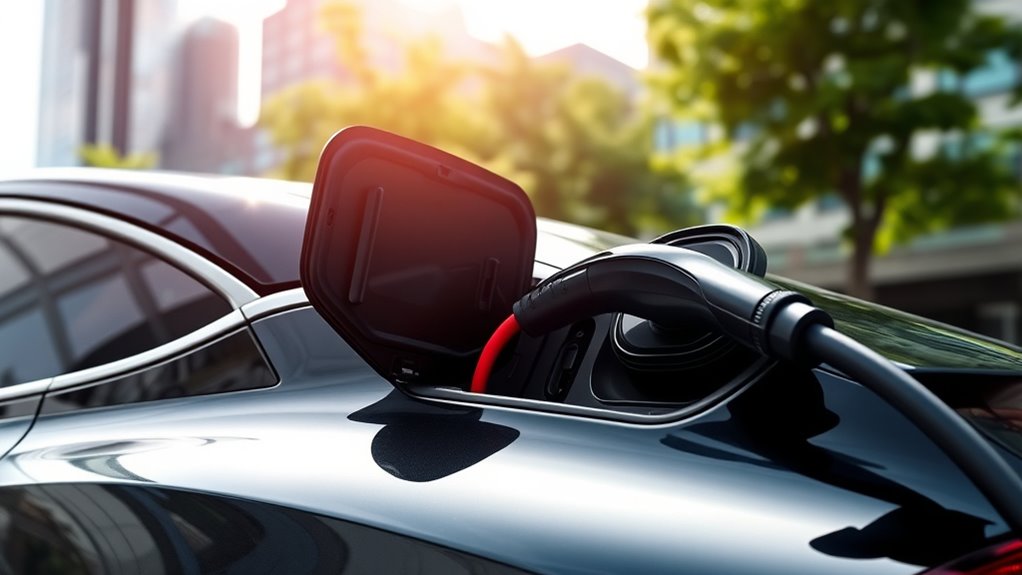

No, you shouldn’t run your EV battery to zero. This doesn’t improve calibration, and it can actually harm the battery’s health over time. Modern EVs automatically calibrate their gauges through software updates or full charges, so deep discharges aren’t necessary. Running the battery too low increases the risk of damage, capacity loss, and unexpected shutdowns. Keep your battery between 20% and 80% for long-term health—learn why’s key if you keep exploring.

Get backup power and energy gear delivered free — and shop member deals
- Fast, free delivery on millions of items
- Access to Prime Big Deal Days deals on October 6–7
- Prime Video, Amazon Music and more included
Key Takeaways
- Running your EV battery to zero does not improve calibration; software updates or full charges suffice.
- Deep discharges can damage the battery and reduce its lifespan over time.
- Modern EVs are designed to avoid damage from low states of charge with management systems.
- Keeping the battery between 20% and 80% optimizes health and prolongs battery life.
- Regular, moderate charging habits are better for battery longevity than fully draining the battery.

Have you ever wondered whether it’s okay to run your electric vehicle (EV) battery all the way down to zero? Many people believe that doing so helps calibrate the battery or improves its accuracy, but this is actually a myth. In reality, consistently draining your EV battery to zero can harm its health and shorten its lifespan. Modern EV batteries are designed with sophisticated management systems that monitor and protect the cells, so there’s no need for deep discharges to keep things running smoothly.
Running your EV battery to zero can damage its health and shorten its lifespan.
Your battery’s health depends heavily on your charging habits. Frequent full discharges and recharges can cause unnecessary wear, leading to capacity loss over time. Instead, it’s better to keep your battery within a moderate state of charge—around 20% to 80%. This practice minimizes stress on the cells and preserves overall battery longevity. Running your EV to zero might seem like a way to reset or calibrate the battery indicator, but in truth, it doesn’t improve accuracy. Most EVs automatically calibrate their battery gauges through software updates or occasional full charges, which don’t require you to let the battery hit zero.
Furthermore, letting your battery reach zero can cause it to shut down unexpectedly, leaving you stranded and potentially risking damage to the battery’s chemistry. Modern batteries are designed to prevent deep discharges precisely to avoid such issues. If you regularly run your battery to near-empty, you might notice a gradual decline in driving range, which is a sign of increased battery degradation. To maximize the lifespan of your EV’s battery, it’s best to avoid pushing it to the limit and instead adopt consistent, mindful charging habits. Battery calibration is often achieved through software or a single full charge rather than deep discharges.
Charging your EV responsibly means plugging in before the battery drops too low and avoiding frequent full charges to 100%. If calibration is necessary, many EVs can do this automatically through software updates or a single full charge after a partial one. This way, you maintain accurate battery readings without risking damage. Remember, the goal is to keep the battery in good health, not to perform deep discharges that could cause long-term harm. By understanding your vehicle’s charging systems and following recommended practices, you’ll ensure your EV remains reliable and efficient for years to come. Running your battery to zero isn’t just unnecessary; it’s potentially damaging, and it certainly isn’t a smart way to manage your vehicle’s performance or longevity.
As an affiliate, we earn on qualifying purchases.
Frequently Asked Questions
Can Fully Depleting the Battery Damage It Permanently?
Running your EV battery to zero can harm its battery longevity over time. Deep discharges strain the battery, leading to faster capacity loss. Your charging habits matter—regular, partial charges help preserve battery health. Avoid fully depleting your battery frequently, as it can cause permanent damage. Instead, keep your battery charged between 20% and 80% for ideal longevity and reliable performance.
How Often Should I Calibrate My EV Battery?
Think of your EV battery as a delicate dance partner, needing just the right rhythm. You should calibrate your battery every 3 to 6 months to maintain ideal battery health and guarantee accurate range readings. Regular calibration keeps your battery performing smoothly, but overdoing it isn’t necessary. Keep an eye on your battery’s behavior, and when it starts acting differently, that’s a good sign it’s time for calibration.
Does Running to Zero Affect Battery Warranty?
Running your EV battery to zero can potentially affect your battery health, but it generally doesn’t void your warranty coverage unless it causes damage. Manufacturers design warranties to cover manufacturing defects and specific issues, not normal use or occasional deep discharges. However, consistently running your battery down to zero isn’t recommended, as it may accelerate wear. Keep your battery within ideal ranges to maintain both health and warranty protections.
Are There Safety Risks in Fully Draining the EV Battery?
Yes, fully draining your EV battery can pose safety risks due to battery safety concerns. When you drain the battery to zero, it increases the risk of internal damage, overheating, or even thermal runaway in extreme cases. Drain risks also include reduced battery lifespan and potential loss of power unexpectedly. To guarantee safety and preserve battery health, it’s best to avoid completely discharging your EV battery and recharge before it drops too low.
What Signs Indicate My Battery Needs Calibration?
If your battery life seems inconsistent or your range estimates are off, it’s likely a sign your EV needs calibration. Poor charging habits or leaving the battery at extremes can cause inaccuracies. Keep an eye on sudden drops in range or unexpected charging behavior. Regular, balanced charging helps maintain accurate battery readings. When you notice these signs, calibrating your battery can restore proper performance and extend its overall health.
As an affiliate, we earn on qualifying purchases.
Conclusion
Think of your EV battery like a delicate garden. If you let it run completely dry, it’s like neglecting your plants—stressing them out and risking damage. Instead, water it regularly and keep it healthy. Running your battery to zero isn’t the secret to calibration; it’s more like overwatering—harmful and unnecessary. Treat your battery like a precious garden, and it’ll thrive longer, giving you reliable performance whenever you need it most.
As an affiliate, we earn on qualifying purchases.
As an affiliate, we earn on qualifying purchases.
Halloween Picks
halloween
As an affiliate, we earn on qualifying purchases.