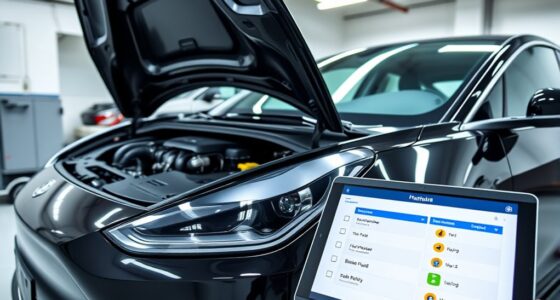
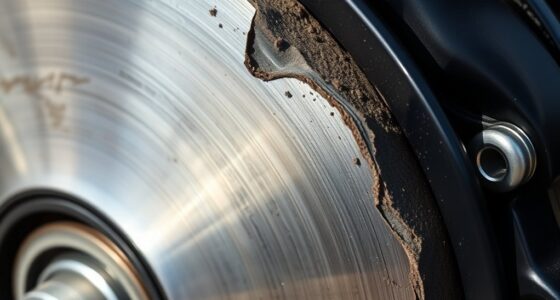
You can handle basic EV maintenance tasks like checking tire pressure, inspecting brakes, and topping off fluids yourself with proper tools and safety precautions. However, avoid working on high-voltage systems or performing software updates, as these require specialized knowledge and equipment. For complex repairs or diagnostics, it’s best to consult a professional to guarantee safety and preserve your warranty. Keep exploring to discover more about what you can do safely on your own.
Key Takeaways
- Perform basic checks like tire pressure, brake inspection, and visual vehicle inspections without specialized tools.
- Handle routine battery terminal cleaning and keep the exterior free of corrosion and debris.
- Avoid attempting high-voltage battery repairs, software updates, or system diagnostics; these require professional expertise.
- Follow manufacturer guidelines for safe charging practices and avoid overcharging or using incompatible chargers.
- Seek professional assistance for complex electrical repairs, battery replacements, or if you notice BMS alerts or performance issues.

Are you interested in saving money and extending the life of your electric vehicle? If so, understanding what maintenance tasks you can handle yourself is essential. One key area you can focus on is maintaining your battery’s lifespan. Proper care of your EV battery not only prolongs its life but also ensures ideal performance. Regularly inspecting the battery for any signs of damage or corrosion can help catch issues early. Keeping the battery terminals clean and secure is a straightforward task that you can do yourself, which helps prevent power loss and potential safety hazards. Additionally, staying informed about your vehicle’s battery management system (BMS) alerts you to any problems that might affect battery health. When it comes to charging safety, you should always follow the manufacturer’s guidelines. Using the correct charger and avoiding overcharging are critical steps you can take to prevent damage and reduce fire risks. Never force a charging connection or use incompatible chargers, as this can harm the battery and pose safety hazards. It’s also wise to park in shaded areas or cool environments during charging, especially in hot weather, to prevent overheating.
Understanding the importance of high refresh rates in projectors can also help you optimize your home setup for both entertainment and safety reasons. While some maintenance tasks are simple enough for you to handle, others require professional expertise. For instance, replacing a damaged battery pack or performing software updates to the vehicle’s control systems should be left to qualified technicians. These tasks involve specialized tools and knowledge to avoid causing harm or voiding warranties. Similarly, any work involving high-voltage systems, such as disconnecting the battery or repairing the electrical system, must be performed by trained professionals to ensure safety. Attempting these repairs without proper training can result in serious injury or damage to your vehicle.
Regular tire checks, brake inspections, and fluid top-offs are examples of maintenance you can confidently do yourself. These tasks are relatively straightforward and help keep your EV running smoothly. However, routine diagnostics or complex electrical system troubleshooting are best left to the pros. Remember, safety always comes first. When in doubt, consult your owner’s manual or contact a certified technician. By understanding which tasks you can confidently perform and which ones require professional assistance, you keep your EV in top shape, save money, and ensure safe operation on the road.

ETENWOLF T300 Digital Tire Pressure Gauge 3-200 PSI, Industrial Tire Gauge Calibrated to ANSI B40.7 Grade 2A(Plus-Minus 0.5%), Replaceable AAA Batteries (Vivid Orange)
PROCESS LEVEL ACCURACY: Each ETENWOLF’s digital tire pressure gauge is calibrated manually to ANSI B40.7 Grade 2A(plus-minus 1…
As an affiliate, we earn on qualifying purchases.
As an affiliate, we earn on qualifying purchases.
Frequently Asked Questions
Can I Replace My Ev’s Battery Myself?
You probably can’t replace your EV’s battery yourself safely. Battery replacement requires specialized tools, extensive knowledge of high-voltage systems, and strict DIY safety precautions. Attempting it without proper training can be dangerous due to electrical hazards and heavy components. It’s best to leave this task to a qualified professional who can handle the process safely, ensuring your vehicle operates correctly and you stay safe during the battery replacement.
How Often Should I Check the Ev’s Coolant Levels?
Think of your EV’s coolant system as a heartbeat that keeps everything running smoothly. You should check the coolant levels every 6 to 12 months, especially before long trips or extreme weather. During coolant inspection, look for any signs of leaks or low fluid. If needed, perform a coolant top-up carefully. Regular checks help prevent overheating and keep your vehicle running efficiently, just like a healthy heartbeat.
Is It Safe to Perform Software Updates on My EV?
Yes, it’s generally safe to perform software updates on your EV if you follow proper procedures. However, be aware of update risks, such as potential software glitches or connection issues. Always verify your vehicle is parked securely, connected to a reliable power source, and your internet connection is stable. Check the manufacturer’s instructions carefully, and if you’re unsure about software safety, consult a professional to avoid any unintended problems.
What Tools Are Necessary for EV Brake Maintenance?
To perform EV brake maintenance, you’ll need a jack, jack stands, a lug wrench, and brake caliper tools. You’ll inspect brake pads, check brake fluid, and rotate tires. These tools help you safely lift the vehicle, remove wheels, and access braking components. Remember, a brake inspection confirms everything’s in good shape, while replacing brake pads and fluid changes keep your EV stopping smoothly. Always prioritize safety and proper technique.
Can I Upgrade My Ev’s Charging Port at Home?
Yes, you can upgrade your EV’s charging port at home, but it involves planning for charging upgrades and proper home installation. You’ll need a compatible charger and often a dedicated circuit, so it’s best to consult a professional electrician to guarantee safety and code compliance. While some minor upgrades are manageable, a proper home installation guarantees efficient charging and prevents potential electrical issues.

Brake Tech Tools Original Truck Inspector
Ideal All In One Tool – Perfect for Drivers and Owner Operators
As an affiliate, we earn on qualifying purchases.
As an affiliate, we earn on qualifying purchases.
Conclusion
Taking care of your EV at home can save you money and boost your confidence. Did you know that regular basic maintenance can extend your vehicle’s lifespan by up to 20%? By handling simple tasks yourself, you stay connected to your car’s health and avoid unnecessary trips to the mechanic. Just remember, knowing your limits is key—when in doubt, leave complex repairs to the pros. Happy DIY-ing and safe driving!

LotFancy Battery Terminal Cleaners (2 pcs), Plus 12 pcs Battery Terminal Anti-Corrosion Fiber Washers (6 Red & 6 Green) for Car Marine RV
【CLEAN & PROTECT KIT】Includes 2 battery terminal cleaners and 12 anti-corrosion fiber washers (6 red, 6 green) for…
As an affiliate, we earn on qualifying purchases.
As an affiliate, we earn on qualifying purchases.

Anina EV Charger Holder SAE J1772 Charging Cable Organizer for Portable Electric Car Charger Cable Hanger Electric Vehicle Charging Cord Holder Wall-Mount Connector Space Saving
Design for J1772 Plug: This EV Charger Holder is compatible with all J1772 charger connectors, the EV charger…
As an affiliate, we earn on qualifying purchases.
As an affiliate, we earn on qualifying purchases.