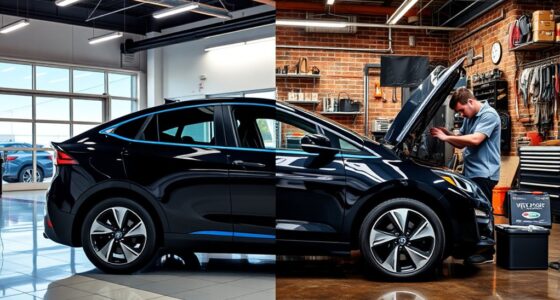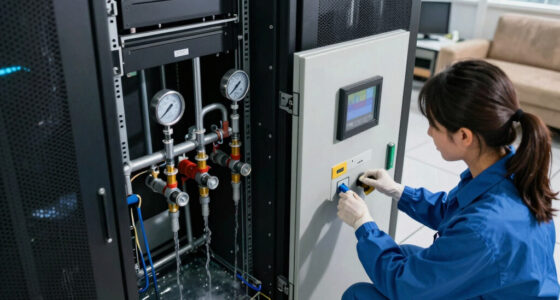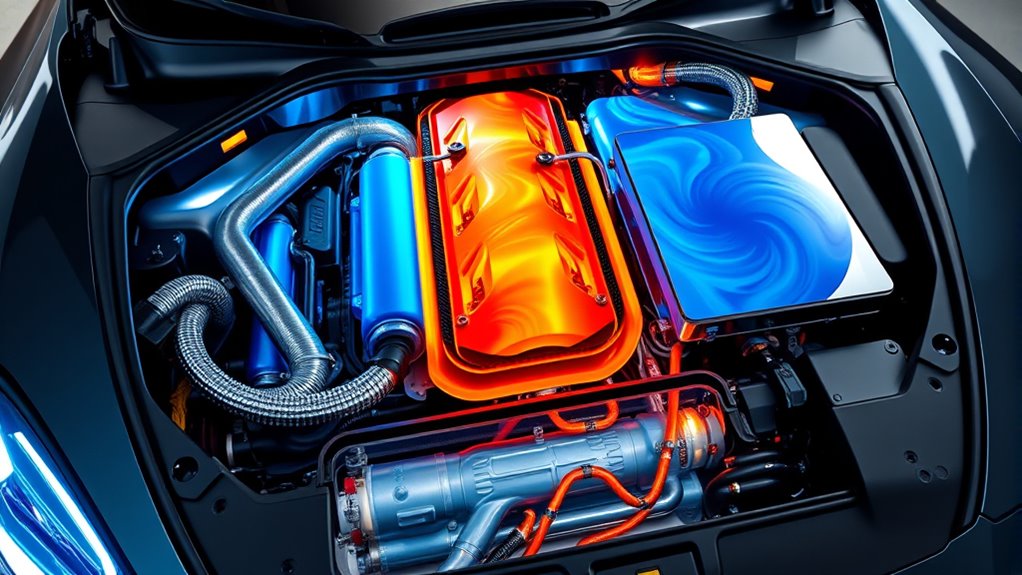

Electric cars keep their batteries cool using advanced thermal management systems, often involving liquid cooling that circulates coolant to transfer heat away efficiently. This helps prevent overheating, which can reduce performance, cause damage, or even lead to safety issues like fires. Maintaining the right temperature guarantees your vehicle runs smoothly, charges faster, and lasts longer. If you’re curious about how these systems work and why they matter, there’s more to discover about keeping EV batteries safe and effective.
Key Takeaways
- EV batteries generate heat during use, requiring cooling systems to prevent overheating and maintain optimal performance.
- Liquid cooling systems circulate coolant to efficiently transfer heat away from the battery pack.
- Sensors monitor battery temperatures and activate cooling mechanisms as needed for safe operation.
- Proper thermal management extends battery lifespan, enhances safety, and ensures consistent charging speeds.
- Effective cooling prevents thermal runaway risks, improving overall safety and reliability of electric vehicles.

Electric vehicle (EV) batteries generate heat during operation, and managing this heat is crucial for peak performance and longevity. When you’re driving, the battery works hard, especially during acceleration, high-speed travel, or rapid charging, producing significant thermal energy. Without proper thermal management, this heat can cause the battery to overheat, leading to reduced efficiency, faster degradation, or even safety issues. That’s why effective cooling systems are vital components of EV design—they keep the battery within an ideal temperature range to ensure reliable performance and longer lifespan.
Thermal management involves more than just cooling; it’s about maintaining a consistent temperature that prevents the battery from overheating or getting too cold. Many modern EVs use sophisticated cooling systems that circulate coolant—similar to the radiator system in traditional cars—to absorb excess heat. These cooling systems often feature liquid cooling, which is more efficient than air cooling because liquids can transfer heat faster and more evenly. When you drive, sensors monitor the battery temperature continuously, and the cooling system adjusts accordingly. If the battery starts to heat up beyond safe limits, the cooling system kicks in more aggressively, dissipating heat rapidly to prevent damage.
Modern EVs use liquid cooling systems with sensors to maintain optimal battery temperature and prevent damage during operation.
Some EVs employ active thermal management, which includes pumps and fans to enhance heat transfer, especially during high-demand scenarios like fast charging or spirited driving. Others might use passive methods, such as phase change materials or air cooling, for simpler applications or less demanding conditions. Regardless of the approach, the goal remains the same: keep the battery cool enough to operate efficiently but not so cold that performance drops. Proper thermal management also helps in maintaining consistent charging speeds, as batteries tend to charge faster and more safely when they’re at ideal temperatures.
You should understand that good cooling systems not only extend the life of your battery but also improve safety. Overheated batteries can cause thermal runaway—a dangerous situation where heat causes a chain reaction of increasing temperature, potentially leading to fires. By controlling heat with well-designed cooling systems, manufacturers reduce the risk of such hazards and ensure your EV remains safe to drive. Additionally, thermal regulation is essential for optimizing energy efficiency during operation. In conclusion, thermal management through advanced cooling systems is fundamental to EV technology. It ensures your battery stays within the perfect temperature range, maximizing performance, safety, and lifespan, so you can enjoy a reliable, efficient driving experience.

SOARAISE Solar Power Bank 48000mAh Wireless Portable Charger with 4 Cables
- High-Efficiency Solar Panels: Charges 5 times faster with 4 panels
- Large 48000mAh Capacity: Extended power for outdoor use
- Multi-Device Compatibility: Supports 7 devices simultaneously
As an affiliate, we earn on qualifying purchases.
Frequently Asked Questions
How Often Do EV Batteries Require Cooling System Maintenance?
You should check your EV’s cooling system every 12,000 to 15,000 miles or annually, whichever comes first. Proper maintenance guarantees ideal cooling technology, helping to extend your battery’s lifespan. Regular inspections and fluid top-offs prevent overheating and keep your battery performing at its best. If you notice unusual heat or reduced range, get your cooling system checked sooner to maintain efficiency and maximize your vehicle’s longevity.
Can Battery Cooling Systems Fail or Malfunction?
Like a silent guardian, your cooling system can fail or malfunction, risking battery overheating. When this happens, the system’s protective shield weakens, and the battery’s temperature can spike dangerously. Cooling system failure isn’t uncommon and could be caused by leaks, sensor issues, or pump failures. Regular maintenance helps prevent overheating, but if you notice signs like reduced range or unusual noises, get it checked promptly to keep your EV running smoothly.
Are There Differences in Cooling Systems Among Various EV Brands?
Yes, different EV brands use brand-specific cooling systems that vary in design and effectiveness. Some manufacturers incorporate innovative cooling technologies like liquid cooling, air cooling, or advanced heat exchangers to optimize battery performance. You’ll find that luxury brands often invest more in sophisticated cooling systems, while others focus on simpler designs. Recognizing these differences helps you select an EV with a cooling system that meets your driving needs and ensures battery longevity.
What Are the Signs of Inadequate Battery Cooling?
If your battery isn’t properly cooled, you might notice signs like reduced range, faster battery heating, or unexpected thermal management system warnings. Pay attention to dashboard alerts and monitor your vehicle’s temperature gauges. Inadequate cooling can cause thermal management issues, leading to battery degradation. Regular system diagnostics can help identify cooling system problems early, ensuring your battery stays within ideal temperature ranges and performs reliably over time.
How Does Climate Affect EV Battery Cooling Efficiency?
Did you know that high ambient temperatures can decrease an EV’s battery life by up to 20%? Climate considerably impacts cooling efficiency; in hot climates, batteries work harder to stay cool, reducing range and lifespan. Conversely, cold weather hampers cooling systems, potentially causing overheating. To guarantee ideal performance, manufacturers design climate adaptation features like liquid cooling and thermal management, helping your EV perform reliably regardless of ambient temperature.
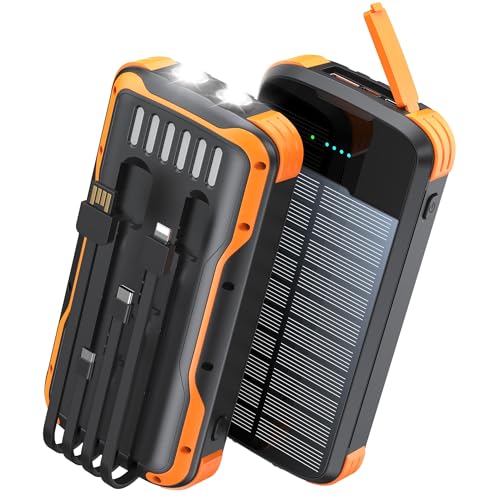
SOXONO Solar Power Bank 40000mAh PD20W Fast Charging Portable Solar Charger
- High Capacity Battery: 40000mAh lithium polymer battery
- Multiple Device Charging: Charges up to 5 devices simultaneously
- Built-in Charging Cables: Includes 4 integrated charging cables
As an affiliate, we earn on qualifying purchases.
Conclusion
Next time you hop into an electric car on a hot day, remember the cooling system working silently beneath you. Just like a invigorating breeze on a summer afternoon, it keeps your battery at the perfect temperature, ensuring safety and performance. Without it, your drive might feel less smooth. So, as you enjoy your eco-friendly ride, know that this clever cooling system is quietly making your journey safer and more reliable—coincidence or clever engineering?
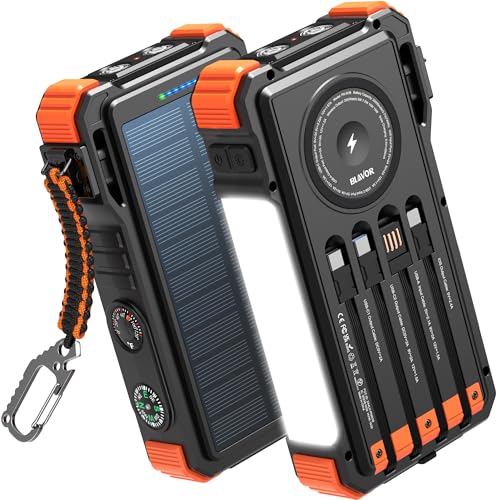
BLAVOR Solar Power Bank 20000mAh Built-in Cables, Wireless Charger for Phones & Apple Watch, 20W Fast Charging Battery Pack with USB C, Flashlight, Solar Charger for iPhone, iPad, iWatch, Samsung
- Simultaneously Charge Multiple Devices: Charges up to 6 devices at once
- Built-in Cables and Wireless Charging: Includes 4 cables and wireless charging area
- High Capacity and Fast Charging: 20000mAh capacity with 20W USB-C fast charge
As an affiliate, we earn on qualifying purchases.

DARAN Portable Power Station 89.6Wh LiFePO4 Battery 100W(200W Peak) Solar Power Bank, Portable Charger Small Generator with AC Outlets & PD Fast Charging for Home/Laptop/Camping(Solar Panel Optional)
- Compact and Lightweight: Size of a smartphone, weighs 2.54 lbs
- Portable Design: Ergonomic soft handle for easy carrying
- Multiple Output Ports: 7 ports including AC, USB-C, USB-A, DC
As an affiliate, we earn on qualifying purchases.