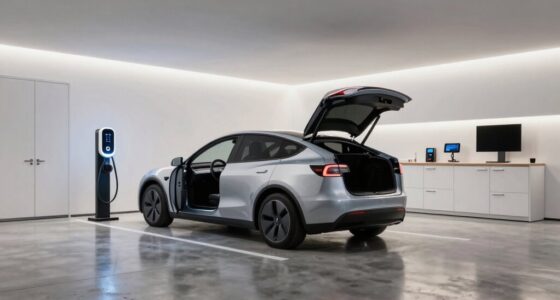

To see if your electrical panel’s ready for an EV charger, first find the main circuit breaker and note its capacity—ideally 200 amps. Check if you have enough space for a dedicated breaker and evaluate your current load by listing your appliances and their circuits. If your panel is full or the capacity is lower, upgrading may be needed. Keep exploring to learn how to guarantee your home can safely handle EV charging.

Get backup power and energy gear delivered free — and shop member deals
- Fast, free delivery on millions of items
- Access to Prime Big Deal Days deals on October 6–7
- Prime Video, Amazon Music and more included
Key Takeaways
- Locate your main electrical panel and check the total amperage rating (100, 150, or 200 amps).
- Calculate current electrical load to ensure sufficient capacity for the EV charger.
- Verify if a dedicated circuit breaker of 40-50 amps is available or needs installation.
- Determine if the panel has enough space for an additional breaker or requires an upgrade.
- Consult a licensed electrician to assess if your panel meets safety and capacity requirements.
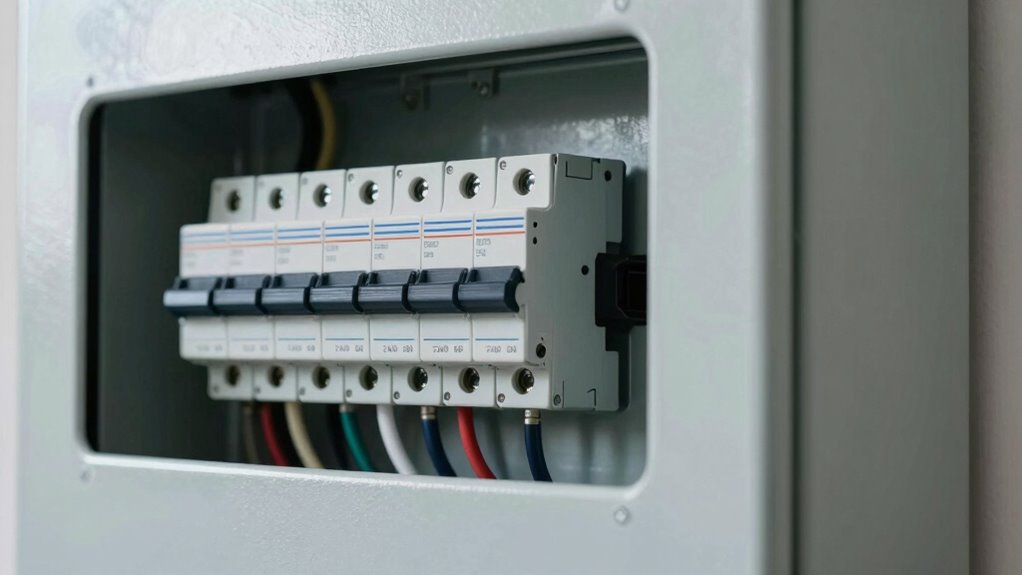
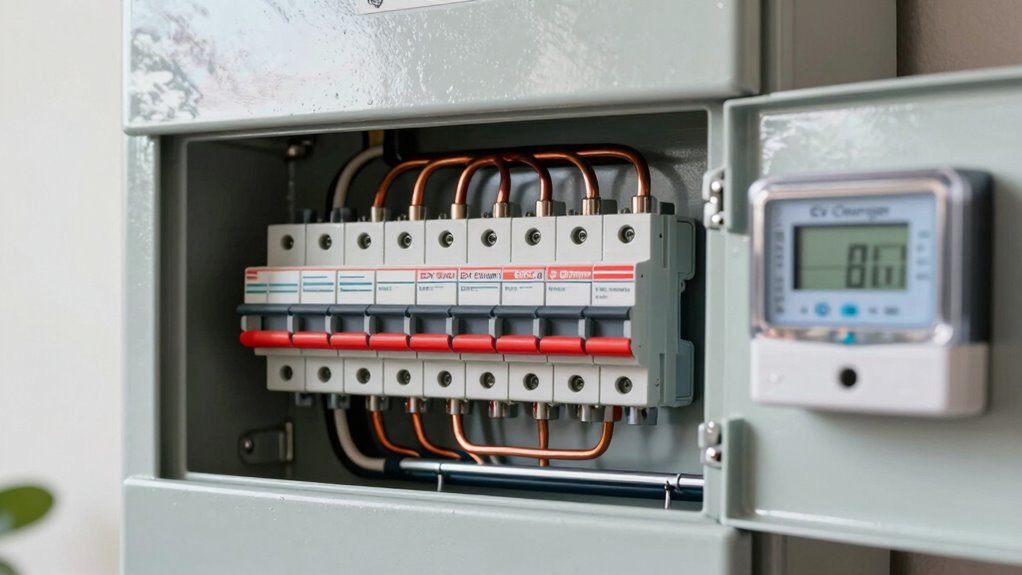
If you’re considering installing an electric vehicle (EV) charger at home, it is vital to determine whether your electrical panel can handle the additional load. Your electrical capacity is the total amount of power your home’s system can safely deliver, and understanding it is key to avoiding overloads. Start by locating your main electrical panel—usually found in a basement, garage, or utility room—and examine the main circuit breaker. The main breaker’s amperage rating, often marked on its switch, indicates the maximum current your entire home can draw at once. Common ratings are 100, 150, or 200 amps. To support a typical Level 2 EV charger, which often requires 40 amps, your panel must have enough capacity and a suitable dedicated circuit.
Next, assess the existing load on your electrical panel. This involves listing essential appliances and their circuit breakers, then summing their amperages. If your panel is already near its maximum capacity, adding a high-demand charger could cause overloads, tripping breakers or, worse, risking electrical hazards. If you’re unsure, a licensed electrician can perform a load calculation, which considers all circuits and appliances simultaneously to determine if your electrical capacity is sufficient. These calculations often include electricity demand and how it impacts your overall system.
Equally important is inspecting the circuit breaker designated for the EV charger. It needs to be properly rated for the charger’s power requirements—typically 40 to 50 amps for Level 2 chargers. If your panel doesn’t have a dedicated breaker of the appropriate size, you might need to upgrade your panel or install a new circuit breaker. Remember, circuit breakers are safety devices designed to trip when the current exceeds their rated capacity, preventing overheating and potential fires. Using a breaker that’s too small can cause nuisance trips, while one that’s too large might not provide adequate protection.
In some cases, your existing panel may not have enough space for an additional breaker, or the electrical capacity might be insufficient for the EV charger’s load. If so, an upgrade to a larger panel might be necessary. This process involves replacing the current panel with one that has more circuits and higher capacity, ensuring your home can safely support the EV charger along with your other electrical needs. Consulting with a qualified electrician will give you a clear assessment of your panel’s readiness and help you choose the best solution for your home, ensuring safe, reliable charging without risking electrical issues down the line. Additionally, understanding electrical load is crucial for maintaining overall home safety and efficiency.
As an affiliate, we earn on qualifying purchases.
Frequently Asked Questions
Can I Upgrade My Existing Electrical Panel for an EV Charger?
Yes, you can upgrade your existing electrical panel for an EV charger. Don’t worry—it’s a straightforward process, but you need to make certain your panel capacity can handle the extra load. Wiring compatibility is essential too; your current wiring might not support the new charger, so an electrician will evaluate and upgrade the wiring if necessary. With the right upgrades, you’ll be charging your EV faster than you ever imagined.
How Long Does It Take to Install a New EV Charger?
Installing a new EV charger typically takes about 4 to 8 hours, depending on your home’s electrical setup. During installation, your technician will address compatibility issues and guarantee proper wiring for maximum charging speed. Factors like panel capacity and existing electrical systems can influence the time. You might experience some minor disruptions, but overall, a professional installation is quick and ensures your charger works safely and efficiently.
What Are the Costs Associated With Panel Upgrades?
The costs associated with panel upgrades vary based on your home’s electrical system and the upgrade process. You can expect a cost estimation between $1,200 and $3,000, which covers labor, permits, and new equipment. The upgrade process typically involves evaluating your current panel, obtaining necessary permits, and installing a larger or additional panel. Consulting a professional will give you a more accurate estimate tailored to your specific needs.
Are There Specific Safety Concerns With Adding an EV Charger?
Back in the day, folks didn’t worry about EV chargers, but now safety is key. You should know that adding an EV charger can pose fire hazards and overload risks if your panel isn’t properly upgraded. To stay safe, make sure your electrical system is inspected and certified by a professional. They can identify potential hazards and recommend necessary improvements, keeping your home safe from electrical mishaps and ensuring your EV charges smoothly.
How Often Should I Have My Electrical System Inspected?
You should have your electrical system inspected every 3 to 5 years, or sooner if you notice issues like flickering lights or frequent breaker trips. During inspections, a licensed electrician checks electrical codes compliance and assesses your home’s power capacity to handle additional loads, such as an EV charger. Regular inspections make sure safety, prevent potential hazards, and confirm your system can support your evolving electrical needs efficiently.
EV charger circuit breaker 40 amps
As an affiliate, we earn on qualifying purchases.
As an affiliate, we earn on qualifying purchases.
Conclusion
In the end, your home’s electrical panel is the gatekeeper to your EV dreams. If it’s outdated or lacks sufficient capacity, it’s like trying to fit a river through a straw. Upgrading might seem intimidating, but it guarantees your charging station runs smoothly without a hitch. Think of it as giving your home a new heartbeat—powerful, reliable, and ready to keep up with your electric journey. Don’t wait; energize your future today.
As an affiliate, we earn on qualifying purchases.
electric vehicle charger installation kit
As an affiliate, we earn on qualifying purchases.
As an affiliate, we earn on qualifying purchases.
Halloween Picks
halloween
As an affiliate, we earn on qualifying purchases.