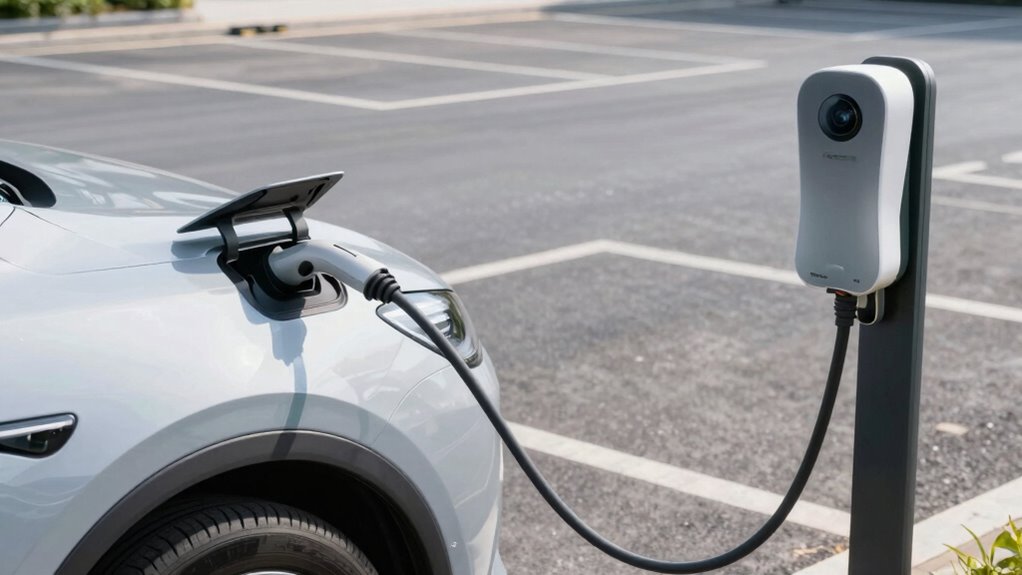
You should position your EV charger close enough to your parking spot to avoid stretching cables or creating tripping hazards, typically within a few feet. Place it near the perimeter or designated EV zones to keep it accessible and prevent interference with traffic flow or other vehicles. Make certain there’s enough space for easy plugging in and safe cable management, considering weather and vehicle movements. If you keep these tips in mind, you’ll learn more about ideal placements and safety considerations.
Key Takeaways
- Place chargers within 3-6 feet of the parking spot to ensure manageable cable length and prevent stretching hazards.
- Maintain at least 2 feet clearance from parking edges to avoid vehicle damage and allow easy access.
- Ensure the charger is positioned along the perimeter or designated EV zone for safety and accessibility.
- Keep cables manageable by locating chargers close enough to prevent excessive stretching or tripping risks.
- Consider weather and traffic flow to position chargers where they are protected and unobstructed.

When installing an electric vehicle (EV) charger, the distance between the charger and your parking spot is more than just a matter of convenience; it affects both safety and usability. Proper charging station placement is essential to guarantee that the charging process is smooth, safe, and accessible. If the charger is too far from your parking spot, you may find yourself juggling extension cords or stretching cables, which can create hazards or lead to damaged equipment. Conversely, placing it too close might interfere with traffic flow or parking space availability. The key is to strike a balance that maximizes user safety while maintaining an efficient parking lot design.
Proper EV charger placement balances safety, accessibility, and parking lot efficiency for optimal use and protection.
In terms of parking lot design, you want to position chargers where they are easy to reach without causing congestion. Ideally, chargers should be located along the perimeter or near designated EV parking zones, so you don’t block other vehicles or impede pedestrian pathways. The goal is to make the charging process intuitive—drivers should be able to park, plug in, and leave without complex maneuvers. When considering placement, think about the typical size of vehicles and how much space they need for easy access to the charging port. This consideration helps prevent tight fits that could damage vehicles or make charging difficult.
The distance between the charger and your parking spot also impacts safety. A charger installed too far away might tempt drivers to stretch cords across walkways or other vehicles, creating tripping hazards or risking accidental disconnections. On the other hand, a charger placed too close to the parking spot’s edge could be vulnerable to damage from passing vehicles or weather conditions. To avoid these issues, parking lot design should incorporate clear pathways and buffer zones around charging stations, ensuring that cables are manageable and don’t pose safety risks. Additionally, considering future expansion needs can help maintain a flexible and scalable charging infrastructure as EV adoption grows. Planning for scalability now ensures that infrastructure can adapt to increasing demand without costly reconfigurations later. Incorporating innovative design approaches can further enhance the efficiency and safety of charging station placement. Proper site planning, including adherence to safety standards, is crucial for creating a secure and reliable charging environment.
As an affiliate, we earn on qualifying purchases.
Frequently Asked Questions
Can I Install a Charger Outdoors or Only Indoors?
You can definitely install an EV charger outdoors, thanks to outdoor compatibility. Many chargers are designed specifically for outdoor installation, with weatherproof features that protect against rain, snow, and dirt. Indoor installation is suitable if you have a covered parking spot, but outdoor chargers work well in open spaces too. Just make sure you choose a charger rated for outdoor use, and follow safety guidelines for a secure, reliable setup.
What Is the Maximum Cable Length for Safety?
The maximum cable length for safety is typically around 25 to 30 feet, like a tether holding a ship steady. Longer cables risk reducing current quality and increasing safety hazards. You should prioritize cable durability and adhere to safety regulations to avoid issues. Always check your charger’s specifications and local codes, as they guarantee you’re not stretching limits that could compromise performance or safety.
Are Wireless EV Chargers Available for Parking Spots?
Yes, wireless EV chargers are available for parking spots. They use wireless charging technology to transfer power without cables, offering convenience. However, you should be aware of compatibility concerns; not all EVs support wireless charging, so check your vehicle’s specifications. Additionally, make certain the parking space is properly equipped with the compatible wireless charging pad to ensure efficient, safe charging without the need for physical connections.
Do Parking Lot Regulations Affect Charger Placement?
Parking lot regulations do influence where you can place your EV charger. These guidelines guarantee safety, accessibility, and efficient use of space, making your charging experience smooth. Following charger placement guidelines helps avoid future hassles and keeps everything running seamlessly. So, check local rules to find the best spot—usually near your parking space—where your charger can be both practical and compliant, giving you peace of mind during every charge.
How Does Charger Placement Impact Charging Speed?
Charger placement directly impacts your charging speed, especially through cable length and charging efficiency. If the charger is too far from your parking spot, a longer cable reduces charging efficiency and can slow down the process. Keeping the charger close guarantees you use the best cable length, which minimizes power loss and maximizes charging speed. So, position your charger strategically to enjoy faster, more efficient charging sessions.
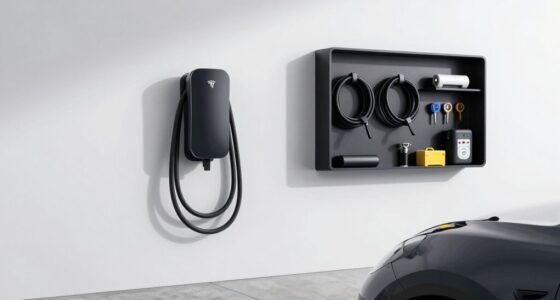
wall-mounted EV charging station
As an affiliate, we earn on qualifying purchases.
As an affiliate, we earn on qualifying purchases.
Conclusion
In the end, placing your EV charger within a few feet of your parking spot is ideal for convenience and safety. Did you know that over 60% of EV owners prefer chargers within 10 feet of their parking space? This proximity not only saves time but also encourages regular charging habits. So, when planning your setup, aim for a location that’s easily accessible—your future self will thank you for the convenience!
As an affiliate, we earn on qualifying purchases.
As an affiliate, we earn on qualifying purchases.