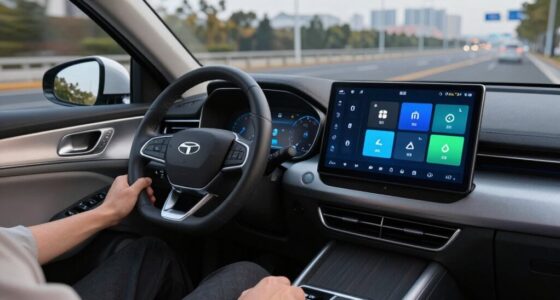
Many new EV owners mistakenly think the rated range is an exact distance they’ll always reach, but it’s only an estimate. Real-world conditions like weather, terrain, and driving habits can drastically reduce that number. Cold months and hilly areas, for example, often cut your actual range. Understanding these factors helps you plan better and avoid surprises. Stick with us, and you’ll learn how to maximize your EV’s range and battery life more easily.
Listen free for 30 days with Audible
Thousands of audiobooks and originals — cancel anytime.
As an affiliate, we earn on qualifying purchases.
Key Takeaways
- Rated range is an estimate, not an exact measurement, and real-world conditions often reduce achievable distance.
- Many new owners assume charging to 100% is necessary for full range, which can degrade battery health.
- Cold weather and hilly terrain significantly decrease effective range, requiring proper planning.
- Frequent topping off the battery unnecessarily wastes energy and can accelerate battery aging.
- Underestimating the impact of driving habits and environmental factors leads to unexpected range limitations.
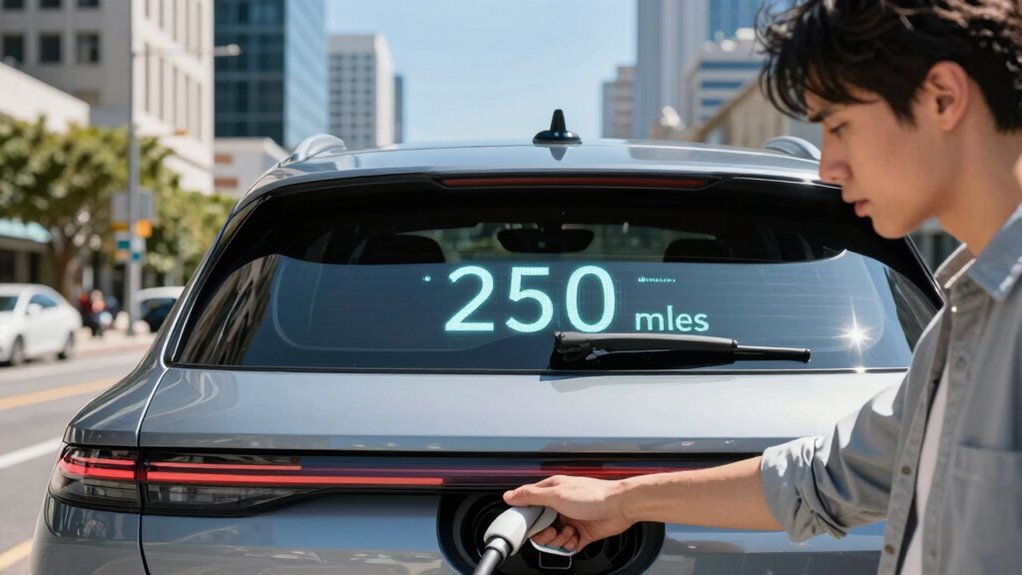
Many new electric vehicle (EV) owners enter the market with the misconception that the rated range displayed on the dashboard accurately reflects how far they can travel on a single charge. While the number can serve as a helpful estimate, it’s often optimistic and doesn’t account for real-world conditions. You might find yourself surprised when your actual range doesn’t match the numbers you saw on the screen, especially during colder months or on hilly terrain. Understanding this helps you plan better and avoid unexpected stops.
Rated range is an estimate; real-world conditions like weather and terrain can significantly affect your EV’s actual distance.
One key aspect of managing your EV effectively is practicing good charging etiquette. This means being considerate of other drivers at charging stations and avoiding unnecessary charging sessions. Instead of topping off your battery every time you see a charger, wait until your range drops to a more practical level. This not only helps you stretch your battery life but also ensures chargers are available for those who need them more urgently. Proper charging etiquette also includes unplugging promptly once your vehicle is full, so others don’t have to wait. This respectful behavior can make a big difference in busy charging areas.
Another common misunderstanding is how frequent and deep discharges impact your battery’s health. Many owners believe that constantly charging to 100% or letting the battery drain completely is harmless. In reality, these habits can accelerate battery degradation. To preserve your EV’s battery, it’s best to keep your charge levels between about 20% and 80%. This practice reduces stress on the battery cells and prolongs their lifespan over time. Also, avoid charging at fast chargers unnecessarily, as high power levels generate more heat, which can be detrimental to battery health if done repeatedly. Additionally, understanding the importance of battery chemistry can help you make more informed decisions about your charging habits. Moreover, adopting proper charging practices can significantly extend your battery’s overall health and longevity. Being aware of temperature effects can further help you optimize your range and battery life in varying weather conditions.
Temperature plays a role too. Cold weather can greatly diminish your EV’s effective range due to battery chemistry slowing down. When planning longer trips, it’s wise to account for this variation and allow some extra buffer in your range calculations. Preconditioning your vehicle by warming it up while still plugged in can help optimize battery performance in winter months. Additionally, understanding state of charge and how it relates to optimal battery conditions can improve your overall driving experience.
In essence, understanding that the rated range is an estimate rather than an absolute limit helps you make smarter decisions. Practice good charging etiquette, be mindful of your battery’s health, and adapt to environmental conditions. Doing so allows you to enjoy your EV confidently, knowing you’re maximizing both your vehicle’s range and lifespan while contributing to a more efficient charging ecosystem.
As an affiliate, we earn on qualifying purchases.
Frequently Asked Questions
How Does Climate Affect My Ev’s Rated Range?
Climate considerably impacts your EV’s rated range. Cold weather reduces battery health and efficiency, leading to decreased range, especially if you don’t adjust your charging habits accordingly. In hot climates, excessive heat can also harm the battery over time. To maximize range, precondition your vehicle, avoid rapid charging in extreme temperatures, and maintain good battery health by following recommended charging habits. This helps your EV perform at its best regardless of climate conditions.
Does Using Accessories Reduce My Ev’s Range?
Using accessories can indeed impact your EV’s range, but the effect varies. Some accessories, like heated seats or entertainment systems, draw power and reduce your range, while others, like roof racks, increase aerodynamic drag. To optimize your range, be mindful of accessory use—turn off what you don’t need. Small adjustments can make a big difference, revealing hidden potential in your EV’s true range.
Can I Improve My Ev’s Rated Range Over Time?
Yes, you can improve your EV’s rated range over time by adopting good charging habits and understanding battery degradation. Regularly charging your battery within recommended levels helps slow degradation, maintaining capacity longer. Avoid deep discharges and extreme temperatures. Over time, these practices preserve your battery’s health, ensuring your vehicle retains its ideal rated range. Proper care allows your EV to perform better and last longer, maximizing your investment.
How Accurate Is the Rated Range in Real-World Driving?
The rated range can vary in real-world driving due to factors like battery degradation and your charging habits. You might find it less accurate over time if the battery’s capacity diminishes, especially after many charge cycles. Your charging habits, such as frequent fast charging, can also impact range accuracy. To get the most reliable estimate, drive conservatively, avoid deep discharges, and maintain a steady charging routine.
Does My Driving Style Impact the Rated Range Significantly?
Yes, your driving style greatly impacts the rated range. Aggressive acceleration and high speeds drain your battery faster, reducing effective range. Poor charging habits and frequent rapid charging can accelerate battery degradation, further lowering your range over time. To maximize your EV’s rated range, drive smoothly, avoid hard accelerations, and maintain consistent charging routines. These habits help preserve your battery health and guarantee you get the most out of your vehicle’s rated range.
EV battery temperature management
As an affiliate, we earn on qualifying purchases.
As an affiliate, we earn on qualifying purchases.
Conclusion
Understanding that your EV’s rated range isn’t set in stone can save you surprises. Many new owners believe they’ll always get the maximum distance advertised, but in reality, factors like weather and driving habits play a big role. Did you know that on average, EVs lose about 20% of their rated range in cold weather? Keep this in mind, and you’ll enjoy your EV more confidently, knowing it’s all about managing expectations and embracing real-world driving.
As an affiliate, we earn on qualifying purchases.
As an affiliate, we earn on qualifying purchases.
Fall yard work Picks
leaf blowers
As an affiliate, we earn on qualifying purchases.