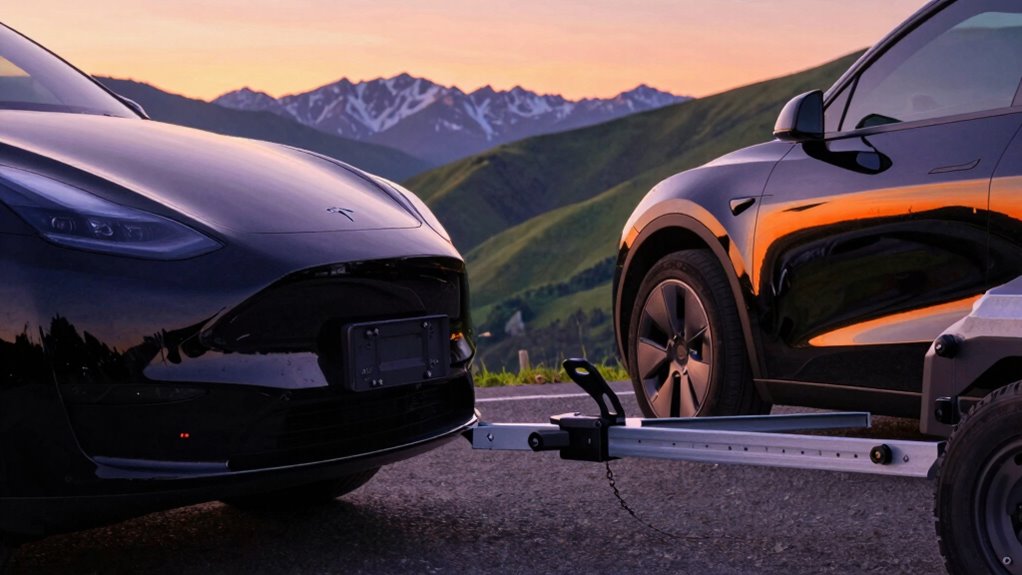

As a first-time EV owner, it’s important to know your vehicle’s towing limits listed in the owner’s manual to avoid damaging your motor or battery. Overloading can cause heat buildup, reduce battery life, and lead to costly repairs. Proper route planning, including charging station stops, helps prevent range anxiety. Regular maintenance, monitoring your battery’s health, and respecting towing capacities keep your EV running smoothly. Want to learn effective tips to improve your towing experience? Keep exploring!

Get backup power and energy gear delivered free — and shop member deals
- Fast, free delivery on millions of items
- Access to Prime Big Deal Days deals on October 6–7
- Prime Video, Amazon Music and more included
Key Takeaways
- Always check your vehicle’s owner’s manual for specific towing limits and guidelines.
- Avoid exceeding the recommended towing capacity to prevent damage to the motor and battery.
- Properly plan routes with charging stations to prevent range issues during towing trips.
- Maintain optimal battery health by avoiding rapid charging and keeping charge between 20-80%.
- Monitor vehicle signals and battery temperature to prevent overheating and ensure safe towing.
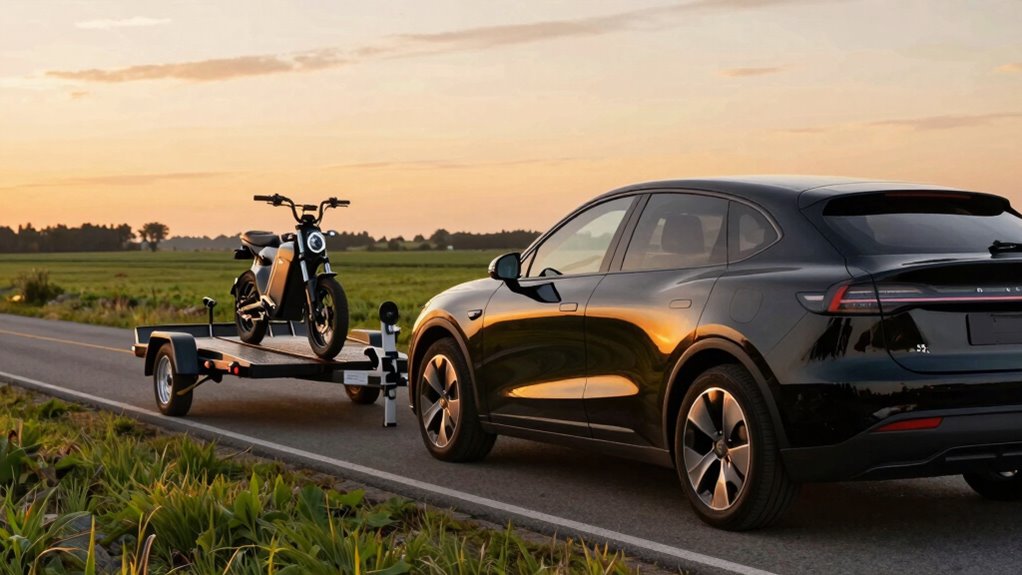
Towing with an electric vehicle for the first time can be intimidating, especially since many EVs weren’t initially designed for heavy-duty hauling. The idea of pulling a trailer or a camper might make you worry about range, battery life, or even damaging your vehicle. But understanding some key points can make your first towing experience smoother and safer. First, it’s essential to recognize your vehicle’s towing limits, which are often listed in the owner’s manual. Exceeding these limits can strain your EV’s motor and battery, leading to potential damage or reduced lifespan. Keep in mind that towing places additional demands on your battery, so planning your trips carefully is vital.
Understanding your EV’s towing limits is key to safe, efficient hauling and preventing damage or reduced battery life.
When you’re preparing for a tow, think about where you’ll find charging stations along your route. Unlike gas stations, charging stations aren’t everywhere yet, especially in rural or remote areas. You’ll want to map out your stops to guarantee you can recharge before your battery gets too low. Planning for charging stations not only prevents range anxiety but also helps you avoid being stranded. Many EV owners use apps or built-in navigation systems that show nearby charging stations and real-time availability, making it easier to plan your journey. Additionally, being aware of your vehicle’s towing limits and how towing impacts your battery can help you avoid overloading the system and causing unnecessary wear.
Battery maintenance becomes even more important when towing. Towing increases the load on your EV’s battery, which can cause it to heat up more than usual. To protect your battery’s health, avoid rapid charging frequently and try to keep the battery’s charge level between 20% and 80%. Regularly checking your battery temperature and avoiding prolonged high-speed drives can also help maintain its longevity. Additionally, ensure your tires are properly inflated, as under-inflated tires can further decrease efficiency and increase strain on your vehicle.
Understanding your vehicle’s towing limits and planning your route with charging stations in mind will help you have a successful first towing experience. Be mindful of your battery’s health by practicing good maintenance habits, and don’t forget to factor in extra time for charging stops. While towing with an EV can seem intimidating at first, with proper preparation, you can enjoy the benefits of electric driving while hauling your gear or trailer safely. Remember, every trip is a learning experience, so stay attentive to your vehicle’s signals, and soon, towing with your EV will become second nature.
As an affiliate, we earn on qualifying purchases.
Frequently Asked Questions
Can I Tow With My EV in Cold Weather?
Yes, you can tow with your EV in cold weather, but keep in mind that battery performance can decrease in low temperatures. Cold weather may reduce your vehicle’s range and towing capacity, so plan accordingly. You might notice longer charging times and less power during towing. To minimize these effects, pre-condition your battery before driving and use heated seats or other climate controls to keep warm without overtaxing the battery.
How Does Towing Affect My Ev’s Battery Warranty?
Towing can impact your EV’s warranty coverage by accelerating battery degradation, especially if you frequently tow heavy loads or drive long distances. Some manufacturers specify towing restrictions that, if disregarded, may void your warranty. To protect your warranty, follow your vehicle’s towing guidelines and avoid excessive strain on the battery. Regular maintenance and mindful towing practices help preserve your battery’s health and ensure warranty coverage remains intact.
Are There Specific Towing Accessories Recommended for EVS?
Think of your EV as a skilled horse ready to pull a wagon; you need the right harness for safe towing. Specific towing accessories like specialized hitches and weight-distribution systems are recommended for EVs. These tools guarantee towing safety and protect your vehicle’s charging infrastructure. Always choose equipment designed for EVs, and check compatibility to avoid damage, guaranteeing your towing journey is smooth and safe.
What’s the Maximum Trailer Weight My EV Can Handle?
Your EV’s maximum trailer weight varies by model, so check your owner’s manual for specifics. Keep in mind, towing can reduce charging efficiency and impact brake performance, especially with heavier loads. You might notice your battery depletes faster, and braking requires more effort. Always stay within the recommended limits, and consider auxiliary cooling or braking systems if you plan to tow frequently. Safety and vehicle longevity depend on adhering to these guidelines.
How Often Should I Check My Ev’s Battery After Towing?
Your EV’s battery is the heartbeat of your vehicle, so check it frequently—at least every few hundred miles after towing. Regular battery maintenance helps prevent surprises, while charging tips like avoiding deep discharges and keeping the battery between 20% and 80% prolong its life. Keep an eye on your battery’s temperature and charge levels, especially after towing, to guarantee peak performance and safety on every trip.
As an affiliate, we earn on qualifying purchases.
Conclusion
As you navigate the open road with your electric vehicle, remember that understanding its towing limits is like steering through a delicate dance. Respect those boundaries, and you’ll glide smoothly over hills and highways, your EV humming softly beneath the weight of your towed load. With this knowledge in hand, you’ll enjoy the journey ahead—confident and in harmony with your vehicle’s capabilities—ready to explore new horizons without missing a beat.
As an affiliate, we earn on qualifying purchases.
As an affiliate, we earn on qualifying purchases.
Fall Picks
fall essentials
As an affiliate, we earn on qualifying purchases.