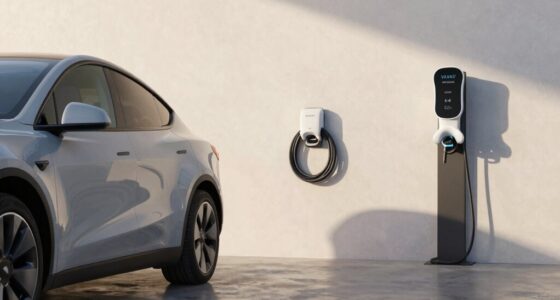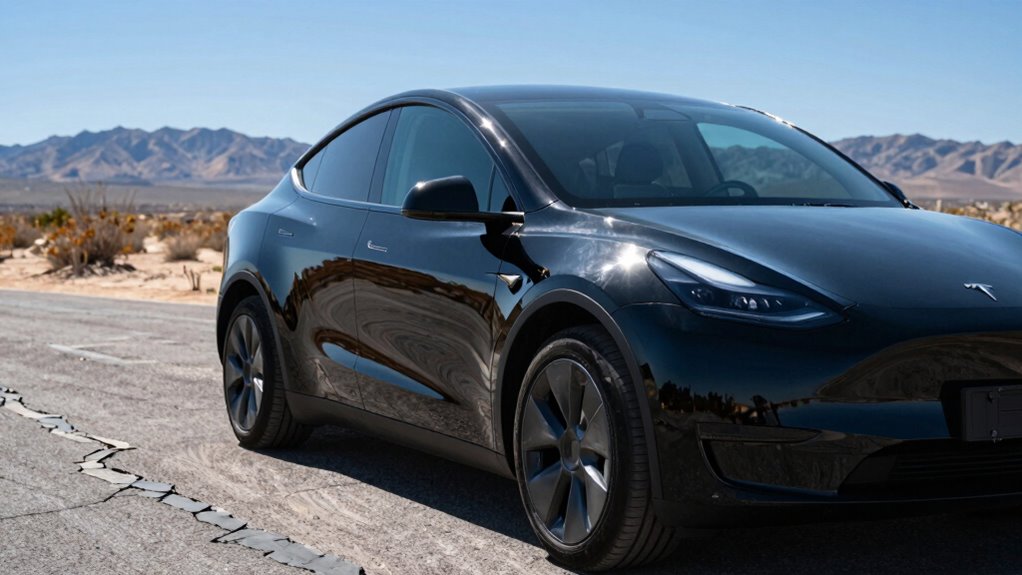

In extreme heat, your EV’s battery can overheat, reducing performance and lifespan. To protect it, use your vehicle’s thermal management system and avoid charging in direct sunlight. Park in shaded or indoor areas, and schedule charging during cooler times like mornings or evenings. Regularly monitoring your battery temperature helps prevent overheating. Staying proactive with cooling and charging habits is key to maintaining your vehicle’s reliability. Want to find out more tips for handling heat? Keep going.
Key Takeaways
- EV batteries may overheat in extreme heat, requiring effective thermal management systems to maintain performance.
- Charging times can increase, and maximum charging rates may be limited during heatwaves.
- Parking in shaded or indoor areas helps protect the battery and sustain charging efficiency.
- Regularly monitor battery temperature and use pre-conditioning features to cool the battery before driving.
- Proper thermal management and proactive care extend battery life and ensure reliable EV performance in hot weather.
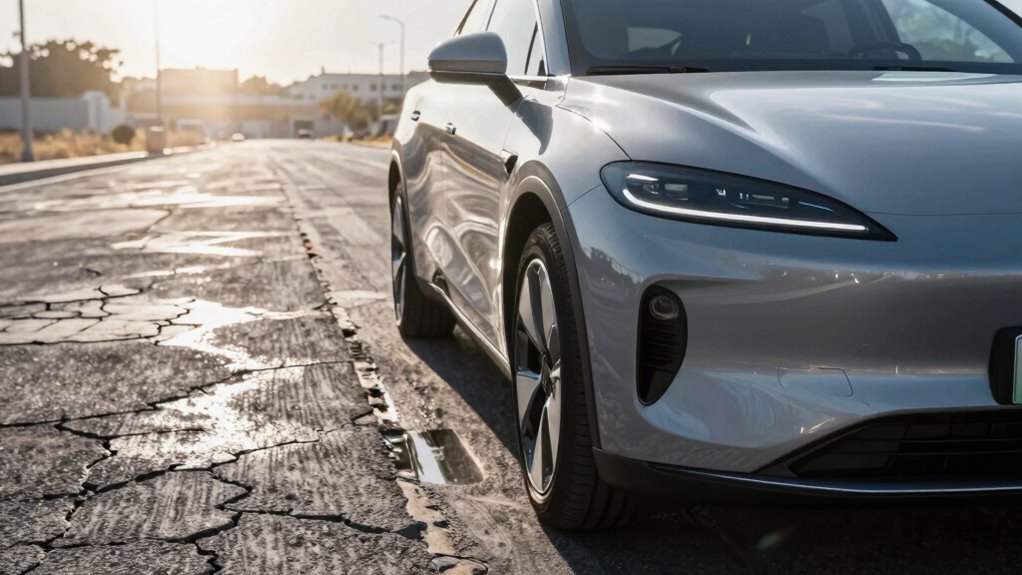
As temperatures soar during extreme heat waves, electric vehicle owners often face unexpected challenges that can affect their driving experience. One of the most critical issues is how high temperatures impact your EV’s battery. When the heat rises, your vehicle’s battery cooling system becomes essential to prevent overheating. Without effective cooling, the battery can become too hot, which not only risks damage but also reduces overall performance. Many modern EVs have advanced thermal management systems designed to keep the battery within optimal temperature ranges, but in extreme heat, you might notice that your vehicle’s cooling system kicks in more frequently or runs longer. This extra effort helps maintain battery health and ensures that your vehicle continues to perform reliably despite the heat.
High temperatures can cause EV batteries to overheat, impacting performance and longevity—effective cooling is essential in extreme heat.
Another significant concern in extreme heat is charging efficiency. High temperatures can interfere with your EV’s ability to charge quickly and effectively. Heat can increase internal resistance within the battery cells, leading to slower charging times and potentially reducing the maximum charging rate. If you’re trying to top up your battery at a public charging station during a heatwave, you might find that charging sessions take longer than usual or that your vehicle limits charging speed to protect the battery. To mitigate this, it’s advisable to park your car in shaded areas or indoors if possible, especially during the hottest parts of the day. Doing so helps keep the battery cooler and preserves charging efficiency, saving you time and ensuring your EV is ready to go when you need it.
Extreme heat also affects the longevity of your EV’s battery, making proactive measures essential. Regularly monitoring battery temperature through your vehicle’s app or dashboard can alert you to overheating issues before they become severe. Planning your charging sessions during cooler parts of the day, like early mornings or evenings, can also help maintain optimal battery temperatures, enhancing both performance and lifespan. Additionally, using pre-conditioning features—if your EV has them—allows you to cool the battery and cabin before you start driving, reducing thermal stress on the battery when you hit the road. Battery thermal management systems are crucial for maintaining battery health in high temperatures.
Ultimately, owning an EV in extreme heat requires a bit more attention to your vehicle’s thermal management. By understanding how battery cooling and charging efficiency are affected by high temperatures, you can take steps to protect your battery, maximize charging speeds, and keep your EV running smoothly in the heat. Staying proactive ensures that your vehicle remains reliable and efficient, even on the hottest days.
EV Thermal Management: Heat Pumps, Battery Cooling, and HVAC Service: A Technical Reference for EV Thermal Specialists (EV Owner & Service Series)
As an affiliate, we earn on qualifying purchases.
As an affiliate, we earn on qualifying purchases.
Frequently Asked Questions
How Does Extreme Heat Affect EV Battery Lifespan?
Extreme heat can accelerate battery degradation in your EV, reducing its lifespan over time. High temperatures strain the battery’s thermal management system, which is designed to keep the battery cool. When thermal management is overwhelmed, it causes internal damage and diminishes capacity. To protect your battery, avoid parking in direct sunlight, use climate control, and follow manufacturer guidelines for thermal management to extend your EV’s battery life.
Are There Specific EV Models Better Suited for Hot Climates?
Some EV models are better suited for hot climates because of their advanced battery technology and design. You should look for vehicles with improved thermal management systems, which help regulate battery temperature during extreme heat. Climate considerations are essential, so choose models that prioritize heat-resilient batteries. Brands like Tesla and Hyundai offer options with enhanced cooling systems, making them more reliable and efficient in hot environments.
What Cooling Features Do EVS Have for Extreme Heat?
In extreme heat, EVs combat temperature challenges with advanced cooling features. You’ll find battery insulation that shields the battery pack from scorching temperatures, maintaining ideal performance. Cabin cooling systems, often powered by the vehicle’s battery, keep the interior comfortable during hot days. This combination guarantees your EV stays cool and efficient, even in the most intense heat, so you can drive confidently without worrying about overheating or battery degradation.
How Can I Prevent My EV From Overheating During Heatwaves?
To prevent your EV from overheating during heatwaves, guarantee your battery insulation is intact, which helps regulate temperature and protect the battery. Use cabin cooling wisely by pre-conditioning your vehicle while it’s still plugged in, keeping the interior comfortable without draining the battery. Additionally, park in shaded areas or use sunshades to minimize heat buildup. Regular maintenance of cooling systems also keeps your EV running efficiently in extreme heat.
Does Extreme Heat Impact EV Charging Times?
Extreme heat can slow down your EV’s charging times, sometimes by up to 20%. When temperatures soar, your vehicle’s battery needs more time to reach full charge due to temperature regulation strategies. To minimize delays, guarantee charging station accessibility and use cooling features when possible. Properly managing heat helps your EV charge efficiently, so you get back on the road faster, even during intense heatwaves.

O2COOL Treva 5 in Portable Battery Powered Desk Fan 2-Speed Black
- Battery Powered: Runs on 2 D batteries (not included)
- Compact Design: Folding, space-saving mini fan
- Two-Speed Operation: High and low speed settings
As an affiliate, we earn on qualifying purchases.
As an affiliate, we earn on qualifying purchases.
Conclusion
Owning an EV in extreme heat is like tending a delicate garden—you need to stay vigilant and adapt to the conditions. Just like watering plants early in the morning to avoid midday scorch, you’ll want to adjust your charging habits and monitor your battery. Remember, in 2022, EV battery efficiency dropped by up to 20% during heatwaves. Staying informed and proactive keeps your EV running smoothly, so you can enjoy the ride even under the blazing sun.

Victron Energy Smart Battery Sense, Voltage and Temperature Sensor
- Wireless Battery Voltage and Temperature Sensor: For Victron MPPT Solar Chargers
- Enhances Charging Efficiency: Improves battery charging and lifespan
- Bluetooth Smart Connectivity: Wireless connection via VE.Smart Network
As an affiliate, we earn on qualifying purchases.
As an affiliate, we earn on qualifying purchases.

SEGUMA Level 2 EV Charger, 40Amp Electric Car Chargers for J1772 BEVs/PHEVs
- High-Speed Charging: Up to 9.6kW with 40Amp power
- Adjustable Charging Settings: Supports 10A to 40A current levels
- Delay Timer Function: Set charging times to reduce costs
As an affiliate, we earn on qualifying purchases.
As an affiliate, we earn on qualifying purchases.