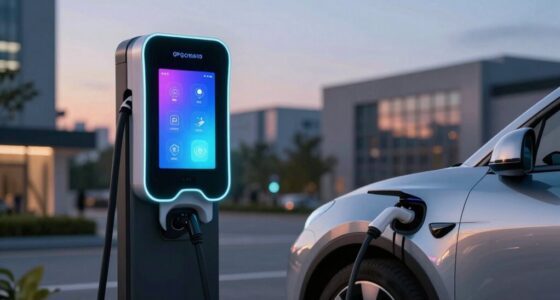

To build a simple case for workplace charging, focus on its benefits for both your company and employees, like boosting morale, attracting top talent, and enhancing sustainability. Highlight potential cost savings through energy efficiency and utility incentives, and emphasize how it improves overall workplace satisfaction. Show how it aligns with your company’s environmental goals without adding complexity. Staying straightforward and clear will help your case stand out; keep exploring to uncover even more key insights.

Get backup power and energy gear delivered free with Prime
- Fast, free delivery on millions of items
- Prime Video, Amazon Music and more included
- Member-only deals all year
Key Takeaways
- Highlight benefits like improved employee satisfaction, retention, and company sustainability reputation.
- Focus on simple, proven solutions and partner with local utilities for support and incentives.
- Emphasize long-term energy savings and cost offsets to strengthen the business case.
- Showcase positive impacts on employee morale and attraction without complex infrastructure.
- Address indoor environment considerations to demonstrate a comprehensive, health-conscious approach.
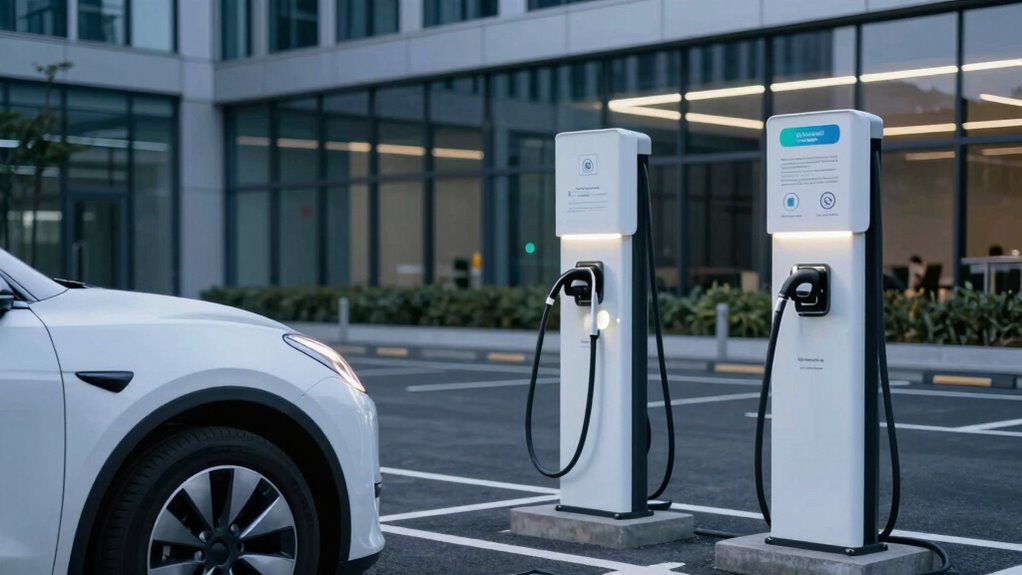
Implementing workplace charging can seem intimidating, but making a strong case starts with understanding the benefits for both your company and employees. Providing charging stations shows your commitment to sustainability and employee well-being, which can improve morale and attract top talent. Employees increasingly seek workplaces that support eco-friendly lifestyles, and offering charging stations signals that your company values innovation and environmental responsibility. To make this case clear, emphasize the potential employee incentives. Charging stations can serve as a tangible perk, encouraging staff to choose your workplace over competitors. It’s an investment in employee satisfaction that can lead to higher retention rates and increased productivity. Additionally, offering charging options can reduce range anxiety for employees with electric vehicles, making their commute more convenient and less stressful.
Partnering with local utilities can considerably ease the process of establishing workplace charging. Utility companies often have programs designed to support businesses moving to cleaner energy solutions. These partnerships can provide financial incentives, rebates, or discounted rates for energy usage, helping offset installation costs. Working with utility providers simplifies the technical aspects of installation and ensures your charging stations are integrated with your existing energy infrastructure. It also demonstrates a proactive approach to sustainability, which can boost your company’s public image and appeal to environmentally conscious clients and employees alike. Many utilities also offer resources or consulting services to help plan the most efficient and cost-effective setup, saving you time and money. Incorporating projected energy savings from these partnerships can further strengthen your case by highlighting long-term cost benefits. Recognizing the importance of renewable energy integration can also position your company as a leader in sustainable practices. Furthermore, understanding indoor air quality and humidity tips can be useful when considering the overall environment of your workplace and ensuring that added infrastructure aligns with healthy indoor conditions. Incorporating energy-efficient infrastructure can also optimize overall building performance and further support your sustainability goals, especially when combined with renewable energy sources.
electric vehicle charging station for workplace
As an affiliate, we earn on qualifying purchases.
As an affiliate, we earn on qualifying purchases.
Frequently Asked Questions
What Are the Initial Costs of Installing Workplace Charging Stations?
The initial costs of installing workplace charging stations typically range from $2,000 to $5,000 per station, depending on factors like infrastructure planning and charger type. You should conduct a thorough cost estimation to account for electrical upgrades, permits, and installation labor. Proper infrastructure planning helps you identify necessary electrical capacity and locations, ensuring your investment is efficient and future-proof, ultimately making the project manageable and cost-effective.
How Long Does It Take to Install Workplace Charging Infrastructure?
Installation of workplace charging infrastructure typically takes anywhere from a few weeks to a few months, depending on your infrastructure planning and site readiness. The installation timeline involves initial assessments, permitting, and actual setup, which can vary based on the complexity of your electrical system and local regulations. To guarantee a smooth process, work closely with installers early on, and clearly outline your needs during infrastructure planning.
Are There Government Incentives for Workplace Charging?
Yes, there are government incentives for workplace charging. You can take advantage of policy incentives like tax credits and grants, which help offset installation costs. Additionally, government rebates are available in many regions to encourage electric vehicle infrastructure. Research your local, state, or federal programs to guarantee you’re maximizing these benefits. These incentives make it more affordable to implement workplace charging, supporting your sustainability goals and boosting employee satisfaction.
How Do Charging Stations Impact Workplace Electricity Bills?
Charging stations increase workplace electricity bills by boosting energy consumption, but the impact is often manageable. You can offset these costs through energy-efficient station choices and smart scheduling. Over time, you may see cost savings as employees switch to electric vehicles, reducing fuel expenses. By analyzing usage patterns and leveraging incentives, you can keep energy costs predictable while promoting sustainable transportation options at your workplace.
What Safety Measures Are Required for Workplace Charging Stations?
You must prioritize safety protocols and adhere to electrical standards when installing workplace charging stations. Proper grounding, circuit protection, and clear signage are essential to prevent accidents. Regular inspections and maintenance guarantee ongoing safety. Neglecting these measures could lead to hazards that threaten both employees and property. Stay vigilant, follow regulations, and implement robust safety protocols—because overlooking these details might just turn a simple charging station into a risky liability.
As an affiliate, we earn on qualifying purchases.
Conclusion
Imagine your employees arriving each day, their electric cars gleaming under the sun, seamlessly plugged into a sleek workplace charger. As you build this case, you’re not just installing equipment—you’re fueling innovation, sustainability, and morale. Picture a future where your office buzzes with eco-conscious energy, turning the parking lot into a vibrant hub of progress. With a simple, clear plan, you’re creating more than charging stations—you’re igniting a greener, brighter workplace.
As an affiliate, we earn on qualifying purchases.
As an affiliate, we earn on qualifying purchases.
Fall Picks
fall essentials
As an affiliate, we earn on qualifying purchases.