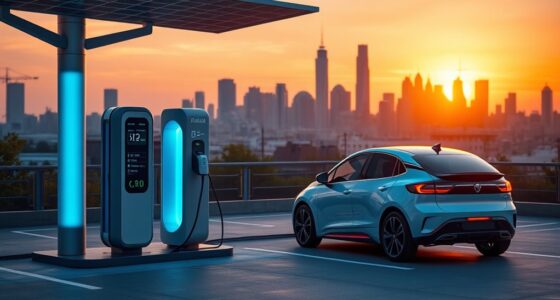
As a new EV owner, understanding key terms like battery capacity (kWh), which affects range, and charging levels (Level 1, 2, and DC fast charging), helps you plan trips and charging needs better. Knowing about battery technology, safety features, and charging infrastructure guarantees confidence in your vehicle’s performance. These terms are essential to maximize your EV experience. Keep exploring these concepts further to become more familiar with all the basics.

Get backup power and energy gear delivered free — and shop member deals
- Fast, free delivery on millions of items
- Access to Prime Big Deal Days deals on October 6–7
- Prime Video, Amazon Music and more included
Key Takeaways
- Understand common EV terms like battery capacity (kWh), range, and charging levels (Level 1, 2, DC fast).
- Know key components such as battery management systems and electric motors.
- Familiarize with charging infrastructure types and their speeds to plan trips effectively.
- Learn how battery performance impacts vehicle range, acceleration, and safety features.
- Recognize the significance of charging stations and network expansion for reliable EV use.
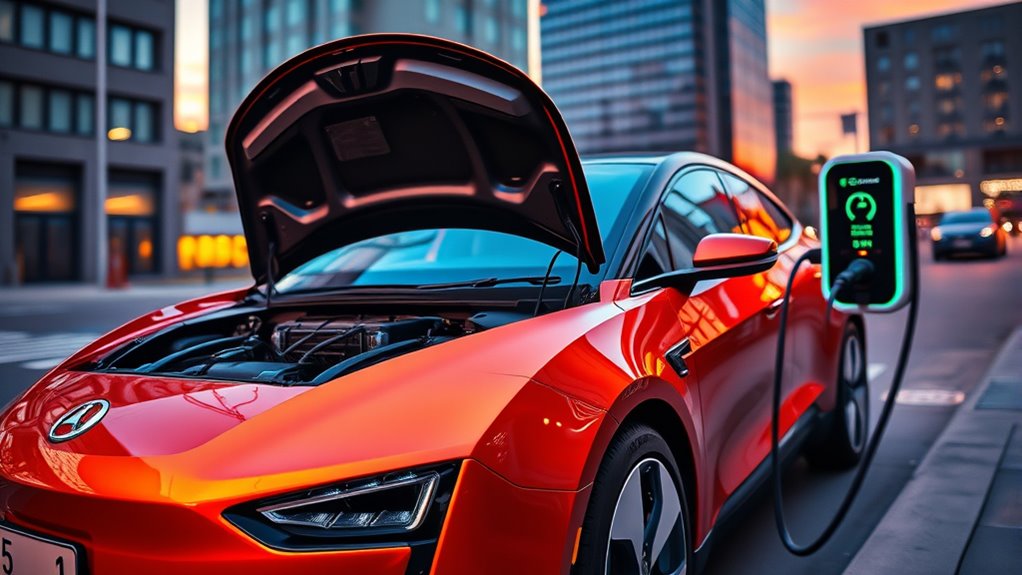
Understanding the terminology behind electric vehicles can seem overwhelming at first, but mastering key terms makes the technology much more approachable. One of the most critical aspects to understand is battery technology. Your EV’s battery is fundamentally its fuel tank, storing the electricity that powers the vehicle. Most modern EVs use lithium-ion batteries because they offer a high energy density, meaning they can store more power in a smaller, lighter package. This impacts your vehicle’s range—the distance you can travel on a single charge—and influences how quickly your car can accelerate. Advances in battery technology continue to improve, making batteries more efficient, longer-lasting, and safer. It’s also helpful to grasp the concept of battery capacity, usually measured in kilowatt-hours (kWh). A higher kWh rating typically means a longer range but may also add to the vehicle’s weight and cost. Understanding these details helps you make informed decisions about which EV fits your driving needs. Additionally, understanding battery management systems is crucial, as they help optimize battery performance and safety during operation.
Equally important is understanding charging infrastructure—the network of facilities where you can recharge your EV. Charging stations come in various types, primarily Level 1, Level 2, and DC fast chargers. Level 1 chargers are the slowest, often just a standard household outlet, providing about 2-5 miles of range per hour of charging. Level 2 chargers are more common and faster, supplying 10-60 miles of range per hour, ideal for overnight or workplace charging. DC fast chargers are the most rapid, capable of adding 60-100 miles of range in just 20-30 minutes, making long trips more feasible. Recognizing the availability and compatibility of charging infrastructure in your area is essential for planning trips and daily commutes. The expansion of charging stations, especially fast chargers, aims to reduce range anxiety—that worry about running out of power—and to make EV ownership more convenient.
As an affiliate, we earn on qualifying purchases.
Frequently Asked Questions
How Long Does an EV Battery Typically Last?
Your EV battery typically lasts around 8 to 15 years, depending on usage and climate. Battery degradation gradually reduces capacity over time, but most manufacturers offer warranty coverage of 8 years or 100,000 miles, ensuring replacement if significant issues arise. Proper maintenance, like avoiding extreme temperatures and frequent fast charging, can extend your battery’s lifespan, helping you maximize your vehicle’s longevity and performance.
What Is the Average Charging Time for a Full Battery?
Charging your EV fully usually takes about 8 to 12 hours using a standard charging station at home. However, if you use fast charging stations, you can get an 80% charge in just 20 to 30 minutes. The exact time depends on your vehicle’s battery size and the type of charger. Always plan your trips with access to charging stations, especially fast chargers, for quick top-ups.
Are EVS Suitable for Long-Distance Travel?
Yes, EVs are suitable for long-distance travel, especially with the growing charging infrastructure. While range anxiety might be a concern, planning your route with available charging stations makes it manageable. Modern EVs offer impressive ranges, and fast chargers can rapidly recharge your battery. With proper planning, you can enjoy extended trips without worry, knowing you’ll find charging points along your journey to keep you moving.
How Do I Properly Maintain My Ev’s Battery?
You should prioritize proper battery management to extend your EV’s lifespan. Avoid frequent deep discharges and keep the battery charge between 20% and 80%. Use the right charging infrastructure, like fast chargers when needed, but don’t over-rely on them. Regularly monitor your battery’s health through your vehicle’s systems, and avoid extreme temperatures. These practices help guarantee your battery stays healthy, maximizing your EV’s performance and longevity.
What Financing Options Are Available for New EV Buyers?
You can choose between leasing and buying your EV, each with different financing options. Leasing often offers lease incentives like lower monthly payments and reduced upfront costs, making it appealing if you want to try a new model frequently. Buying allows you to build equity and avoid mileage limits. Compare lease incentives and consider your driving habits to decide whether leasing or buying aligns best with your budget and lifestyle.
DC fast charger for electric vehicles
As an affiliate, we earn on qualifying purchases.
As an affiliate, we earn on qualifying purchases.
Conclusion
Now that you’ve learned these key EV terms, you’re better equipped to navigate the world of electric vehicles. Think of this glossary as your roadmap—guiding you smoothly through conversations and decisions. Just like a compass helps travelers find their way, understanding these terms makes your EV journey clearer and more confident. Keep this knowledge handy, and you’ll drive into the future like a pro, ready to embrace all the perks of electric driving.
As an affiliate, we earn on qualifying purchases.
As an affiliate, we earn on qualifying purchases.
Fall Picks
fall essentials
As an affiliate, we earn on qualifying purchases.