
The best solar backup power station for most buyers is the EF ECOFLOW DELTA 3 MAX, which pairs a 2048Wh expandable battery with fast solar charging and a bundled 220W panel — enough to run a fridge, router, and lights through an extended outage. Close behind, the Jackery Explorer 2000 v2 offers similar capacity with two solar panels included and a lighter design, while the Anker SOLIX C1000 wins on recharge speed in a smaller footprint. The main tradeoffs in this category come down to capacity versus portability, battery chemistry (LiFePO4 lasts far longer than older NMC cells), and whether a solar panel is bundled or sold separately. Small 300W units are convenient for camping but struggle with home backup duty. Continue reading for the full breakdown of all 14 models and who each one suits best.

Get backup power and energy gear delivered free with Prime
- Fast, free delivery on millions of items
- Prime Video, Amazon Music and more included
- Member-only deals all year
Complete the kit


Key Takeaways
- The 2000Wh class (EcoFlow DELTA 3 MAX, Jackery Explorer 2000 v2, Anker SOLIX S2000, OUKITEL P2001 Pro) separated itself as the real home-backup tier — the 1000Wh models covered essentials only, and the 300Wh units were camping tools, not outage insurance.
- Bundled solar panels made a bigger practical difference than headline capacity: the Jackery Explorer 2000 v2 ships with 400W of panels while the similarly sized Anker S2000 ships with none, shifting the true cost of getting solar input.
- LiFePO4 battery chemistry appeared on most mid-tier picks (BLUETTI AC180, ALLWEI, the generic 1024Wh unit), while several Jackery competitors in this lineup still use shorter-lived NMC-style cells — a durability gap worth knowing before buying.
- Recharge speed varied widely even at similar capacity: Anker’s SOLIX C1000 and EcoFlow’s DELTA line recharged in roughly an hour, whereas budget 500W-class units like the GRECELL took most of a day from the wall.
- For true beginners, the Jackery Solar Generator 300 bundle was the lowest-friction entry point — small panel included, simple interface — but its 292Wh capacity means it powers a phone and a light, not a refrigerator.


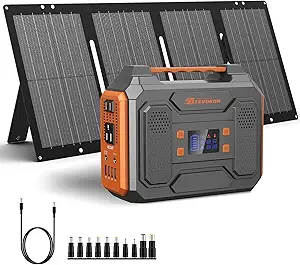


| solar backup power station | Capacity | Weight | AC Output | Battery Type |
|---|---|---|---|---|
| Jackery Explorer 1000 v2 Porta | 1070Wh | 23.8 lbs | 1500W | LFP |
| EF ECOFLOW DELTA 3 MAX Portabl | 2048Wh | — | 2400W | — |
| Anker SOLIX C1000 Gen 2 Portab | 1,024Wh | 11.3 kg | 2000W | — |
| Jackery Solar Generator 300 an | 292Wh | 7.5 lbs | 300W | — |
| GRECELL Portable Power Station | 519Wh | — | 500W pure sine wave | Lithium |
| 1000W Portable Power Station 1 | 1024Wh | 27.73 lbs | — | LiFePO4 |
| ALLWEI Portable Power Station | 256Wh | 6.4 lbs | — | LiFePO4 |
| OUKITEL P2001 Pro 3200W/2048Wh | 2048Wh | 50 lbs | — | — |
| BLUETTI Portable Power Station | 1152Wh | — | 1800W continuous / 2700W peak | LiFePO4 |
| Portable Solar Generator 300W | — | — | — | — |
| Jackery Explorer 2000 v2 with | 2042Wh | 66.8 lbs | 2200W continuous | — |
| Jackery Solar Generator 1000 V | 1070Wh | 23.8 lbs | 1500W (3000W surge peak) | LFP, 4000+ cycles |
| Jackery Explorer 300 Portable | 292Wh | 7.5 lbs | — | — |
| Anker SOLIX S2000 Portable Pow | 2010Wh | 35.7 lbs | — | LFP, rated 10,000 cycles |
More Details on Our Top Picks
Jackery Explorer 1000 v2 Portable Power Station, 1070Wh, 1500W
The Explorer 1000 v2 earns the top spot because it nails the balance most buyers actually need: enough capacity to run a fridge, lights, and phones through an outage, at a weight you can still carry to the car. Its one-hour full recharge is the standout here — compared with the GRECELL 500W, which needs 6–7 hours on wall power, the Jackery recovers from a draining evening in the time it takes to eat breakfast. The LFP chemistry rated for 4,000 cycles means this is a decade-long purchase rather than a two-season gadget. The tradeoff is ecosystem lock-in: solar input works cleanly with Jackery’s own panels, so if you already own third-party panels, the Anker SOLIX C1000 Gen 2 may fit your kit better. Outlet count is also modest for the price tier.
Pros:- 1,024–1,070Wh capacity covers fridges, CPAP machines and laptops through most outages
- Full recharge in about one hour minimizes downtime between uses
- LFP battery rated for 4,000 cycles — roughly a decade of regular use
- 3000W surge peak handles motor-driven appliance startups
Cons:- Solar input is limited to Jackery-branded panels
- Fewer total outlets than competing units like the Anker SOLIX C1000
- No bundled solar panel at this level — expect an extra purchase
Best for: Homeowners and campers who want a do-everything mid-size station with class-leading recharge speed
Not ideal for: Buyers with existing non-Jackery solar panels, or anyone who needs to run a whole house — 1070Wh covers essentials only
- Capacity:1070Wh
- AC Output:1500W
- Surge Peak:3000W
- Battery Type:LFP
- Charge Cycles:4,000
- Charging Time:~1 hour fast charge
- Weight:23.8 lbs
Our verdict“If you want one station that handles both emergency backup and weekend camping without compromise, this is the one to buy.”
EF ECOFLOW DELTA 3 MAX Portable Power Station with 220W Solar Panel, 2048Wh
When the power goes out for days rather than hours, capacity and output ceiling matter more than portability — and that’s where the DELTA 3 Max separates itself. With 2048Wh and up to 3400W of running power, it can carry a microwave, a space heater, or a well pump simultaneously, something the Jackery Explorer 1000 v2 simply cannot approach. The included 220W panel means this bundle is genuinely off-grid capable out of the box, unlike the Jackery, which assumes a separate panel purchase. Its 0–80% recharge in about an hour is remarkable for this capacity class. Real drawbacks exist: it’s heavy enough that you’ll think twice about moving it solo, and the outlet count is thin for a unit this capable. For serious outage prep, though, it’s the strongest package here.
Pros:- 2048Wh capacity doubles the runtime of 1000Wh-class rivals
- Up to 3400W running power handles high-demand appliances
- Bundled 220W solar panel makes it off-grid ready immediately
- Smart app control allows remote energy monitoring and management
Cons:- Heavy and bulky despite the ‘portable’ label — moving it solo is a chore
- Only three power outlets, limiting larger setups
- Premium positioning puts it out of reach for casual users
Best for: Homeowners preparing for multi-day outages who need to run high-wattage appliances
Not ideal for: Campers and hikers — the weight and bulk make this a rolling station, not a carrying one
- Capacity:2048Wh
- Running Wattage:3400W
- AC Output:2400W
- Included Solar Panel:220W
- Fast Charging:0–80% in ~1 hour
- Dimensions:19.5″ x 9.4″ x 12″
- Warranty:5 years
Our verdict“This is the pick when the goal is surviving an extended grid failure with real appliances running, not just keeping phones alive.”
Anker SOLIX C1000 Gen 2 Portable Power Station
The SOLIX C1000 Gen 2 is the clever pick in this lineup: it packs 2,000W of output into a chassis smaller and lighter than direct rivals — a genuine advantage if your station lives in an apartment closet or gets hauled in and out of a vehicle. Its 49-minute HyperFlash recharge edges out even the Jackery Explorer 1000 v2 in the same capacity class, and nine output ports beat the Jackery’s more modest offering for device-dense situations. Solar recharge in 1.8 hours is strong for this size. The tradeoff is thermal and practical: pushing 2,000W through a compact body means it works harder under sustained heavy loads, and the 1,024Wh capacity still limits how long you can run a fridge versus the EcoFlow DELTA 3 Max. It’s a brilliant compromise — just not a whole-home solution.
Pros:- 2000W output rivals stations twice its size
- 49-minute full recharge is among the fastest in this capacity class
- Nine output ports accommodate device-heavy setups
- Compact, lighter body simplifies storage and transport
Cons:- At 11.3 kg it’s still awkward for one-handed carrying
- Sustained max loads drain the 1,024Wh battery quickly
- Priced above budget options like the GRECELL 500W
Best for: Apartment dwellers, van-lifers, and remote workers who want big output in a small footprint
Not ideal for: Buyers needing multi-day appliance backup — capacity is half of the 2048Wh class
- Capacity:1,024Wh
- AC Output:2000W
- Peak Output:3000W
- Battery Chemistry:LiFePO4
- Recharge Time:49 min (wall), 1.8 hrs (solar)
- Total Outlets:9
- Weight:11.3 kg
Our verdict“For anyone short on space but unwilling to give up serious power delivery, this is the smartest footprint-to-output ratio on the list.”
Jackery Solar Generator 300 and 40W Solar Panel, 292Wh, 300W AC
At 7.5 lbs, the Explorer 300 with its bundled 40W panel is the only complete solar kit here you can genuinely carry on a trail. Unlike the GRECELL 500W, which requires a separate panel purchase, this arrives ready to harvest sunlight on day one — a real advantage for backpackers and paddle-trippers. The 292Wh capacity keeps phones, headlamps, drones, and a laptop topped up for days; it will not run a fridge or any appliance over 300W, and the small panel means full solar recharge takes considerable patience. Compared with the Anker SOLIX C1000, it’s a different product category entirely: an energy companion for people in motion rather than a home backup unit. Judged on that basis, the portability-to-capability ratio is hard to beat.
Pros:- Bundled solar panel creates a complete off-grid kit out of the box
- 7.5 lbs weight is genuinely trail-portable
- LiFePO4 battery rated for 4,000+ charge cycles
- Versatile outlet mix including 100W USB-C PD
Cons:- 300W ceiling excludes nearly all kitchen appliances
- 40W panel recharges the battery slowly in real conditions
- Capacity fills fast when powering laptops and cameras
Best for: Backpackers, kayakers, and minimalist campers who need an all-in-one lightweight solar kit
Not ideal for: Home backup planners — 292Wh and 300W won’t run refrigeration, medical equipment, or most appliances
- Capacity:292Wh
- AC Output:300W
- AC Outlets:2
- USB-C:100W PD
- Solar Panel:40W included
- Battery Chemistry:LiFePO4
- Charge Cycles:4,000+
- Weight:7.5 lbs
Our verdict“Buy this for mobility and self-sufficiency on the trail, not for keeping a household running during an outage.”
GRECELL Portable Power Station 500W, 519Wh Solar Generator Backup
The GRECELL 500W makes the list on value logic: it delivers 519Wh and a genuinely varied port selection — including a wireless charging pad no other pick here offers — at a price point far below the Jackery Explorer 1000 v2. For keeping a router, phones, a laptop, and a lamp alive during a short outage, it does the job honestly. The tradeoffs are speed and ceiling: recharge takes 6–9 hours on solar and 6–7 on wall power, so it can’t match the sub-hour recovery of premium rivals, and the 500W limit rules out anything with a heating element or heavy motor. Compared with the Jackery Explorer 300, you trade portability for nearly double the capacity — a fair swap if the station lives in a closet rather than a backpack. Just budget for a panel separately.
Pros:- 519Wh capacity comfortably covers communication and work devices for a day or more
- Unusually broad port variety including wireless charging and QC3.0 USB-A
- Three recharge methods: solar, wall, and car
- Built-in safety protections guard both battery and connected devices
Cons:- 6–9 hour solar recharge is slowest in this lineup
- Solar panel sold separately, adding to true cost
- 500W output ceiling excludes most kitchen and heating appliances
Best for: Budget-conscious buyers wanting reliable phone, laptop, and small-device backup during short outages
Not ideal for: Anyone needing fast recovery between uses or appliances over 500W — kettles, microwaves, and power tools are off the table
- Capacity:519Wh
- AC Output:500W pure sine wave
- AC Outlets:2 (110V)
- USB-C PD:60W
- Wireless Charger:10W
- Recharge Time:6–9 hrs solar / 6–7 hrs wall
- Battery Type:Lithium
Our verdict“A sensible, honest emergency pick for essential devices — as long as you accept slow recharging and modest power limits.”
1000W Portable Power Station 1024Wh LiFePO4 for Outdoor & Home
This model occupies a smart middle ground in the roundup: it delivers roughly the same 1024Wh capacity as the BLUETTI AC180 but positions itself as a value play rather than a performance flagship. Where the AC180 charges faster and pushes more wattage, this unit counters with a lower barrier to entry and a durable LiFePO4 chemistry rated for 3000+ cycles, which translates to years of reliable emergency service rather than a few seasons.
The 300W solar input ceiling is the real compromise — pairing it with a 200W panel means a 6-8 hour recharge, noticeably slower than the AC180’s 500W solar ceiling. At 27.73 lbs with no wheels, it’s also carry-only transport. Still, for keeping a fridge, router, and lights alive during an outage, the capacity-to-price ratio here is hard to beat.
Pros:- 1024Wh LiFePO4 battery rated for 3000+ cycles for long-term reliability
- 1000W output runs lights, routers, and mini fridges simultaneously
- Multiple fast-charging ports plus solar compatibility for off-grid flexibility
- Lightweight build with a non-slip handle compared to 50-lb units like the OUKITEL P2001 Pro
Cons:- 300W solar input cap slows off-grid recharging considerably
- 27.73 lbs with no wheels makes it awkward for frequent transport
Best for: Households that want a full-day emergency power reserve for a mini fridge, router, and lights without paying flagship prices
Not ideal for: Anyone planning fast solar recharges in unpredictable weather — the 300W input cap makes full solar top-ups a full-day affair
- Power Output:1000W continuous
- Capacity:1024Wh
- Battery Type:LiFePO4
- Solar Input:Up to 300W
- Solar Charge Time:6-8 hours with 200W panel
- Cycle Life:3000+ cycles
- Weight:27.73 lbs
Our verdict“A sensible pick for buyers who want AC180-class capacity at a friendlier price and can live with slower solar recharging.”
ALLWEI Portable Power Station 300W, 256Wh Solar Generator LiFePO4 Battery
At 6.4 lbs, the ALLWEI is the featherweight of this lineup, and that changes what it’s for entirely. Compared with the Jackery Solar Generator 300, it offers a similar capacity class but distinguishes itself with LiFePO4 chemistry rated for 3000 cycles and four separate recharge paths — AC, car, solar, or a combined AC-plus-solar dual mode that speeds up top-ups when outlets and sunshine are both available.
The pure sine wave output is a genuine plus at this size, meaning sensitive electronics like laptops run cleanly. But 300W continuous is a hard ceiling: no kettles, no hair dryers, no full-size refrigerators. It’s a phone, tablet, camera-battery, and CPAP-class machine. Buyers who need to run a fridge should step up to the 1024Wh unit or the BLUETTI AC180 instead.
Pros:- Featherlight 6.4 lbs with a compact 9.25-inch footprint for true portability
- LiFePO4 battery rated for 3000 charge cycles
- Pure sine wave output safely runs sensitive electronics
- Four recharge methods including dual AC + solar for faster top-ups
Cons:- 300W continuous limit rules out nearly all kitchen and heating appliances
- 256Wh capacity drains quickly for anything beyond device charging
- Solar panel sold separately, unlike the bundled generator kits in this roundup
Best for: Hikers, car campers, and CPAP users who need clean power for small devices and want a unit light enough to actually carry
Not ideal for: Home-backup buyers — 256Wh won’t sustain a refrigerator or any appliance past 300W for more than a few minutes
- Capacity:256Wh
- Continuous Power:300W (600W peak surge)
- Battery Type:LiFePO4
- Cycle Life:3000 cycles
- Charge Time:3.5-4 hours AC, 4-5 hours solar (100W panel)
- Recharge Methods:AC, 12V car, solar, dual AC + solar
- Weight:6.4 lbs
Our verdict“The right choice when weight matters more than wattage — a genuine carry-anywhere power source, not a home backup unit.”
OUKITEL P2001 Pro 3200W/2048Wh Portable Power Station with 200W Solar Panel
This is the heavyweight of the batch, and its role is clear: serious outage insurance. With 2048Wh of capacity and 3200W of output (6400W surge), it sits in the same capacity class as the EF ECOFLOW DELTA 3 MAX and Jackery Explorer 2000 v2, but it differentiates with a built-in UPS mode — plug your computer or medical device into it full-time and it switches over instantly when the grid drops, something the smaller units here can’t credibly do.
The included 200W solar panel is a real value-add compared to panel-less competitors, though one panel is modest for a battery this size. The tradeoffs are physical: at 50 pounds, this is a two-hand, wheels-or-nothing machine. It’s not a camping companion in any meaningful sense — it’s a basement or garage power hub that occasionally travels by car.
Pros:- 2048Wh capacity with 3200W output runs multiple large appliances at once
- UPS mode delivers instant switchover for critical devices during outages
- Bundled 200W solar panel adds off-grid capability out of the box
- 5 outlets plus fast AC charging for flexible, quick replenishment
Cons:- 50-pound weight and large footprint make it genuinely difficult to move
- Premium positioning puts it out of reach for casual or occasional-use buyers
- Single 200W panel is undersized for recharging a battery this large quickly
Best for: Homeowners who want automatic, seamless backup for refrigerators, well pumps, or home-office setups during extended outages
Not ideal for: Campers and anyone without a dedicated storage spot — at 50 lbs and 16 inches wide, portability is a secondary thought
- Output:3200W continuous / 6400W surge
- Capacity:2048Wh
- Outlets:5 total
- UPS Mode:Yes
- Included Panel:200W solar panel
- Voltage:120V
- Weight:50 lbs
- Dimensions:16″L x 11.3″W x 12.9″H
Our verdict“If your priority is keeping a household running through an outage rather than packing power into the woods, this is the pick in this batch.”
BLUETTI Portable Power Station AC180, 1152Wh LiFePO4 Battery Backup
The AC180’s defining trick is speed: a full charge in about one hour over AC, which no other unit in this roundup matches. That single spec changes behavior — you can top up between uses rather than planning your day around a recharge. Against the Anker SOLIX C1000 or the 1024Wh budget model above, the BLUETTI pulls ahead with a 500W solar input ceiling, nearly halving solar recharge times to under 3.5 hours in good conditions.
The 2700W boost mode (via app) is another quiet advantage, letting it briefly run power tools or kitchen appliances that would trip a 1000W-class unit. The honest tradeoff is capacity: 1152Wh means roughly a day of fridge runtime, not the multi-day endurance of the OUKITEL P2001 Pro. And it’s no lightweight. This is the pick for buyers who value turnaround speed over sheer storage.
Pros:- 1-hour full AC charging is the fastest in this roundup
- 1800W output with app-activated 2700W boost handles demanding appliances
- 500W solar input roughly doubles the solar recharge speed of 300W-class rivals
- Doubles as a UPS for home electronics during outages
Cons:- Heavier than comparable capacity units, limiting true portability
- 1152Wh capacity falls short of 2000Wh-class options for extended outages
Best for: Users who want minimal downtime — quick AC recharges and fast solar input make it practical for frequent, rotating use
Not ideal for: Buyers seeking multi-day outage endurance without recharging — 1152Wh trails the 2048Wh-class units here
- Capacity:1152Wh
- Battery Type:LiFePO4
- AC Output:1800W continuous / 2700W peak
- AC Charge Time:About 1 hour
- Solar Input:500W
- Solar Charge Time:2.8-3.3 hours
- Outlets:8
Our verdict“The best choice when recharge speed matters more than maximum capacity — ideal for frequent campers and short-outage households.”
Portable Solar Generator 300W with 60W Solar Panel
This is the only product in this batch that arrives as a complete solar generator kit at an entry-level price — power station plus a 60W foldable monocrystalline panel in one box. Compared with the ALLWEI 300W, which requires buying a panel separately, this bundle makes solar off-grid power genuinely accessible for first-timers who don’t want to research compatibility.
The compromises are real, though. A 60W panel is slow going for any meaningful recharge, so patience is part of the deal. The junction box on the panel isn’t waterproof, which means you’ll need to position it carefully in damp conditions — a fussiness the pricier kits avoid. But with multiple USB ports, two AC outlets, an SOS flashlight, and built-in BMS protection, it covers the essentials of an emergency kit for phones, tablets, and small devices without the complexity or cost of bigger systems.
Pros:- Everything included in one kit — no separate panel purchase or compatibility research needed
- Foldable 60W monocrystalline panel with 20.5% conversion efficiency
- Multiple ports including two AC outlets and quick-charge USB
- Built-in BMS protection and cooling system plus an SOS flashlight for emergencies
Cons:- 60W panel recharges slowly, requiring patience for full solar top-ups
- Solar panel junction box is not waterproof, limiting wet-weather use
- Capacity and 300W ceiling confine it to small devices, not appliances
Best for: First-time buyers and car campers who want a complete, low-cost solar setup for phones, tablets, and small devices
Not ideal for: Anyone powering anything over 300W — and users in rainy climates, given the non-waterproof panel junction box
- Power Output:300W
- Solar Panel:60W foldable monocrystalline, 20.5% efficiency
- AC Outlets:2 x 300W max
- USB Ports:3 x 5V/3A plus 1 quick-charge port
- DC Port:9V-12.6V / 10A max
- Safety:BMS protection with cooling system
- Recharge Methods:AC, solar, car
Our verdict“The cheapest way to get started with genuine solar power in this roundup — just know it’s a device charger, not an appliance runner.”
Jackery Explorer 2000 v2 with 2x200W Solar Panels, 2042Wh Portable Power Station
For buyers who want a power station that can genuinely carry a household through an outage, this option stands out for its 2200W continuous output paired with 2042Wh of capacity — enough to run a refrigerator, lights, and a few smaller devices simultaneously for a day or more. Compared with the Anker SOLIX S2000, which offers similar capacity but only 1500W of output, the Explorer 2000 v2 can handle hungrier appliances like microwaves or power tools without tripping. The UPS switching feature is a genuine differentiator for backup duty: plug your fridge into it full-time and it flips to battery automatically when the grid drops. The bundled 400W of solar panels is also more charging muscle than the single-panel kits elsewhere in this roundup. The tradeoff is weight — at nearly 67 pounds, this is a basement-and-wagon unit, not a backpack companion.
Pros:- 2200W output handles high-wattage appliances most mid-size units can’t run
- UPS pass-through switching provides automatic blackout response
- Bundled 400W of solar panels gives faster off-grid recharging than single-panel kits
- LiFePO4 chemistry rated for up to 10 years of use
Cons:- At 66.8 pounds, portability is limited compared with lighter units like the Explorer 300
- Premium capacity and included panels push it out of budget-buyer territory
Best for: Homeowners who want automatic, fridge-first blackout protection with enough solar input to recharge off-grid
Not ideal for: Campers and van lifers who move their gear frequently — at 66.8 pounds it’s a two-person lift
- Capacity:2042Wh
- AC Output:2200W continuous
- Battery Chemistry:LiFePO4
- Solar Panels Included:2x 200W
- Special Features:UPS pass-through, fast charging
- Weight:66.8 lbs
- Dimensions:13.2″ x 10.4″ x 11.5″
Our verdict“If keeping a refrigerator and essentials alive during an outage is the priority, this is the most complete solar backup package in the lineup.”
Jackery Solar Generator 1000 V2 with 200W Solar Panel, 1070Wh, 1500W AC
This pick makes the most sense for buyers who want a balanced capacity-to-portability ratio without giving up real solar capability. At 1070Wh and 23.8 pounds, it splits the difference neatly between the heavyweight Jackery Explorer 2000 v2 and the pocket-sized Explorer 300 — enough to run a mini-fridge overnight or keep laptops, phones, and a CPAP charged for a weekend. The 1-hour fast charge to 80% is the standout feature here: compared with the 6-hour solar recharge, being able to top up quickly from a wall outlet before a storm makes this far more practical as an emergency unit. The 1500W inverter with a 3000W surge peak also comfortably beats the 300W-class units in this roundup for anything involving heat, like an electric kettle. Just know the panel and generator ship separately, and the fastest charging requires initial app setup.
Pros:- Included 200W solar panel makes this a complete kit out of the box
- 1-hour fast charging means it’s ready before a storm, not after
- 1500W output with 3000W surge runs appliances smaller units can’t touch
- 23.8 lbs with a foldable handle is genuinely portable for its class
Cons:- Panel and station ship separately, so arrival timing can be mismatched
- App setup is needed to unlock the fastest charging profile
- Cannot ship to PO Box addresses
Best for: Weekend campers and storm-preppers who want a one-purchase solar kit that’s still car-trunk portable
Not ideal for: Households backing up full-size refrigerators for multi-day outages — the capacity runs out before the Explorer 2000 v2’s would
- Capacity:1070Wh
- AC Output:1500W (3000W surge peak)
- Battery Type:LFP, 4000+ cycles
- Solar Panel:200W included
- Charge Times:1 hr fast / 3 hr AC / 6 hr solar
- Weight:23.8 lbs
- Ports:3 AC, 2 USB-C, 1 USB-A, 1 DC car port
Our verdict“The best single-purchase middle ground for buyers who want real solar backup capability without hauling a 60-plus-pound unit.”
Jackery Explorer 300 Portable Power Station, 292Wh
Sometimes the best backup station is the one you actually carry, and at 7.5 pounds this is the lightest true power station in the roundup — a fraction of the Explorer 1000 V2’s 23.8 pounds and nowhere near the 66.8-pound Explorer 2000 v2. This model is better suited to a very specific job: keeping phones, headlamps, drones, a laptop, or a small fan alive when the grid or the campground hookup is out of reach. The LiFePO4 chemistry rated for 4000+ cycles is unusual at this size and price class — cheaper small units like the ALLWEI 256Wh often cut corners elsewhere — so it will survive years of weekend trips. The honest tradeoff is the 300W output ceiling, which rules out anything with a heating element, and no panel comes in the box.
Pros:- 7.5 lbs makes it the most portable station in the lineup by a wide margin
- LiFePO4 chemistry with 4000+ cycles outlasts typical small-unit batteries
- Six outlets including USB-C cover every common device cable
- Supports solar charging for off-grid top-ups
Cons:- 300W rated output excludes most household appliances
- Solar panel sold separately, so it isn’t a complete solar kit as shipped
Best for: Hikers, car campers, and anyone building a go-bag who needs device-level power they can carry one-handed
Not ideal for: Anyone backing up kitchen appliances — 292Wh and 300W won’t run a refrigerator, microwave, or kettle for any useful length of time
- Capacity:292Wh
- Output Wattage:300W (600W peak surge)
- Battery Cell Type:LiFePO4
- Outlets:2 AC, 1 USB-C, 2 USB-A, 1 car port
- Charge Time:Approx. 4 hours
- Weight:7.5 lbs
- Dimensions:9.1 x 5.2 x 7.8 inches
Our verdict“A device-charging lifeline for people who prioritize carry weight over capacity — buy it for the trail, not for the fridge.”
Anker SOLIX S2000 Portable Power Station, 2010Wh, 1500W
The headline spec here is the 10,000-cycle LFP battery — roughly double to triple the cycle life of the Jackery Explorer 2000 v2 and Solar Generator 1000 V2, which matters if you plan to cycle this unit daily for years, as off-grid cabin owners or RV full-timers do. At 35.7 pounds for over 2kWh of capacity, it’s also remarkably light for its class; the Jackery 2000 v2 carries nearly double the weight for barely more stored energy. Where it gives ground is raw power: 1500W continuous means a microwave plus other loads can push it over the line, something the Jackery handles with 700W of headroom to spare. The absence of a 12V DC port is an annoyance for anyone running car accessories or portable fridges directly. For buyers who value battery longevity and liftability over maximum wattage, this is the smarter buy.
Pros:- 10,000-cycle battery rating translates to roughly 15 years of usable lifespan
- 35.7 lbs is exceptionally light for 2010Wh — nearly half the weight of rival 2kWh units
- Compact footprint fits under a desk or in an RV compartment
- Up to 400W solar input enables meaningful off-grid recharging
Cons:- 1500W continuous output trails 2kWh rivals like the Jackery Explorer 2000 v2
- No 12V DC port limits compatibility with car-style accessories
Best for: RV travelers and off-grid users who cycle their battery daily and want it to last a decade or more
Not ideal for: Households running power-hungry kitchen appliances simultaneously — the 1500W ceiling fills up fast
- Capacity:2010Wh
- Continuous Power:1500W (3000W peak)
- Battery Type:LFP, rated 10,000 cycles
- Solar Input:Up to 400W
- Weight:35.7 lbs
- Dimensions:8.2 x 11.1 x 12.7 inches
Our verdict“The pick for buyers who charge and drain their station constantly and want the longest-lasting battery in this capacity class.”

How We Picked
My ranking starts with a simple question: can this unit actually back up a home during an outage? That meant prioritizing usable capacity (2000Wh for whole-essentials backup, 1000Wh for lights-and-devices duty), inverter output high enough to start a fridge or microwave, and solar input fast enough to refill the battery in a single sunny day. Units that included a solar panel in the box scored higher than panel-optional competitors at the same price tier, because a power station without panels is only half a solar backup system.
Beyond raw specs, I weighed battery chemistry and cycle life (LiFePO4 models rate for thousands of cycles versus hundreds for older cell types), recharge speed, port selection, expandability, and weight. I also factored in ecosystem maturity — whether a brand supports battery expansion, extra panels, and app control — since backup needs usually grow after the first purchase. Durability, warranty reputation, and how forgiving the interface is for non-technical users rounded out the evaluation. Products were then ordered by how cleanly each one serves a distinct buyer: whole-home preparedness first, then value picks, then compact and beginner options.
| solar backup power station | Battery Type |
|---|---|
| Jackery Explorer 1000 v2 Porta | LFP |
| EF ECOFLOW DELTA 3 MAX Portabl | — |
| Anker SOLIX C1000 Gen 2 Portab | — |
| Jackery Solar Generator 300 an | — |
| GRECELL Portable Power Station | Lithium |
| 1000W Portable Power Station 1 | LiFePO4 |
| ALLWEI Portable Power Station | LiFePO4 |
| OUKITEL P2001 Pro 3200W/2048Wh | — |
| BLUETTI Portable Power Station | LiFePO4 |
| Portable Solar Generator 300W | — |
| Jackery Explorer 2000 v2 with | — |
| Jackery Solar Generator 1000 V | LFP, 4000+ cycles |
| Jackery Explorer 300 Portable | — |
| Anker SOLIX S2000 Portable Pow | LFP, rated 10,000 cycles |
Factors to Consider When Choosing Solar Backup Power Stations
Choosing a solar backup power station is really about matching three numbers — capacity, inverter output, and solar input — to the specific things you want to keep running. Before spending anything, get clear on whether you’re preparing for outages, powering campouts, or both, because that answer changes which specs matter and which are wasted money.Capacity: Size for the Outage You Actually Expect
Capacity, measured in watt-hours, determines how long your essentials stay on, not how many things you can plug in at once. A realistic starting point is to list the devices you genuinely need during an outage — refrigerator (roughly 150Wh per hour), Wi-Fi router, a few lights, phone chargers — and multiply by the number of hours you want covered. Most households discover they need 1000Wh for a short interruption and 2000Wh or more for a multi-day event, which is exactly why the larger units in this roundup dominate the top of the ranking. A common mistake is buying a big battery without enough solar panel wattage to refill it; a 2000Wh station recharging from a single 100W panel takes days of good sun. Match panel wattage to battery size — aim for enough input to recharge in one to two sunny days.
Inverter Output and Surge Ratings
The wattage rating tells you what the station can run simultaneously, and it’s where underpowered units quietly fail buyers. Refrigerators, microwaves, and power tools draw far more at startup than their running wattage — sometimes two or three times as much for a few seconds — so the surge rating matters as much as the continuous rating. A 300W station cannot run a fridge at all, while 1500W handles most kitchen appliances one at a time and 3000W-plus units can run several at once. If your plan includes a well pump, sump pump, or window air conditioner, check each appliance’s startup draw before assuming any unit in this class will handle it. When in doubt, buy more inverter headroom than you think you need; running a station at its ceiling generates heat and shortens its lifespan.
Battery Chemistry and Cycle Life
LiFePO4 (lithium iron phosphate) batteries now dominate the mid and premium tiers for good reason: they typically rate for 3,000-plus charge cycles, meaning daily use for the better part of a decade, while older NMC chemistry is often rated for around 500 cycles. For a backup device that may sit for months and then get hammered during an outage, longevity directly affects cost per year of ownership. Chemistry also influences safety and heat tolerance, which matters if you’ll store the unit in a garage or vehicle. That said, NMC-based stations tend to be lighter for the same capacity, which is why compact picks like the Jackery Explorer 300 still use it — a reasonable tradeoff for a carry-around unit, a poor one for a home backup centerpiece. Check which chemistry a product uses before comparing prices; two stations at the same watt-hours are not equal if one dies in three years.
Solar Input, Panel Bundles, and Recharge Speed
A power station’s solar input ceiling determines how fast sunlight becomes stored energy, and it varies enormously — from around 60–100W on small units to over 400W on the EcoFlow and OUKITEL models. Bundles change the math: the Jackery Explorer 2000 v2 and OUKITEL P2001 Pro include panels in the box, while the Anker SOLIX S2000 leaves you buying them separately, which can add hundreds to the real cost. Wall recharge speed matters too if you want the unit topped off quickly between grid interruptions; Anker and EcoFlow units recharge in about an hour, while budget models can take six or more. Also confirm compatibility with the panel brand you own or plan to buy — proprietary connectors and voltage limits still trip up buyers who mix brands. Finally, remember that real-world panel output runs well below the sticker wattage except in ideal conditions, so budget for roughly 60–70 percent of rated output on a good day.
Portability Versus Fixed Backup
Weight is the spec buyers most often regret ignoring. A 2000Wh station weighs 40–60 pounds — fine for a shelf in the garage, miserable to haul to a campsite — while 300Wh units fit in a backpack but can’t back up a home. Decide early whether your station lives in one place or travels, because optimizing for both usually means compromising on both. Some households solve this with a two-unit strategy: a large station parked at home for outages and a small one for trips. If you do move a big unit regularly, look for foldable handles, wheels, or a suitcase-style design. Also consider where you’ll store it — batteries prefer moderate temperatures, so an unheated shed in a climate with freezing winters is a poor home for any lithium station.
Expandability and Ecosystem Lock-In
Backup needs almost always grow. The unit that ran your router fine during a four-hour outage feels inadequate when a storm knocks power out for three days, which is why expandable systems like the EcoFlow DELTA 3 MAX — which accepts extra battery modules — rank highly despite higher upfront cost. Brand ecosystems also determine whether you can add panels later, monitor the system from your phone, or chain units together. The tradeoff is lock-in: expansion batteries only work with their parent station, so committing to a brand’s ecosystem is a bet on that company’s future product support. If you’re starting small with an eye on growth, buy into an ecosystem with a proven expansion path rather than the cheapest standalone unit. Budget brands often skip expandability entirely, which is acceptable for a first unit but limits you later.
Frequently Asked Questions
Can a solar backup power station run a refrigerator during an outage?
Yes, but only if both the capacity and inverter output are adequate. A typical fridge needs roughly 100–200W while running but can draw 2–3 times that at compressor startup, so a 300W-class unit like the Jackery Solar Generator 300 is out of the question, while the 1500W inverters on the Anker or Jackery 1000-class stations handle it comfortably. For runtime, expect a 1000Wh station to keep a modern fridge running for 10–15 hours, and a 2000Wh model like the EcoFlow DELTA 3 MAX to stretch that to a full day or more. With sufficient solar input — 200W or better — you can keep a fridge alive indefinitely through sunny weather. If fridge backup is your main goal, prioritize inverter headroom and panel wattage over extra USB ports.
Is a bundled solar panel bundle actually a better deal than buying the station and panels separately?
Bundles usually win on convenience and compatibility, but not always on value. Bundles like the Jackery Explorer 2000 v2 with two 200W panels or the OUKITEL P2001 Pro with its 200W panel guarantee the panels match the station’s input limits and connectors, which removes the most common setup mistake buyers make. Buying separately can be cheaper if you already own compatible panels or find a station deeply discounted without them — as with the Anker SOLIX S2000, which is often cheaper than bundled rivals but needs panels added. Check the panel’s output against the station’s maximum solar input; pairing a 400W-capable station with a single 100W panel wastes its potential. Whichever route you take, the total system cost, not the station’s sticker, is the number that matters.
How much capacity do I really need for home backup?
The honest answer comes from an hour of math, not from marketing tiers. List your must-run devices with their wattage, estimate daily hours of use, and add 20 percent for inefficiency — most families land between 1000Wh for a modest overnight outage and 2000Wh-plus for multi-day independence. The 2000Wh models in this lineup exist precisely because that tier covers a fridge, networking gear, lights, and device charging for a day without rationing. Going below 1000Wh for home backup usually means choosing which essentials to sacrifice, which defeats the purpose of buying insurance against outages. Going far above 2000Wh makes sense mainly if you’re adding medical equipment, a sump pump, or partial air conditioning, or if you plan to expand later with extra battery modules.
Do LiFePO4 batteries justify choosing a less feature-rich station?
For a home backup unit, usually yes. LiFePO4 chemistry rates for roughly 3,000–4,000 cycles versus about 500 for older NMC cells, which translates to many more years of service from a device that will sit charged most of its life and get cycled hard during emergencies. That’s why the BLUETTI AC180 ranks as strongly as flashier NMC-based competitors despite simpler styling. The exception is portable use: if the station lives in a car trunk or backpack, NMC’s lighter weight per watt-hour — as in the Jackery Explorer 300 — is a legitimate reason to accept shorter lifespan. Cycle life also affects resale and long-term value, since a heavily cycled NMC unit degrades noticeably within a few years of regular use. For anything serving as fixed home insurance, chemistry should weigh heavily in your decision.
Can I keep a solar power station plugged in and ready at all times?
Most modern stations support pass-through or maintenance charging, but the details differ by model and affect battery health over time. Quality units trickle-charge to hold the battery around full without continuously cycling it, which is fine for years of standby; cheaper units may keep the cells topped aggressively, generating heat that slowly shortens lifespan. Check whether your model advertises a storage or maintenance mode, and keep the unit in a cool, ventilated spot rather than a hot closet or freezing garage, since lithium cells degrade fastest at temperature extremes. Plan to discharge and recharge the station every few months to keep the battery meter accurate. Also test it under real load before storm season — discovering a fault during an outage is the exact failure you bought the unit to prevent.
Conclusion
For most buyers, the EF ECOFLOW DELTA 3 MAX bundle is the best overall pick: 2048Wh of capacity, high solar input, a bundled 220W panel, and an expansion path if your needs grow. The best premium choice is the Jackery Explorer 2000 v2 with two 200W panels, which delivers the most included solar wattage in this lineup and a lighter frame than comparable 2000Wh rivals. For best value, the BLUETTI AC180 stands out with LiFePO4 durability and 1800W of output at a mid-tier price, while the Anker SOLIX C1000 is the pick if recharge speed in a compact body matters most — just budget for a panel separately.
Beginners should start with the Jackery Solar Generator 300 bundle, which includes a panel and keeps everything simple, accepting that it covers phones and lights rather than appliances. Budget-conscious buyers who still want home-backup capability get real capacity from the GRECELL 519Wh or the 1024Wh LiFePO4 unit, provided they tolerate slow recharging. For heavy-duty specific needs — running power tools, multiple appliances, or an off-grid setup — the OUKITEL P2001 Pro with its 3200W inverter and included panel is the strongest match. Match the tier to your actual outage plan, and remember that panels plus chemistry, not headline watt-hours alone, determine whether the system performs when the grid goes down.
Halloween Picks
halloween
As an affiliate, we earn on qualifying purchases.