If your EV runs out of charge, you’ll be stranded and unable to move until help arrives. Your vehicle might display low battery warnings or decreased performance beforehand, but if ignored, it can completely shut down, leaving you stuck. To stay safe, pull over to a secure spot and call roadside assistance. Knowing how to avoid this situation and what to do next helps you stay prepared for any unexpected downtime—learn more to keep your trips smooth.

Get backup power and energy gear delivered free — and shop member deals
- Fast, free delivery on millions of items
- Access to Prime Big Deal Days deals on October 6–7
- Prime Video, Amazon Music and more included
Key Takeaways
- The vehicle will lose power and come to a complete stop, potentially leaving you stranded until recharged or towed.
- Warning indicators, such as a low battery light, will alert you to recharge needs before total depletion.
- Attempting to continue driving after the battery is fully drained can damage the battery and vehicle systems.
- You should safely pull over, activate hazard lights, and contact roadside assistance or towing services.
- Planning ahead with known charging stations helps prevent running out of charge and getting stranded.
As an affiliate, we earn on qualifying purchases.
What Causes an EV to Run Out of Power?

An electric vehicle (EV) runs out of power mainly because its battery is depleted after extensive use or insufficient charging. Battery failure can happen if the battery’s cells degrade over time, reducing overall capacity and causing unexpected power loss. Another common cause is charger malfunction; if the charging station isn’t working properly or your charging process is interrupted, your battery may not fully recharge. Sometimes, faulty chargers or damaged charging cables prevent adequate power transfer, leaving your battery partially charged or empty. Poor maintenance or using incompatible chargers can also contribute to these issues. Recognizing these causes helps you understand why your EV might unexpectedly run out of juice, emphasizing the importance of regular battery checks and ensuring your charging equipment functions correctly.
As an affiliate, we earn on qualifying purchases.
Immediate Steps When Your EV Is Losing Charge

As your EV’s battery drops to critical levels, the first step is to pull over safely and quickly to avoid being stranded in traffic. Turn on your emergency signals to alert other drivers and make your location clear. Then, contact roadside assistance so help can arrive promptly and safely. To further prepare, consider carrying energy-efficient emergency equipment that can assist in such situations. Understanding the battery management system can also help prevent unexpected power loss and enhance your safety. Additionally, being aware of range estimation features in your vehicle can help you plan your trips better and avoid running out of charge unexpectedly.
Safely Pull Over Quickly
When your EV starts to lose charge unexpectedly, it’s crucial to act quickly and safely. Find a safe parking spot away from traffic, ideally on a level surface. Signal early to alert other drivers and reduce your speed smoothly. Once you’ve identified a suitable area, perform a quick stop to minimize strain on your vehicle and avoid sudden movements. Prioritize safety by avoiding busy roads or tight shoulders. Use this table to guide your decision-making:
| Situation | Action | Key Point |
|---|---|---|
| Busy highway | Find closest exit | Minimize risk |
| Narrow shoulder | Pull over to the side | Keep clear of traffic |
| Urban area | Use parking lot or side street | Safe, well-lit spot |
| Rural road | Stop at designated pull-offs | Avoid hazards |
Always prioritize safe parking to prevent accidents and ensure a quick stop without panic.
Activate Emergency Signals
Noticing your EV’s charge dropping rapidly can be stressful, but activating your emergency signals promptly is key to guaranteeing safety. Turning on your hazard lights alerts other drivers that you’re experiencing trouble, reducing the risk of collisions. Emergency signals like hazard lights should be activated immediately once you realize your vehicle is losing power or is stranded. This step helps create visibility and warns approaching vehicles to proceed with caution. Additionally, understanding the concept of Free Floating can help you better navigate situations where your vehicle might become stranded unexpectedly, emphasizing the importance of preparedness and awareness. Proper filtration in your vehicle’s electrical systems can also prevent malfunctions that might contribute to unexpected power loss. Recognizing the role of electrical system maintenance can further ensure your vehicle’s reliability during critical moments. Being aware of your vehicle’s energy management features can assist you in making informed decisions when power is critically low. Ensuring your vehicle’s diagnostics are up-to-date can help identify potential issues before they lead to power failures. Turn on hazard lights as soon as you notice a power issue – Ensure all four hazard lights are functioning – Use emergency signals to alert drivers behind you – Keep hazard lights on until you are safely pulled over or assistance arrives
Contact Roadside Assistance
If your EV’s charge is rapidly depleting, contacting roadside assistance should be your immediate priority. Proper battery management is vital in this situation to prevent complete shutdown. A professional service can assist with safe towing and guarantee your vehicle is handled correctly, avoiding further battery damage. They can also help locate the nearest charging infrastructure or mobile charging units, which might be able to provide a quick boost. While waiting, activate your emergency signals to alert other drivers. Don’t attempt to push or move the vehicle yourself, especially if you’re unfamiliar with EV safety protocols. Promptly contacting roadside assistance minimizes risks, keeps you safe, and guarantees you get the support needed to reach a charging station or repair facility efficiently. Additionally, understanding battery capacity and how to monitor it can help prevent future emergencies. Knowing how to manage your EV’s energy consumption effectively is also crucial to avoid similar situations. Being aware of proper charging techniques can help extend your battery’s lifespan and improve your vehicle’s range. It’s also helpful to familiarize yourself with emergency protocols specific to electric vehicles so you can respond quickly and confidently in future incidents. Staying informed about battery health monitoring can further aid in preventing unexpected shutdowns and ensure optimal performance.
As an affiliate, we earn on qualifying purchases.
Signs That Your Battery Is Nearly Depleted
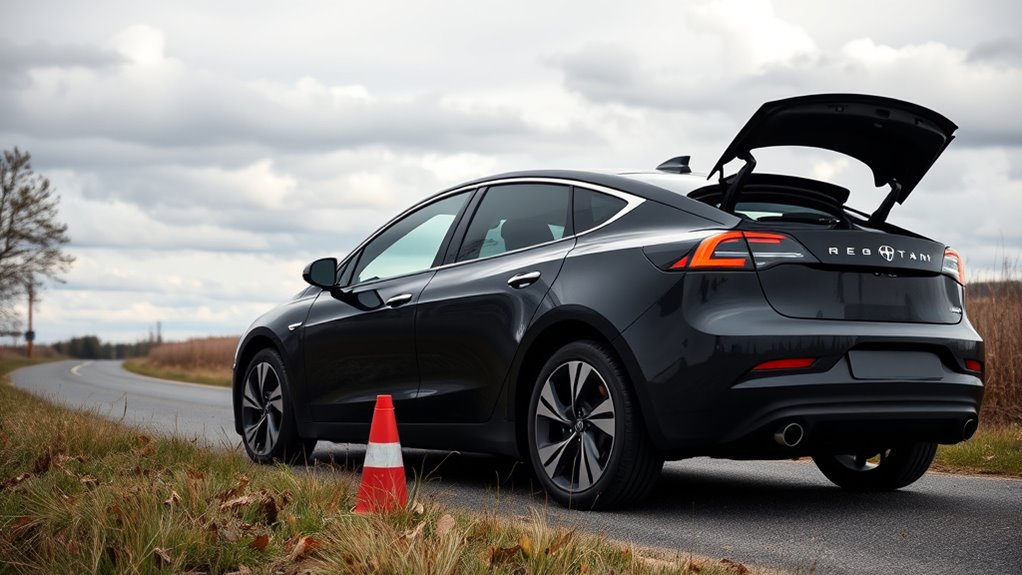
You’ll notice your low battery indicator blinking or lighting up, signaling that your charge is running out. You might also feel reduced power performance, with your vehicle responding more slowly or struggling to accelerate. Paying attention to these signs can help you avoid getting stranded with an empty battery.
Low Battery Indicator
Ever wondered how to tell when your electric vehicle’s battery is running low? Your car’s low battery indicator is your first sign. A battery warning or charging alert appears on your dashboard, signaling that your range is decreasing. Keep an eye out for these clues:
- The battery icon flashes or displays a warning symbol
- A specific alert sound or message appears
- Range estimates drop considerably
- The power may feel slightly reduced during acceleration
These signs help you avoid surprises on the road. When you see a charging alert, it’s time to plan for a recharge to prevent getting stranded. Responding promptly to the low battery indicator keeps your journey smooth and ensures you don’t run out of charge unexpectedly.
Reduced Power Performance
Noticing a decline in your vehicle’s power during acceleration is a key sign that your battery is nearly depleted. Your EV’s battery management system may activate power conservation mode to stretch remaining charge, causing sluggish response and reduced top speed. This is your vehicle’s way of warning you to find a charging station soon. You may also experience thermal behavior changes, such as increased battery temperature, indicating that the battery is under stress from low charge levels. Monitoring your vehicle’s battery status can help you stay aware of how much charge remains and prevent unexpected shutdowns. Additionally, understanding battery degradation patterns can help you anticipate when replacement might be necessary to maintain optimal performance. Being familiar with these signs can help you prevent being stranded, ensuring a safer and more reliable driving experience.
| Feeling the strain? | Your EV is warning you to act. |
|---|---|
| Slow acceleration | Battery is running low. |
| Reduced response | Power management kicks in. |
| Limited speed | Charge nearing depletion. |
| Diminished torque | Battery is nearly out. |
| Longer stops | Time to recharge is critical. |
Stay alert, drive carefully, and conserve power to avoid getting stranded.
As an affiliate, we earn on qualifying purchases.
How to Prevent Your EV From Running Out of Charge
To prevent your EV from running out of charge, it’s essential to plan your trips carefully and monitor your battery levels regularly. Effective trip planning helps you identify charging stations along your route, avoiding surprises. Battery conservation techniques, such as reducing speed and limiting HVAC use, can extend your range. Always keep an eye on your battery percentage, especially on longer drives, to stay ahead of potential issues. Incorporating proper maintenance of your vehicle can also ensure optimal battery performance and longevity. Some key ideas include:
- Map out charging stations before your trip
- Maintain steady speeds for better efficiency
- Use eco-driving modes when available
- Avoid unnecessary energy drain, like high acceleration
Being aware of your vehicle’s battery management features can further help you optimize energy use and prevent unexpected outages. Regularly updating your vehicle’s software can enhance battery performance and overall efficiency. Additionally, understanding how thermal management systems work can help you keep your battery at optimal temperatures, especially in extreme weather conditions.
Roadside Assistance Options for Stranded EVs

When your EV unexpectedly breaks down or runs out of charge in a remote area, knowing your roadside assistance options can save you time and stress. Many automakers offer roadside assistance plans that include EV-specific services, such as mobile charging or towing to the nearest charging station. Some insurance policies also provide roadside support for EVs, ensuring help is just a call away. It’s important to recognize that EV maintenance has evolved, and roadside services now often include portable chargers or access to charging infrastructure in remote locations. Familiarize yourself with these options before a trip, so you’re prepared if your EV runs out of charge. Being proactive guarantees you’ll get back on the road quickly, even when charging infrastructure isn’t readily available nearby. Additionally, understanding the technology and features of your vehicle can help you better utilize available roadside assistance tools effectively. Having a comprehensive roadside plan tailored for EVs can further reduce the stress of unexpected breakdowns or charge depletion.
Tips for Managing Your Battery Range During Trips
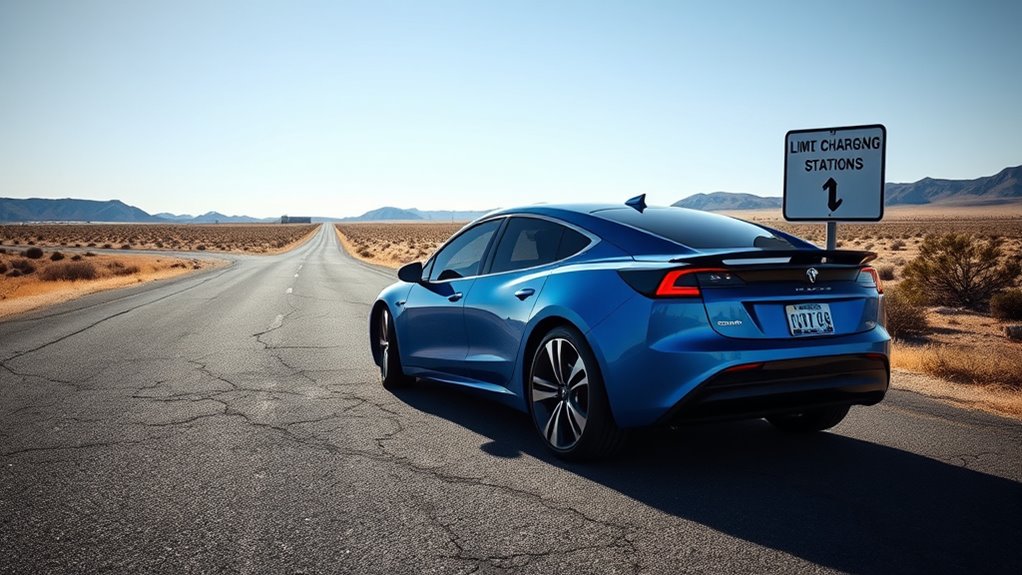
Managing your battery range effectively during trips requires planning ahead and making strategic decisions. To maximize battery preservation, you should monitor your energy consumption and adjust your driving habits accordingly. Efficient trip planning helps you avoid unnecessary detours and find charging stations in advance. Keeping a steady speed, using regenerative braking, and minimizing AC use can extend your range. Additionally, consider the terrain; flat roads reduce energy use compared to hilly areas. Here are some tips to manage your battery during trips:
- Plan your route with charging stations in mind
- Drive smoothly and avoid sudden acceleration
- Limit high-energy features like climate control
- Maintain consistent speeds and use eco-driving modes
These strategies help you conserve battery life, making long trips smoother and reducing the risk of running out of charge.
Charging Solutions When You’Re Stranded Away From Stations
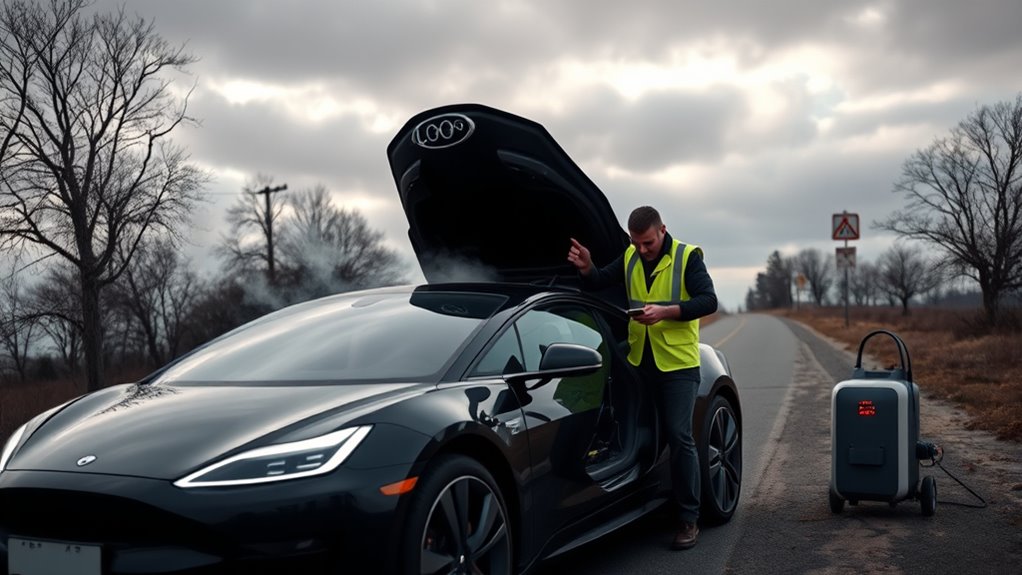
If you find yourself stranded away from charging stations, quick thinking and resourcefulness are essential. First, check your vehicle’s battery maintenance history—sometimes, a well-maintained battery can hold a charge longer. Use your phone to locate nearby charging station networks or public charging points, even if they’re not within your usual range. If no stations are nearby, consider alternative solutions like portable EV chargers or seeking assistance from roadside services that may offer battery boosting or towing. You might also find opportunities to charge at local businesses or public parking facilities that have Level 2 chargers. Staying calm and proactive can help you navigate the situation safely while you work to reconnect with reliable charging options.
Frequently Asked Questions
Can an Ev’s Battery Be Repaired After Fully Draining?
Yes, your EV’s battery can often be repaired after fully draining, but it depends on the damage. Sometimes, a battery repair is possible if only certain cells are affected. However, if the battery is severely damaged or degraded, you’ll likely need a battery replacement. It’s best to have a professional diagnose the issue to determine whether repair is feasible or if replacing the entire battery is necessary.
What Legal Issues Might Arise From Being Stranded in an EV?
If you’re stranded in an EV, liability concerns could arise if others are injured or if property is damaged while you’re trying to get help. You might also face trespassing laws if you enter private property to access charging stations or seek aid. To avoid legal issues, stay within public areas, follow local laws, and notify authorities or roadside assistance promptly. This proactive approach helps protect you from potential legal complications.
How Does Extreme Weather Affect an Ev’s Battery Life?
Imagine your EV’s battery as a delicate flower, vulnerable to harsh weather. Extreme cold accelerates battery degradation, reducing range, while scorching heat strains the charging infrastructure and heats the battery, risking damage. You might find it harder to charge or rely on limited range. To protect your EV, avoid extreme temperatures when possible, and plan routes with accessible charging stations, ensuring your journey stays safe despite nature’s challenges.
Are There Long-Term Effects of Regularly Letting an EV Run Out of Charge?
Regularly letting your EV run out of charge can accelerate battery degradation over time. This happens because deep discharges strain the battery, reducing its overall lifespan. Poor charging habits, like neglecting to recharge promptly, can also contribute to faster wear. To keep your EV’s battery healthy, avoid frequent deep discharges and develop consistent charging habits that maintain peak charge levels. This helps prolong your vehicle’s performance and longevity.
Can Running Out of Charge Damage the Ev’s Electrical System?
Running out of charge won’t fry your EV’s electrical system; think of it as a superhero saving the day, not causing chaos. Your battery safety systems kick in to prevent electrical damage, acting like vigilant guardians. So, no, letting your battery hit empty doesn’t harm the electrical system—just avoid making it a habit, or you might turn your sleek ride into a modern-day paperweight. Stay charged, stay safe!
Conclusion
If your EV runs out of charge, don’t panic—you’re not stranded on a deserted island, but it might feel like it! Keep these tips in mind, stay calm, and use roadside assistance if needed. Planning ahead can turn a potential nightmare into a minor hiccup. Remember, with a little preparation, you’ll be back on the road faster than you can say “full charge,” conquering any distance with confidence.
Fall Picks
fall essentials
As an affiliate, we earn on qualifying purchases.