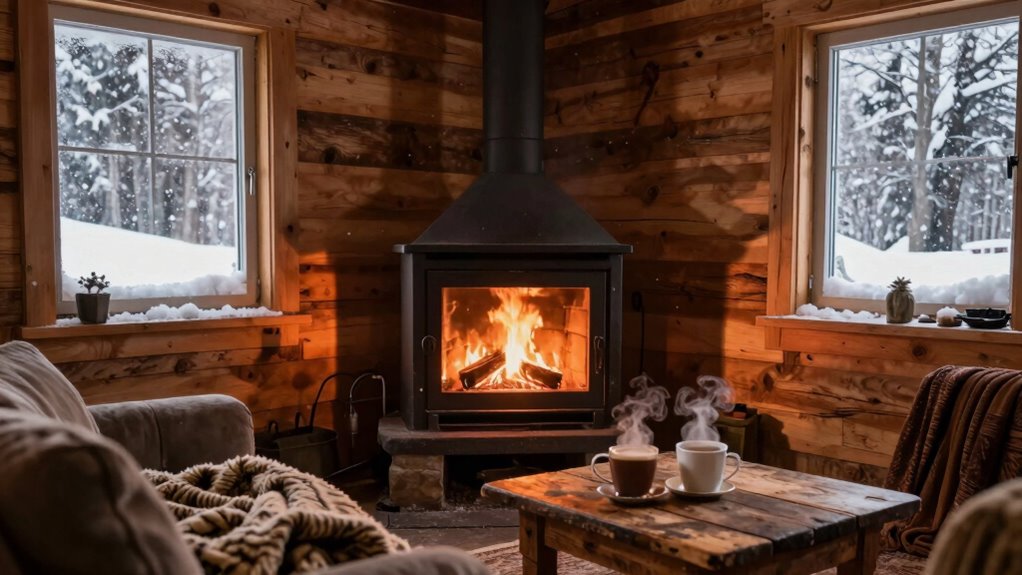

During winter, cabin heat isn’t just about comfort—it’s essential for your safety and energy efficiency. Proper insulation helps keep warmth inside, reducing how hard your heating system works and lowering costs. It also prevents cold spots and drafts, making your space more livable. Maintaining good heat helps avoid costly breakdowns and keeps you safe from extreme cold. If you want to understand how to keep your cabin warmer and more efficient, keep exploring these key tips.
Key Takeaways
- Adequate cabin heat ensures safety by preventing hypothermia and frostbite in cold weather conditions.
- Proper insulation reduces energy costs and environmental impact by maintaining warmth with less heating effort.
- Consistent warmth enhances comfort, making winter living more manageable and enjoyable.
- Efficient heat retention minimizes strain on heating systems, decreasing maintenance and operational expenses.
- Maintaining optimal cabin temperature prevents cold spots and drafts, ensuring a cozy, livable environment.

Have you ever wondered why cabin heat is so essential during winter? When the temperatures drop, staying warm isn’t just about comfort—it’s about safety and well-being. Your cabin’s ability to retain heat depends heavily on effective thermal insulation, which acts as a barrier to prevent the cold from seeping in and the warm air from escaping. Without proper insulation, your heating system has to work much harder to maintain a comfortable temperature, reducing heating efficiency and increasing fuel or energy costs. This means that even if your heater is powerful, poor insulation can leave you feeling cold and uncomfortable, defeating the purpose of having a heating system in the first place. Proper thermal insulation ensures that your cabin stays warm longer and more evenly, making a significant difference in overall comfort.
Proper insulation ensures your cabin stays warm, efficient, and comfortable during winter’s coldest days.
Thermal insulation plays a crucial role in how well your cabin retains heat. It’s not just about installing a few layers of insulation; it’s about ensuring that every wall, ceiling, and floor is properly insulated to minimize heat loss. When insulation is inadequate, you’ll notice drafts and cold spots that make it difficult to stay warm. This also puts extra strain on your heating system, causing it to run longer and more often, which can lead to higher energy bills and increased wear and tear on your equipment. Additionally, using air purifiers with HEPA filters can improve indoor air quality, making your environment healthier and more comfortable during the cold months. Proper insulation techniques can help optimize your system’s performance and save you money over time. Conversely, a well-insulated cabin maintains a steady, comfortable temperature with less effort, making your heating system more efficient and cost-effective.
In winter, the importance of heating efficiency becomes even more apparent. A highly efficient heating system doesn’t just mean it warms your space quickly; it also means it uses energy wisely, conserving fuel and reducing emissions. When thermal insulation is optimized, your cabin stays warm longer, and your heater doesn’t need to work as hard. This results in fewer breakdowns, lower operational costs, and a smaller environmental footprint. Good insulation also helps you avoid the frustration of constantly adjusting the thermostat, as your cabin’s temperature remains stable and comfortable without excessive energy input. Proper filter maintenance, such as cleaning or replacing filters regularly, can further support your heating system’s efficiency by ensuring clean airflow and preventing dust buildup.
Ultimately, investing in quality thermal insulation and focusing on heating efficiency makes a significant difference during winter. It’s about creating a space that’s warm, safe, and energy-smart. When your cabin is well-insulated, you’ll notice the difference in how cozy and manageable winter becomes. Instead of battling the cold and wasting energy, you’ll enjoy a snug, efficient environment that keeps you comfortable no matter how low the outdoor temperature drops. That’s the true value of good cabin heat—it’s about making winter not just bearable but genuinely livable.

AGHITG Bubble Reflective Insulation Roll to Window Insulation for Winter, Double Side Aluminum Bubble Foil Insulation Roll for Keep Heat,59"x 99" Thermal Insulation Shield,RV Window Insulation.
AlUMINUM REFLECTIVE INSULATION SHEET SIZE: 59" W x 99" L,Easy to cut that can cater to all your…
As an affiliate, we earn on qualifying purchases.
As an affiliate, we earn on qualifying purchases.
Frequently Asked Questions
How Does Cabin Heat Affect Vehicle Fuel Efficiency?
Cabin heat impacts your vehicle’s fuel efficiency because using the heater increases engine load, which in turn raises fuel consumption. When you turn on the heat, the engine works harder to generate warmth, leading to higher fuel usage. To conserve fuel, consider using seat heaters or wearing warmer clothing, reducing the need for the cabin heater. This way, you can stay warm without markedly affecting your vehicle’s fuel efficiency.
Can Cabin Heat Impact Windshield Defrosting Speed?
Yes, cabin heat can impact your windshield defrosting speed. When heat distributes evenly, it clears away fog and ice faster, giving you a window of clarity like a crystal-clear lake. Poor heat distribution leaves cold spots, making it harder for moisture to evaporate. By ensuring your heater works efficiently, you speed up windshield defrosting, so you can see the road clearly and stay safe in winter’s icy grip.
What Are the Safety Risks of Insufficient Cabin Heat?
Insufficient cabin heat can compromise passenger safety by creating icy windows, reducing visibility and increasing accident risk. It also affects cabin interior humidity, leading to dry air that causes discomfort and potential health issues like sore throats or respiratory problems. When you neglect proper heating, you’re risking impaired vision and passenger well-being, making it vital to guarantee adequate heat for safe driving and a comfortable environment.
Does Cabin Heat Influence Battery Performance in Electric Vehicles?
Think of your EV’s battery like a delicate plant that needs just the right warmth to thrive. Cabin heat influences battery performance by affecting battery thermal management, which keeps the battery at ideal temperatures. Using a heat pump improves efficiency, conserving energy and extending range. When cabin heat is insufficient, the battery struggles, reducing performance. So, maintaining proper cabin heat isn’t just comfort — it’s essential for your vehicle’s health and efficiency.
How Does Cabin Heat Contribute to Driver Comfort on Long Trips?
Cabin heat greatly enhances your comfort on long trips by maintaining a cozy environment. Interior insulation helps trap warmth, making it easier to stay warm without overusing energy. Seat heating provides direct warmth, so you can feel comfortable even if the cabin isn’t perfectly warm. This combination guarantees you stay relaxed and focused on your journey, reducing fatigue and making your trip more enjoyable despite chilly outdoor conditions.

Space Heater, WINHL Small Portable Electric Heaters for Indoor Use with Thermostat and Remote, 70°Oscillation, 12H Timer, 5 Modes, 1500W PTC Ceramic Fast Safety Heat for Office Bedroom Home
Efficient and Fast Heating: The indoor small-space heater features advanced PTC ceramic heating technology, providing rapid heat-up in…
As an affiliate, we earn on qualifying purchases.
As an affiliate, we earn on qualifying purchases.
Conclusion
Just as the warmth of a hearth keeps spirits high in old tales, your cabin heat shields you from winter’s chill, turning a frosty ordeal into a cozy refuge. Think of it as your personal beacon, guiding you safely through icy nights. When you prioritize your cabin’s warmth, you’re not just fighting cold—you’re embracing comfort, security, and the timeless wisdom that even in winter’s darkest hours, a little heat can light the way home.

GroTheory 2 Pack Door Draft Stopper, Under Door Sweep for Exterior & Interior Doors, Weather Stripping Door Seal, Garage Window Blocker Noise Cold Air Insulation, Draft Guard White 2" W x 39" L
PREMIUM MATERIALS – The Door Draft Stopper are made of silicone material, which can bend and deform. Draft…
As an affiliate, we earn on qualifying purchases.
As an affiliate, we earn on qualifying purchases.

Mountman 12000 BTU Mini Split AC/Heating System,19 SEER2 110/120V Energy Efficient Ductless Inverter System,Cools Up to 750 Sq.Ft with Pre-Charged Condenser,Heat Pump & Installation Kits
4 Flexible Modes for Year-Round Comfort :Choose from Cool, Heat, Dry, Fan modes to adapt to any season….
As an affiliate, we earn on qualifying purchases.
As an affiliate, we earn on qualifying purchases.