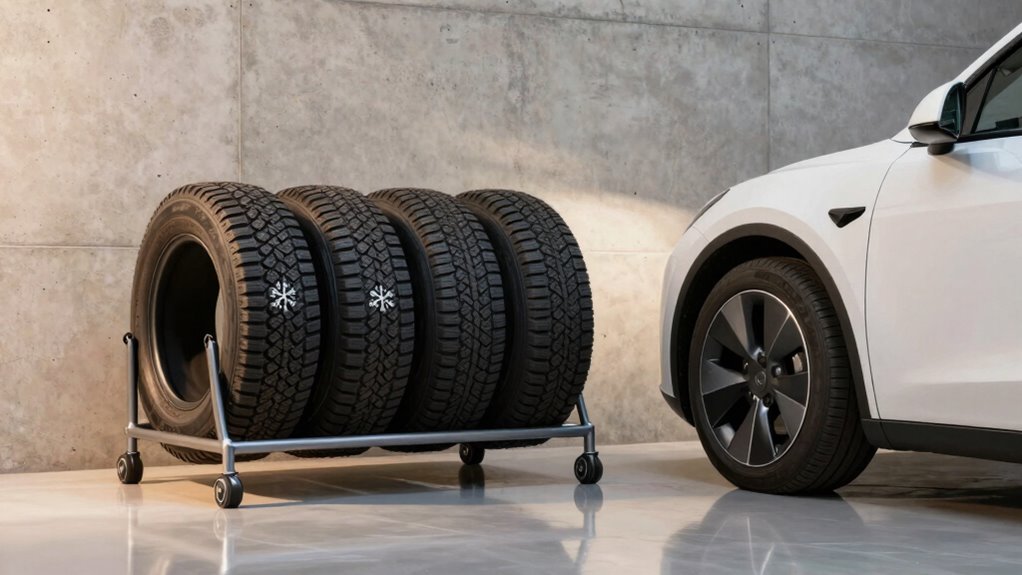

As an EV owner, you should store your seasonal tires in a cool, dry place away from direct sunlight and extreme temperature changes. Clean and inspect them beforehand, checking for damage, and dry thoroughly to prevent mold. Store tires upright or flat with breathable covers to avoid deformation and moisture buildup. Regularly check on them to catch any issues early. Keep your tires in the best shape by following these tips—there’s more to guarantee lasting performance.

Get backup power and energy gear delivered free — and shop member deals
- Fast, free delivery on millions of items
- Access to Prime Big Deal Days deals on October 6–7
- Prime Video, Amazon Music and more included
Key Takeaways
- Store EV tires in a cool, dry, and dark environment to prevent rubber degradation from UV rays and moisture.
- Inspect and clean tires thoroughly before storage to identify damage and remove dirt, brake dust, or debris.
- Keep tires vertically or stacked flat, avoiding hanging by rims, to prevent deformation and rim damage.
- Use breathable covers, like cloth or tire covers, to protect tires from dust, moisture, and environmental exposure.
- Regularly check stored tires for signs of deterioration and maintain a stable environment for optimal long-term preservation.

As an EV owner, thinking about seasonal tire storage might not be at the top of your to-do list, but it’s an important part of maintaining your vehicle’s performance and safety. Proper tire maintenance and choosing the right storage environment can extend the life of your tires and guarantee they perform at their best when you need them most. The key is to treat your tires carefully during their off-season, avoiding common pitfalls like neglecting to clean or inspect them, which can lead to damage over time.
Proper seasonal tire storage extends tire life and ensures optimal performance when you need them most.
When it comes to storage environment, you want a space that’s cool, dry, and away from direct sunlight. Heat and UV rays can degrade the rubber, causing cracks and weakening the tires’ structure. Moisture is equally problematic, as it can lead to mold or corrosion, especially if your tires have metal rims. A climate-controlled garage or a storage room with stable temperature and humidity levels is preferable. Avoid basements or sheds that are prone to dampness or extreme temperature fluctuations, as these can accelerate tire deterioration. Proper climate control can help maintain optimal conditions for your tires’ longevity. Additionally, understanding the impact of environmental factors can better inform your storage decisions. Recognizing how humidity levels influence tire preservation can be especially helpful in choosing the best storage environment. Being aware of these factors can also help prevent unnecessary material degradation, ensuring your tires stay in top condition.
Before storing your tires, give them a thorough inspection. Check for cuts, punctures, or embedded objects that might have gone unnoticed during regular use. Clean them with soap and water to remove dirt, grime, and brake dust, then dry them completely to prevent moisture buildup. If you notice any damage, consider having the tires inspected by a professional before storing them away. It’s also wise to rotate your tires before storage, ensuring even wear and reducing the risk of deformities over time. Additionally, proper storage techniques can help preserve the integrity of your tires over the long term.
When storing, keep the tires in a vertical position if possible, leaning them against a wall or stacking them flat if space is limited. Avoid hanging them by the rims, as this can cause deformation. If you’re storing multiple tires, place them in a way that minimizes rubbing or contact with other objects. Covering them with a breathable material, like a cloth or tire cover, helps protect against dust and light exposure, but avoid plastic covers that can trap moisture. Regularly checking your stored tires for signs of deterioration is also recommended.
seasonal tire storage covers for tires
As an affiliate, we earn on qualifying purchases.
As an affiliate, we earn on qualifying purchases.
Frequently Asked Questions
How Do EV Tires Differ From Traditional Vehicle Tires?
EV tires often differ from traditional vehicle tires in tread design and rubber compounds, tailored for energy efficiency and reduced rolling resistance. You’ll notice that maintaining proper tire pressure is vital, as it directly impacts range and safety. While the tread pattern may be less aggressive, it still provides grip, but it’s necessary to check and adjust tire pressure regularly to guarantee maximum performance and longevity of your EV tires.
Can I Store EV Tires Indoors?
Yes, you can store EV tires indoors. Before storing, clean the tires thoroughly with tire cleaning products to remove dirt and brake dust. Use sturdy storage containers to protect them from dust, moisture, and sunlight. Keep the tires in a cool, dry place away from direct heat sources. Proper storage helps maintain tire integrity and extends their lifespan, making indoor storage a convenient and effective option for EV owners.
What Are the Best Conditions for Seasonal Tire Storage?
Think of your tires as sleeping giants; they need proper rest to perform well. The best conditions for seasonal tire storage include a cool, dry, and dark environment, away from direct sunlight and extreme temperatures. Keep the tires upright or stacked with minimal pressure to protect the tread. A stable storage environment prevents cracking, deterioration, and tread damage, ensuring your tires stay healthy and ready for the road when you need them.
How Often Should I Check My Stored EV Tires?
You should check your stored EV tires every 4 to 6 weeks. During each check, focus on maintaining proper tire pressure, as it can naturally decrease over time, and guarantee the tread depth remains sufficient for safe driving. Also, inspect for any signs of cracking or damage. Regularly monitoring these aspects helps prevent issues when you’re ready to switch back to your seasonal tires, ensuring safety and peak performance.
Is Tire Rotation Necessary When Switching Seasonal Tires?
Yes, tire rotation is necessary when switching seasonal tires. It helps maintain even tire pressure and tread depth, which are vital for safety and efficiency. Rotating your tires ensures that wear is evenly distributed, extending their lifespan. Regularly check tire pressure and tread depth during the swap, especially for EVs, to optimize performance and safety. Remember, proper maintenance keeps your EV running smoothly year-round.
climate-controlled tire storage cabinet
As an affiliate, we earn on qualifying purchases.
As an affiliate, we earn on qualifying purchases.
Conclusion
Storing your seasonal tires might feel like a small task, but it’s really the anchor that keeps your EV sailing smoothly through each season. By giving your tires a proper home, you’re protecting your investment and ensuring safer, more efficient drives. Think of it as giving your car a seasonal wardrobe—each change keeps it looking and performing its best. With a little effort, you’ll keep your EV running like a well-oiled machine year-round.
tire inspection and cleaning kit
As an affiliate, we earn on qualifying purchases.
As an affiliate, we earn on qualifying purchases.
breathable tire covers for storage
As an affiliate, we earn on qualifying purchases.
As an affiliate, we earn on qualifying purchases.
Fall Picks
fall essentials
As an affiliate, we earn on qualifying purchases.