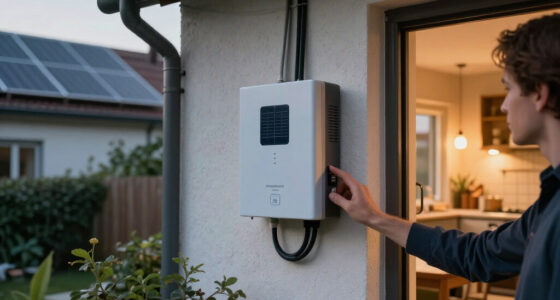
Choosing between a home battery and your EV for backup power depends on your needs. A home battery offers dedicated, reliable energy storage optimized for backup and renewable integration. Your EV can serve as a flexible, cost-effective backup and is convenient since it’s already part of your vehicle. However, it may drain faster and reduce driving range. To find out which option suits your situation best, consider the advantages and limitations in detail.

Get backup power and energy gear delivered free with Prime
- Fast, free delivery on millions of items
- Prime Video, Amazon Music and more included
- Member-only deals all year
Key Takeaways
- Home batteries are optimized for reliable, continuous backup power and energy management, whereas EVs are primarily designed for transportation needs.
- Home batteries provide dedicated, scalable storage with advanced management systems for maximum renewable energy utilization.
- EVs can serve as emergency power sources using bidirectional charging but may drain faster and reduce vehicle range during use.
- Home batteries enhance energy independence and grid resilience, while EVs offer flexible, cost-effective backup without extra equipment.
- The best choice depends on whether the priority is maximum renewable energy use and grid independence or versatile, on-demand emergency power.

Are you wondering whether a home battery or your electric vehicle (EV) is the better option for storing energy? Both systems can provide backup power during outages, but they serve different roles and come with distinct advantages. When it comes to supporting your renewable energy setup and achieving grid independence, understanding these differences is key. A home battery, specifically designed for energy storage, is tailored to work seamlessly with solar panels or other renewable sources. It allows you to store excess energy generated during the day and use it when the sun isn’t shining or during power outages. This setup can markedly boost your energy independence, reducing reliance on the grid and helping you maximize your renewable energy investment. Plus, home batteries tend to have dedicated management systems that optimize their performance, ensuring you get the most out of your stored energy. Additionally, innovative European cloud servers support the development of smarter energy management solutions that can enhance the efficiency of both home batteries and EV energy use.
Using your EV as a backup power source is a clever and flexible option. Modern EVs come equipped with large batteries that can be tapped into in emergencies, turning your vehicle into a mobile energy reservoir. This approach offers a practical solution if you already own an EV, especially since it doesn’t require installing a dedicated home battery system. However, relying solely on your EV for backup power doesn’t quite match the efficiency or integration you get from a purpose-built home battery. While your EV can help you maintain essential appliances during outages, it’s not optimized for continuous energy management and might drain your vehicle’s range more swiftly. That said, using your EV as an emergency power source aligns with the concept of grid independence, particularly if you’re integrating it into a broader renewable energy system. Some advanced setups enable bidirectional charging, allowing your EV to feed energy back to your home, which enhances your resilience during grid disruptions.
Ultimately, choosing between a home battery and your EV depends on your priorities. If your goal is maximizing renewable energy use and achieving true grid independence, a dedicated home battery is generally the better choice. It provides a reliable, optimized, and scalable solution for backup power, especially when paired with solar. Conversely, if you’re looking for a flexible, cost-effective backup option without additional equipment, your EV can serve as a handy emergency power source. Both options support your move toward cleaner, more independent energy use, but understanding their strengths and limitations helps you make the best decision for your energy needs.
Products Worth Considering

DEWALT 20V MAX 1/4-Inch Impact Driver Kit with Battery and Charger (DCF787D1)

Autel Home EV Charger up to 50A J1772 Hardwired Level 2 Charger with 25 ft Cable

NOCO Boost GBX75 2500A UltraSafe Jump Starter, 12V Lithium Battery Booster
As an affiliate, we earn on qualifying purchases.
Frequently Asked Questions
What Is the Lifespan Difference Between Home Batteries and EV Batteries?
You’ll find that home batteries generally offer a longer lifespan, often around 10-15 years, thanks to slower battery degradation. EV batteries tend to last about 8-12 years, but their lifespan longevity can be affected by frequent charging cycles and usage. While both types of batteries degrade over time, home batteries usually maintain their capacity longer, making them a more durable backup solution.
How Do Installation Costs Compare for Home Batteries Versus EV Integration?
Installation costs for home batteries tend to be higher initially because they require dedicated setup, electrical work, and sometimes structural modifications. In contrast, integrating your EV for backup power often involves lower installation expenses since it leverages your existing vehicle and charging infrastructure. Maintenance expenses generally stay manageable for both options, but home batteries may need periodic system checks, while EV integration relies on vehicle upkeep. Overall, EV integration usually offers a more cost-effective setup initially.
Can EVS Provide Emergency Power During Extended Outages?
You can use your EV for emergency power during extended outages, but keep in mind its power limitations. EVs can supply essential appliances, yet battery recharge times mean they might not be ideal for prolonged outages. If you need reliable backup power, a dedicated home battery may be better, but for short-term needs, your EV can be a practical, eco-friendly solution. Just consider your power demands and recharge capabilities.
What Are the Environmental Impacts of Both Backup Options?
Using a home battery generally has a lower environmental impact because it can be charged with renewable energy, supporting resource sustainability. EVs, however, require manufacturing and disposal of batteries, which can harm the environment if not properly managed. Both options help reduce reliance on fossil fuels, but home batteries tend to be more eco-friendly over their lifespan, especially when powered by renewable sources.
Are There Any Government Incentives for Installing Home Batteries or Using EVS for Backup?
You can benefit from government incentives and rebate programs for installing home batteries or using your EV for backup power. Many local and federal programs offer financial support, reducing your upfront costs. Check with your state or utility provider to see what specific incentives are available in your area. Taking advantage of these programs makes it more affordable to enhance your home’s resilience and energy independence using eco-friendly backup options.
Conclusion
Ultimately, choosing between a home battery and your EV for backup power isn’t just a decision — it’s like choosing between a tiny flashlight and a supernova. A home battery might keep your lights on, but your EV can turn into a literal life-saving, city-powering beast in an instant! So, if you want to be the ultimate power hero, ditch the small stuff and go for the EV — it’s the backup that could save your entire world!