To power your camping devices from your EV’s battery, connect a quality 12V inverter rated above your total device wattage, ensuring safe and reliable operation. Use heavy-duty cables and follow proper wiring for safety. Adding solar panels with a compatible charge controller helps extend your battery life during long stays. This setup keeps your devices running smoothly and reduces reliance on the vehicle’s main battery—continue exploring how to maximize this setup effectively.

Get backup power and energy gear delivered free — and shop member deals
- Fast, free delivery on millions of items
- Access to Prime Big Deal Days deals on October 6–7
- Prime Video, Amazon Music and more included
Key Takeaways
- Connect a high-wattage inverter directly to your EV’s battery using heavy-duty cables for powering devices.
- Choose an inverter wattage that exceeds your total device power needs to prevent overload.
- Integrate portable solar panels with a compatible charge controller to maintain EV battery levels during extended camping.
- Use quality inverters and proper wiring to ensure safety, reliability, and efficient power conversion for your devices.
- Combining solar energy with inverter setup provides a continuous, sustainable power source, reducing reliance on the vehicle’s main battery.

If you’re camping in an area without reliable power sources, your electric vehicle (EV) can be a game-changer. Instead of lugging around bulky generators or worrying about dead batteries, you can harness your EV’s energy to power your devices. The key lies in understanding how to set up an inverter and incorporate solar charging to keep your power supply steady and sustainable. With the right setup, your EV becomes a portable power station, making camping more comfortable and convenient.
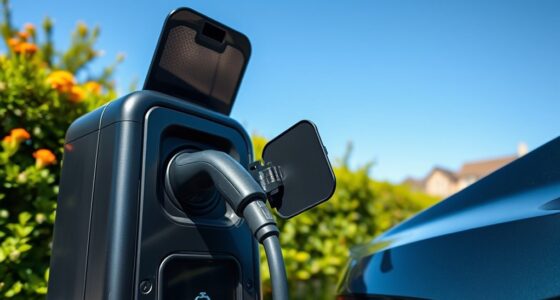
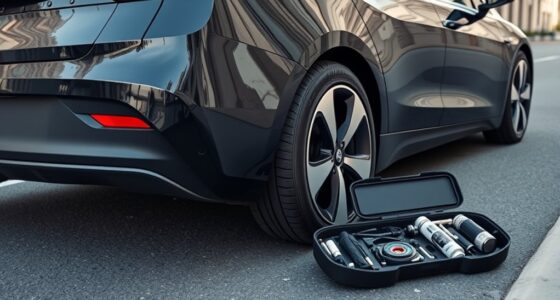
First, you’ll want to focus on inverter setup. An inverter converts your EV’s DC power into AC power, which most devices require. To do this effectively, ensure your EV has a dedicated port or outlet designed for high-current connections—many newer models include accessories for this purpose. You’ll connect a compatible 12V or 24V inverter directly to your EV’s battery using heavy-duty cables. It’s essential to choose an inverter with sufficient wattage to support your devices without overloading the system. For instance, if you plan to run a small refrigerator, lights, or charging devices, pick an inverter rated a bit higher than your total power needs to prevent strain. Once connected, you can plug in your devices directly into the inverter, turning your vehicle into an instant power hub.
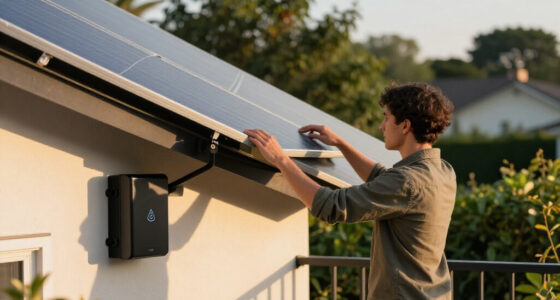
Now, to make this setup even more dependable, consider integrating solar charging. Portable solar panels can be deployed during the day to supplement your EV’s battery, especially if you’re parked for extended periods. Solar charging helps maintain battery levels, reducing the risk of depleting your vehicle’s power reserve. Set up your solar panels in a sunny spot, connect them to a compatible charge controller, and then link this to your EV’s battery or auxiliary power port. This way, you’re not just relying solely on your EV’s stored energy but actively replenishing it during daylight hours. Combining solar charging with your inverter setup ensures a continuous power flow, keeping your devices running smoothly without draining your vehicle’s main battery. Additionally, understanding the importance of high-quality inverters and proper safety measures can prevent potential electrical issues during your camping trip.
As an affiliate, we earn on qualifying purchases.
Frequently Asked Questions
Can I Charge My Phone Directly From the Ev’s Battery?
Yes, you can charge your phone directly from the EV’s battery, but you need the right charging adapters designed for automotive use. Check your EV’s battery capacity to verify it can handle your phone’s charging needs without draining too much power. Using a 12V cigarette lighter socket or a dedicated USB port connected through an inverter makes this easy and safe, letting you keep your device powered on the go.
What Safety Precautions Should I Take When Using Inverters Outdoors?
Sure, because outdoor safety is overrated, right? When using inverters outdoors, you should always prioritize electrical safety and be mindful of fire risk. Keep the inverter away from flammable materials, ensure proper ventilation, and avoid overloading it. Use grounded outlets and inspect cords regularly for damage. And, of course, don’t forget to disconnect everything when not in use—after all, a small spark can turn into a big problem.
How Long Can I Power Devices With My Ev’s Battery?
You can power devices from your EV’s battery for several hours, depending on the battery capacity and your devices’ power consumption. Check your EV’s watt-hour rating and add up your devices’ wattages. Then, divide the battery capacity by total power consumption to estimate runtime. Keep in mind, higher power devices drain the battery faster, so plan accordingly to avoid depleting your EV’s battery unexpectedly.
Are There Specific Types of Devices Incompatible With EV Power?
Certain devices might be incompatible with your EV’s power system due to device compatibility issues or inverter limitations. High-wattage appliances like hairdryers, microwaves, or coffee makers can overload the inverter, causing it to shut down or get damaged. Also, delicate electronics like certain medical devices may not be suitable. Always check your inverter’s capacity and your device’s power requirements before connecting, ensuring safe and efficient power usage.
Does Using My Ev’s Battery for Camping Void the Vehicle Warranty?
Using your EV’s battery for camping typically doesn’t void your warranty if you follow manufacturer guidelines. However, repeated deep discharges can diminish your battery’s lifespan, raising warranty considerations. Always check your vehicle’s warranty details and avoid overloading the system. With careful use, you can confidently power devices without jeopardizing your vehicle’s warranty, enjoying outdoor adventures without additional anxiety.
portable solar panel with charge controller
As an affiliate, we earn on qualifying purchases.
As an affiliate, we earn on qualifying purchases.
Conclusion
Now that you know how to harness your EV’s battery for camping, you’re practically turning it into a portable power plant. Imagine powering all your devices effortlessly, like having a mini grid at your fingertips. With this hack, you’re not just camping—you’re transforming into a tech-savvy adventurer capable of conquering the wilderness with the power of an entire city. Get ready to elevate your outdoor experience to legendary status!
heavy-duty battery cables for inverter
As an affiliate, we earn on qualifying purchases.
As an affiliate, we earn on qualifying purchases.
As an affiliate, we earn on qualifying purchases.
Fall Picks
fall essentials
As an affiliate, we earn on qualifying purchases.