
Electric vehicles are designed with waterproofing features that help them handle rain, storms, and typical water exposure on the road. They have sealed battery compartments, protected electrical systems, and robust body designs to prevent water from entering critical areas. While they can withstand normal wet conditions, deep flooding or driving through large puddles can cause damage or safety issues. You’ll find more details on how these features work and precautions to take if you keep exploring further.
Key Takeaways
- EVs are designed with waterproof features like sealed compartments and protective body designs for typical weather conditions.
- They can safely operate in rain and storms, but deep water or flooding should be avoided to prevent damage.
- Water intrusion during normal driving is unlikely, but prolonged submersion may cause safety issues or disable vehicle functions.
- Charging in wet conditions is safe when using designated stations and ensuring connectors are dry; avoid flooded areas.
- For optimal safety, follow manufacturer guidelines and avoid driving through deep water or flooded roads.
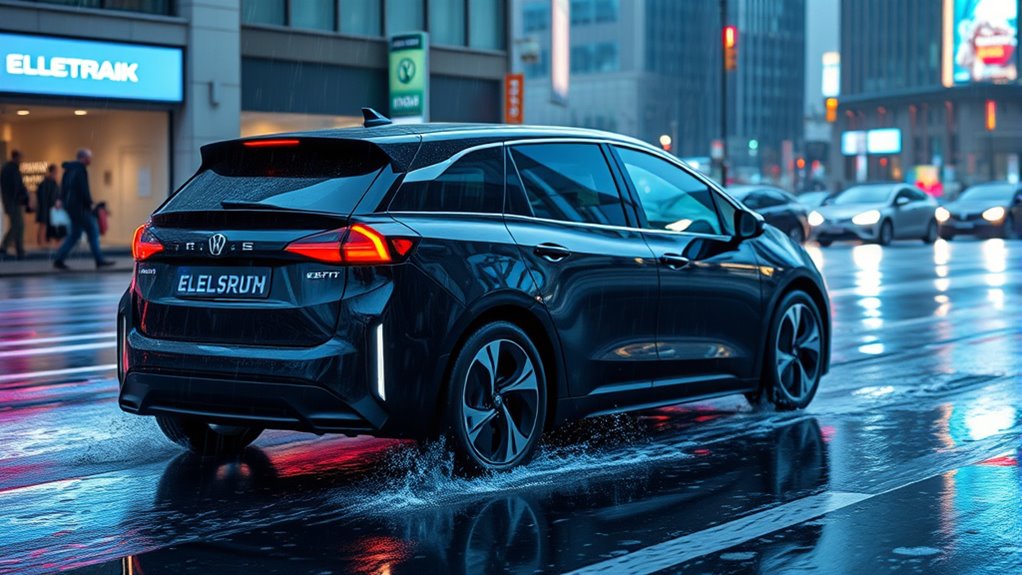
Are electric vehicles (EVs) truly waterproof? That’s a common question many drivers have, especially when facing rain, storms, or even flooded roads. The truth is, EV manufacturers design their vehicles to withstand typical weather conditions and water exposure. Most EVs are built with extensive waterproofing measures, including sealed battery compartments, protected electrical systems, and robust body designs that prevent water intrusion. However, despite these protections, it’s essential to understand the limits of your vehicle’s waterproofing and take appropriate precautions.
EVs are designed with waterproof features, but avoiding deep water and flooding is recommended for safety.
One area where many drivers become cautious is battery safety. EV batteries are sensitive components, and while they are well-shielded, water entering critical areas can pose risks. Manufacturers rigorously test their vehicles to ensure that water doesn’t compromise battery safety under normal driving conditions. That said, it’s wise to avoid deliberately exposing your EV to deep water or flooding, as prolonged submersion can sometimes lead to unforeseen issues. If your vehicle’s battery or electrical system detects water intrusion, it may trigger warning alerts or even disable certain functions to prevent damage. Staying vigilant and ensuring your vehicle’s waterproof seals remain intact is key to maintaining safety.
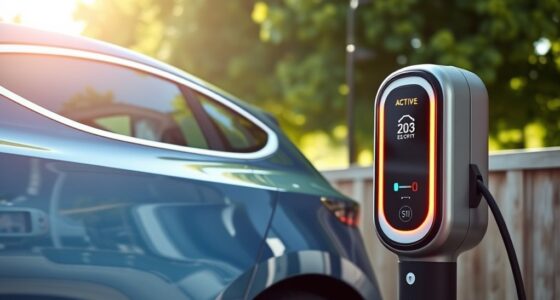
Charging precautions are equally important, especially in wet conditions. Many drivers worry about charging their EVs in the rain or during storms. The good news is that most modern EV charging stations and vehicles incorporate safety features that minimize risks associated with water exposure. When charging, always use designated charging points and ensure the connector and port are dry before plugging in. If you see moisture or water around the charging port, it’s best to wait until everything is completely dry. Avoid charging your EV in flooded areas or during heavy rainfall if possible, as water can sometimes seep into the charging port or cable connection, potentially causing electrical faults or safety hazards.
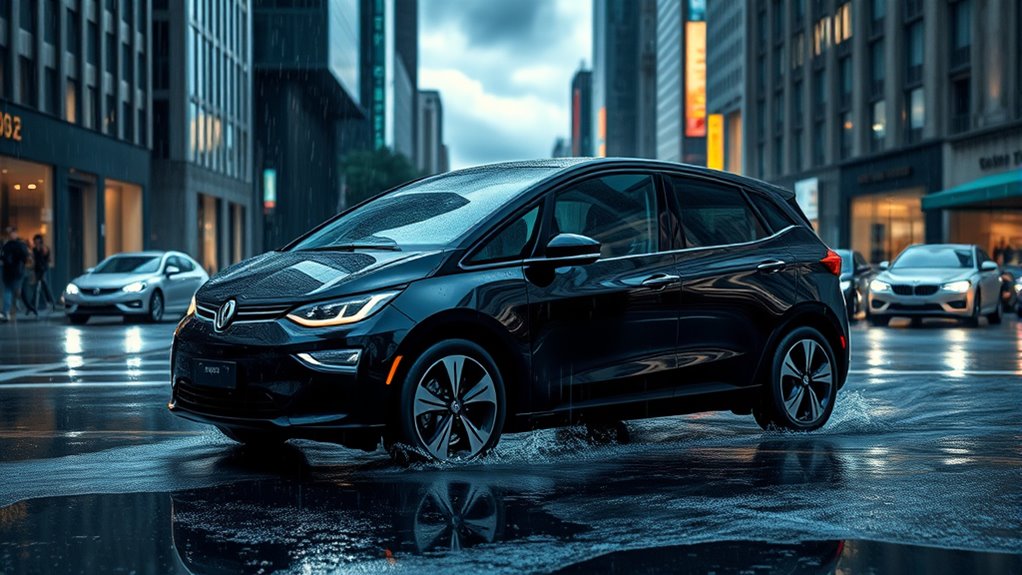
Driving in rain or storms generally isn’t a problem for EVs, thanks to their waterproof construction. Many models feature advanced water-resistant materials and systems designed to keep water out of sensitive areas. Still, you should exercise caution—reduce your speed in heavy rain, avoid deep puddles, and be mindful of hydroplaning risks. If you encounter flooded roads, it’s best to turn around. Even if your vehicle is waterproof, driving through deep water can damage the undercarriage, clog air intakes, and impair other crucial systems. Additionally, understanding waterproofing standards can help you better assess your vehicle’s capabilities and limitations in adverse weather conditions.
Frequently Asked Questions
Can EVS Be Safely Driven Through Flooded Streets?
You shouldn’t drive your EV through flooded streets, even if it has a waterproof design. While electric cars are built with flood resistance in mind, deep or fast-moving water can still cause damage or short-circuit the electrical system. Always avoid water that reaches the vehicle’s undercarriage or exceeds the manufacturer’s recommended limits. Safety comes first, so it’s best to find an alternative route rather than risking your EV’s integrity.
How Does Rain Affect an Ev’s Battery Life?
Think of your EV’s battery like a waterproof seal protecting a treasure chest. Rain doesn’t harm it because of the weatherproof design and waterproof seals, which keep moisture out. Modern EV batteries are engineered to handle wet conditions, so rain has minimal impact on battery life. As long as you follow manufacturer guidelines, you can confidently drive in the rain without worrying about your battery’s durability or performance.
Are Charging Stations Protected From Water Damage?
Charging stations are designed to be safeguarded from water damage using waterproof seals and electrical insulation. You can confidently charge your EV in rainy weather or wet conditions because these protective measures prevent water from reaching sensitive components. Manufacturers ensure stations meet strict safety standards, making them resilient against storms and flooding. So, you don’t need to worry about water damaging the station while charging your electric vehicle in adverse weather.
What Safety Features Prevent Electric Shocks in Wet Conditions?
You might wonder if wet conditions pose a shock risk, but advanced safety features keep you safe. Grounding systems automatically divert stray electricity, while insulation technology isolates high-voltage components from water exposure. These measures work seamlessly, preventing electric shocks even in rain, storms, or floods. Rest assured, modern EVs are designed with your safety in mind, ensuring you stay protected as you navigate wet roads.
Is It Legal to Drive an EV in Severe Weather Conditions?
Driving your EV in severe weather conditions is generally legal, but you should check local laws and weather regulations first. Some areas might have restrictions during extreme storms or flooding to guarantee safety. Always exercise caution, avoid flooded roads, and follow manufacturer guidelines. While EVs are designed to withstand wet conditions, driving responsibly during severe weather helps prevent accidents and keeps you within legal boundaries.
Conclusion
So, next time you’re caught in a rainstorm or, dare I say, a flood, just remember—your EV’s waterproof magic is basically a superhero cape. No need to panic or turn into a mud-wrestling contest. Just keep driving, stay dry, and maybe thank those fancy seals and gaskets for saving your electric ride from turning into a soggy sandwich. After all, who knew your car’s secret superpower was avoiding a soggy fate?