
Fast DC charging may eventually cost more than gasoline due to faster battery degradation, higher infrastructure expenses, and increased maintenance over time. While charging today is often cheaper and more convenient, the long-term costs of replacing batteries and developing widespread fast-charging networks could tip the balance. If you’re curious about how these costs might evolve and what factors influence them, there’s more to uncover below.

Get backup power and energy gear delivered free with Prime
- Fast, free delivery on millions of items
- Prime Video, Amazon Music and more included
- Member-only deals all year
Key Takeaways
- Fast charging accelerates battery degradation, increasing long-term replacement and maintenance costs, potentially surpassing fuel expenses over time.
- Limited fast charger infrastructure raises costs and reduces convenience, possibly making EV charging more expensive than gasoline in some regions.
- Technological advancements in batteries and infrastructure could lower fast charging costs, but current expenses may still exceed fuel costs.
- Rapid charging’s impact on battery lifespan might lead to higher total ownership costs, offsetting the initial savings compared to gasoline.
- Evolving energy sources and infrastructure investments may influence future cost dynamics, possibly making DC fast charging more economically viable than fuel.

Have you ever wondered how fast charging electric vehicles compares to refueling with gasoline? When you think about it, the convenience of quick charging is often touted as a major advantage, but it’s important to consider the long-term implications. One key factor is battery degradation. Fast charging places more stress on your EV’s battery, which can accelerate deterioration over time. This means that although you might save time on each charge, you could face higher replacement costs down the line if your battery’s lifespan shortens. The more frequently you rely on rapid DC chargers, the more you risk diminishing your battery’s health, potentially leading to costly repairs or replacements sooner than expected.
Fast charging can speed up battery degradation and increase long-term replacement costs.
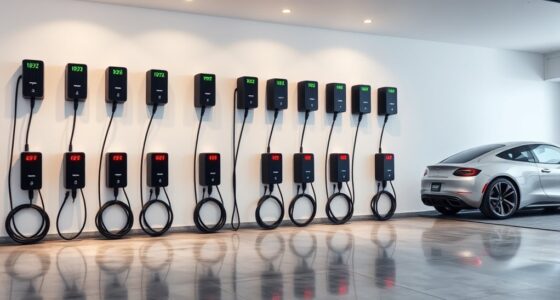
On the other hand, the charging infrastructure plays a vital role in how practical and economical fast charging really is. While fast chargers are becoming more widespread, they’re still not as ubiquitous as gas stations, and their availability can vary greatly depending on where you live. This limits your convenience, especially if your local charging network is sparse or unreliable. Additionally, fast chargers often require more complex and expensive infrastructure, which can translate into higher costs for stations and, consequently, higher prices for consumers. If these costs are passed down to you, it could make fast charging more expensive than initially anticipated, especially over the long term.
Comparing this to gasoline, the infrastructure is well-established, with countless fueling stations available almost everywhere. Gas stations are generally cheaper to operate and maintain, which keeps fuel prices competitive. Gasoline also doesn’t cause the same kind of immediate battery wear as fast charging does, although it comes with its own set of environmental and economic costs. Still, in terms of direct costs to you as a consumer, gas refueling remains straightforward and often cheaper per visit. Over time, however, fuel prices can fluctuate, and the environmental costs are mounting, prompting many to reconsider whether the economic advantages of gasoline will hold up in the longer run.
Ultimately, while fast charging offers undeniable convenience, it’s not without trade-offs. The potential for increased battery degradation and the current state of charging infrastructure might push the true cost of fast charging higher than gasoline over the vehicle’s lifespan. If you’re weighing your options, it’s worth considering not just the immediate time savings but also the long-term maintenance costs and the evolving landscape of charging technology. As the infrastructure improves and battery technology advances, these costs could shift, but for now, they’re important factors to keep in mind. Additionally, European cloud solutions are leading the way in sustainable energy management, which could influence future charging infrastructure developments and costs.
Products Worth Considering

Autel Home EV Charger up to 50A J1772 Hardwired Level 2 Charger with 25 ft Cable

DEWALT 20V MAX 1/4-Inch Impact Driver Kit with Battery and Charger (DCF787D1)

Milwaukee M18 FUEL 18V Lithium-Ion Brushless Cordless 1 in. Impact Wrench Extended Reach D-Handle Kit with Two 12.0 Ah Batteries
As an affiliate, we earn on qualifying purchases.
Frequently Asked Questions
How Does the Environmental Impact of Fast Charging Compare to Gasoline?
You’ll find that fast charging generally has a lower environmental impact compared to gasoline, especially when powered by renewable energy sources. It reduces your carbon footprint since electric vehicles produce zero emissions during operation. While the electricity source matters, using cleaner energy makes fast charging a greener option. Over time, this shift helps decrease pollution and reliance on fossil fuels, making it better for the environment overall.
What Are the Long-Term Maintenance Costs for Electric Vehicle Chargers?
You’ll find that long-term maintenance costs for EV chargers are lower than you might expect. Equipment longevity plays a big role, with many chargers lasting over 10 years with minimal repairs. While installation costs can be high initially, ongoing expenses mainly involve routine inspections and software updates. On average, maintenance costs are around 10-15% of the initial installation, making EV chargers a cost-effective investment in the long run.
Can Government Incentives Make Fast Charging More Affordable Than Gasoline?
Yes, government incentives can make fast charging more affordable than gasoline. Tax credits for electric vehicle infrastructure encourage investment, lowering installation costs. Additionally, infrastructure investments expand access to fast chargers, reducing charging costs over time. These measures help you save money on charging, making electric vehicle charging more competitive with gasoline prices. As incentives grow, fast charging becomes a smarter, more affordable option for your transportation needs.
How Does Energy Grid Capacity Affect the Cost of Charging EVS?
Imagine a city street during rush hour, with cars clogging intersections—that’s grid congestion impacting EV charging costs. When energy grid capacity is limited, peak demand spikes, making charging more expensive due to the strain on infrastructure. If the grid can’t handle high charging volumes, utilities may pass those costs to consumers, raising prices. So, your EV’s charging cost hinges on how well the grid manages congestion during peak demand times.
Will Future Battery Technologies Lower the Overall Cost of Electric Charging?
Yes, future battery technologies will lower the overall cost of electric charging. Thanks to battery innovation, manufacturers are developing more efficient, longer-lasting batteries that reduce costs. As these advancements continue, you’ll see cheaper production and maintenance, which translate into lower charging prices. This cost reduction makes electric vehicles more affordable and accessible, encouraging wider adoption and helping to shift away from traditional fuel sources.
Conclusion
In the end, whether fast charging costs more than gasoline depends on various factors like electricity prices and charging infrastructure. While the landscape is evolving, remember, “a penny saved is a penny earned.” Staying informed and weighing your options can help you make smarter choices. As technology advances, what seems costly today might become more affordable tomorrow. So, keep your eyes open and don’t put all your eggs in one basket.