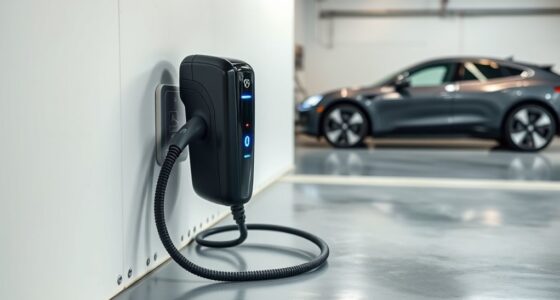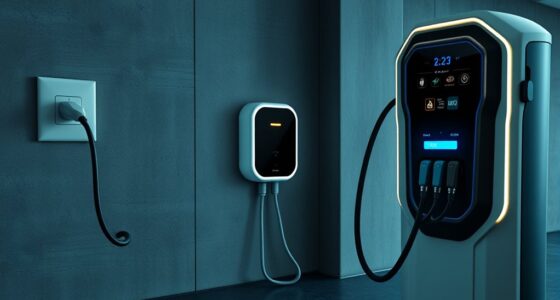

You can’t really overcharge an electric car because modern EVs have built-in Battery Management Systems (BMS) that monitor and regulate the charging process. These systems automatically stop charging once the battery reaches full capacity, preventing overloading and potential damage. This safety feature guarantees your vehicle charges safely even if left plugged in longer than necessary. If you want to understand how these protections work and how to maintain your battery’s health, keep exploring the details behind EV safety features.
Key Takeaways
- Modern EVs have built-in Battery Management Systems (BMS) that monitor and regulate charging to prevent overcharging.
- Automatic safety protocols stop charging once the battery reaches 100%, even if still plugged in.
- Charging to 100% regularly can reduce battery lifespan, so EVs are designed to limit overcharging risks.
- Certified chargers and proper wiring minimize electrical faults that could lead to overcharging issues.
- Proper charging habits and safety features work together to ensure the battery is protected from overcharge damage.

While electric cars are praised for their eco-friendliness and cost savings, overcharging them can pose serious risks. When you plug in your EV, battery management systems (BMS) come into play to monitor and regulate the charging process. These systems are designed to maximize charging safety by preventing your battery from overloading or overheating. As you connect your vehicle to a charger, the BMS continuously checks voltage, current, and temperature levels, ensuring that charging proceeds smoothly and safely. This sophisticated battery management is what keeps overcharging from becoming a problem in modern electric vehicles.
You might wonder, can you really overcharge an EV? The answer is generally no, thanks to built-in safety features. Most electric cars and charging stations are equipped with automatic cut-off functions. Once the battery reaches full capacity, the system stops delivering additional power, preventing overcharging. This means that even if you leave your car plugged in for hours after reaching 100%, your vehicle’s charging safety protocols will protect the battery from damage. The design of these systems ensures that your battery doesn’t sustain harm from extended charging sessions.
Most EVs automatically stop charging at full capacity, preventing overcharging even if left plugged in.
However, it’s still important to be mindful of proper charging practices. While the vehicle’s safety features handle overcharge risks, neglecting battery management can impact your battery’s longevity over time. For instance, consistently charging your battery to 100% and keeping it there can accelerate capacity fade. If you’re not in a hurry, keeping the charge level between 20% and 80% can help preserve your battery’s health. This approach leverages the effective battery management systems already in place, but it also underscores your role in maintaining ideal charging habits.
Charging safety extends beyond just preventing overcharging. Using certified chargers and following manufacturer guidelines reduces risks of electrical faults or fire hazards. Avoid cheap or incompatible chargers, as they may not have proper safety features. Always inspect charging cables and connectors for damage before use. When charging at home, ensure your outlet and wiring are capable of supporting your EV’s power demands. Proper charging safety practices help protect not only your vehicle but also you and your property.
Additionally, understanding the role of Herbal Infusion Machines and tools can enhance your knowledge of safe and efficient processing methods, similar to how modern EVs are designed with safety in mind. In essence, the combination of advanced battery management and built-in safety features in modern EVs means you don’t have to worry excessively about overcharging. These systems are designed to shut down charging once your battery reaches full capacity, safeguarding against potential damage. Just remember that good charging habits—like using reliable equipment and avoiding constant full charges—are key to maintaining your vehicle’s battery health over the long term. With proper care, your electric car can serve you well, safely and efficiently.

Battery Management Algorithm for Electric Vehicles
As an affiliate, we earn on qualifying purchases.
As an affiliate, we earn on qualifying purchases.
Frequently Asked Questions
Do All Electric Cars Have Overcharge Protection?
Most electric cars do have overcharge protection built into their systems. You benefit from advanced battery management that guarantees charging safety by preventing overcharging, which could damage the battery. When you plug in, the system automatically stops charging once the battery reaches full capacity. This feature helps maintain your EV’s battery health and prolongs its lifespan, giving you peace of mind during every charge.
Can Overcharging Damage an Ev’s Battery?
Ever wonder if overcharging your EV can harm its battery? The good news is, it usually doesn’t cause damage thanks to built-in overcharge protection and advanced charging management systems. Overcharging can lead to battery degradation over time, but modern EVs prioritize charging safety, stopping the process once full. So, while occasional overcharging isn’t a big concern, consistently doing it might wear out your battery faster.
How Long Can an EV Stay Plugged in Safely?
You can safely keep your EV plugged in for several days or even weeks without harming the battery, thanks to charging safety features. Modern EVs are designed to optimize battery longevity, preventing overcharging and overheating. However, for best battery health, it’s recommended to charge within the manufacturer’s suggested range and avoid leaving it plugged in constantly at 100%. This guarantees both safety and maximum lifespan of your vehicle’s battery.
Are There Any Risks of Overcharging With Fast Chargers?
Imagine a tightrope walker balancing carefully—fast chargers are designed to prevent risks like overcharging, so you stay safe. While rapid charging could generate more heat, modern EVs and charging infrastructure include safeguards to protect battery longevity. These systems monitor and regulate power flow, reducing the risk of damage. So, you don’t need to be concerned about overcharging with fast chargers, as technology guarantees your battery remains healthy and safe.
What Happens if an Ev’s Battery Is Overcharged?
If your EV’s battery gets overcharged, it can lead to increased battery heat, which might cause wear over time. Modern EVs are designed to stop charging once full, protecting your battery from overcharging and preserving its lifespan. However, frequent overcharging can still impact your battery’s health, reducing the number of charging cycles and overall efficiency. To keep your battery healthy, avoid consistently charging past 80-90%.

AIMILER Level 2 Electric Vehicle (EV) Charger(WIFI APP/Plug-play), 32A, 25ft Cable ETL Certified, 220V-240V NEMA 14-50P Plug EVSE w/ J1772 Connector, Portable EV Car Charging Stations for Home Level 2
❤ [Equipped with Nema 14-50 plug 240V, Compatible with 110-120V Nema 5-15p to 14-50r EV Adapter(Not packaged) or…
As an affiliate, we earn on qualifying purchases.
As an affiliate, we earn on qualifying purchases.
Conclusion
So, rest assured, your EV’s smarter than a rocket scientist on a caffeine high. It’s practically a superhero that stops you from overcharging, saving your battery from certain doom. Overcharging isn’t just a minor mistake; it’s like throwing your car into the fiery pits of battery hell. Thanks to cutting-edge technology, your electric vehicle guards itself like a fierce guardian angel. Drive confidently, knowing your EV’s got your back—protecting your investment from the brink of disaster.
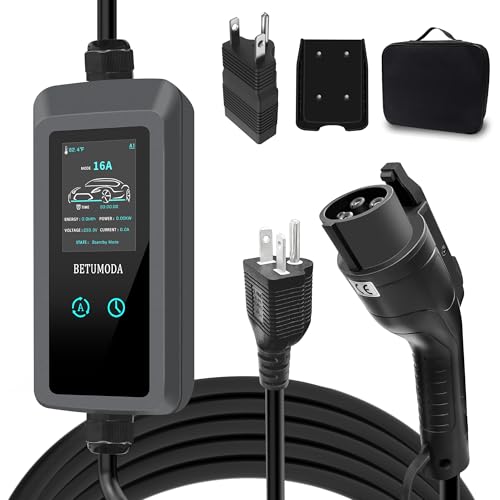
BETUMODA Level 1&2 EV Charger, 25ft Cable, 16Amp, 110V–240V, Adjustable Current&Timer, NEMA 6-20 Plug&5-15 Adapter for Household Socket, SAE J1772 Compatible for All PHEV/EV(Tesla Requires Adapter)
2026 CHARGING UPGRADE: The upgraded J1772 charger features four adjustable current levels (8A/10A/13A/16A) and an intelligent delay timer…
As an affiliate, we earn on qualifying purchases.
As an affiliate, we earn on qualifying purchases.
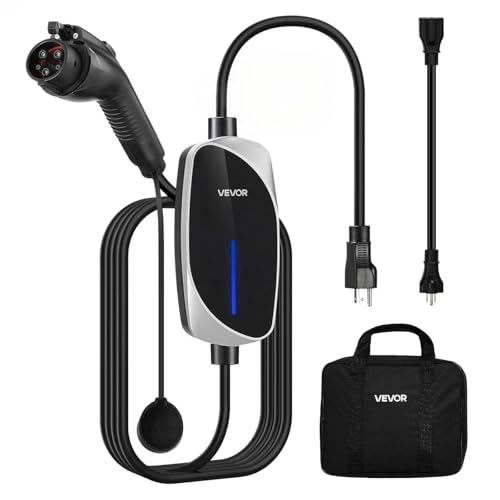
VEVOR Level 1&2 EV Charger, 16 Amp, Electric Vehicle Portable Charger with 25 ft Charging Cable, 120V-240V, NEMA 6-20P Plug NEMA 5-15 Adapter, LED Indicator, Home Car Charging Station for SAE J1772 EV
Adjustable Current Modes: Choose from 12A or 16A to match your home circuit breaker — no electrician needed….
As an affiliate, we earn on qualifying purchases.
As an affiliate, we earn on qualifying purchases.