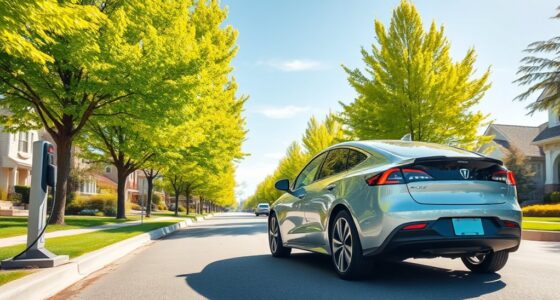
Your EV’s energy consumption display, measured in watt-hours per mile (Wh/Mile), shows how efficiently your vehicle uses energy on the road. Lower Wh/Mile indicates better efficiency, while higher values mean more energy is used per mile. Factors like driving habits, speed, terrain, and weather affect these numbers. To make the most of your range, you should understand what influences this display. Keep exploring to learn how to optimize your driving for maximum efficiency.

Get backup power and energy gear delivered free with Prime
- Fast, free delivery on millions of items
- Prime Video, Amazon Music and more included
- Member-only deals all year
Key Takeaways
- Wh/Mile measures how efficiently your EV uses energy, with lower values indicating better efficiency.
- External factors like weather and terrain can influence Wh/Mile readings, affecting accuracy.
- Proper display calibration ensures accurate energy consumption data for informed driving decisions.
- Aggressive driving and high speeds increase Wh/Mile, reducing overall energy efficiency.
- Regularly monitoring your Wh/Mile helps optimize driving habits and extend your EV’s range.
If you want to make the most of your electric vehicle, understanding how to read its energy consumption display is essential. This display, typically measured in watt-hours per mile (Wh/Mile), shows you how efficiently your EV uses energy during your drive. Grasping what this number means helps you optimize your driving habits, extend your battery’s range, and better appreciate your vehicle’s performance. To interpret this data accurately, it’s important to understand the role of battery efficiency and how display calibration impacts the readings you see. Regular monitoring of your energy consumption can help identify patterns and improve your driving strategies.
Understanding your EV’s energy display helps optimize driving and extend range effectively.
Battery efficiency refers to how well your vehicle converts stored energy into motion. When you see a low Wh/Mile number, it indicates that your EV is using energy efficiently, allowing you to go farther on a single charge. Conversely, higher numbers suggest less efficient driving, often caused by aggressive acceleration, high speeds, or frequent stop-and-go traffic. By paying attention to these figures, you can adjust your driving style—such as smoothly accelerating and decelerating—to improve battery efficiency and maximize your range.
Another key factor influencing your energy consumption readings is display calibration. Over time, the calibration of your EV’s display might drift, leading to readings that don’t accurately reflect actual energy use. Some vehicles automatically calibrate their displays based on recent driving patterns, but others may require manual calibration or software updates to ensure accuracy. If you notice inconsistencies or suspect that the display isn’t aligned with your actual energy consumption, consult your vehicle’s manual or contact the manufacturer to perform calibration procedures. Proper calibration ensures that the Wh/Mile reading provides a true picture of your efficiency, empowering you to make informed driving decisions.
You should also be aware that external conditions, such as temperature, terrain, and weather, can influence your energy consumption. Cold weather, for example, often reduces battery efficiency, leading to higher Wh/Mile figures even if your driving habits haven’t changed. Similarly, driving uphill or against strong headwinds can increase energy use. Recognizing these factors helps you interpret your display more accurately and avoid unnecessary concern or misjudgment of your vehicle’s performance.
Products Worth Considering

Innova 5610 OBD2 Bidirectional Scan Tool

Milwaukee 2697-22 M18 18-Volt Lithium-Ion Cordless Hammer Drill/Impact Driver XC Combo Kit (2-Tool)

DEWALT 20V MAX Cordless 1/2-Inch Impact Wrench Kit (DCF900P1)
As an affiliate, we earn on qualifying purchases.
Frequently Asked Questions
How Does Weather Affect My Ev’s Wh/Mile Readings?
Weather considerably impacts your EV’s Wh/mile readings by affecting climate impact and battery efficiency. Cold temperatures cause your battery to work harder, reducing efficiency and increasing Wh/mile readings. Hot weather can also strain the system, forcing it to use more energy for cooling. Extreme conditions lower overall battery performance, so you’ll notice higher Wh/mile numbers in harsh weather. To optimize, plan trips during moderate temperatures when possible.
Can Different Driving Modes Change My Energy Consumption?
Yes, different driving modes can change your energy consumption. Eco mode, for example, promotes energy-efficient driving habits by limiting acceleration and optimizing speed, which helps improve your Wh/Mile readings. Sport mode, on the other hand, encourages quicker acceleration and higher speeds, increasing energy use. To maximize range, focus on speed optimization and smooth driving habits, regardless of the mode you select. This way, you’ll get the most out of your EV’s efficiency.
Why Does My Wh/Mile Vary During the Same Trip?
Your Wh/mile varies during the same trip because of factors like regenerative braking and tire pressure. When you use regenerative braking, you recover energy, lowering your consumption. Proper tire pressure reduces rolling resistance, making your vehicle more efficient. Changes in road conditions, elevation, and driving habits also impact your energy use. By maintaining ideal tire pressure and using regenerative braking wisely, you can keep your energy consumption more consistent.
Is Wh/Mile Affected by Vehicle Load or Passenger Weight?
Yes, your Wh/Mile is affected by vehicle weight and passenger impact. When you add more weight through passengers or cargo, your EV needs more energy to move, increasing Wh/Mile. Conversely, carrying less weight can reduce energy consumption. Keep in mind that the heavier your vehicle, the more energy it uses, so your Wh/Mile readings will reflect these changes during your trip.
How Accurate Is the Energy Consumption Display Compared to Real Energy Use?
Your EV’s energy consumption display is generally accurate, but factors like battery calibration and display calibration can affect precision. Over time, recalibrating your battery helps make certain the readings reflect actual energy use. Keep in mind that driving habits, terrain, and load can cause slight deviations. Regular calibration and mindful driving give you a clearer picture of real energy consumption, making your display more reliable for planning your trips.
Conclusion
By mastering your EV’s energy display, you’ll effortlessly enhance efficiency and extend range. The clearer your comprehension, the calmer your commute becomes. Focus on facts, familiarize yourself with figures, and forge a future of frugal, fuss-free driving. Remember, understanding your wattage’s way will warm your wisdom and widen your willingness to work with your vehicle’s wants. With consistent curiosity, you’ll conquer confusion and cruise confidently, creating a car that’s both clever and cost-conscious.