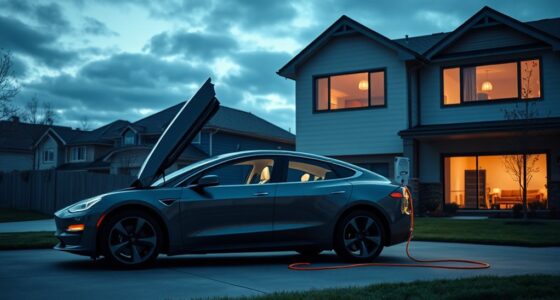

Switching from a gas car to an EV might seem intimidating, but you’ll quickly see how expanding charging stations and fast-charging tech make it easier. Modern batteries last over 100,000 miles, and warranties cover much of the worry about replacements. With reliable infrastructure and improved technology, range anxiety fades, letting you enjoy quieter, more cost-effective driving. If you’re curious about the full journey and lessons learned, there’s even more to discover.
Key Takeaways
- Modern charging infrastructure and fast chargers greatly reduce range anxiety and ensure reliable access during daily use and long trips.
- Battery longevity warranties and technological improvements lessen concerns about costly replacements and enhance vehicle reliability.
- Home charging options offer convenient overnight top-ups, making daily charging simple and hassle-free.
- Increased public charging stations and cloud-connected data improve vehicle management and charging availability.
- Overall savings on fuel, maintenance, and environmental benefits make the switch from gas to EV a practical and rewarding decision.

Have you noticed how quickly the shift from gas-powered cars to electric vehicles (EVs) is accelerating? It’s hard not to see the growing number of charging stations popping up in cities, shopping centers, and even along highways. If you’re considering making the switch, you might feel a mix of curiosity and skepticism. That’s natural. When I first thought about going electric, I worried about things like battery replacement and whether the charging infrastructure was reliable enough for everyday use. But as I’ve learned more, my doubts started to fade, replaced by confidence in the technology and the benefits it offers.
One of the biggest concerns I had was the longevity of the battery. I wondered how long my EV’s battery would last and what the cost of replacement would be down the line. Turns out, modern EV batteries are designed to last well over 100,000 miles, and many manufacturers offer warranties of eight years or more. When properly maintained, the battery’s performance remains strong, and even if replacement becomes necessary, the costs are coming down as technology advances. Knowing that, I felt reassured that battery replacement wouldn’t be an immediate or insurmountable issue.
Modern EV batteries last over 100,000 miles with warranties of eight years or more, and replacement costs are decreasing.
Another hurdle I initially saw was the charging infrastructure. I worried about whether I’d be able to find charging stations when I needed them, especially for longer trips. The good news is that the network of charging stations is expanding rapidly. Public chargers are now more prevalent, and home charging options make it convenient to keep your EV ready overnight. Installing a home charger is straightforward and offers the convenience of charging while you sleep, which alleviates much of the range anxiety I once had. Plus, many EVs come with features like fast charging, so you can top up your battery quickly when needed. Additionally, European cloud infrastructure is contributing to more reliable data connectivity for vehicle management and charging networks, further enhancing the overall experience.
As I transitioned from a skeptic to a believer, I realized that many of my concerns were rooted in misconceptions or outdated information. The charging infrastructure has grown incredibly reliable, and battery technology continues to improve, providing longer life and better performance. I also learned that the overall savings on fuel and maintenance outweigh the initial investment. No longer do I worry about running out of charge on a trip or replacing the battery prematurely. Instead, I focus on the benefits: lower emissions, quieter rides, and the joy of driving a future-ready vehicle. If you’re hesitant, know that these challenges are steadily being addressed, making the switch more practical than ever.
Top picks for "skeptic believer owner"
Open Amazon search results for this keyword.
As an affiliate, we earn on qualifying purchases.
Frequently Asked Questions
How Do EV Maintenance Costs Compare to Gas Cars?
EV maintenance costs are generally lower than gas cars because you avoid oil changes and engine repairs. However, you should consider battery degradation over time, which may lead to expensive replacements, and higher insurance premiums due to the vehicle’s value and repair costs. Overall, EVs tend to cost less to maintain, but keep these factors in mind for a complete comparison.
What Are the Best Charging Options for Daily Use?
They say patience is a virtue, and for daily EV charging, it’s true. Your best option is home charging, which offers convenience and consistent power. Opt for a Level 2 charger to maximize charging speed, so you spend less time plugged in. This setup lets you charge overnight effortlessly, ensuring your EV is ready each morning. Balancing charging speed and home setup makes daily use simple and reliable.
How Does EV Range Impact Long-Distance Travel Plans?
Your EV’s range greatly influences long-distance travel plans; a larger battery capacity lets you travel farther between charges. To make trips smoother, you’ll want to plan routes around reliable charging infrastructure, ensuring charging stations are accessible along your route. Keep in mind that rapid chargers can substantially cut down charging time, making long-distance travel more practical and less stressful, even with a smaller battery capacity.
Are EVS Suitable for Cold Climates and Winter Conditions?
EVs can handle cold climates, but battery performance drops by up to 40% in winter, affecting range. You’ll find winter charging essential, as cold weather slows battery efficiency and increases energy use. To stay prepared, plan for extra charging stops and keep your battery warm when parked. With proper planning, EVs are practical even in harsh winter conditions, making them viable year-round options.
What Incentives or Rebates Are Available for EV Buyers?
You can take advantage of various government incentives and rebate programs when buying an EV. Many regions offer substantial rebates that reduce your upfront costs, making EVs more affordable. Additionally, some government incentives provide tax credits or special financing options. Be sure to check local, state, or federal programs, as eligibility and benefits vary. These incentives aim to encourage cleaner transportation and help you save money while making eco-friendly choices.
Conclusion
Switching from a gas car to an EV changed your perspective completely. It’s like opening a window to fresh air after being in a stuffy room—refreshing and eye-opening. You’ve learned that EVs aren’t just about saving the planet; they’re about embracing innovation and convenience. If you were once skeptical, now you see the future clearly. This journey proves that sometimes, taking a chance can turn doubts into confidence, like sunrise banishing the night.