To prepare your electric vehicle for natural disasters, keep its battery charged as high as possible, and monitor energy use regularly. Assemble an emergency kit with essentials like a portable charger, solar panel, jumper cables, water, and first aid supplies. Know your EV’s features to conserve power, plan routes with charging station info, and avoid unnecessary accessories. Staying prepared guarantees you stay mobile and safe — learn more tips to make your EV disaster-ready.

Get backup power and energy gear delivered free with Prime
- Fast, free delivery on millions of items
- Prime Video, Amazon Music and more included
- Member-only deals all year
Key Takeaways
- Keep your EV’s battery charged as high as possible before a disaster strikes.
- Assemble an emergency kit with portable chargers, jump starters, and essential supplies.
- Plan evacuation routes considering available charging stations and safe zones.
- Minimize energy use by turning off unnecessary accessories and limiting climate control.
- Stay informed about vehicle features and updates to optimize energy management during emergencies.
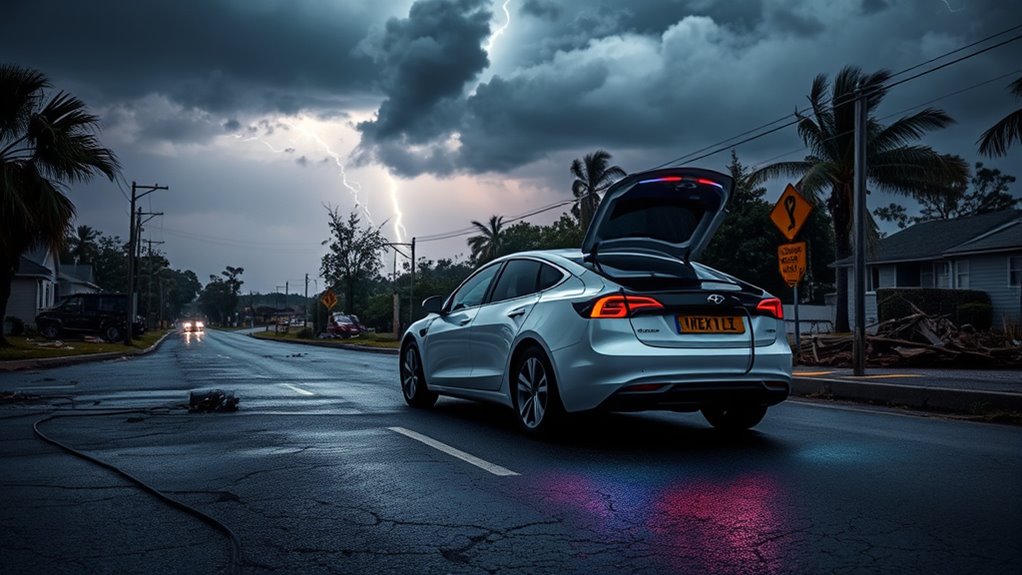
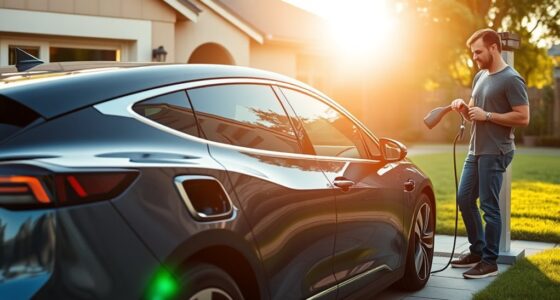
Electric vehicles (EVs) are increasingly becoming essential tools in emergency situations, offering quick mobility, reliable power sources, and reduced emissions during crises. But to truly harness their potential when disaster strikes, you need to be prepared. One of the most common challenges during emergencies is battery drain. In a crisis, you might find yourself relying heavily on your EV to evacuate or reach safety, which can quickly deplete its battery, especially if you’re running appliances or charging devices from the vehicle’s power outlets. To prevent being stranded, it’s crucial to monitor your battery level regularly and keep your EV’s charge as high as possible when a disaster is forecasted. Planning your routes to include charging stations or portable chargers can also help ensure you don’t run out of power when you need it most.
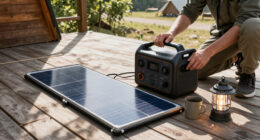
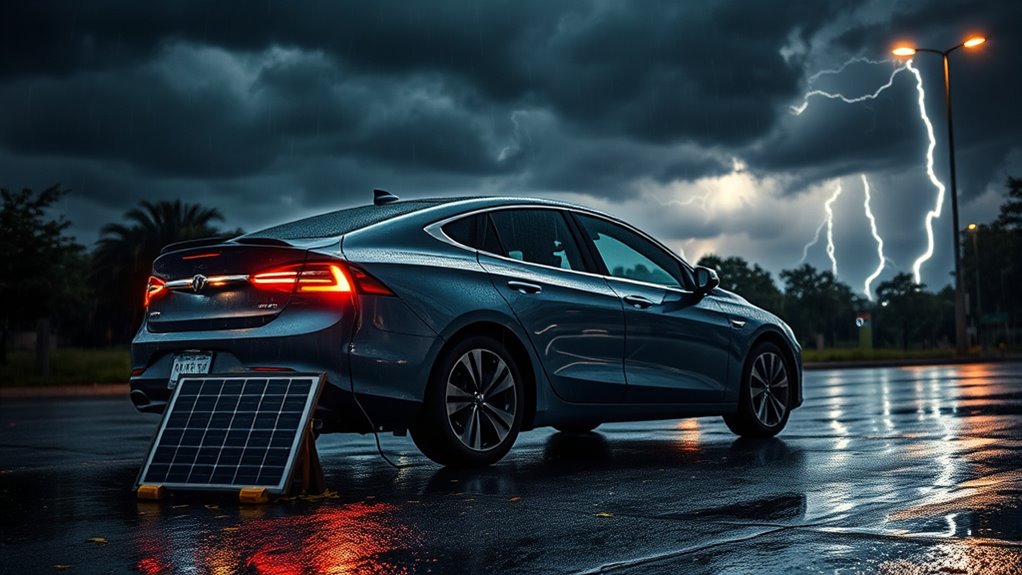
Equally important is assembling a comprehensive emergency kit tailored for your EV. Your kit should include essentials like a portable jump starter, extra charging cables, and a power bank compatible with your vehicle. A portable solar panel can be a game-changer, providing additional power if the grid is down. Don’t forget basic supplies like water, non-perishable food, first aid items, and warm clothing—these are vital if you get stuck or need to wait out an emergency. Consider adding a multi-tool or flashlight, especially if the power outage extends into the night. By having all these items ready, you’ll be better equipped to handle unexpected situations without panicking or becoming helpless. Additionally, understanding modern charging solutions can help you stay prepared and extend your EV’s range during emergencies.
Build a prep kit with jump starters, cables, solar panels, water, food, and tools for EV emergencies.
Preparing your EV for emergencies isn’t just about having the right gear; it’s also about understanding your vehicle’s capabilities and limitations. Familiarize yourself with how your EV’s battery management system works and how to optimize energy consumption. For instance, reducing cabin heating or cooling and turning off unnecessary accessories can help conserve battery life. Keep an eye on your vehicle’s software updates too, as these can improve efficiency and safety features. Additionally, plan your evacuation routes in advance, considering locations of charging stations or safe zones where you can recharge if needed.
In an emergency, your EV can serve as a lifeline, but only if you’re prepared. Managing battery drain proactively, assembling a well-stocked emergency kit, and understanding your vehicle’s features will ensure you remain mobile and safe during natural disasters. Being ready means not just owning an EV but knowing how to use it effectively when it matters most.
Products Worth Considering

NOCO Boost GB70 2000A 12V Lithium Jump Starter
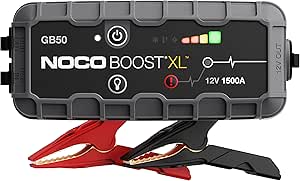
NOCO Boost GB50 1500A UltraSafe Jump Starter, 12V Lithium Battery Booster

NOCO Boost GBX75 2500A UltraSafe Jump Starter, 12V Lithium Battery Booster
As an affiliate, we earn on qualifying purchases.
Frequently Asked Questions
Can EV Batteries Be Safely Used to Power Emergency Devices?
Yes, EV batteries can be safely used to power emergency devices if you follow proper battery safety and power management. You should use a dedicated inverter designed for vehicle batteries to prevent overloads or damage. Always make sure you’re aware of your EV’s battery capacity and limitations. Properly managing power consumption and consulting your vehicle’s guidelines helps keep the process safe and effective during emergencies.
What Specific Tools Are Needed to Access Emergency Power From an EV?
Think of your EV as a power reservoir ready to spring into action. To access emergency power, you’ll need a portable charger or a set of jumper cables designed for EVs. These tools connect your car’s battery to devices or another vehicle, channeling energy like a water flow. Make sure to have the right adapters and follow safety procedures, so you can turn your car into an emergency power station when needed.
How Does Cold Weather Affect an Ev’s Emergency Readiness?
Cold weather can impact your EV’s emergency readiness by reducing battery temperature, which decreases efficiency and range. When the battery gets too cold, it takes longer to charge and may not supply power as effectively during emergencies. To stay prepared, pre-condition your vehicle’s battery before a storm, keep it plugged in when possible, and carry warm blankets or a portable charger. This helps maintain ideal battery temperature and guarantees your EV is ready when needed.
Are There Insurance Considerations for Using EVS in Disasters?
Insurance considerations for using EVs in disasters include reviewing your coverage and understanding liability considerations. You should verify your insurance coverage to ensure damages caused during emergencies are protected, and clarify liability considerations if you’re involved in an accident or incident. Don’t delay—thoroughly discuss details with your insurer, and document damage or incidents to prevent problems and ensure proper protection during disaster deployments.
Can Solar Panels Be Integrated With EVS for Backup Power?
Yes, you can integrate solar panels with your EV for backup power systems. Solar panel integration allows your electric vehicle to harness sunlight, providing a sustainable energy source during outages. This setup can charge your EV and serve as backup power for your home if needed. By installing compatible solar systems, you guarantee continuous power supply, making your EV a reliable asset during natural disasters or emergencies.
Conclusion
Preparing your electric vehicle for emergencies isn’t just smart—it could save your life. Some say EVs can’t handle power outages, but recent innovations prove otherwise, with features like portable chargers and solar integration. Don’t rely solely on theory; test your car’s emergency capabilities beforehand. By staying informed and proactive, you guarantee your EV remains a reliable lifeline during disasters. Trust in the technology, and be ready to face any emergency with confidence.