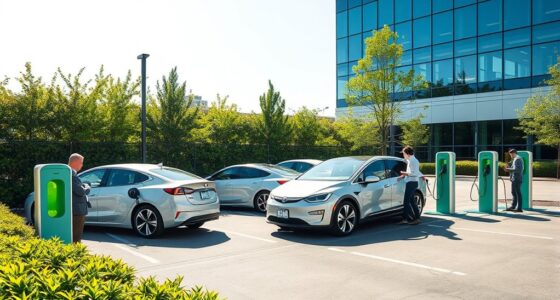
Keeping a gas car as a backup can give you peace of mind, especially during long trips or in areas with limited charging stations. It offers quick refueling and reliability when you need it most, balancing your environmental goals with practical needs. While expanding EV infrastructure is promising, having a gas vehicle guarantees you’re prepared for unexpected delays or emergencies. To explore how to manage this balance effectively, consider what fits your driving habits and location.
Key Takeaways
- A gas car provides reliable backup during range limitations or charging station shortages, especially in rural or less-developed areas.
- Maintaining a second vehicle offers flexibility for long trips, quick refueling, and emergencies, ensuring travel certainty.
- The environmental impact and costs of keeping a gas car may outweigh benefits until EV infrastructure fully matures.
- As charging networks expand and technology improves, reliance on a backup gas vehicle is likely to decrease over time.
- Personal driving habits and geographic location influence whether keeping a gas car as backup aligns with your needs and comfort level.

Have you ever been stranded without gas and wished you had a backup plan? If you’re considering an electric vehicle (EV) as your primary ride, this scenario might cross your mind more often than you’d like. Range anxiety—the fear of running out of battery far from a charging station—is a common concern among EV owners. While charging infrastructure has improved over the years, it’s still not as widespread or convenient as traditional gas stations. This can leave you feeling uncertain about long trips or unexpected detours. Having a backup gas car can serve as a safety net, easing these worries and ensuring you’re never truly stranded. It’s a practical solution, especially when you consider that charging stations tend to be clustered in urban areas, with fewer options available in rural or less-developed regions. This uneven fueling infrastructure could make you hesitant to fully rely on an EV for all your travel needs.
Keeping a gas car as a backup can provide peace of mind, especially if you often venture into areas with limited charging options. It’s not just about avoiding range anxiety but also about flexibility. Sometimes, charging times can be longer than filling up a gas tank, and if you’re pressed for time or facing an emergency, a gas vehicle can be a lifesaver. Plus, many people find comfort in having a familiar, quick-fuel option for day-to-day errands or longer journeys. This way, you can enjoy the benefits of EV ownership—like lower emissions and reduced fuel costs—without sacrificing reliability. It also allows you to test and adapt to the EV landscape gradually, understanding its limitations and strengths firsthand.
However, maintaining a second vehicle isn’t without its costs and environmental considerations. It might seem counterintuitive to keep an internal combustion engine (ICE) vehicle when aiming to reduce your carbon footprint. But for many, the practicality outweighs these concerns. As charging infrastructure continues to expand and technology advances, the reliance on a backup gas car may decrease over time. Still, until EV charging stations are as ubiquitous as gas stations, having a gas-powered backup remains a sensible choice. It’s about balancing your desire for cleaner transportation with the realities of current infrastructure and your personal travel needs. Ultimately, whether to keep a backup gas vehicle hinges on your specific driving habits, geographic location, and comfort level with the evolving EV landscape.
![Car Reverse Backup Camera - [HD Night Vision] [170°Wide Angle] Front Side Rear View Camera with Dual Purpose Design - Waterproof Universal Reverse Camera for Car Truck SUV RV](https://m.media-amazon.com/images/I/51NYgTENExL._SL500_.jpg)
Car Reverse Backup Camera – [HD Night Vision] [170°Wide Angle] Front Side Rear View Camera with Dual Purpose Design – Waterproof Universal Reverse Camera for Car Truck SUV RV
- Dual Installation Methods: Butterfly bracket or embedded setup
- HD + 170° Wide Angle: Clear images with wide field of view
- Low Light Night Vision: Sharp images in dark environments
As an affiliate, we earn on qualifying purchases.
As an affiliate, we earn on qualifying purchases.
Frequently Asked Questions
How Much Does Maintaining a Backup Gas Car Cost Annually?
Maintaining a backup gas car costs you roughly $500 to $1,000 annually, depending on its age and usage. Your cost analysis includes maintenance expenses like oil changes, tire rotations, brake servicing, and registration fees. Regular upkeep is essential to keep the vehicle reliable, especially if you need it during emergencies or long trips. Budgeting for these expenses guarantees your backup car remains functional without unexpected breakdown costs.
What Are the Environmental Impacts of Keeping a Backup Gas Vehicle?
Keeping a backup gas vehicle contributes to emissions impact, with transportation accounting for nearly 29% of global greenhouse gases. Environmental concerns arise as gas cars emit pollutants like CO2 and nitrogen oxides, harming air quality and accelerating climate change. While convenient, maintaining a gas car increases your carbon footprint. To reduce environmental impact, consider electric alternatives or shared vehicle options, helping cut down emissions and support a cleaner, healthier planet.
How Reliable Are Older Gas Cars as Backups Compared to EVS?
Older gas cars can be fairly reliable as backups, but you should consider their fuel efficiency and maintenance costs. They tend to consume more fuel and require more repairs over time, which can add up. While they might start reliably, their overall dependability isn’t as high as newer EVs, especially if they haven’t been well-maintained. Keep in mind, their reliability varies based on age and condition.
What Insurance Considerations Exist for Dual Vehicle Ownership?
When owning two vehicles, your insurance policy needs to cover both cars adequately. You should update your liability coverage to reflect the increased risk and make sure both vehicles are properly insured. Check if your insurer offers multi-vehicle discounts, which can save you money. Also, confirm that your policy includes comprehensive coverage for your EV and a suitable policy for your gas car, so you’re protected in all situations.
How Does a Backup Gas Car Affect Overall Vehicle Depreciation?
Keeping a backup gas car can increase your vehicle’s overall depreciation impact, as it may be viewed as a less essential asset over time. This can negatively affect resale value since potential buyers might see it as an unnecessary expense. However, if you use the gas car frequently or for specific needs, it may help offset depreciation on your EV, balancing your overall vehicle investment.

Oxseryn Power Equipment 4400 Watts Inverter Generator Gas Powered, Portable Open Frame Generator, Low Noise with ECO Mode, RV Ready, Emergency Home Backup
- High Power Output: 4400 peak and 3400 running watts
- Multiple Output Ports: 2 AC, 1 DC, RV port
- Long Runtime: Up to 14 hours at 25% load
As an affiliate, we earn on qualifying purchases.
As an affiliate, we earn on qualifying purchases.
Conclusion
Ultimately, keeping a gas car as a backup can be a smart move, especially if you’re not ready to give up the convenience and range it offers. It’s like having a safety net—you won’t be left high and dry if your EV hits a snag. While it’s tempting to go all-in on electric, sometimes you’ve got to keep your options open. After all, a bird in the hand is worth two in the bush.

ChargePoint HomeFlex Level 2 EV Charger J1772 – Fast Smart Battery Power Charging at Home for Electric Automobile Vehicles – Hardwired for Electric Car
- Reliable Home Charging: Builds dependable EV charging stations
- 24/7 Support: Around-the-clock assistance available
- Mobile App Control: Manage charger via smartphone app
As an affiliate, we earn on qualifying purchases.
As an affiliate, we earn on qualifying purchases.

2026 Fuel Sync Gas Saver Device, 2 Pack Plug-in Gas Saver for Cars, Trucks, SUVs & Diesel Vehicles, 12V Automotive Fuel Saving Device, Compact Gas Economizer for City, Highway & Long-Distance Driving
- Fuel Efficiency Support: Enhances fuel economy during daily driving
- Easy Plug-and-Play: No tools or wiring required for installation
- Universal Vehicle Compatibility: Fits cars, trucks, SUVs, and diesel vehicles
As an affiliate, we earn on qualifying purchases.
As an affiliate, we earn on qualifying purchases.