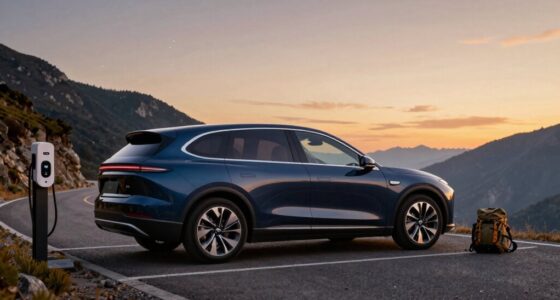

To prepare for your first EV road trip, pack essential tools like a portable charger, multiple charging cables, and a power strip, along with a printed list of nearby charging stations as backups. Don’t forget to bring an emergency kit, snacks, water, and comfort items. Keep your vehicle maintained and verify battery health beforehand. Staying flexible and informed about charging options will make your trip smoother—continue to explore for more helpful tips and tricks.
Key Takeaways
- Bring multiple charging cables, adapters, and a portable charger to ensure connectivity and charging options.
- Pack a printed list of nearby charging stations and download reliable charging station apps for real-time updates.
- Include a basic emergency kit with jumper cables, tire repair tools, and a portable power bank for unforeseen situations.
- Prepare snacks, water, and comfort items like blankets and neck pillows to stay comfortable during long stops.
- Carry an EV maintenance checklist and ensure your vehicle’s key systems, like brakes and tires, are in optimal condition.
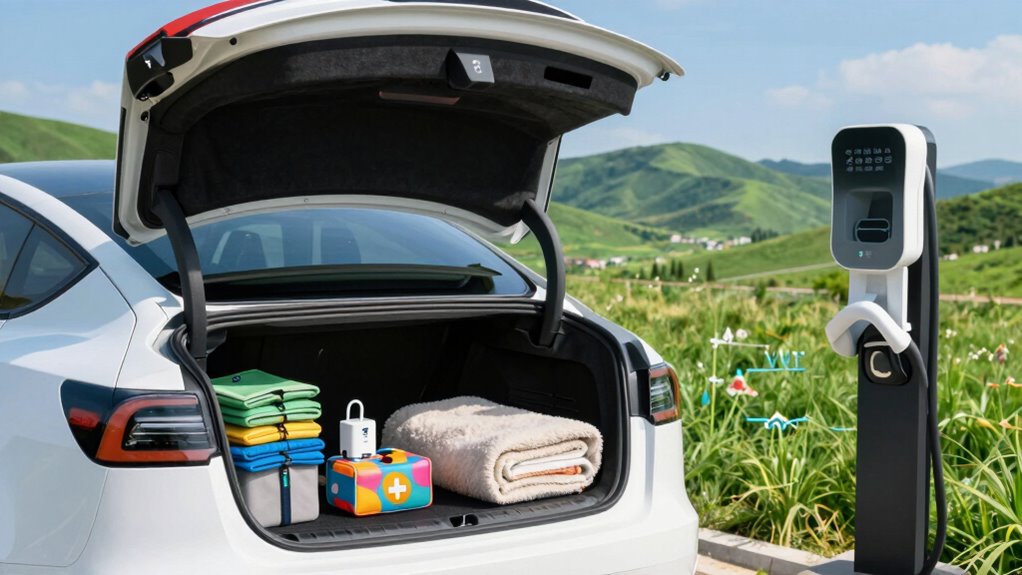
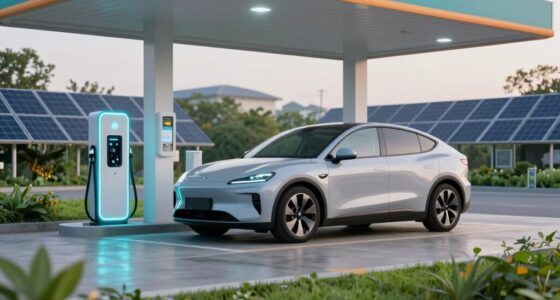
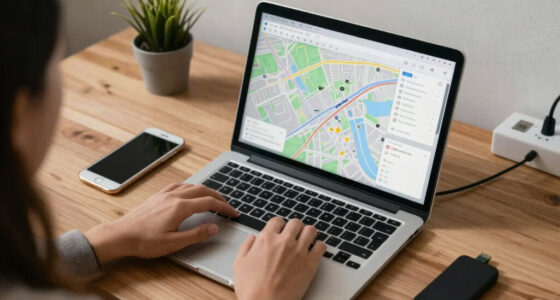
Beginning your first electric vehicle (EV) road trip can be exciting, but it also requires some planning to guarantee a smooth journey. One of the most important steps is knowing what to pack and how to prepare your EV for the road. First, make sure you have a reliable way to find charging stations along your route. Charging station apps are essential tools—they help you locate nearby chargers, check real-time availability, and sometimes even reserve a spot. Download a few of these apps before you hit the road, so you’re not scrambling when your battery dips. It’s also wise to print out a list of charging stations as a backup, especially if you’re traveling through areas with poor mobile coverage.
Next, consider creating an EV maintenance checklist before departure. Make sure your vehicle is in top shape by checking tire pressure, fluid levels, and brakes. Confirm that your battery health is good and that your charging ports are clean and functioning properly. This proactive step can prevent unexpected issues that might delay your trip. Pack a basic EV emergency kit, including a portable charger if you have one, jumper cables, and a tire repair kit. Being prepared can save you stress and time if you encounter minor problems. Additionally, consider regular vehicle inspections to keep your EV in optimal condition.
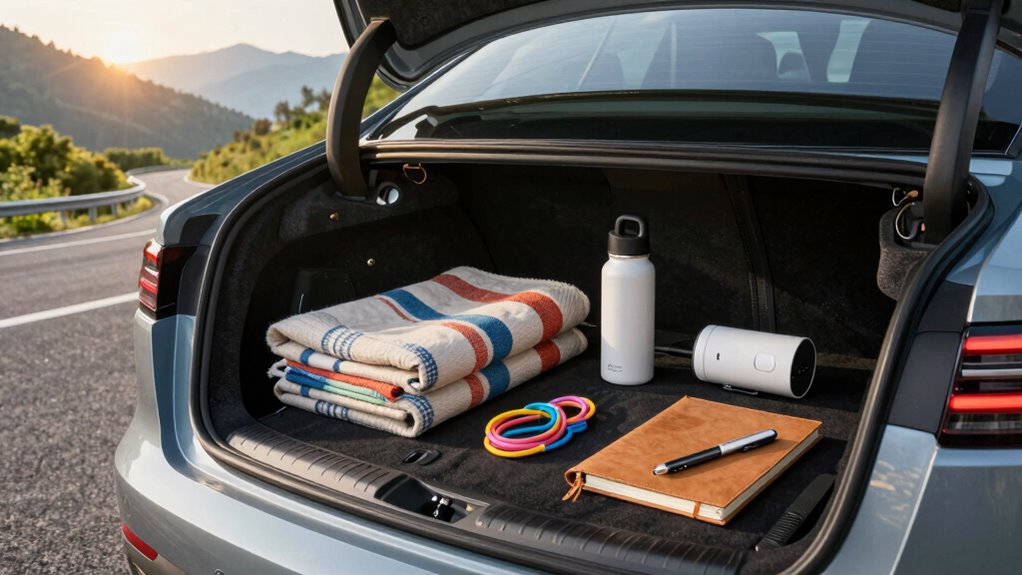
When packing for your trip, don’t forget to bring essential accessories. A portable phone charger or power bank can be a lifesaver when navigating or using charging station apps without Wi-Fi. Keep your charging cables, adapters, and a multi-outlet power strip handy; they’ll help you charge multiple devices simultaneously. It’s also smart to bring snacks, water, and comfort items like a blanket or neck pillow for longer stretches. If you’re traveling with others, extra chargers or entertainment options will make the journey more enjoyable. Planning your route with charging station availability in mind can help you avoid unnecessary detours and ensure a smoother experience. Additionally, understanding emerging trends in digital publishing can be useful if you want to stay updated on new tools or resources for EV travelers.
Finally, plan your route with a mix of charging opportunities and rest stops. While charging station apps will help you locate stations, it’s helpful to have a sense of where you’ll stop for breaks, meals, or sightseeing. This way, you can optimize your time and reduce the risk of running low on power unexpectedly. Being aware of technological advancements in EV infrastructure can help you better anticipate future charging needs and options. By combining careful packing, using the right tools like charging station apps, and following an EV maintenance checklist, you set yourself up for a successful first EV road trip. It’s all about being prepared, staying flexible, and enjoying the adventure ahead. Proper planning and organization can make all the difference in ensuring a smooth journey.

EVDANCE Level 1&2 EV Charger, Electric Vehicle Portable Charger with 25FT Cable, ETL Listed J1772 EVSE for All EVs & PHEVs, 12A 120V/16A 240V(Black, 16A Max | NEMA 5-15&6-20(Standard Home Plug))
- Compatibility: Works with J1772 EVs and PHEVs
- Charging Options: Supports 120V and 240V outlets
- Cable Length: 25-foot flexible charging cable
As an affiliate, we earn on qualifying purchases.
As an affiliate, we earn on qualifying purchases.
Frequently Asked Questions
How Do I Find Charging Stations Along Remote Routes?
You find charging stations along remote routes by using reliable charging apps like PlugShare or ChargePoint, which show real-time availability and locations. Before your trip, plan your route carefully, noting potential charging spots. Carry spare cables and adapters to guarantee compatibility with different chargers. This way, you’re prepared for unexpected situations and can confidently navigate remote areas, keeping your EV charged and your trip smooth.
What Should I Do if My EV Runs Out of Charge Unexpectedly?
If your EV runs out of charge unexpectedly, stay calm and activate your hazard lights. Use your battery management system to locate the nearest charging station, and move your vehicle safely if needed. Practice good charging etiquette by notifying others if you’re blocking access. While waiting, conserve energy by minimizing accessories use. Consider roadside assistance or calling for help if charging options aren’t nearby, ensuring you get back on the road safely.
Are There Specific Packing Tips for Cold or Hot Climates?
For hot or cold climates, pack climate-appropriate clothing to stay comfortable and safe. In cold weather, bring insulated layers, hats, and gloves, while in hot climates, include lightweight, breathable fabrics. Always carry a well-stocked emergency kit with items like a flashlight, first aid supplies, and extra chargers. Being prepared for the weather guarantees your EV road trip remains enjoyable, safe, and hassle-free regardless of the climate.
How Much Extra Planning Is Needed Compared to a Gas Vehicle Trip?
You need more planning with an EV trip compared to a gas vehicle. You’ll need to map out charging stops, considering charging etiquette at stations, and plan for potential wait times. Battery maintenance is also key—monitor your charge levels and avoid deep discharges. This extra planning guarantees you won’t be stranded and helps you make the most of your charging opportunities along the way.
What Entertainment Options Are Best for Long EV Drives?
Did you know 78% of EV owners favor streaming services during long drives? For entertainment, bring downloadables like audiobooks, podcasts, and playlists to avoid charging interruptions. While enjoying your drive, remember to practice good EV charging etiquette and keep an eye on EV maintenance needs. This way, you stay entertained, respectful, and prepared, making your long EV trip smoother and more enjoyable from start to finish.

J1772 to Nema 5-15/5-20 Discharger, EV Station Charging Adapter with 0.35M Cable,EV Adapter Plug,J1772 to Nema 5-20 for E-Bike/Scooter/One Wheel
- Voltage Compatibility: Works with 240-volt chargers
- Device Compatibility: Suitable for bikes, scooters, unicycles
- Cable Length: Approximately 20 inches long
As an affiliate, we earn on qualifying purchases.
As an affiliate, we earn on qualifying purchases.
Conclusion
Packing wisely guarantees your first EV road trip is smooth sailing. Remember, over 60% of electric vehicle owners report increased confidence after their first trip, so don’t stress if it feels new at first. Keep essentials handy, plan your charging stops, and enjoy the journey. With the right preparation, you’ll make memories and maybe even inspire others to hit the road in their EVs. Happy travels!
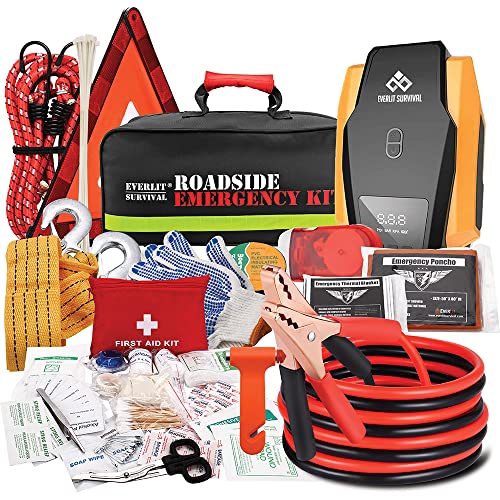
Everlit Survival Car Emergency Kit, Roadside Safety Tool Kit with Gloves,Digital Auto Air Compressor Tire Inflator, First Aid Kit, 12 Feet Jumper Cable, Tow Strap, Flashlight for Women, Men, Teenagers
- Roadside Emergency Kit: Comprehensive tools for roadside emergencies
- Digital Tire Inflator: Fast, auto shutoff air compressor
- LED Light & Nozzles: Illuminates and inflates in dark conditions
As an affiliate, we earn on qualifying purchases.
As an affiliate, we earn on qualifying purchases.

Power Strip Surge Protector – One Beat 6 Widely Outlets with 4 USB Ports (2 USB C), 5 Ft Extension Cord Flat Plug, Wall Mount Outlet Extender Small Power Strip for Travel Home Office College Dorm Room
- 10-in-1 Power Strip with USB C: 6 AC outlets, 2 USB, 2 USB C ports
- Fast Charging with Smart Technology: Auto-detect devices for quick charging
- Space-Saving 3-Side Design: Large outlets spaced 1.6 inches apart
As an affiliate, we earn on qualifying purchases.
As an affiliate, we earn on qualifying purchases.