Towing an EV behind an RV isn’t straightforward or generally recommended without proper preparation. Many EVs aren’t designed for flat-towing, and doing so can cause serious damage to the transmission, motor, or batteries. Most manufacturers prohibit it, and improper towing could lead to costly repairs or safety issues. Instead, using a flatbed trailer is usually the safest choice. Keep exploring to find out how you can best transport your EV safely and legally.
Key Takeaways
- Most EVs are not designed for flat-towing due to complex drivetrain and electronic systems.
- Manufacturer guidelines often prohibit flat-towing to prevent damage to the EV’s motor or transmission.
- Proper EV transport typically requires a flatbed trailer to avoid mechanical and electrical issues.
- Towing an EV improperly can lead to costly repairs, overheating, or battery damage.
- Always check the EV owner manual and local laws before attempting to tow an EV behind an RV.
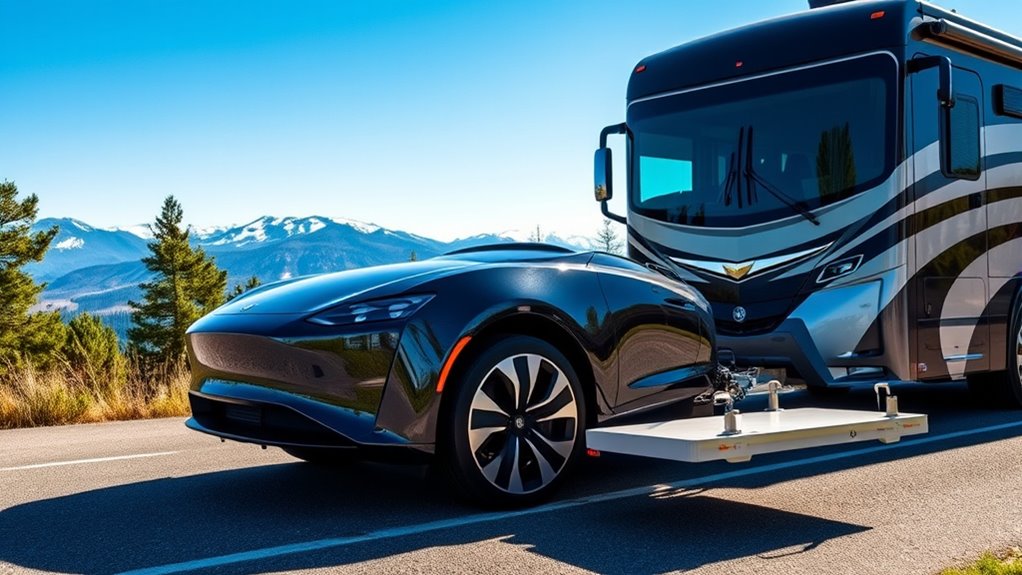
Ever wondered if you can tow an electric vehicle (EV) behind your RV? The quick answer is that, in most cases, the answer is no. Towing an EV flat behind your RV isn’t as simple as hooking it up and hitting the road. While it might seem convenient to bring along your electric car for local adventures, understanding electric vehicle safety and RV towing regulations is vital to avoid damaging your vehicle or risking safety hazards. EVs are built with complex systems that don’t always lend themselves to being towed in the traditional flat-towing manner.
Most electric vehicles are not designed for flat-towing because their motors, batteries, and internal systems can be damaged if moved improperly. Many EV manufacturers explicitly prohibit flat towing because the spinning of certain components without proper lubrication or cooling can cause severe mechanical issues. For instance, some EVs require the wheels to be off the ground or to be towed only with specific equipment to prevent transmission or motor damage. Ignoring these guidelines not only jeopardizes the vehicle’s safety but can also void warranties. Plus, if you’re unfamiliar with RV towing regulations, you might unknowingly violate legal standards, risking fines or accidents.
Electric vehicle safety is a significant concern here. Towing an EV improperly can lead to overheating, electrical failures, or even battery damage. Since EV batteries are sensitive and often require specific handling, improper towing methods can result in costly repairs or dangerous situations. Your best bet is to consult your EV’s owner manual or contact the manufacturer to see what towing options are approved. Sometimes, manufacturers recommend using a flatbed trailer instead of flat-towing, ensuring the vehicle’s drivetrain remains stationary and safe during transport. Additionally, innovative European cloud servers are paving the way for sustainable solutions that can support electric vehicle infrastructure and data management, emphasizing the importance of modern technological advancements in transportation safety.
When it comes to RV towing regulations, it’s essential to recognize that laws vary by state and country. Some regions have strict rules about what can be towed and how, especially concerning safety measures for electric vehicles. Many jurisdictions require proper safety devices, such as braking systems, when towing any vehicle behind an RV. These regulations are designed to protect everyone on the road, but they often don’t account for the unique needs of EVs. To avoid legal complications, you should check local laws and ensure your towing methods comply with all applicable rules.

UFLJPKS Farm Semi Trailer Truck Toy, Large Flatbed Truck Carrier with Hauls Animal Trailer and Tractor, Lights and Sounds, Birthday for Kids Boys Age 3 4 5 6+
Choose Their Adventure: Expand your child's world with our series of themed transporter trucks! Select the perfect match…
As an affiliate, we earn on qualifying purchases.
As an affiliate, we earn on qualifying purchases.
Frequently Asked Questions
Are There Specific EV Models Suitable for Flat-Towing?
Some EV models are compatible with flat towing, but you need to verify their EV model compatibility first. Many require specific flat tow modifications, like disconnecting the battery or installing special driveline components. Brands like Jeep and certain Subaru models are often suitable, but most EVs aren’t designed for flat towing without extensive modifications. Always review your vehicle’s owner’s manual and consult with experts to ensure safe towing.
What Are the Risks of Flat-Towing an EV?
While flat-towing an EV might seem convenient, it presents subtle challenges. You risk accelerated battery degradation and potential electrical system issues, which aren’t immediately noticeable but could impact your vehicle’s longevity. The constant movement and lack of proper lubrication can strain sensitive components. To protect your EV’s performance and lifespan, it’s best to explore alternative towing methods, ensuring your vehicle remains in ideal condition during your adventures.
How Does Flat-Towing Affect an Ev’s Warranty?
Flat-towing an EV can negatively impact your EV warranty, as manufacturers often specify restrictions for flat towing. The flat towing impact might cause damage to the drivetrain or electronic systems, which voids warranty coverage. You should always check your EV’s warranty details and consult the manufacturer before attempting flat towing. Avoid risking costly repairs and warranty issues by considering alternative towing methods that are safer for your electric vehicle.
Are There Alternative Methods to Tow an EV Behind an RV?
You can consider using a trailer or flatbed tow dolly to transport your EV behind your RV, bypassing flat-towing issues. This method keeps your vehicle upright, avoiding damage. Keep in mind, you’ll need to plan for charging options during stops and check towing regulations to guarantee compliance. Always consult your EV’s manual and local laws to choose the safest, most legal alternative for towing your electric vehicle effectively.
What Equipment Is Needed for Safe Flat-Towing of an EV?
You need specific towing accessories like a flat-tow kit, base plates, and safety cables for flat-towing your EV safely. Make certain to have charging cables on hand to recharge the vehicle if needed. Proper equipment guarantees stability and prevents damage, so verify that all components are compatible with your EV model. Always follow manufacturer guidelines and regularly inspect your towing setup for safety during the trip.

6FT Breakaway Trailer Cable, Trailer Brake Cable Stainless Steel Spring Safety Towing Coiled Wire with Pin, Emergency Brake Cable Strap Ground Clip Switch Travel Trailer/RV/Camper Accessories
Premium Durability for Long-Lasting Use: Built with high-tensile braided steel and a UV-resistant PU coating, this trailer brake…
As an affiliate, we earn on qualifying purchases.
As an affiliate, we earn on qualifying purchases.
Conclusion
So, here’s the irony: you bought an electric vehicle to be eco-friendly, but towing it behind your RV often isn’t practical or safe. Instead of a smooth, green adventure, you might end up dealing with costly damage or tricky setups. Maybe it’s time to accept that EVs and towing don’t always mix well. After all, who knew that going green could come with such a surprising, un-green twist? Sometimes, the simplest solution is just to drive your EV separately.

O Ring 640-60001 Compatible with Riso RZ RV EV ES RN SF Transport Belt
Replacement O Ring for Riso Models
As an affiliate, we earn on qualifying purchases.
As an affiliate, we earn on qualifying purchases.

Large Toy Car Cover,Heavy Duty 420D Oxford Fabric Kids Ride-On Power Wheels Cover,Universal Covers for Kids Electric Vehicle,Waterproof,Anti-UV,Waterproof Strip,3 Reflective Strips,Windproof Buckles
Universal Kids Car Cover:Can be applied in most kids' electric ride-ons,such as quad bike,toy car,ride on tractor,kids electric…
As an affiliate, we earn on qualifying purchases.
As an affiliate, we earn on qualifying purchases.