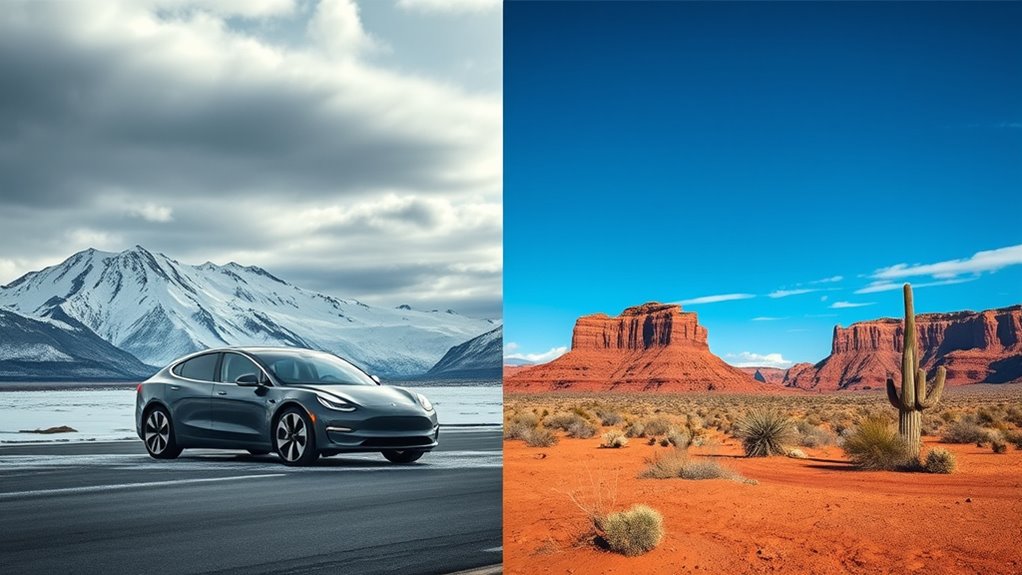

Owning an EV in Alaska or Arizona means facing very different climate impacts. In Alaska, cold winters reduce your battery’s range and increase charging times, so preconditioning and careful route planning are essential. In Arizona, intense heat can degrade your battery over time and affect performance, especially during summer drives. Both states demand seasonal adjustments to keep your EV running smoothly. Want to discover tips that help you maximize your EV experience in these climates? Keep exploring to learn more.
Key Takeaways
- Cold Alaskan winters reduce EV battery efficiency and range, requiring preconditioning and extra planning for long trips.
- Arizona’s extreme heat accelerates battery degradation and decreases range, especially during summer fast charging.
- Alaska’s limited charging infrastructure necessitates careful route planning, whereas Arizona offers more accessible charging stations.
- Seasonal weather impacts driving conditions in Alaska, demanding cautious winter driving; in Arizona, managing heat-related stress on batteries is key.
- Climate influences vehicle maintenance needs, with Alaska facing weather-related wear and Arizona benefiting from corrosion-resistant conditions.

Owning an electric vehicle (EV) in Alaska versus Arizona presents vastly different experiences due to their contrasting climates and infrastructure. In Alaska, harsh winters and extreme cold temperatures challenge your ability to keep your EV charged and ready for seasonal driving. Cold weather affects battery performance, decreasing range and increasing charging times. You’ll need to plan carefully, especially during the winter months, since the charging infrastructure isn’t as widespread or accessible as in more populated areas. Many charging stations are limited to urban centers, making long trips tricky unless you map out your route and charging stops in advance. When temperatures plummet, you might find yourself relying more on preconditioning your vehicle while still plugged in, to warm up the battery and cabin before heading out. This extra step can be vital for maintaining range and avoiding inconvenience during winter adventures. Additionally, extreme weather conditions can impact vehicle longevity and maintenance needs, requiring EV owners to be extra vigilant about vehicle care.
In Arizona, the climate is much milder, but the intense summer heat introduces its own set of challenges. The hot temperatures can cause battery degradation over time and reduce overall range, so you’ll want to manage your charging habits carefully. Fortunately, charging infrastructure is more developed in urban and suburban areas, so finding a station for seasonal driving is usually straightforward. During the cooler months, your EV’s range improves considerably, making longer drives more feasible without frequent recharges. The dry climate also helps prevent issues like corrosion, which can sometimes plague EV components in wetter regions. However, you still need to be mindful of extreme heat, especially if you’re relying on fast chargers that generate additional heat during operation. Staying ahead by monitoring your battery health and planning for charging stops ensures you won’t get stranded, whether you’re heading into the mountains or exploring desert landscapes.
Both states demand that you adapt your driving habits to seasonal conditions. In Alaska, winter driving requires extra caution, and you’ll often need to precondition your vehicle and plan for longer charging times. Conversely, in Arizona, summer heat can diminish your range quickly, prompting you to schedule charging sessions during cooler parts of the day or at night. The key difference lies in the availability and reliability of charging infrastructure, which plays a fundamental role in your overall experience. Alaska’s sparse network, combined with seasonal challenges, demands more planning, while Arizona’s more developed network and milder seasons make EV ownership more convenient, but you still need to account for extreme weather effects on your vehicle’s performance. Ultimately, understanding how climate influences charging infrastructure and seasonal driving helps you maximize your EV’s potential in either state.
Frequently Asked Questions
How Does Cold Weather Impact EV Battery Life Long-Term?
Cold weather can accelerate battery degradation over time, reducing your EV’s range and performance. When temperatures drop, your vehicle’s thermal management system works harder to keep the battery warm, which can drain energy faster. Consistently exposed to cold, your battery’s long-term health may decline more quickly, so it’s important to keep your EV in a garage or use pre-conditioning features to help maintain ideal battery temperature and extend its lifespan.
Are There Specific EV Models Better Suited for Extreme Climates?
Yes, some climate-specific EV models are better suited for extreme climates. Look for vehicles with advanced battery thermal management systems, which help maintain ideal battery temperatures in harsh conditions. For cold climates like Alaska, choose models designed for better cold weather performance, while in hot Arizona, opt for those with superior heat dissipation features. Selecting climate-specific EV models guarantees your battery stays healthy and your driving experience remains dependable.
How Do Charging Station Availability and Infrastructure Differ?
Ever wonder if charging stations are as rare as a snowstorm in Phoenix? In Alaska, your charging network is pretty much a mythical creature, with sparse infrastructure development making long trips a gamble. Meanwhile, in Arizona, infrastructure is booming, and charging stations are everywhere, like desert cacti. So, your EV adventures depend heavily on the charging network’s reach, or lack thereof, in your chosen climate.
What Maintenance Challenges Are Unique to Each Climate?
In colder Alaskan climates, you’ll face challenges like winter corrosion and road salt damage, which can affect your EV’s battery and undercarriage. Regular inspections and protective coatings help mitigate these issues. In Arizona’s hot, dry climate, you’ll deal with battery overheating and thermal stress, so ensuring proper cooling systems and avoiding prolonged sun exposure are key. Each climate demands tailored maintenance to keep your EV running smoothly.
Does Climate Influence EV Insurance Costs or Coverage Options?
Climate definitely influences your EV insurance costs and coverage options. In harsher climates like Alaska, insurance premiums tend to be higher due to increased risks of cold-related issues, while coverage limitations may be stricter for battery damage. Conversely, in Arizona, extreme heat can raise premiums too, but coverage options might differ. Always review your policy carefully, as climate impacts both costs and what’s included, ensuring you’re protected no matter the weather.
Conclusion
Owning an EV in Alaska or Arizona offers unique challenges and rewards. In Alaska, temperatures can drop as low as -40°F, reducing battery efficiency by up to 40%, but with proper planning, you can still enjoy eco-friendly driving. Meanwhile, Arizona’s scorching summers can cause similar battery issues. Surprisingly, a recent study shows EV owners in colder climates experience a 20% decrease in range during winter months, highlighting how climate truly impacts your driving experience regardless of where you are.