You should unplug at 80% to help protect your battery’s health and reduce stress caused by fast charging. Stopping at this level also supports better station availability for others, keeping shared chargers free for busy periods. By unplugging early, you contribute to a more efficient and fair charging environment, preventing unnecessary wait times. To learn more about why this has become new fast-charge etiquette, keep exploring these best practices.
Key Takeaways
- Unplugting at 80% reduces battery strain and prolongs EV battery lifespan.
- Limiting charge to 80% helps minimize heat and stress during fast charging.
- Unplugging at 80% promotes fair access at busy charging stations for all users.
- Properly ending charges early supports community resource efficiency and reduces wait times.
- Adopting this practice aligns with sustainable, responsible EV charging etiquette.

Fast-charging your electric vehicle is convenient, but to preserve battery health and ensure fair use at charging stations, it’s best to unplug once your battery reaches around 80%. This practice supports better battery longevity and helps you develop responsible charging habits. When you frequently let your battery charge to 100%, it can cause unnecessary stress on the battery cells, accelerating capacity loss over time. By stopping at 80%, you reduce the risk of long-term degradation, allowing your EV’s battery to stay healthier for longer. This isn’t just about protecting your vehicle; it’s about fostering a more equitable use of shared charging resources.
Unplug your EV at 80% to protect battery health and promote fair, shared charging station use.
Your charging habits have a direct impact on your vehicle’s overall lifespan. Fast chargers supply high power levels, which can generate heat and strain the battery if used excessively beyond the *ideal* charge level. Unplugging at around 80% minimizes this strain, helping to maintain consistent battery performance. Over time, this approach can mean fewer battery replacements and lower maintenance costs, ultimately saving you money. It also ensures that the charging station remains available for others, especially during busy times when everyone’s in a hurry.
Adopting this habit also aligns with the emerging fast-charge etiquette. Many EV owners and charging station operators now recognize that ending the charge at 80% is considerate and sustainable. It reduces wait times for others and promotes a more communal approach to shared resources. Instead of leaving your vehicle plugged in unnecessarily, unplug promptly once you hit that 80% mark. This small act can ripple outward, creating a more efficient charging ecosystem where everyone benefits from quicker turnaround and healthier batteries.
Furthermore, understanding the importance of battery longevity encourages you to view charging as more than just a quick top-up. It’s an integral part of your vehicle’s overall care routine. By consciously choosing to unplug at 80%, you’re making a smart decision that respects your vehicle’s design and longevity. Additionally, proper charging practices can help optimize your battery’s performance over time. Over time, this consistent practice becomes second nature, shaping your habits into ones that prioritize both your vehicle’s health and community fairness.
In essence, unplugging at 80% isn’t just a personal preference; it’s a responsible way to approach fast charging. It helps extend your battery’s life, supports fair usage at public stations, and promotes better charging etiquette for all EV drivers. So, next time you’re at a fast-charging station, remember that a simple, mindful step like unplugging at 80% can make a significant difference in the longevity of your vehicle and the efficiency of the charging network.

Autel MaxiCharger Level 2 Electric Vehicle (EV) Charger, up to 80 Amp Fast Charging EV Charger Level 2, Integrated Cloud with AI, Indoor/Outdoor Charging Stations J1772, Hardwired
- Smart App Control: Schedule, monitor, and control remotely
- High-Speed Charging: Up to 80A for rapid EV charging
- Long-Range Performance: Adds 70 miles per hour of charge
As an affiliate, we earn on qualifying purchases.
As an affiliate, we earn on qualifying purchases.
Frequently Asked Questions
Does Unplugging at 80% Extend Battery Lifespan Significantly?
Unplugging at 80% can help reduce battery degradation over time. By limiting charge cycles and preventing constant high-voltage exposure, you extend your battery’s lifespan. While the impact may be subtle, consistently stopping at 80% minimizes stress on the battery, leading to less capacity loss in the long run. So, if you want your device to stay healthy longer, unplug at 80% whenever possible.
How Do Different EV Models Respond to Fast-Charging at 80%?
Think of your EV as a race car, finely tuned for performance. Different models respond uniquely to fast-charging at 80% because of variations in battery chemistry and charging compatibility. Some handle rapid top-ups smoothly, maintaining longevity, while others may experience more stress. Always check your vehicle’s specifications to optimize battery health, ensuring your car’s performance stays race-ready every time you hit the road.
Is There a Risk of Damaging the Charger or Vehicle When Unplugging Early?
Unplugging early generally doesn’t risk charger safety or your vehicle’s warranty if you follow proper procedures. Modern chargers are designed with safety features to prevent damage, and most EVs can handle stopping a charge at 80%. To protect your vehicle and guarantee warranty coverage, always use recommended charging practices and avoid forcing connections or disconnections. This helps keep both your charger and vehicle in ideal condition.
How Does Charging Etiquette Vary Across Different Charging Station Types?
Did you know that over 60% of EV owners adapt their charging etiquette based on charger station types? At fast-charging stations, it’s polite to unplug promptly once your vehicle reaches 80%, freeing the charger for others. Conversely, at slower or residential stations, you can take more time. Recognizing etiquette variations across charger station types helps make certain everyone gets fair access and maintains a respectful charging environment.
What Are the Environmental Impacts of Frequent Partial Charging?
Frequent partial charging can impact the environment through increased energy consumption and battery recycling challenges. When you often charge partially, batteries may degrade faster, leading to more frequent replacements and higher waste. This cycle stresses battery recycling systems and consumes extra energy during manufacturing and disposal. To minimize this impact, try to charge your vehicle efficiently, avoid overuse of fast-charging, and support sustainable recycling programs, reducing your overall environmental footprint.

EZRED BMK1914 5-Piece Battery Maintenance Kit
- Complete Battery Maintenance Kit: Includes essential tools for battery service
- Portable Roll-Up Storage Case: Easy to carry and store tools
- Durable, Ergonomic Tools: Designed for comfort and longevity
As an affiliate, we earn on qualifying purchases.
As an affiliate, we earn on qualifying purchases.
Conclusion
Just like the wise old owl knowing when to rest, unplugging at 80% keeps your battery healthy and the charging station fair. By practicing this simple etiquette, you’re not only extending your EV’s lifespan but also respecting others waiting in line—think of it as a modern-day parable of balance. So, next time you charge, remember: a little patience and mindful unplugging can make a world of difference, echoing timeless lessons of moderation and consideration.
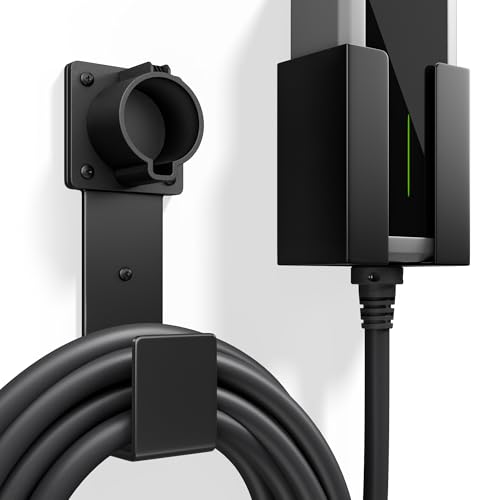
EV Charger Holder Wall Mount – J1772 Cable Organizer & Nozzle Holster with Storage Box for Electric Vehicle Charging
- Compatible with J1772 connectors: Securely holds standard charging connectors
- Durable stainless steel build: Rust-resistant and long-lasting support
- Cable organization hook: Prevents tangles and cable strain
As an affiliate, we earn on qualifying purchases.
As an affiliate, we earn on qualifying purchases.

2026 Upgraded Level 1&2 Portable EV Charger, 8-16Amp AdjustableCurrent & Timer, 110V-240V, NEMA 5-15 & 6-20 Plug, 21Ft EV Charging Cable, J1772 Electric Car Charger for All PHEV/EV Charging Cord
- Intelligent Charging with Smart Scheduling: Adjustable current and 1-12 hour delay timer
- Universal Compatibility: Compatible with all SAE J1772 EVs and PHEVs
- Fast Charging Speeds: Up to 4× faster than standard chargers
As an affiliate, we earn on qualifying purchases.
As an affiliate, we earn on qualifying purchases.