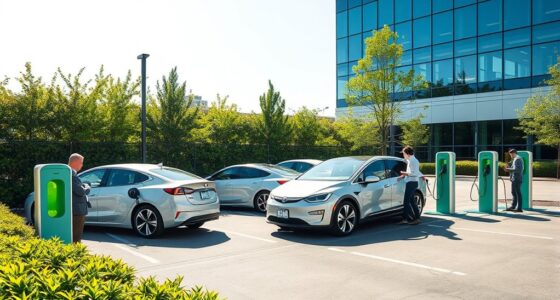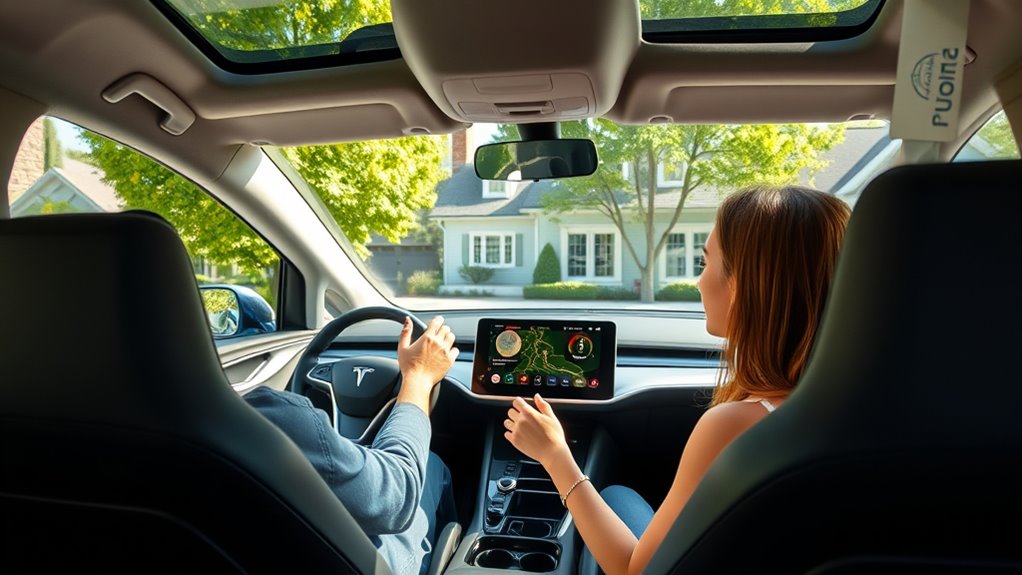

When teaching someone to drive an EV, start by explaining its unique features like regenerative braking and instant torque. Encourage smooth acceleration and deceleration to maximize battery health and range. Show them how to locate and use charging stations, especially for longer trips. Help them get comfortable with the vehicle’s responsiveness and quiet operation. If you keep guiding them through these basics, they’ll gain confidence and become proficient in EV driving quickly.

Get backup power and energy gear delivered free with Prime
- Fast, free delivery on millions of items
- Prime Video, Amazon Music and more included
- Member-only deals all year
Key Takeaways
- Explain EV driving differences, like instant torque and regenerative braking, to help new drivers adapt smoothly.
- Emphasize gentle acceleration and deceleration to optimize battery health and driving comfort.
- Introduce how to locate and use charging stations, including planning routes around charging needs.
- Teach proper charging habits, such as avoiding full charges and keeping the battery cool during recharge.
- Highlight routine maintenance and battery care tips to ensure longevity and confidence in EV operation.

Ever wondered how to teach someone to drive an electric vehicle (EV)? It’s a rewarding process, but it’s also different from traditional gas-powered cars in several ways. One of the first things you’ll want to cover is how EV charging works. Unlike filling up a gas tank, charging an EV involves understanding various charging stations and the importance of maintaining a good charging routine. Explain that most EV owners rely on home chargers for daily use, which makes charging as simple as plugging in at night. For longer trips, public fast chargers are available, allowing quick top-ups along the way. Make sure your learner understands how to locate these chargers using apps or onboard navigation, and emphasize the importance of planning routes around charging stations to avoid range anxiety.
Battery maintenance is another critical aspect that differs from traditional vehicles. Teach your student that EV batteries are designed to last many years, but they do require some care to optimize longevity. Encourage them to keep the battery between 20% and 80% charge whenever possible instead of letting it drain completely or stay fully charged for long periods. This helps prevent unnecessary wear. Explain that frequent rapid charging, while convenient, can accelerate battery degradation if overused, so it’s best to reserve fast chargers for urgent situations. Regularly monitoring the vehicle’s battery health through the EV’s onboard system is also important, so show them how to access and interpret these diagnostics. Keeping the battery cool during charging and not exposing the car to extreme temperatures can also help preserve its condition over time. Additionally, understanding the importance of battery management systems can empower your learner to better care for their EV’s health in the long run.
As you guide your newbie through the driving experience, remind them that EVs respond differently—particularly in how they accelerate and brake. Because of their instant torque, they often feel more responsive, so encourage smooth, gradual acceleration and deceleration. When it comes to battery maintenance, stress that gentle driving habits not only improve range but also extend the battery’s lifespan. Also, educate them on the importance of scheduled maintenance checks, even if EVs require less upkeep overall. Point out that staying aware of their vehicle’s charging habits and battery health ultimately saves time, money, and frustration down the line. With patience and clear instructions, you’ll help your learner become confident in handling an EV’s unique aspects, making their transition from gas-powered cars seamless and enjoyable.
As an affiliate, we earn on qualifying purchases.
Frequently Asked Questions
How Do I Explain EV Charging to a New Driver?
To explain EV charging, tell them charging stations are like gas stations but for electric cars, and they’re easy to find online or via apps. Show how plugging into a charging station replenishes the battery, which is vital for maintaining its lifespan. Emphasize that charging is simple—plug in, wait a bit, and unplug when full. This helps them understand that EVs are convenient and cost-effective for everyday driving.
What Are Common Misconceptions About Driving Electric Vehicles?
You might think EVs need a lot of battery maintenance, but they actually require less upkeep than gas cars. Many believe charging infrastructure is limited, yet networks are expanding rapidly, making charging convenient. Some assume EVs can’t handle long trips, but with fast chargers, you can travel comfortably. Remember, electric vehicles are reliable, and understanding these misconceptions helps you enjoy the benefits of driving electric confidently.
How Can I Help a Beginner Understand EV Range Anxiety?
To help a beginner understand EV range anxiety, explain that with proper EV maintenance and planning, they won’t run out of juice. Encourage them to learn charging etiquette, like using public chargers efficiently and keeping track of battery levels. Remind them that most trips are well within their vehicle’s range, and planning routes with charging stations guarantees peace of mind. This builds confidence and eases concerns about range limitations.
What Safety Tips Are Unique to EVS?
Safety specifics spark special awareness in EVs. You should stress battery safety by avoiding punctures and extreme temperatures, which could cause hazards. Encourage proper charging etiquette, like using designated chargers and unplugging carefully. Remind newbies to keep a safe distance when charging and avoid tampering with charging ports. These mindful measures help maintain safety, prevent mishaps, and keep their EV experience smooth, secure, and satisfying.
How Do I Teach Someone to Use Regenerative Braking Effectively?
To teach someone to use regenerative braking effectively, start by explaining its role in energy recovery and how it differs from traditional braking. Encourage smooth, gradual braking techniques to maximize energy recovery without startling the driver. Remind them to anticipate stops early, easing off the accelerator and gently pressing the brake pedal. Practice in various driving scenarios, so they become comfortable with the feel of regenerative braking and optimize its benefits.
public fast charger for electric vehicles
As an affiliate, we earn on qualifying purchases.
As an affiliate, we earn on qualifying purchases.
Conclusion
Remember, teaching an EV is about more than just handling the pedals—it’s about understanding its unique features. Did you know that 60% of new EV owners feel more confident after just a week of proper guidance? By staying patient and emphasizing key differences, you’ll help your newbie driver shift smoothly. With a little practice, they’ll be confidently steering electric roads in no time—making the switch to cleaner driving an exciting and achievable journey for both of you.
As an affiliate, we earn on qualifying purchases.
As an affiliate, we earn on qualifying purchases.
Columbus Day / Indigenous Peoples' Day Picks
long weekend sales
As an affiliate, we earn on qualifying purchases.