Regenerative braking helps reduce wear and tear on your EV’s brake system by converting kinetic energy into electrical energy, easing the load on traditional brake components. This process lessens friction, heat, and mechanical stress on brake pads and rotors, extending their lifespan. As a result, your brakes stay in better condition longer, lowering maintenance needs. If you’re curious about how to keep your brake system in top shape, there’s more to uncover further on.

Get backup power and energy gear delivered free with Prime
- Fast, free delivery on millions of items
- Prime Video, Amazon Music and more included
- Member-only deals all year
Key Takeaways
- Regenerative braking reduces friction and heat, decreasing wear on brake pads and rotors.
- It lessens mechanical stress on brake components, extending their lifespan.
- Lower brake usage results in less brake fluid degradation and fewer repairs.
- Proper maintenance enhances regenerative braking efficiency, further minimizing component wear.
- Overall, regenerative braking significantly diminishes wear and tear compared to traditional braking systems.
How Regenerative Braking Works in Electric Vehicles
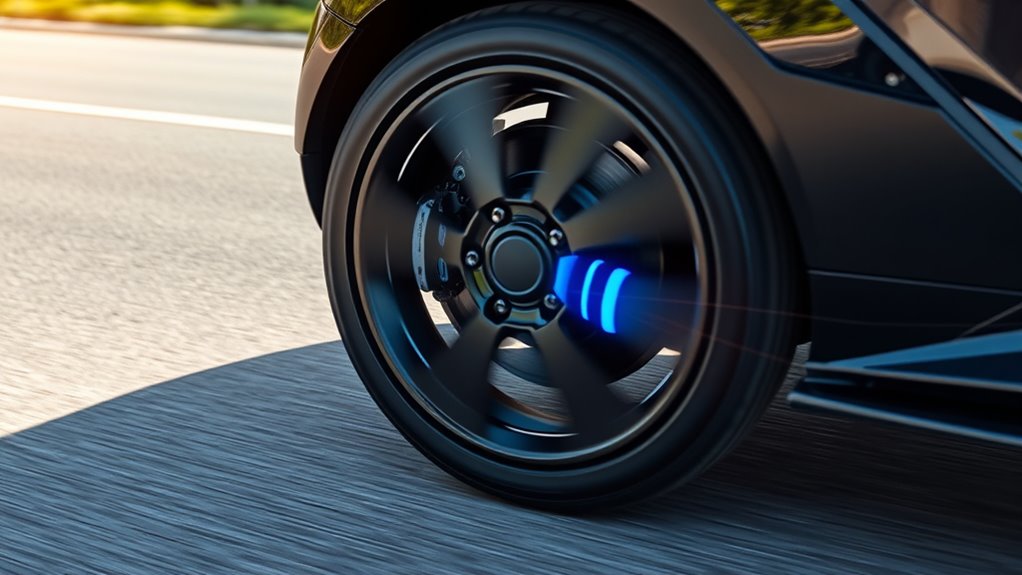
Have you ever wondered how electric vehicles recover energy when you brake? When you press the brake pedal, the regenerative braking system activates, converting the vehicle’s kinetic energy into electrical energy. This process is called energy recovery, and it feeds the electricity back into the battery, helping to extend your driving range. The system works efficiently by using an electric motor as a generator, which slows the vehicle while generating power. This not only recovers energy that would otherwise be lost as heat in traditional brakes but also improves overall system efficiency. As a result, your EV not only conserves energy but also reduces wear on brake components. Understanding this process highlights how regenerative braking maximizes energy use and enhances your vehicle’s performance.
The Impact of Regenerative Braking on Brake System Components
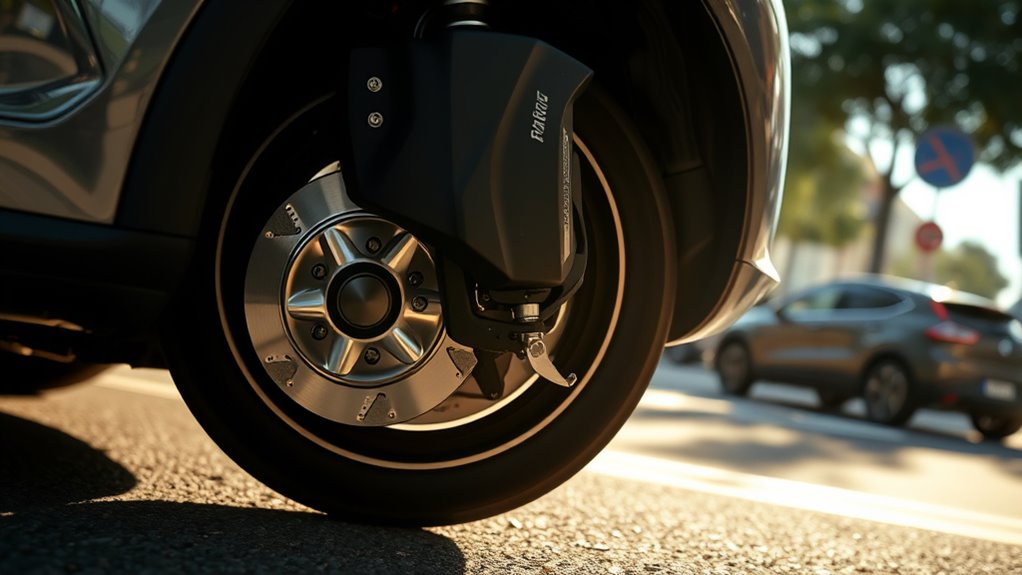
Regenerative braking considerably affects traditional brake system components by reducing the wear and tear on friction brakes. Since the electric motor handles most deceleration, brake pads experience less friction, extending their lifespan. This reduction in physical brake engagement also leads to less heat buildup, which helps prevent brake fluid degradation over time. Additionally, the stress on brake pad materials diminishes, lowering the risk of glazing or material breakdown. Moreover, thermal management becomes less critical, further enhancing brake system durability. Proper system maintenance is still essential to ensure optimal performance, but overall, regenerative braking lessens the strain on key brake system components, leading to reduced maintenance needs and improved longevity. This shift not only preserves brake components but also enhances overall vehicle efficiency. As a result, component longevity can be significantly improved, providing savings on repairs and replacements over the vehicle’s lifespan. Incorporating regenerative braking technology can also contribute to better energy efficiency, making electric vehicles more sustainable in the long run. Additionally, understanding brake system design helps in optimizing maintenance schedules and ensuring safety.
Comparing Wear and Tear: Regenerative vs. Traditional Braking
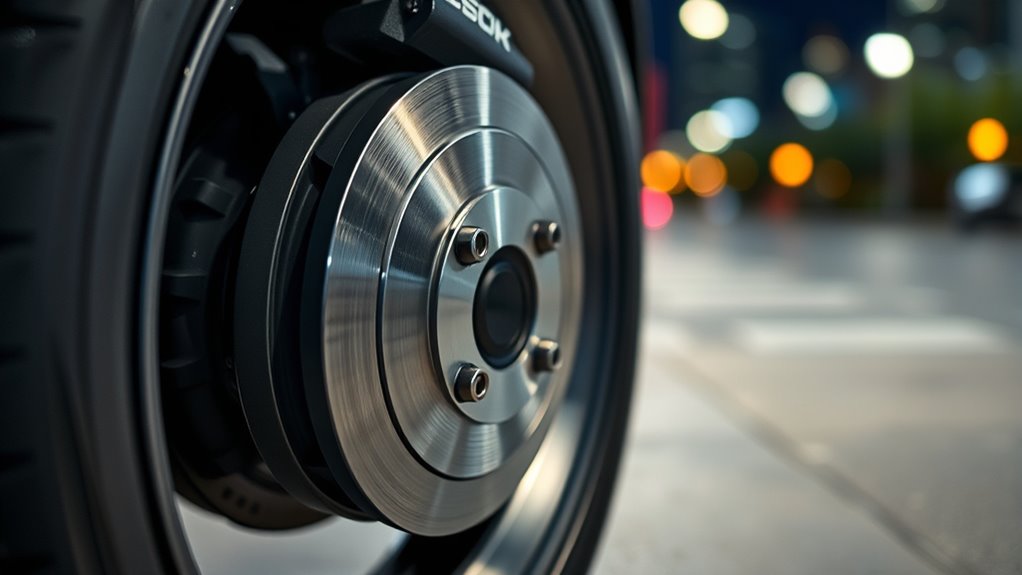
When comparing wear and tear, regenerative braking considerably reduces the physical stress on brake components compared to traditional systems. Because it captures energy during deceleration, your brake pads experience less friction and heat, extending their lifespan. This energy recovery process not only minimizes mechanical wear but also enhances overall vehicle efficiency. Additionally, regenerative braking supports better battery health by optimizing energy recovery, which enhances charging efficiency over time. Instead of relying solely on friction brakes, your EV uses electricity to slow down, conserving energy and reducing the frequency of brake repairs. Overall, regenerative braking not only protects your brake components but also contributes to more efficient energy use, making your vehicle more reliable and cost-effective in the long run.
Factors Influencing Brake System Longevity in EVs
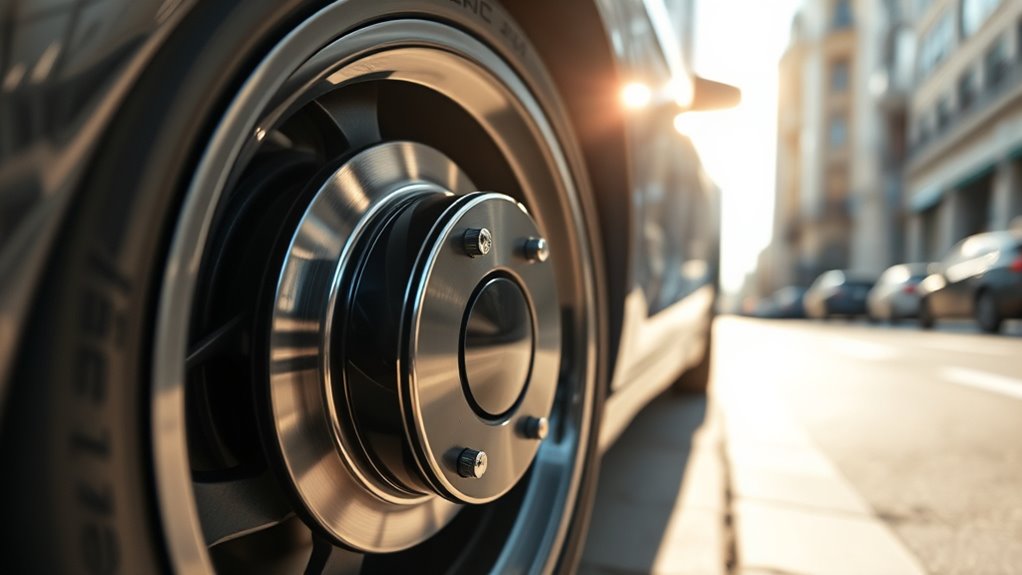
Several factors influence how long your EV’s brake system lasts, with driving habits playing a significant role. Aggressive acceleration and hard braking increase wear, while smooth driving extends brake life. Battery degradation can impact regenerative braking efficiency, meaning less energy recovery and more reliance on traditional brakes, which may hasten wear. Tire wear also affects braking performance; worn tires reduce traction and can cause uneven brake force, leading to uneven brake system stress. Consistent maintenance of tires and monitoring battery health help optimize braking efficiency and reduce unnecessary strain on your brake components. Additionally, proper driving techniques such as anticipating stops and avoiding sudden maneuvers can significantly reduce brake wear. Maintaining optimal brake system health through regular inspections can further prolong component life, as neglected brakes are more prone to premature failure. Moreover, understanding the interplay between regenerative and mechanical braking can help drivers adopt methods that maximize brake system longevity. Ultimately, your driving style and vehicle maintenance directly shape the longevity of your EV’s brake system, making mindful driving and regular checks essential.
Maintenance Considerations for EV Brake Systems

Maintaining your EV’s brake system is key to ensuring it performs reliably over time. Proper upkeep helps preserve rotor efficiency and prevents costly repairs. First, regularly check and replace the brake fluid, as contaminated fluid can reduce braking effectiveness and cause corrosion. Second, inspect the brake pads and rotors for uneven wear or damage, ensuring smooth contact and ideal rotor performance. Third, monitor brake system performance, especially if you notice any decrease in stopping power or unusual noises, which could indicate the need for maintenance. Since regenerative braking reduces wear on traditional brake components, you might see less frequent service, but these checks are still essential to keep your brake system functioning safely and efficiently. Additionally, understanding simple strategies can help maintain your brake system’s longevity and overall safety. Incorporating knowledge about the impact of regenerative braking can further optimize maintenance routines and extend component lifespan, especially considering the notable brands that design durable components for EVs. Regularly reviewing brake system diagnostics can also help identify potential issues early and prevent more significant repairs down the line. Moreover, adopting preventive maintenance practices can further enhance braking system reliability in your EV.
Practical Tips to Maximize Brake System Lifespan
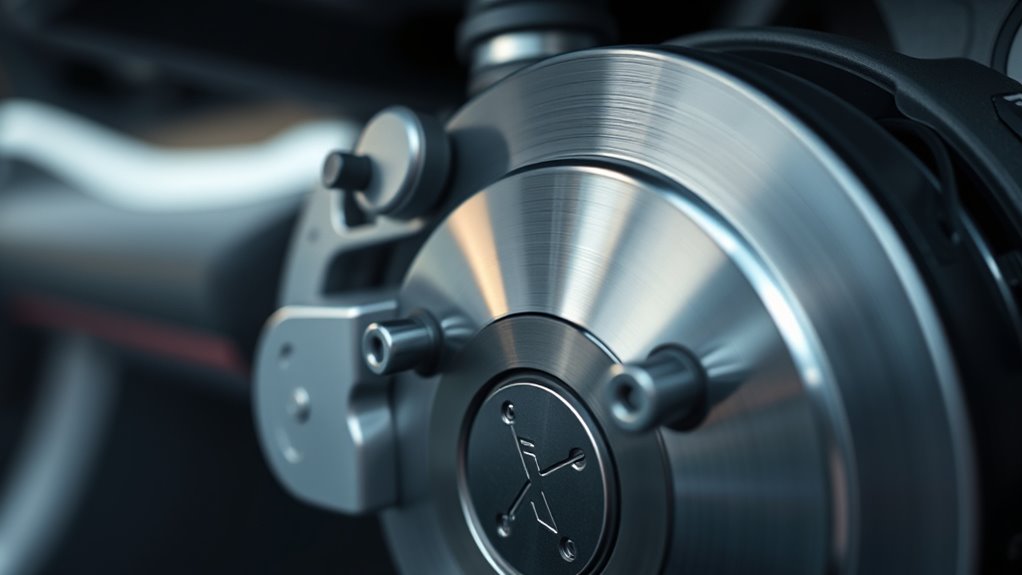
To extend your brake system’s lifespan, start with regular inspections to catch issues early. Adopt proper driving habits, like gentle braking and avoiding sudden stops, to reduce wear. Also, maintain your brake components as recommended to guarantee ideal performance over time. Utilizing professional equipment for diagnostics can help identify potential problems before they become costly repairs. Additionally, understanding regenerative braking and its impact on wear can help optimize your vehicle’s overall maintenance strategy. Research shows that smart braking systems can further decrease brake wear by adjusting braking force based on driving conditions, contributing to longer-lasting brake components. Incorporating sustainable materials in your vehicle’s design can also support eco-friendly maintenance practices.
Regular Brake Inspections
Regular brake inspections are essential for guaranteeing your braking system remains reliable and safe. These checks help identify issues early, preserving brake pad integrity and preventing costly repairs. During inspections, focus on: 1. Evaluating brake pad thickness and replacing worn components to maintain electric motor efficiency. 2. Checking for uneven wear that could signal alignment problems or the need for realignment. 3. Inspecting brake fluid levels and sealing systems, which support overall brake performance and safety. Regularly maintaining brakes also supports eco-friendly practices like battery recycling, reducing waste. Incorporating preventive maintenance into your routine can help extend the lifespan of your brake components and ensure optimal performance. Keeping your braking system in top shape maximizes regenerative braking benefits, minimizes wear, and enhances overall vehicle longevity. This proactive approach ensures safer driving and a more sustainable EV ownership experience. Proper brake maintenance can also help prevent the bitterness caused by overuse or poor quality components, ensuring a smoother driving experience. Additionally, understanding electric vehicle brake systems can help you better diagnose potential issues early. Regular inspections contribute to the overall efficiency of regenerative braking, which can reduce brake wear and improve energy recovery. Understanding how brake system components interact can further help you optimize maintenance routines and prevent unexpected failures.
Proper Driving Habits
Adopting proper driving habits can considerably extend the lifespan of your brake system, especially in electric vehicles that rely on regenerative braking. Avoid sudden stops and acceleration; smooth driving allows regenerative braking to work efficiently, reducing wear on brake components. Keep your tire pressure at the recommended level to improve overall vehicle control and braking performance. If your EV has autonomous driving features, use them wisely—gentle deceleration helps preserve brake life. Consistent driving habits not only maximize regenerative braking benefits but also minimize unnecessary brake usage.
| Tip | Benefit |
|---|---|
| Maintain proper tire pressure | Enhances braking efficiency and safety |
| Use autonomous driving cautiously | Promotes smooth deceleration and reduces wear |
| Drive smoothly, avoid abrupt stops | Extends brake system lifespan |
| Plan routes to minimize stops | Less brake usage, more regenerative braking |
Maintain Brake Components
Maintaining brake components properly is essential for guaranteeing your braking system performs reliably and lasts longer. Regular inspections help identify wear early, preventing costly repairs. To maximize your brake system’s lifespan, focus on these three key areas:
- Keep your tires properly aligned to reduce uneven brake wear and improve overall safety.
- Ensure your battery cooling system functions at its best, as overheating can indirectly affect brake performance through temperature-related issues.
- Replace brake pads before they become excessively worn, maintaining consistent braking and preventing damage to rotors.
Frequently Asked Questions
Does Regenerative Braking Improve Overall Vehicle Efficiency?
Yes, regenerative braking improves your vehicle’s overall efficiency by capturing energy during braking for reuse, which enhances energy recovery. This system reduces brake wear because it relies less on traditional brake components, decreasing maintenance needs. As a result, your EV conserves battery power more effectively and minimizes the need for frequent brake repairs, making your driving experience more efficient and cost-effective over time.
Can Regenerative Braking Fully Replace Traditional Braking Systems?
Regenerative braking can’t fully substitute traditional braking systems because of regenerative limitations and braking system compatibility. While it helps recover energy and reduces wear on brake components, it doesn’t provide enough stopping power in all situations, especially abrupt stops or emergency braking. You still need conventional brakes to ensure safety and effective stopping, making regenerative braking a helpful supplement rather than a complete replacement for traditional systems.
How Does Climate Affect Regenerative Braking Performance?
Climate impact and temperature effects play a subtle role in regenerative braking performance. Cold weather can slow down energy recovery, making the system less efficient, while hot climates may cause components to heat up, affecting overall responsiveness. You might notice less smooth deceleration in extreme temperatures. Staying mindful of climate impact helps optimize your EV’s regenerative braking, ensuring it remains effective and reduces wear on traditional braking components.
Are There Specific Driving Habits That Enhance Brake System Longevity?
You can enhance your brake system’s longevity by adopting a smooth driving style, avoiding abrupt stops and rapid accelerations. Pay attention to road conditions—slowing down earlier on hills and rough surfaces reduces strain on your brakes. Using regenerative braking effectively, along with gentle driving habits, helps minimize wear and tear, ensuring your EV’s brake system stays in better shape longer.
Does Regenerative Braking Increase the Risk of Brake System Failure?
You might think regenerative braking risks brake system failure, but ironically, it often reduces it. By lessening hydraulic brake wear, it prevents brake system corrosion and extends brake life. Since regenerative braking handles most stopping power, your traditional brakes stay healthier longer. Just guarantee your system’s properly maintained, and you’ll enjoy fewer worries about brake failure, not more. So, no, regenerative braking doesn’t increase the risk; it actually safeguards your brakes.
Conclusion
While regenerative braking does help reduce wear on your EV’s brake components, it’s not a complete substitute for traditional braking. Regular maintenance remains essential to ensure safety and performance. Don’t worry—using regenerative braking won’t compromise your brakes’ reliability. Instead, it extends their lifespan, saving you money in the long run. Embrace this technology, but stay proactive with routine checks, so your EV stays in top shape for miles to come.
Evergreen bestsellers Picks
bestsellers
As an affiliate, we earn on qualifying purchases.